
Muslim Girl Murdered & Secretly Buried For Eloping With Dalit Youth In UP; Father & Uncle Arrested
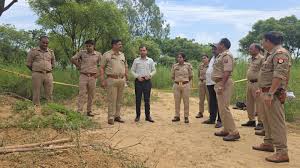
Lucknow: A teenaged Muslim girl was allegedly murdered and secretly buried by her family members in Uttar Pradesh’s Baghpat district after she eloped with a 19-year-old Dalit boy. The victim’s father, Waris, uncle Matlubh, and cousin Sadik — all residents of Palda village — were taken into custody by Baraut police after villagers noticed injury marks on the girl’s neck during her burial and informed the boy’s family and local police. According to primary investigation, the girl was in a relationship with Sagar Kashyap, a scheduled caste youth from the same village. “The two had been in love for over 18 months but faced strong opposition from the girl’s family due to caste and religious differences. The minor girl’s grandfather is a known Samajwadi Party worker with political influence in the area,” a police official said. On July 15, the couple fled to Himachal Pradesh’s Una, where Sagar worked at a brick kiln. “The girl’s family tracked them down the next day, brought them back to the village in a car, allegedly beating them throughout the journey. They tied them near a tubewell in the village, where the couple was publicly thrashed. Sagar was handed over to his family with death threats, and the girl was taken back home,” the cop added. According to police, the family allegedly strangled the girl on July 23, telling everyone that she had died of tuberculosis. Her body was buried in a hurry. However, some villagers noticed bruises and strangulation marks on her neck and other parts during the burial, and alerted the authorities. Courtesy : Odisha Bytes Note: This news is originally published on https://odishabytes.com/bha and is used purely for non-profit/non-commercial purposes, especially human rights.
Samajwadi Party Chief Akhilesh Yadav Accuses BJP Of Targeting Poor, Dalits & Minorities By Shutting Schools
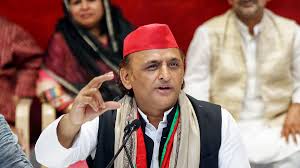
Yadav alleged that the BJP’s education policy is not only regressive but also discriminatory in nature. “Their aim is clear—they want to create an unequal society where the marginalized remain uneducated and voiceless,” he said. Lucknow: Samajwadi Party president Akhilesh Yadav has sharply criticized the Uttar Pradesh BJP government, asserting that it is “ruining basic and primary education.” He accused the ruling party of deliberately targeting the poor and PDA (Pichhde, Dalit, and Minority) communities by closing government-run schools, thereby robbing their children of a fundamental right guaranteed by the Constitution. Yadav alleged that the BJP’s education policy is not only regressive but also discriminatory in nature. “Their aim is clear—they want to create an unequal society where the marginalized remain uneducated and voiceless,” he said. By systematically shutting down schools in rural and underprivileged areas, the government is paving the way for private institutions that are financially inaccessible to common citizens, he added. He further stated that instead of improving infrastructure, filling vacant teaching posts, or modernizing classrooms, the government is dismantling the very foundation of public education. “The education of future generations cannot be compromised for political or economic motives,” he remarked. Akhilesh also expressed concern that such actions are in direct violation of the Right to Education (RTE) Act and run counter to the vision of inclusive growth. “If local schools disappear, where will the children of laborers, farmers, and daily wage earners study? What future are we offering them?” he asked. He urged citizens, especially educators and civil society, to raise their voices against this “dangerous trend” and vowed that his party would restore dignity, access, and equality in education if voted back to power Rahul M Courtesy : TFPJ Note: This news is originally published on https://thefreepressjournal.com/bha and is used purely for non-profit/non-commercial purposes, especially human rights.
Speak up in Parliament for ‘marginalised’ Muslims, Mehbooba urges Rahul

SRINAGAR: Former J&K chief minister and People’s Democratic Party (PDP) president Mehbooba Mufti wrote Monday to Rahul Gandhi, urging Congress’s LS leader of Opposition to take a firm stand during Parliament’s current monsoon session against “growing marginalisation of Muslims in India”. In her letter, Mehbooba acknowledged that while key issues like the horrific Pahalgam attack, Operation Sindoor and other critical security matters were expected to dominate House discussions, she “sincerely hopes the opposition, especially INDIA bloc, raises the growing concern of Muslim victimisation across the country”. “Under the pretext of targeting ‘Bangladeshis’ and ‘Rohingyas’, Muslims are being pushed into increasingly desperate situations. Disturbing media reports have even suggested that some were forced into the sea in attempts to expel them from India. As you rightly highlighted during your (recent) visit to Assam, the large-scale demolition of thousands of Muslim homes is deeply troubling,” Mehbooba’s letter stated. The PDP president also referred to the raging controversy over special intensive revision (SIR) of electoral rolls in poll-bound Bihar. He described the exercise as “yet another systematic effort to dispossess, disempower, and ultimately disenfranchise Muslims, effectively erasing their presence, both symbolically and literally”. Mehbooba underscored Rahul’s legacy to urge him to voice the concerns. “Muslims who chose to remain in India during Partition did so because of the faith they had in the secular leadership of the Congress from Mahatma Gandhi to Pandit Jawaharlal Nehru. Today, as the bearer of that legacy, the responsibility falls on your shoulders to uphold and defend the secular and democratic values enshrined in our Constitution,” the letter stated. Mehbooba pointed out that when Hindus, minorities in neighbouring countries like Pakistan or Bangladesh, were targeted, “our nation rightly expresses outrage and the Union government intervenes”. “But when Muslims are targeted within our own country there is an unsettling silence, a fear that prevents many from speaking up,” she wrote. As a politician from one of the “only Muslim-majority regions that chose to join the Indian Union largely due to the vision and secular character of your great-grandfather (Nehru), I feel extremely helpless at times”, the PDP chief wrote, urging Rahul to continue speaking up for a minority “steadily marginalised and pushed to the fringes of Indian society”. Courtesy : TOI Note: This news is originally published on https://timesofindia.com/bha and is used purely for non-profit/non-commercial purposes, especially human rights.
NOS funding cuts signal systemic exclusion of Dalits, minorities from educational opportunities

In a manner, it is an extension of the violence visited upon the Dalits and the minorities by Hindutva proponents on the streets and in homes A recent piece of news reported by a few national English dailies, but which didn’t seem to get much traction in regional newspapers or in public discussions, was regarding a substantial cut in the number of National Overseas Scholarships (NOS). The NOS programme was instituted in 1954-55 to provide financial support to students from Scheduled Castes (SC), Denotified Nomadic Tribes (DNT), semi-nomadic tribes, landless agricultural labourers, or traditional artisan categories, with a family income below Rs 8 lakh per annum, for study and research in foreign universities. Left in limbo On July 1, the Ministry of Social Justice and Empowerment announced provisional scholarship awards to only 40 of the 106 candidates selected for NOS for the academic year 2025-26, with a statement that letters for the remaining 66 candidates “may be issued… subject to availability of funds.” In previous years, all students in the selected list had received provisional scholarship letters at the same time, but this year less than half of the selected candidates received the award letters, leaving the rest in limbo, not knowing what the outcome is going to be. A Ministry official was quoted as saying by Hindustan Times, “It is an issue with the Cabinet Committee on Economic Affairs not approving the money allocated to these scholarship schemes. We have the money but we also need green signal from above to give it out.” The Cabinet committee is headed by Prime Minister Narendra Modi. BJP govt’s larger agenda While this may appear to be a minor glitch in the flow of funds — which will be rectified in a short time and all the selected candidates allowed to pursue their higher studies and further their careers — a closer look will suggest there is much more to the picture than what is apparent. And that it is in line with a much larger agenda of the BJP government of systematically denying students of the SC, ST and minority communities scholarships and much needed support for their education. A simple enumeration of developments in the last few years will serve to place the matter into perspective: In the 2022-23 Union Budget, there was a huge reduction of over 99 per cent in funds allocated to the Maulana Azad Education Foundation (MAEF), which works for the educational upliftment of minority communities such as Muslims, Christians, Sikhs, Buddhists, Parsis and Jains. While the previous year’s Budget allocated Rs 90 crore, the 2022-23 Budget allotted a paltry Rs 1 lakh to the foundation. As a result, the stipend payments of more than 1,400 PhD scholars from these communities have been stalled since January 2025 and some from even earlier. Funds for the National Fellowship for SC and ST students were cut by 99.99 per cent as the allocation dropped from Rs 240 crore in the revised estimates (RE) for 2024 to just Rs 0.02 crore in the budget estimates (BE) for 2025. The National Testing Agency (NTA) initially released a selection list of 865 scholars in March 2025 for the National Fellowship for SC and ST students, but a ‘revised list’ was issued in April which cut down selections to only 487 of the previously chosen candidates. The NOS scheme, mentioned earlier, saw a reduction of 99.8 per cent from Rs 6 crore in RE 2024 to Rs 0.01 crore in BE 2025. In 2022, the Union Ministry of Social Justice and Empowerment had excluded “topics/courses concerning Indian Culture/heritage/History/Social studies on India based research topics” from the NOS scheme. The Pre-Matric Scholarship for Minorities was reduced by 72.4 per cent to Rs 90 crore in BE 2025 from Rs 326.16 crore in RE 2024. It has also been restricted to students of classes IX and X. The Post-Matric Scholarship for Minorities has been decreased by 69.9 per cent, from Rs 1,145.38 crore in RE 2024 to Rs 343.91 crore in BE 2025. The Merit-cum-Means (MCM) Scholarship first saw a reduction 42.6 per cent to Rs 19.41 crore in the 2025 Budget. According to the latest reports, it has been discontinued due to “overlap with similar schemes of other ministries.” The Dr Ambedkar Scheme of Interest Subsidy on Educational Loan for Overseas Studies for OBC and OEC students incurred a cut of 56.66 per cent to Rs 8.16 crore from Rs 15.30 crore in BE 2025. An RTI enquiry filled by activist MA Akram brought to light that more than 50 per cent of the funds slotted for minority educational programmes have not been used. Specifically, of the Rs 305.8 crore allocated for fee reimbursement scheme, Rs 174.23 crore remained unutilised. Maulana Azad Foundation shut Even more tellingly, on February 7 of this year, the Ministry of Minority Affairs (MoMA) issued an abrupt order to close down the Maulana Azad Education Foundation, without assigning any reasons for the decision. The Foundation was established in 1989, coinciding with the birth centenary of Maulana Abul Kalam Azad, the first Education Minister of India, as a non-profit organisation under the MoMA to address the educational disparities faced by minority communities, particularly Muslims, in India. Over the years, it has provided significant service for the educational upliftment of minorities through a variety of schemes spanning across the entire spectrum of education from the primary to higher education and research. Despite this, the order of closure came without any warning. It also mandated the transfer of surplus funds worth Rs 669.71 with the Foundation to the Consolidated Fund of India. Criticism of MoMA It is crucial to note that the Parliamentary Standing Committee on Social Justice and Empowerment, chaired by BJP lawmaker PC Mohan, was quite caustic in its criticism of the Ministry of Minority Affairs for the sharp reduction in funding and the inordinate delays in funding approvals. In its report of January 2025, the Committee stated that the delays and cuts have left students and institutions
Moradabad News: Promise to restore lost respect of Dalits, backward and minorities on formation of SP government in PDA Jan Chaupal Thakurdwara.

Samajwadi Party organized PDA Jan Chaupal in Faridnagar village on Wednesday. The workers demonstrated with copies of the Constitution, taking a pledge to protect it. The chief guest of the program, area MLA Nawab Jan Khan and District President Jaiveer Singh Yadav, while addressing the program, said that the party’s national president and former Chief Minister Akhilesh Yadav is constantly fighting for the rights of minorities, Dalits and backward classes. It was due to their struggle and pressure that the government had to take the decision to conduct caste census. He alleged that the BJP and its government want to abolish the Constitution. It insults the Constitution maker Dr. Bhimrao Ambedkar. In the program, SP leaders announced that the lost respect of Dalits, minorities and backward classes will be restored if the SP government is formed in the state. Party’s assembly constituency president Naveen Kumar Yadav, city president Irfan Ansari, former block chief husband Ejaz Ansari, head husband Atiq Qureshi etc. were present in the program. Courtesy : Hindi News
Caste census will uplift Dalit, backward and Pasmanda classes: Danish Azad Ansari

Lucknow, 30 April. A meeting of the Union Cabinet was held in Delhi on Wednesday under the chairmanship of Prime Minister Narendra Modi. Many important decisions were taken in the meeting. The Modi government at the Center has also decided to conduct caste census in this meeting. Yogi government minister Danish Azad Ansari expressed happiness over this decision of the government. Danish Azad Ansari, while talking to the news agency, said that Prime Minister Narendra Modi’s decision to conduct caste census is historic. This decision will prove to be very meaningful in the reconstruction of the nation. This census will open new paths for the upliftment of backward society, Dalit society and Pasmanda class and new schemes will be made. Prime Minister Modi has always kept the development and upliftment of the country paramount. This historic decision has been taken with the spirit of serving the country, which the whole country welcomes. He further said that we have full faith that after this census, our resolve for a developed India 2047 will not only get further strengthened, but our country will move forward rapidly on the path of this resolve. Let us tell you that the Modi cabinet approved the caste census on Wednesday. Giving information about the government’s decision, Ashwini Vaishnav said that the Congress governments opposed the caste census. There has been no caste census since 1947. Instead of caste census, Congress conducted caste survey, many states in the UPA government have conducted caste survey from political point of view. He further said that in 2010, the then Prime Minister Dr. Manmohan Singh had assured in the Lok Sabha that the caste census would be considered in the cabinet. Thereafter, a cabinet group was also formed, in which most of the political parties recommended caste based census. Despite this, the Congress government considered it appropriate to conduct a survey instead of caste census, which is known as CECC. Despite all this, the parties of the Congress and Indy alliance used the subject of caste census only for their political benefit. Vaishnav further said that this type of survey has spread confusion in the society. Keeping all these situations in mind and ensuring that our social fabric does not come under the pressure of politics, the caste census should be included in the original census instead of a survey. This will strengthen the society economically and socially and the country will also progress uninterrupted. The Cabinet Committee on Political Affairs led by PM Modi has decided that caste census will be included in the upcoming census. Courtesy: Hindi News
‘Call special Parliament session to demonstrate national unity’: Congress on Pahalgam terror attack

NEW DELHI: Congress president Mallikarjun Kharge and Rahul Gandhi Tuesday urged PM Narendra Modi to convene a special session of Parliament to discuss the Pahalgam terror attack, with the idea of demonstrating a collective national resolve and unity. The two leaders of opposition wrote separately to Modi on Monday night. Congress had sought an all-party meeting on the day of the gruesome killings of tourists in Kashmir, which the govt had agreed to immediately. Kharge wrote to the PM, “At this moment, when unity and solidarity is essential, opposition believes it is important to convene a special session of both Houses of Parliament at the earliest. This will be a powerful demonstration of our collective resolve and will to deal with the brutal terror attack in Pahalgam on innocent citizens on April 22. It’s is our fond hope that the session will be accordingly convened.” In a similar brief letter, Rahul said the Pahalgam terror attack has “outraged” every Indian and that New Delhi must at this critical time show that it stands together against terrorism. He said the special session would be a platform for people’s representatives “to show their unity and determination”. AICC spokesman Jairam Ramesh said the letters were written after a discussion between the Congress brass and several opposition leaders. The idea is to show unity, let there be a discussion with responsibility,” he added. The demand, already made by RJD and CPI earlier, may add a fresh twist to the post-Pahalgam to and fro between the govt and the opposition. While the opposition has extended support to the govt on the response it proposes against the attack “masterminded by Pakistan”, Congress has also accused the ruling BJP and RSS of using the attack to target Muslims in the country through social media handles. Some opposition parties have also blamed the security lapse and the intelligence failure for the attack. While Congress has presented the theme of “unity” with the govt as far as response to the attack is concerned, its leaders in states – like AICC Karnataka incharge and Rajya Sabha MP Randeep Surjewala in Bengaluru on Tuesday – have been attacking the ruling BJP and the PM for the security lapse. Congress has been critical of the PM for missing the all-party meeting and instead attending an election rally in Bihar, as done by Congress president Kharge at a rally in Jaipur on Monday. Ramesh said when the Parliament meets for the special session, PM Modi should attend both the Houses. Courtesy : TOI Note: This news is originally published on https://timesofindia.com and is for use by the non-military/non-commercial community, especially those in the human rights sector.
Muslims, Dalits not disposed to crime, says survey report

This finding marks a departure from perceptions prevalent in other regions of the country and highlights the unique stance of the state’s law enforcement on issues of crime and community relations In a revealing survey conducted among police respondents in Punjab, a significant majority has expressed the firm belief that neither Muslims nor Dalits are naturally predisposed to criminal behaviour. As per the “Status of Policing in India Report’ (SPIR)”, done by the Common Cause and Lokniti-CSDC organisation, this finding marks a departure from perceptions prevalent in other regions of the country and highlights the unique stance of the state’s law enforcement on issues of crime and community relations. According to the survey data, an overwhelming percentage of police officers in Punjab (over 80%) contend that Muslims, Dalits and Adivasis do not have inherent tendencies towards crime. This belief was notably stronger among Punjab’s police compared to respondents from other states, indicating a profound suspicion of the stereotype that links specific communities to criminality. The survey also highlighted law enforcement’s approach to public safety issues. The Punjab Police reported the highest proportion of arrests related to loitering and public nuisance, accounting for 60% of the total arrests, significantly outpacing the other states surveyed. This reflects a proactive stance on maintaining public order, despite the low association perceived between crime and these communities. When it comes to justifying the controversial practice of torture, police respondents from Punjab displayed a relatively low tolerance. Only 15% reported a high propensity to justify such actions, while a considerable 30% indicated a low propensity and another 30% showed a very low propensity. Furthermore, Punjab has been identified as one of the states with the least justification for mob violence, especially concerning allegations of cow slaughter. A robust 62% of the respondents stated that mob violence was not at all justified, aligning with similar findings from states like Kerala and West Bengal, which also exhibited low levels of justification for such behaviour. The survey not only sheds light on the perceptions of crime among law-enforcement officials in Punjab but also reinforces the significance of community relations in upholding justice and security in the region. The findings suggest a move towards a more equitable perspective on crime with respect to community background, which could potentially influence future policing strategies and community outreach programmes. The Status of Policing in India Report (SPIR) 2025 was released on March 26 at the India International Centre by a distinguished panel of experts, including Justice S Muralidhar, former Chief Justice of the Odisha High Court, Vrinda Grover, lawyer and activist, Dr Amar Jesani, public health expert and the Editor of the Indian Journal of Medical Ethics, and Prakash Singh, IPS (retd) and a former DGP of UP, Assam and BSF. The Punjab angle of the report studied by The Tribune talks about the response of the Punjab Police respondents. Sixth in the series, the SPIR 2025 on “Police Torture and (Un)Accountability” is the only report of its kind in India to focus on police high-handedness and custodial violence at police stations across the country. 80 pc Punjab cops hold this view An overwhelming percentage of police officers in Punjab (over 80%) contend that Muslims, Dalits and Adivasis do not have inherent tendencies towards crime. This belief was notably stronger among Punjab’s police compared to respondents from other states, indicating a profound suspicion of the stereotype that links specific communities to criminality Courtesy :Jupinderjit Singh, The Tribune Note: This news is originally published on https://thetribune.com and is used purely for non-profit/non-commercial purposes, especially human rights.
Rioter tag, Muslim migrant workers from Bengal ‘thrashed’ in Odisha and Uttar Pradesh

‘Forced returns’ have sparked fear among migrant workers from Murshidabad and Malda, many of whom were now worried about their survival The fallout of the Samserganj riots reached BJP-ruled Odisha and Uttar Pradesh on Monday when around 70 migrant labourers of the minority community from Murshidabad and Malda were allegedly assaulted and sent home when they reached those states to resume work. Some 50 workers from Murshidabad had left for Keonjhar, Odisha, on Sunday, after their Eid break. They had to return home late Monday night in the same bus arranged by a labour contractor after being attacked allegedly by Hindutva activists who accused them of attacking a particular community in riot-hit Murshidabad. Similarly, 24 migrant workers from Sujapur in Malda, who had been working in a garments factory in Jamalpur in Uttar Pradesh, were also allegedly beaten up and forced back. The violence, which erupted over protests against the amended waqf law, had spread in pockets of Murshidabad, leaving three dead and damaging homes and property. The “forced returns” have sparked fear among migrant workers from Murshidabad and Malda, many of whom were now worried about their survival. On Monday, a Special Investigating Team (SIT) formed by the Bengal government arrested 12 migrant labourers from Jharsuguda in Odisha for their alleged role in the Murshidabad riots. However, these migrant workers who were attacked and forced to return home, claimed they were not involved in violence but were paying the price of perception. Momin Miyan, a labour contractor from Suti, who had arranged the Odisha-bound trip, said: “We just came home for a small break which coincided with the anti-waqf Act protests. We didn’t take part in it.” Momin, who has been recruiting labourers for 12 years, said he had arranged a bus for workers to Keonjhar as usual. “Around 5.30am on Monday, a group of youths with Bajrang Dal flags stopped our bus at Jashipur More in Mayurbhanj. We were dragged out and beaten up…. They accused us of attacking their community. They warned us that the bus would be set on fire if we didn’t leave,” said Momin. One of the 24 migrant workers from Sujapur in Malda who had been working in Jamalpur, Uttar Pradesh, for seven years, said a group of youths with saffron flags in their hands attacked them when they were working. “They accused us of attacking a community and asked us to leave, saying we would not be allowed to work there. Some of us were beaten up severely,” he said. Monirul Khan of Sujapur, who returned from UP, said when they went to the police, they were detained and were released “only after paying a bribe of ₹30,000”. “We have been working in UP for seven years. There was no problem earlier. But the scenario changed after the Murshidabad violence. Now it has become a question of our survival since we are not feeling secure to return there,” he said. When the Sujapur workers were detained at Jamalpur Kotwali police station, Fatema Khatun, wife of migrant worker Shariful Khan, lodged a complaint with the Kaliachak police in Malda. The issue was taken up by the Migrant Workers’ Unity Forum. Its general secretary, Asif Farooq, wrote to Union home minister Amit Shah, urging him to ensure the safety and rights of migrant workers across states. Jangipur SDO Ekam J. Singh professed ignorance. “If I get any complaint, I will report it to the state government,” he said. The CPM said that TMC MP Abu Taher’s comment about the role of migrant workers in the riots was also to blame. “Abu Taher’s comment was amplified by BJP leader Tarunjyoti Tewari on social media. Within hours, attacks were unleashed in Odisha and UP. The Centre has also abrogated its responsibility to protect migrant workers…,” said CPM state secretary Md Salim and added that his party units in the two states were alerted to help Bengal workers. Samirul Islam, chairman of West Bengal Migrant Workers’ Welfare Board and TMC’s Rajya Sabha MP, blamed the BJP. “Such attacks on migrant workers are not new in BJP-ruled states. Wherever they find Bengali-speaking Muslim migrant workers, they always find an issue to torture them,” he said. Samik Bhattacharya, the BJP Rajya Sabha MP, argued that such incidents were the result of suspicion after states like Tamil Nadu found many Bengali-speaking people with fake Indian documents, who are Bangladeshi infiltrators. He pointed out that Tamil Nadu was not a BJP-ruled state. “Tamil Nadu government, which is not run by the BJP, was the first to conduct a combing operation and discovered many such migrant workers with fake identities. After that, they stopped allowing Bengali migrant workers to work in their state. The allegations that came from other states are likely to be the result of such suspicion,” said Bhattacharya. Courtesy : Alamgir Hossain, The Telegraph Note: This news was originally published on https://thetelegraph.com/bha and is used purely for non-profit/non-commercial purposes, especially human rights.
Muslim member cannot continue as State Waqf Board member on expiry of tenure in State Bar Council: Supreme CourtOnline legal consultation

The Supreme Court has ruled that a Muslim member of a State Bar Council, appointed to the State Waqf Board, could not continue as a member of the Board on expiry of his tenure in the Bar Council.Online legal consultation The Bench of Justice MM Sundresh and Justice Rajesh Bindal on Tuesday observed that eligibility to the Waqf Board under Section 14(1)(b)(iii) of the Waqf Act, 1995 flew directly from the individual’s status as a Muslim member of the bar council and ended with it. Overruling a Manipur High Court order, which allowed a former Bar Council member to retain his seat on the Board despite demitting the bar council, the top court of the country said that without such membership in the Parliament, the State Legislative Assembly or the Bar Council, the very basis for their membership in the Board ceased to exist. The matter pertained to a dispute between Firoz Ahmad Khalid and Rabi Khan over membership in the State Waqf Board. In February 2023, the Manipur government appointed Khalid to the Board after his election to the Bar Council, replacing Khan, whose term had ended.Legal research services While a single-judge Bench of the High Court dismissed the challenge to this appointment, a Division Bench reversed that ruling, holding that Explanation II to Section 14 only required sitting MPs and MLAs to vacate Waqf Board posts upon expiry of their tenures, and made no such mention of Bar Council members. The Apex Court ruled that Explanation II to Section 14(1)(b) of the 1995 Act did not explicitly mention that the term of a Muslim member of the Bar Council in the Board was also co-terminus with their term in the Bar Council. This must be understood to be implied upon a reading of the provision as a whole, it added. The Bench, however, clarified that where there were no Muslim members in any of the three categories mentioned in Section 14(1)(b) of the 1995 Act, ex-Muslim Members of Parliament or State Legislative Assembly or ex-Member of the Bar Council, as the case may be, shall constitute the electoral college. It said if there was no serving Muslim member in the Bar Council and no senior Muslim advocate was available, only then would an ex-Member of the Bar Council be eligible to be a Member of the Board. It was axiomatic to state that an existing Muslim Member of the Board from the Bar Council would cease to be a Member of the Board, upon the completion of their tenure as a Member of the Bar Council, when there was another Muslim Member available to replace them from within the Bar Council, noted the Bench. The Apex Court further held that the Bombay High Court order in Shri Asif S/o Shaukat Qureshi vs State of Maharashtra to permit a former Bar Council member to remain on the Board was not a good law. It also rejected the argument that Explanation II’s silence implied legislative intent to exclude Bar Council members from its scope. The Apex Court observed that giving an overreaching interpretation to Explanation II would amount to treating the MPs and MLAs differently from members of the Bar Council. No intelligible differentia was discernible for such a classification from the scheme of the provision, it added. Restoring the single-judge Bench order, the top court of the country upheld appellant Khalid’s appointment by the State of Manipur. Courtesy : India Legal Note: This news was originally published on https://indialegal.com/bha and is used purely for non-profit/non-commercial purposes, especially human rights.