
Meerut: Attempted kidnapping of Dalit girl; police find her using drone in 3 hours; search for the accused continues

The girl’s family said they suspect the accused are from the same village, and the police are currently investigating. Meerut: A case of kidnapping of an 11th-grade Dalit girl has come to light in the district. Some unidentified youths forcibly dragged her into a field. Acting on information from local residents, police launched a search operation using drone cameras. After approximately three hours of effort, the girl was recovered safely, while the police are continuing to search for the absconding accused. SP City Vinayak Gopal Bhosale stated that the incident occurred in the Partapur police station area, where a Dalit minor girl was forcibly taken into the fields by some men. Local villagers became suspicious and informed the police. Upon receiving the information, the SSP arrived at the scene with his team and began a search using drone cameras. After approximately three hours of effort, the girl was recovered. The villagers also provided considerable support during this time. The SP stated that drone cameras are now being used to monitor the area. The accused youths will be identified and arrested soon. Efforts are also being made to interrogate the student so that the accused can be identified quickly. Meanwhile, the student’s family stated that they suspect the accused are from the village. Currently, the police are investigating from every angle. Courtesy: Hindi News
TN: Family abducts woman on highway for marrying Dalit man

M Chithiravalli belonged to the Most Backward Class (MBC) and Ajith Kumar belonged to the Scheduled Caste community. Chennai: A woman in Tamil Nadu’s Tiruchirappalli was reportedly abducted by her family on Saturday, July 4, for marrying a Dalit man, with her kin assaulting her, hurling casteist slurs and giving death threats. According to The Hindu, the woman was identified as 27-year-old M Chithiravalli. She was allegedly abducted on the Tiruchi-Dindigul national highway near Maravanur under Manapparai Police Station limits. A police team rescued her and subsequently arrested four people, including her elder brother, involved in the crime. A resident of Mudukupatti, Chithiravalli married Ajith Kumar, 27, at a temple near Tiruchi in June. She belonged to the Most Backward Class (MBC) and Kumar belonged to the Scheduled Caste community. Since her family strongly opposed the union due to the caste differences, both sides approached the Manapparai All Women Police Station. Chithiravalli was sent with Kumar and his parents following the enquiry. Relations between Kumar and Murugesan, the husband of Chithirivalli’s sister, worsened soon after. Relations between families sour, leading to abduction Murugesan, on July 1, filed a complaint claiming Kumar threatened him, following which the two were directed to appear at the police station for questioning. According to the report, Kumar, his mother and Chithiravalli arrived for the inquiry on Saturday and submitted a petition. Murugesan failed to appear. The issue escalated when Kumar was returning with the two women from the police station in an autorickshaw. At around 1:40 pm, Murugesan, along with other accused, intercepted them in two cars on the National Highway and abducted Chithiravalli. The police said the group attacked Kumar, abused him with casteist slurs and threatened to kill him, while forcibly taking Chithiravalli away. Woman rescued from grandmother’s house Police officials acted swiftly, tracing Chithiravalli to her grandmother’s house in Yagapuram. She was reportedly confined by her family and was rescued that same night. Police arrested four accused – including Murugesan, his brother P Prakash, M Malaisamy, Chithiravalli’s elder brother and N Amanullah, alias Mala. They have been remanded to judicial custody, while the cars used for abduction were seized. Authorities have since registered a case based on Kumar’s complaint under various sections of the Bharatiya Nyaya Sanhita (BNS) and the Scheduled Caste and Scheduled Tribes (Prevention of Atrocities) Act. Chithiravalli’s family had allegedly been pressuring her to leave Kumar and had threatened her with serious consequences if she didn’t. Courtesy : TSD Note: This news is originally published on https:/thesiasatdaily.com/bha and is used purely for non-profit/non-commercial purposes, especially human rights
Odisha: Mob lynches Dalit man, family accuses police of assault
The police, who arrested two persons in connection with the lynching, rejected the allegation that Nayak was assaulted after the force rescued him. Bhubaneswar: A Dalit man was allegedly beaten to death by a mob, suspecting him of being involved in a theft case in Odisha’s Khurda district, police said on Tuesday, June 30. The family members of the deceased also accused the police of assaulting Tofan Nayak (32) after rescuing him from the mob attack and taking the injured man home instead of a hospital. The police, who arrested two persons in connection with the lynching, rejected the allegation that Nayak was assaulted after the force rescued him. The incident took place at Khanat village under Banpur police station area at about 4 pm on Sunday, June 28, where the villagers allegedly tied Nayak to an electric pole and physically assaulted him by several people. He was rescued by the police at about 6 pm and handed over to his family two hours later. The family took him to a hospital. Nayak died on Monday, June 29, during treatment at Capital Hospital in Bhubaneswar. Earlier, he was admitted to Banpur Community Health Centre (CHC). The cause of death will be ascertained after post-mortem examination, the police said. Also ReadRapido driver beaten to death over Rs 8k, family left devastated Police reject allegations, CCTV footage to be examined Meanwhile, based on a preliminary investigation, the Odisha Police headquarters rejected the allegation of custodial violence by Banapur Police. “The allegation is not supported by the available materials at this stage. The Zimmanama (handing over) executed by the parents, their statement before the CHC Banapur doctor, photographs of Tofan with family members at the time of release, and available CCTV footage of the police station are being examined,” the police said in a statement. Banapaur Police Station inspector in-charge Jayprakash Parida said, “One can verify the CCTV footage of Nayak being brought to the police station. He was made to sit outside the police station and never taken to the lock-up. There was no assault on him in police custody. He was healthy when being handed over to the family, though intoxicated.” Two accused arrested The police have meanwhile arrested Pabitra Rout (51) and Sarat Kumar Swain (60), both residents of Khanat village under Banapur police station. Khurda Superintendent of Police Parmar Smit Parshottamdas said a detailed investigation into the incident is underway, and further action will be taken after the postmortem report is received. The police have registered a case of murder under the Bharatiya Nyaya Sanhita (BNS) and Scheduled Caste Scheduled Tribe (Prevention of Atrocities) Act based on the complaint lodged by Nayak’s wife, Sasmita. She alleged that her husband was beaten up by people at Khanta village as well as by the personnel at the police station. Bhikari Nayak, the father of the deceased, held the police responsible for the death of his son. “The police rescued him from the village where my son was being beaten up. It was the duty of the police to refer him to a hospital instead of forcing us to take my injured son home,” he said. Nayak’s mother Sachala demanded a high-level inquiry and strict action against both police personnel and villagers involved in the assault. The incident came in less than two weeks after a mob attack on two NGO workers, including a woman in Rayagada district. This is also the second mob lynching incident in Khurda district where a GRP constable was beaten to death at Balianta on the outskirts of Bhubaneswar on May 7. Courtesy : TSD Note: This news is originally published on https:/thesiasatdaily.com/bha and is used purely for non-profit/non-commercial purposes, especially human rights
RTIH inks pact with Dalit Philanthropy Foundation to empower women entrepreneurs

Ratan Tata Innovation Hub (RTIH), Vijayawada, signed a Memorandum of Understanding (MoU) with Dalit Philanthropy Foundation (DPF) at the NTR District Collectorate on Tuesday. According to a press release, the partnership aims to promote women entrepreneurship, inclusive innovation, livelihood development, and social enterprises, with a special focus on empowering marginalised and underserved communities. Through this collaboration, both organisations will work together to strengthen entrepreneurial ecosystems, facilitate capacity-building initiatives, provide mentorship opportunities, and support sustainable livelihood interventions. Dalit Philanthropy Foundation executive director Santosh Kumar Samal and Ratan Tata Innovation Hub CEO G. Krishnan exchanged the MoU. Speaking on the occasion, the representatives of both organisations emphasised the importance of collaborative efforts in creating equitable opportunities for aspiring entrepreneurs and fostering inclusive economic growth. The Hindu Bureau Courtesy : The Hindu Note: This news is originally published on https:/thehindu.com/bha and is used purely for non-profit/non-commercial purposes, especially human rights
Dalit content creator’s Instagram account suspended for making a video criticizing Goa CM; find out what happened to ‘Deepak Dialogues’
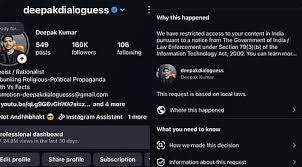
Deepak Kumar, whose account had approximately 1.6 lakh followers and a monthly reach of approximately 1.4 crore, had uploaded a video criticizing Goa Chief Minister Pramod Sawant. Case after case of action against social media accounts of content creators critical of the government is increasing. In this series, the Instagram account of Dalit rationalist content creator Deepak Kumar, also known as ‘Deepak Dialogues’, was also suspended a month ago. Deepak Kumar, whose account had approximately 1.6 lakh followers and a monthly reach of approximately 1.4 crore, had uploaded a video criticizing Goa Chief Minister Pramod Sawant. In the video, he questioned the alleged silence of the Chief Minister and the government regarding the sex scandal involving Soham Naik, son of a BJP councilor in Goa. Subsequently, his account was suspended in India without any prior notice. Deepak alleges that Meta suspended his account based on a complaint from the Goa Police. Deepak Kumar uploaded the video in March, amid widespread public outrage over allegations of a sex scandal involving Soham Naik, the son of a BJP councilor in Goa. In the video, he questioned the silence of the Goa government and Chief Minister Pramod Sawant. Deepak stated that the Epstein Files scandal was being discussed globally at the time, so he cited it as an example. He accused the Chief Minister of adopting double standards, claiming he had previously protested on public issues but remained silent on this issue. The controversy escalated after the video referred to some leaders as “useless leaders.” Speaking to Bahujan Lives Matter, Deepak stated that the word “useless” was intended as criticism, not an insult. Despite this, his Instagram account was suspended in India on April 8th without any prior notice, email, or notice. Deepak stated that Meta told the Delhi High Court that this action was taken following communication from the Goa Police. Cockroach Janata Party’s X account was also shut down in India, gaining record followers since its launch on May 16th. The Goa CID Cyber Crime notice accused the account of posting “objectionable/defamatory content” and cited sections 353 and 356 of the BNSS. The notice directed Meta to disable the account and blacklist the device and phone number to prevent the creation of new accounts. Furthermore, the Goa Crime Branch summoned Deepak to Goa for questioning under section 35(3) of the BNSS. According to Deepak, before he could appear on the notice, Goa police arrived in Delhi, where he was staying at a friend’s house for medical treatment. The police traced not only his phone but also the phones of those he was in regular contact with. Deepak stated that he could not travel 2000 kilometers immediately due to health reasons. The police left after speaking with a lawyer. Deepak also received threats following this incident. He stated that the account closure has severely affected his livelihood. Suspending his entire account instead of removing a single video is tantamount to taking away his source of income. Deepak Kumar has now filed a writ petition in the Delhi High Court challenging the account suspension and is awaiting further legal action. Geetha Sunil Pillai Courtesy: Hindi News
Queer, trans collective to protest Centre’s amendment bill
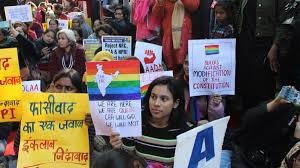
Panaji: The Goa Queer and Trans Collective will protest at Azad Maidan, Panaji, on March 22 against the Transgender Persons (Protection of Rights) Amendment Bill 2026 presented in the Lok Sabha. They called it a regressive law that bases itself on transmedicalism (the idea that gender identity must be validated through medical or biological criteria) and said it will fail to protect trans persons and exploit vulnerabilities. The collective said the legislation, if passed, will dismantle constitutional protections, criminalise realities, and subject transgender individuals to invasive control. It said the bill creates arbitrary classification within transgender persons without scientific basis, relying on vague standards such as “genuine oppressed persons” or “those in need of protection”. “It recognises only socio-cultural groups while excluding others, despite all transgender persons having the constitutional right to self-determination,” the collective said in a press note. “The bill shifts the foundation of gender recognition from self-perceived identity to state-controlled medical certification, placing transgender persons under invasive scrutiny by administrative and medical bodies,” it added. The bill narrows the definition of transgender to exclude transwomen and transmen, trans-masculine and trans-feminine persons, and erases genderqueer and non-binary identities and conflates intersex variations with gender identity, reflecting a lack of social understanding, the collective added. Courtesy : TOI Note: This news is originally published on https:/timesofindia.com/bha and is used purely for non-profit/non-commercial purposes, especially human rights
Caste row over Dalit woman’s engagement at anganwadi centre in Odisha resolved, says official
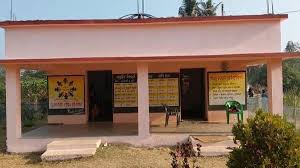
The anganwadi centre will function normally from February 16, as the parents consented to send their children, Sujata Nayak, member of State commission for protection of child rights, saidKendrapara The anganwadi in Odisha’s Kendrapara district has not been functioning for nearly three months. The anganwadi in Odisha’s Kendrapara district has not been functioning for nearly three months. | Photo Credit: Photo Credit: Special Arrangement Two days after a caste row over the engagement of a Dalit woman as an anganwadi helper was raised in Parliament, Odisha’s Kendrapara district administration on Saturday (February 14, 2026) said the matter had been resolved through negotiations. Kendrapara district sub-collector Arun Nayak said the matter has been amicably resolved as villagers have agreed to send their children to the anganwadi centre from Monday (February 16, 2026). “Final talks with upper-caste residents, who had stopped sending their children to the centre since November 21, were held in the presence of stakeholders, including members of the State Commission for Protection of Child Rights and Odisha State Commission for Women. The officials sensitised villagers on the abolition of age-old caste practices,” he said. The anganwadi centre will function normally from Monday (February 16, 2026) as the parents consented to send their children, Sujata Nayak, member, state commission for protection of child rights, said. The dispute arose in Nuagaon village under Ghalimala gram panchayat, where residents boycotted the centre for nearly three months, also refusing to receive nutritious food items for pregnant women, protesting the engagement of Sharmistha Sethy, a Dalit woman, as helper. “I am happy that the matter is resolved. I am desperate to see children back in the anganwadi centre and women receiving their nutritious food items provided by the government,” said Ms. Sethy. “I will try my best to serve the children and women,” she said. Kharge on anganwadi boycott Congress president and leader of opposition in the Rajya Sabha, Mallikarjun Kharge, on February 12 had raised concerns over caste discrimination at workplaces, citing a recent incident in Odisha where members of a particular community refused to let their children eat food cooked by a Dalit anganwadi worker. Raising the issue during Zero Hour in the Upper House, Mr. Kharge said, “In the 21st century, when we talk about social development, social reform, and the unity of Hindus, people of a particular community are refusing to let their children eat food cooked by a Dalit woman who is a helper-cum-cook in an anganwadi centre in Odisha. That anganwadi centre has been boycotted for the last three months.” An official said as the centre remained shut for all practical purposes, the district administration initiated steps to amicably settle the dispute by deputing a high-level team to the village, but it initially failed. The protesting residents finally agreed after realising that depriving children of pre-school education could harm their future. Kalpana Mallik, member of Odisha State Commission for Women, said she had elaborate discussions with the villagers before they finally agreed to stop opposing an educated woman on the basis of her caste. “We are hopeful that such incidents will not be repeated in the village in future. The Nuagaon village has a population of 450. The camaraderie, bonding and fellow feeling among the people is very much intact. The recent incident was a stray case,” sarpanch Sailendra Mishra said. Villager Gobardhan Pradhan said, “We have forgotten the dispute of the past. We will no more oppose the Dalit anganwadi helper’s engagement at the centre. Courtesy : The Hindu Note: This news is originally published on https:/thehindu.com/bha and is used purely for non-profit/non-commercial purposes, especially human rights
Modi Playing the Dalit Caste Card to Push Rahul Gandhi Out of the Ring and Don the Mantle of Dalit Messiah
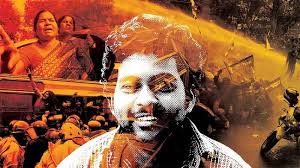
The Supreme Court’s decision to stay the recent University Grants Commission (UGC) regulation on the ground that it adopted a non-inclusive definition of caste-based discrimination and excluded certain categories from institutional protection is certainly not a setback for Narendra Modi. Instead, it could significantly elevate his stature in the eyes of Dalits and the poor. Politically, the most important observation made by the bench of Chief Justice Surya Kant and Justice Joymalya Bagchi—“If we don’t intervene, it will lead to dangerous consequences, divide society, and have grave impact”—will have far-reaching implications. The court also observed that by limiting the scope of “caste-based discrimination” only to SC, ST, and OBC categories, the UGC had effectively denied institutional protection and grievance redressal to individuals belonging to the “general” or non-reserved categories who may also face harassment or bias based on caste identity. However, this order also raises a crucial question: why did the court not take suo motu cognisance when hundreds of SC, ST, and OBC students in IITs and IIMs allegedly died by suicide due to discrimination? With the epithet “Hindu Hridaya Samrat” losing relevance amid the mushrooming of multiple claimants, Narendra Modi appears to have chosen a new path in saffron politics—to don the crown of a Dalit Messiah. For the first time in his eleven-year rule as Prime Minister, Modi has made a politically astute move by antagonising traditional upper-caste supporters through measures perceived as protective of Dalits and marginalised students. Modi refused to heed the advice of friends and well-wishers to retrace his steps, despite being aware of the consequences. Some protesters even targeted his caste identity, claiming that “the Teli is out to destroy our future” (Modi belongs to the Teli community, an OBC group). Yet Modi appears unmoved. He seems confident that upper-caste voters will not desert the BJP despite their anger over the new rules. With the 2029 Lok Sabha election in view, winning over Dalits and EBCs appears to be at the top of his priority list. Shivam Singh, one of the founders of the Savarna Sena (Forward Caste Army), stated that protests would be withdrawn if the government assured that general-category students would not be affected. Data shows that complaints related to caste discrimination in universities were around 173 in 2016–17 but rose to over 350 in the 2023–24 academic year, indicating a significant increase. Even memories of 1990, when upper-caste youth launched violent protests against the implementation of the Mandal Commission report, do not seem to deter Modi. During that agitation, over 150 people attempted suicide, with at least 63 succumbing to their injuries. The protest, which began after Prime Minister V.P. Singh announced the implementation of the Mandal Report, turned violent as many students resorted to self-immolation. Rajeev Goswami’s attempt became the symbolic face of the agitation. The compulsion to identify with Dalits and the proletariat has become so acute for Modi’s political survival that he has sought to reinvent himself as a modern Dalit Messiah. This shift also reflects the rise of hardline Hindutva leaders such as Yogi Adityanath within the BJP ecosystem, many of whom are associated with the “Hindu Hridaya Samrat” image. Modi, unwilling to be overshadowed by any rival within the saffron camp, appears determined to chart an independent path by aligning himself with Dalits and EBCs. Recent political developments have significantly strengthened Rahul Gandhi’s appeal among Dalits. What was once a peripheral issue has become a central ideological plank of his leadership as Leader of the Opposition. Although the Congress had historically lost Dalit trust in the 1990s, Rahul Gandhi has attempted to reclaim this space by linking social justice with the demand for a caste census—what he calls an “X-ray of the country.” He is increasingly perceived by Dalits and EBCs as a potential liberator. By placing the caste census at the centre of his political narrative, Rahul Gandhi has moved beyond tokenism. He aims to demonstrate the underrepresentation of Dalits, Adivasis, and OBCs in corporate, media, and academic institutions. He has targeted what he calls BJP’s “Manuvaad” and accused the government of weakening constitutional protections for marginalised communities. His claim that 95 per cent of upper-caste bureaucrats decide the fate of Dalits and the poor has found resonance among these communities. With Rahul Gandhi aggressively shaping the Dalit narrative, Modi appears left with little option but to reposition himself. Yet he faces competition not only from regional leaders but also from the BJP’s own targeted outreach strategies. After V.P. Singh, no national leader could fully capture the imagination of Dalits as a Mandal Messiah, although regional leaders like Mulayam Singh Yadav, Lalu Prasad Yadav, Ram Vilas Paswan, and Nitish Kumar emerged as protagonists of Mandal politics. Over time, however, they came to be seen largely as caste leaders rather than representatives of collective Dalit empowerment. Experts and liberals fear the emergence of violent protests similar to those witnessed after the Mandal Commission’s implementation in 1990. Upper-caste students in Bihar and Uttar Pradesh have already taken to the streets against the UGC’s Promotion of Equity in Higher Education Institutions Regulations, 2026. Sit-in protests have been organised across universities, with demonstrators claiming that the rules would lead to caste conflict and disrupt social harmony on campuses. Critics argue that the rules are one-sided and lack safeguards against false complaints. They question the effectiveness of “Equity Squads” and the potential for increased conflict. The regulations require every university and college to establish an Equal Opportunity Centre and an Equity Committee, with representation from SC, ST, and OBC communities. Institutions must address complaints within 24 hours, failing which they risk severe penalties. The 2026 regulations mark a legally binding step towards safer and more equitable campuses, aiming to curb the sharp rise in reported caste-based discrimination cases between 2019 and 2024. Yet a crucial question remains: why did the Modi government choose this moment and this mechanism to introduce such rules? In 2022, the Supreme Court had directed the UGC to formulate accessibility guidelines for students with
Karnataka leadership tussle: Dalits plan rally for CM Siddaramaiah; wait for Home Minister’s approval
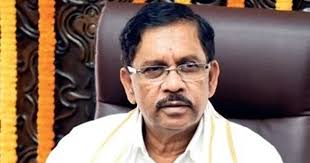
Being a member of the Siddaramaiah camp, Parameshwara feels the former would continue as CM and that is the reason he is hesitating to back the Dalit rally, sources said. BENGALURU: With the leadership tussle between Chief Minister Siddaramaiah and DCM DK Shivakumar unlikely to die down till the intervention of LoP in Lok Sabha Rahul Gandhi, a section of Dalits is planning a rally to push for a CM from their community. Several Dalit leaders are exerting pressure on Home Minister Dr G Parameshwara, the prominent Dalit face in Karnataka, to give the go ahead for the rally in Old Mysuru Region. A group, led by Venkataramanaswamy, also known as Papu, from Chamarajanagar, met him in Tumakuru on Sunday and sought his dates for the event. However, Parameshwara advised them to wait for some more time. Being a member of the Siddaramaiah camp, Parameshwara feels the former would continue as CM and that is the reason he is hesitating to back the Dalit rally, sources said. Parameshwara, a loyalist of the Nehru-Gandhi family and an aide of AICC president Mallikarjun Kharge, is not ready to go against them, they added. He met Kharge, but what transpired between them was not known even as he termed their meeting a courtesy call. “Since Parameshwara is a staunch Congress loyalist, he should be made CM if Siddaramaiah has to step down,” said DSS leader Mavalli Shankar, adding that a Dalit rally will be organised soon to give this demand a push. “The top post has been elusive for Dalits since Independence as many senior leaders missed the bus. It should not be the case this time,” he said. Meanwhile, AHINDA organisations have started preparations to hold rallies across the state, including in Mysuru and Hubballi, to back Siddaramaiah to continue in the top post. A rally has also been planned in central Karnataka, either in Haveri or Davanagere, sources said. Have faith my party will decide my future: DKS Amid the change in leadership tussle in the Congress government, Deputy Chief Minister DK Shivakumar said he has faith in the party and it will decide his future as well. Shivakumar said more than outsiders, some people from his own community are criticising him out of jealousy. “They are stabbing me in the back. All this is natural in politics. One should not lose peace . We must remain honest,’’ he said. Shivakumar also said when Union minister and JDS leader HD Kumaraswamy was chief minister, he had worked honestly. “Yet, Kumaraswamy accused me of stabbing him in the back. I do not need anyone’s certificate. It is enough if I satisfy my conscience,’’ he said. Devaraj B Hirehalli Courtesy : TNIE Note: This news is originally published on https:/thenewindianexpress.com/bha and is used purely for non-profit/non-commercial purposes, especially human rights
5 injured after gang opens fire at Dalit family:Dispute over cow grazing led to attack in Morena village; elderly man seen pleading with folded hands
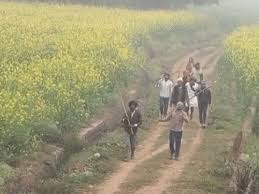
In Rajaram Ka Pura village of the Jaura development block in Morena, influential villagers allegedly opened fire and assaulted a Dalit family after the family refused to let their cows graze in the field or allow the removal of bajra stalks. The attackers are accused of firing indiscriminately and then beating the family with sticks. Injured admitted to the hospital Five members of the family are injured in the incident and have been admitted to Jaura Hospital. The victim’s family has also accused the police of delaying in registering the report. The incident occurred on the first day of the new year, i.e., Thursday at 3 PM. The video surfaced on Friday morning. According to the victim, Maharaj Jatav, the cows of influential villagers Banwari Gurjar and his associates were grazing in his field. When the family protested, they also took away the bajra stalks. Due to this, the dispute escalated, and the influential people threatened to take revenge. Fired 8-10 rounds, beaten with sticks It is alleged that Banwari Gurjar, along with his 10-12 companions, reached the house of a Dalit family. First, 8 to 10 rounds were fired, after which the family was attacked with sticks and batons. In the video, youths are also seen holding sticks and batons. Ramesh Jatav, Maharaj Jatav, Bahadur Jatav, Mahadevi Jatav, and Simla Jatav were injured in the assault. During the dispute, an elderly member of the family even folded his hands and apologized to the bullies, but despite this, the accused did not stop the assault. Police accused of delaying FIR After the incident, the injured family members reached the Jaura police station. It is alleged that their complaint was not registered immediately. The FIR was registered late at night. A case has been registered against Banwari Gurjar, Vishram Gurjar, Damodar Gurjar, Bunty Gurjar, and Veera Gurjar in the matter. Jaura SDOP Nitin Baghel said, The dispute was over a cow and fodder. The investigation revealed that there was first an altercation with a youth from the Gurjar family, after which there was a physical fight between both parties. An FIR has been registered based on the video and available evidence. The investigation of the case is ongoing. Courtesy : Bhaskar English Note: This news is originally published on https:/bhaskarenglish.com/bha and is used purely for non-profit/non-commercial purposes, especially human rights