
SC/ST employees on strike at AIIMS Rishikesh: Bhim Army chief makes this demand regarding disregard of reservation rules in promotions
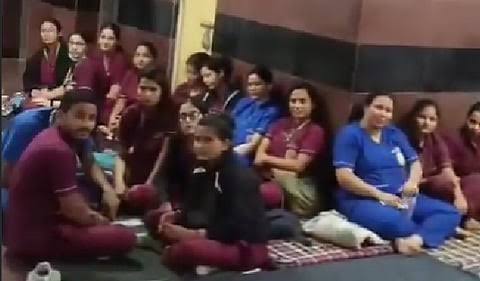
Chandrashekhar Azad writes letter to JP Nadda New Delhi – Nagina MP Chandrashekhar Azad has written to Union Health and Family Welfare Minister JP Nadda, alleging serious disregard of reservation rules in the promotion of Scheduled Caste and Scheduled Tribe employees at the All India Institute of Medical Sciences (AIIMS), Rishikesh. In the letter, he has demanded a review of the flawed DPC order issued on October 10, the holding of a review DPC, and accountability of the concerned officials. According to the letter, SC/ST employees working at AIIMS Rishikesh have complained about the blatant disregard of reservation rules, previous instructions of the Ministry, the ‘Own Merit’ principle, and the reservation roster in the promotion process. The employees have objected to the DPC order of October 10. On October 11th, they submitted a letter of dissent, but since the administration has not taken any positive action, the employees have been on a peaceful strike under the banner of the All SC/ST Employees Welfare Association since October 12th. Azad stated that on October 13th, he spoke to the employees via video conferencing and assured them of the protection of their constitutional rights. He stated that this type of strike by employees at a medical institution of national importance is an administrative failure and is impacting health services. Azad had previously intervened in the matter. On December 16th, 2025, he submitted a representation to the Parliamentary Committee on the Welfare of Scheduled Castes and Scheduled Tribes. Following this, the Lok Sabha Secretariat, through Office Memorandum No. 8 (2)/SCTC/2026 (dated January 22nd), directed the Ministry of Health and AIIMS Rishikesh to investigate the complaints and submit a report by January 30th, 2026. According to the employees, the Ministry also issued directives in this regard on March 10, but it is unclear what action the AIIMS administration has taken on them. The employees have also raised this issue with the National Commission for Scheduled Castes (NCSC) and the National Commission for Scheduled Tribes (NCST). Azad requested the Minister to direct the concerned officials to ensure action on the following points: An impartial review of the October 10 DPC order should be conducted based on applicable rules and available records. The action taken by AIIMS Rishikesh and the status of compliance with the Ministry’s March 10 directives should be clarified and a compliance report should be sought. A review of the previous DPC and reservation roster should be conducted, as required, in accordance with DoPT guidelines. The correct application of the ‘Own Merit’ principle regarding reservation in promotions should be ensured, and its criteria and records should be examined. The complaints, responses, instructions, and compliance reports (ATRs) submitted before the Parliamentary Committee, NCSC, and NCST should be reviewed. The impact of relevant judicial orders and pending court cases should be examined before issuing the DPC order. The role of the current Director, Deputy Director, AO, and JAO in denying reservation in promotions despite clear instructions from the Ministry, alleged irregularities in the October 10 DPC, and secret joinings should be investigated. The role and responsibilities of the Liaison Officer in the reservation roster and DPC process should also be reviewed. The competent authority should provide a written, reasoned, and timely decision on the dissent representations submitted by employees on October 11. An immediate formal meeting should be held between the AIIMS administration and authorized representatives of the Association. A clear timeline should be set for resolving the matter, and the employees and the Association should be informed in writing of the action taken. Bhim Army Chief Chandrashekhar Azad stated in the letter that, given the seriousness of this issue, necessary instructions should be issued to the concerned officials to ensure a fair and timely resolution of the current dispute, including the complaints raised earlier, and to ensure the protection of the constitutional and service rights of SC/ST employees. Geetha Sunil Pillai Courtesy: Hindi News
125 people have died in sewers and septic tanks so far in 2026, raising serious questions about the safety of Dalit and migrant workers.
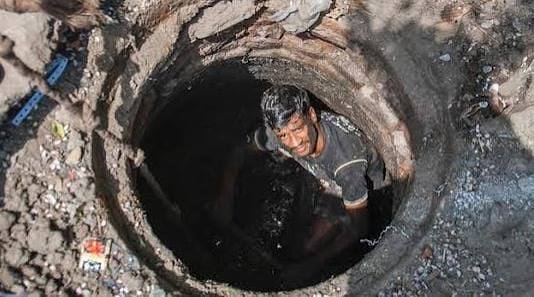
At least 125 people have died in India so far in 2026 while performing hazardous cleaning and maintenance work in sewers, septic tanks, and other enclosed spaces. According to data released by the Dalit Adivasi Shakti Adhikar Manch (DASAM), these deaths were recorded in 20 states and union territories between January 1 and October 2, 2026. The organization describes these incidents as not merely accidents, but a serious crisis linked to caste discrimination, exploitation by contractors, lack of safety measures, and the failure of government systems. In a statement issued in New Delhi on October 5, DASAM said that workers are losing their lives while cleaning and maintaining sewers, septic tanks, manholes, drains, sewage treatment plants, underground water tanks, and other enclosed structures. The deaths include sanitation workers, contract laborers, construction workers, and migrant laborers. According to the organization, in several incidents, workers fainted or died from lack of oxygen due to toxic gases. In some cases, others who went inside to rescue a worker also died from exposure to the toxic gases. According to the organization’s data, July 2026 was the deadliest month, with 28 deaths recorded. March saw 25 deaths, June 20, May 19, February one, April 10, August 10, September nine, and October 2nd saw three deaths. State-wise figures show 14 deaths in Bihar, 12 in Tamil Nadu, 11 in Haryana, and 10 in Uttar Pradesh. Meghalaya and Odisha each reported nine deaths, Madhya Pradesh eight, Assam and Maharashtra seven each, and Chhattisgarh six. However, there are discrepancies in some figures in the organization’s document. The state-wise total is 126, while the total number of deaths is reported as 125. DASAM stated that caste-based labor systems and economic inequality play a significant role in these deaths. According to the organization, Dalit communities, particularly Valmiki and other marginalized castes, have historically been employed in the most dangerous and degrading jobs, such as sanitation. Meanwhile, migrant and economically disadvantaged workers employed through contractors are also forced to work in unsafe conditions. Many workers receive no written contracts, nor adequate training, safety equipment, insurance, or social security. The report cites several incidents in Mumbai, Delhi, Uttar Pradesh, Bihar, Haryana, Tamil Nadu, Rajasthan, and other states. In June, three workers died after inhaling toxic gas from a factory septic tank in Delhi’s Mundka industrial area. According to the organization, the workers’ families alleged that they were not provided with adequate safety equipment, gas testing, and rescue systems. Similarly, in March, four members of a family died in an incident related to cleaning a household septic tank in Vaishali district, Bihar. Such incidents demonstrate that the danger is not limited to municipal sewers, but also exists in private homes, hospitals, factories, and residential complexes. DASAM also questioned the poor implementation of laws prohibiting manual scavenging and providing for rehabilitation. The organization demanded an impartial and timely investigation into every death occurring while working in sewers and septic tanks, and that responsible contractors, employers, property owners, and relevant officials be held accountable. The organization demanded a compensation of at least ₹30 lakh to the families of each deceased, government employment for eligible dependents, and education, health, housing, and livelihood support for the families. The organization demanded the promotion of the use of machines for cleaning sewers and septic tanks, the prohibition of entry of workers into enclosed spaces without gas testing and adequate safety measures, and the mandatory provision of trained rescue teams. According to DASAM, the primary employer or government agencies cannot escape responsibility by outsourcing work to contractors. The organization has appealed to the central and state governments to maintain a transparent record of such deaths across the country and implement an effective national strategy to prevent hazardous cleaning operations. Courtesy: Hindi News
‘My Joy’ by Shreeja Rao celebrates Dalit identity, childhood and self-expression
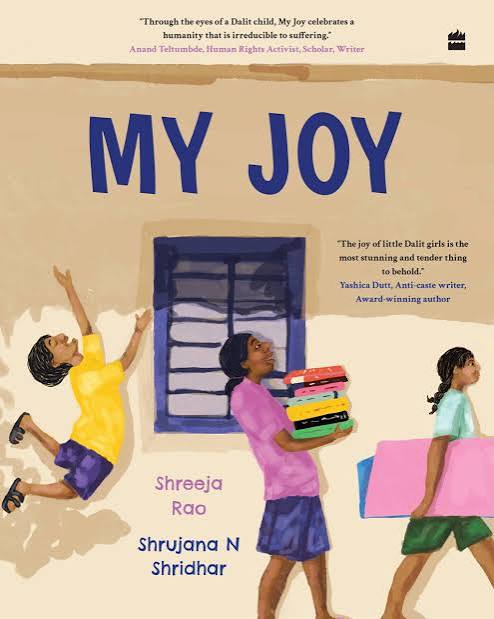
A new title for young readers offers a refreshing take on growing up as a Dalit girl in modern India There are storybooks written for children that are inspired by India’s rivers, its mountains, and its flora and fauna. And there are few others that mount a reality check about today’s times, and the challenges that come with growing up in a society dictated by caste. Fresh off the press is My Joy (HarperCollins India) by Shreeja Rao, aided by Shrujana N Shridhar’s striking illustrations that lead us to a positive, heartwarming story. Rao was clear about telling this story as clearly and transparently as possible. “All literature, old or new, depicts Dalit communities in endless pain. While it is vital to show the consequences of inequality, I have yearned to read stories that celebrate the full humanity of Dalit people,” she admits, sharing that the germ of this book emerged from growing up around and among incredibly brave individuals from the community who defied the odds to build joyous lives. “My Joy is the first and only book about a Dalit child’s identity and assertion. This assertion, whether quiet or loud, is joyful,” she reminds us. Flipping through the pages reveals layers of incisive storytelling, and a bold colour palate that pierces right through the heart of the little protagonist’s life. Rao is quick to inform us about the narrative, “The scenes [from the book] are from my childhood and aspirations. However, the little girl in the book is not one child but many at once. She has many names. She is not special or rare; she takes the freedom to simply exist.” It’s not surprising that women play key factors throughout the insightful trajectory. “I have learnt strength and ambition from women and women’s stories. This book pays homage to the women who have touched me most. It also tries to introduce inspiring figures like Savitrimai [Savitribai Phule] and Mukta Salve to readers. An illustration in the book depicting Mukta Salve Shridhar’s art acts like a primer – evocative, empathetic and yet, brushed with a certain playfulness that we yearn for, often by habit, in books for young readers. What clicked, we asked Rao. “I started writing this book when I was 20, to refute the popular notion that Dalit people are mere vessels of suffering. There was no other artist more fitting to illustrate this idea than the talented and hardworking Shrujana N Shridhar. Our chemistry lies in being two passionate and individualistic women who also happen to be friends. Her illustrations give life to the soul of my writing, and My Joy is our shared becoming. Shridhar echoes the sentiment. “The colour palette and style for this book came from my childhood experiences and those of [Shreeja] Rao, the author. I wanted the book’s visual language to evoke not just joy, but also the universe, solitude, friendships, and aspirations that came with it.” Going by the storyline’s honest intent at its core, we sense that it is bound to help break barriers, and engage young people, one word at a time. Fiona Fernandez Courtesy : Mid-Day Note: This news is originally published on https:/mid-day.com/bha and is used purely for non-profit/non-commercial purposes, especially human rights
Chandrashekhar Azad vs. Akash Anand in UP: Who will support Dalit voters? BSP to hold a flurry of rallies starting October 28th
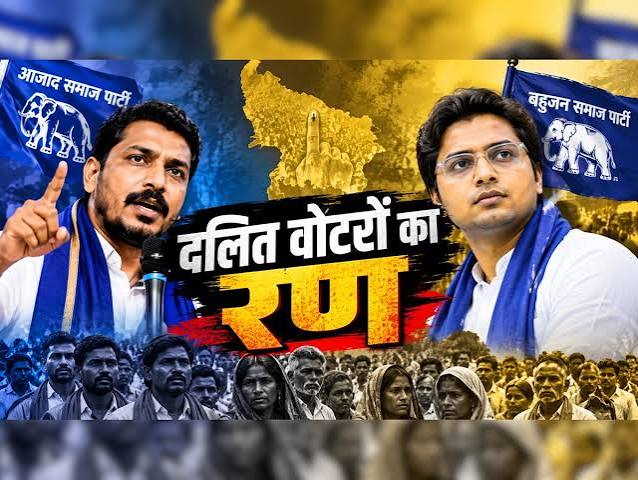
Uttar Pradesh has approximately 22% Dalit voters. The battle for Dalit voters in the state has become Azad Samaj Party vs. BSP. Akash Anand will begin his election rallies from October 28th, and Chandrashekhar Azad will begin his election rallies from October 18th. In response to the Azad Samaj Party’s proposed rallies, the BSP has also released its schedule. The BSP has fielded Akash Anand against Chandrashekhar Azad. Chandrashekhar Azad presents himself as a prominent Dalit leader in UP. Ahead of the upcoming assembly elections in UP, the battle for Dalit politics has now become Chandrashekhar Azad vs. Akash Anand. Dalit voters are at the center of the political battle between the Azad Samaj Party and the BSP. Both parties’ politics revolve around Dalits. Mayawati has fielded Akash Anand against Chandrashekhar. Akash Anand faces the challenge of regaining the BSP’s lost base, while Chandrashekhar faces the challenge of political expansion. The most important question now is who will Dalit voters support in the upcoming state assembly elections. Akash Anand to Hold a Series of Rallies Bahujan Samaj Party (BSP) chief Mayawati has made full preparations to field her nephew and party’s national convener, Akash Anand, in the electoral fray. A rally for Akash is scheduled for October 28th in Anupshahr, Bulandshahr. Following this, meetings are also scheduled in Saharanpur, Ayodhya, Agra, and Kanpur divisions. Through these rallies, the party will announce potential candidates and attempt to recapture its lost support base. Major Challenges Facing Akash Political analyst Vinod Shukla explains that Akash Anand faces more than just the challenge of holding election rallies. He must also demonstrate how active the BSP organization is at the booth level, how connected old workers are, and what the party is doing to bring its traditional supporters back to the polling booths. The campaign, which begins on October 28th, is crucial in this regard. After Anupshahr, meetings are scheduled in Nakur, Saharanpur, on November 2nd, Bikapur, Ayodhya, on November 20th, Agra, on November 22nd, and Bilhaur, Kanpur, on November 29th. Akash Anand’s programs have also been scheduled in Punjab and Uttarakhand. Assembly elections are due in these two states, along with Uttar Pradesh. Chandrashekhar’s path is not easy. Chandrashekhar Azad’s political career is rooted in Dalit rights, the Constitution, voices against social discrimination, and grassroots movements. After establishing his identity through the Bhim Army, he formed the Azad Samaj Party (Kanshi Ram) and won the Nagina seat in the 2024 Lok Sabha elections. His victory demonstrated that there are political parties for Dalits in Uttar Pradesh beyond the BSP. According to political analysts, winning one Lok Sabha seat does not necessarily sway Dalit voters across the state. Chandrashekhar’s programs are scheduled for Amroha on October 18, Aligarh on October 19, and Muzaffarnagar, Prayagraj, Varanasi, and Ghazipur from October 24 to 28. Chandrashekhar did not win due to the Dalit equation. In the 2024 Lok Sabha elections, Chandrashekhar Azad won the Nagina seat. Chandrashekhar received 512,552 votes, defeating BJP’s Om Kumar by 151,473 votes. BSP candidate Surendra Pal Singh received 13,272 votes. Political analysts say that Muslim voters voted for Chandrashekhar to defeat the BJP, which is why he won. The Dalit equation played no role in his victory. Will the Dalit vote be divided? Vinod Shukla says that Dalit voters in Uttar Pradesh have long been the BSP’s core support base and traditional vote bank. Azad’s victory in Nagina certainly saw a decline in the BSP’s old electoral base, but this result is specific to a specific Lok Sabha constituency. Therefore, this cannot be seen as a permanent shift in Dalit votes across Uttar Pradesh. He stated that Dalit voters will remain with the BSP. The likelihood of them switching to Azad is very low. There are approximately 22 percent Dalit voters in Uttar Pradesh, which is the BSP’s traditional vote bank. The role of Akash Anand and Chandrashekhar Azad will be in the spotlight for the 2027 UP Assembly elections regarding the support of Dalit voters. The BSP faces the challenge of re-establishing its old political base and organization. Chandrashekhar Azad faces the challenge of converting his victory in Nagina into a widespread electoral presence. Manoj Mishra Courtesy: Hindi News
Protest in Mandya over Kumaraswamy’s ‘anti-Dalit’ remark on Kharge
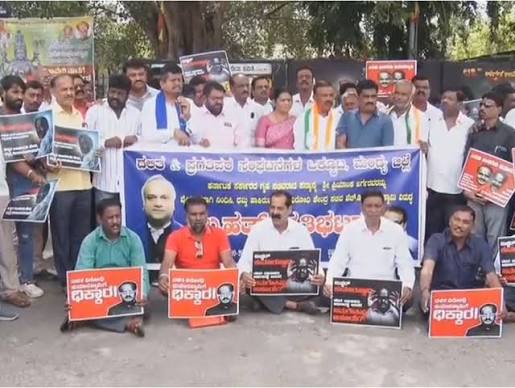
Congress workers and Dalit groups staged a protest in Mandya against Union Minister HD Kumaraswamy’s remarks targeting Home Minister Priyank Kharge. They blocked a highway, calling Kumaraswamy ‘anti-Dalit’ and threatening a statewide agitation. Congress, Dalit groups protest in Mandya Congress workers, along with Dalit and progressive organisations, staged a protest in Mandya condemning Union Minister HD Kumaraswamy for remarks against Home Minister Priyank Kharge. The protest was held at Sanjaya Circle in Mandya. Protesters blocked the old Bengaluru-Mysuru highway and formed a human chain to express their outrage. They raised slogans holding posters of Kumaraswamy. “It is not right for a responsible Union Minister to speak like this. Learn how leaders from a big family should maintain dignity. You are anti-Dalit; it is not right to personally abuse a Dalit Home Minister,” protesters said. Kumaraswamy’s sharp attack on Priyank Kharge Earlier, Kumaraswamy launched a sharp attack on Priyank Kharge over the alleged defamatory sting operation linked to former Chief Minister Siddaramaiah, challenging the state government to summon and interrogate him directly instead of detaining Janata Dal (Secular) workers. “Does the Home Ministry belong to your father? Your father has not given you this department. It is not your father’s. If you are a Home Minister, work like one. Issue me a notice if you want, if you have guts,” Kumaraswamy said, taking a direct swipe at Kharge. The Union Minister also criticised Kharge’s conduct since taking charge as Home Minister and urged him to exercise restraint in his public statements. “Priyank Kharge should control his tongue. He should mind his words. It is not necessary to advise me how to behave in public. For the last three to four months, I am watching how he is behaving after becoming Home Minister. Continuously, he is attacking. First he should control his tongue and his attitude; then he can advise anybody,” he said. (Except for the headline, this story has not been edited by Asianetnews Editorial staff and is published from a syndicated feed.) Courtesy : Asia Net News Note: This news is originally published on https:/asianetnews.com/bha and is used purely for non-profit/non-commercial purposes, especially human rights
Dalit Man Beaten to Death In Sitapur, Family Alleges Caste Abuse
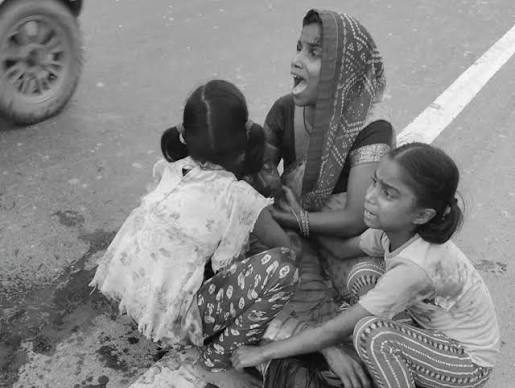
Dalit man Manoj Gautam was beaten to death in Sitapur, Uttar Pradesh, in front of his 10-year-old daughter. A Dalit man, Manoj Gautam, was beaten to death in Sitapur, Uttar Pradesh, allegedly amid casteist slurs and long-standing family rivalry. Four of the six accused have been arrested. The Bhim Army–Azad Samaj Party is supporting the victim’s family and demanding a fair, transparent probe. Will justice be ensured for the family? A 35-year-old Dalit man named Manoj Gautam was beaten to death in Sitapur district, Uttar Pradesh, on the evening of 17 October 2026. The incident occurred near Ludhaura village under the jurisdiction of Kamlapur police station while Gautam was returning home from a local market with his 10-year-old daughter. He was intercepted and assaulted by a group of men. Gautam was taken to a community health centre in Kasmanda, where he was declared dead on arrival. Police have registered a case and initiated an investigation. According to Maktoob Media, Gautam’s family alleged that casteist slurs were used during the attack. Police cited a long-standing family rivalry as the suspected motive. Four of the six accused have been arrested, including Shubham Singh, Dhirendra Singh, and Narendra Singh. The First Information Report (FIR) was filed under relevant sections of the Bharatiya Nyaya Sanhita and the Scheduled Castes and Scheduled Tribes (Prevention of Atrocities) Act. As reported by undefined, preliminary investigations suggest the murder was linked to a long-standing dispute between two families. Police confirmed that Gautam had previously filed a case against the accused under the SC/ST Act. The two sides were reportedly involved in a verbal altercation a day before the incident. Four police teams have been formed to apprehend the remaining accused, and the investigation is ongoing to establish the full circumstances surrounding the killing. Coverage revealed that a video showing Gautam’s grieving wife and children beside his body circulated widely on social media, drawing public attention to the case. Superintendent of Police Ankur Agarwal stated that the investigation is being conducted under the relevant legal provisions, and efforts are underway to ensure all accused are brought to justice. Police sources indicated during the investigation that Gautam’s prior complaint under the SC/ST Act is being examined as part of the motive. The authorities are also reviewing the events leading up to the assault, including the reported altercation on the previous day. The police have not released further details about the ongoing investigation or the status of the remaining suspects. “Our demand is that all the accused be arrested immediately, a fair investigation be conducted in the case, and strict legal action be ensured against the guilty,” said Bhim Army chief Chandra Shekhar Azad, as quoted in the coverage. Further details highlighted that the Bhim Army–Azad Samaj Party (Kanshiram) has been supporting the victim’s family since the incident. The organisation reiterated its commitment to securing justice for the family and called for a fair and transparent investigation. Community members and activists have condemned the killing as the case drew attention to issues of caste-based violence and the need for effective legal action. The police have assured that all aspects, including the allegations of casteist abuse and the history of rivalry, are being thoroughly investigated. “The local team of the Bhim Army–Azad Samaj Party (Kanshiram) had been standing with the victim’s family since the incident, and reiterated the organisation’s commitment to securing justice for them,” the coverage stated. Legal proceedings are ongoing, and authorities have stated that updates will be provided as the investigation progresses as new information emerges. The case remains under close scrutiny from both law enforcement and civil society groups. Courtesy : The Quint Note: This news is originally published on https:/thequint.com/bha and is used purely for non-profit/non-commercial purposes, especially human rights
Sold RS seat to ‘Mumbai bizman’: Yogi targets Akhilesh for ‘ignoring backward, Dalit candidates’

Uttar Pradesh CM Yogi Adityanath’s remarks came in the context of SP nominating senior Reliance Industries executive Dhanraj Parimal Nathwani to RS in the election this month. Lucknow: Uttar Pradesh Chief Minister Yogi Adityanath has accused the Akhilesh Yadav-led Samajwadi Party (SP) of selling a Rajya Sabha seat to a wealthy businessman while sidelining its “PDA” or “pichhda (backward), Dalit, alpsankhyak (minorities)” plank. Yogi’s remarks came in the context of Yadav nominating senior Reliance Industries executive Dhanraj Parimal Nathwani to the Rajya Sabha in the election held earlier this month, where the SP won two seats unopposed. Nathwani, one of the two SP winners, is also considered close to Prime Minister Narendra Modi and Union Home Minister Amit Shah. His father Parimal Nathwani is an Independent Rajya Sabha MP from Jharkhand. The latter had won the seat in April this year after defeating Congress candidate Pranav Jha. Addressing a teachers’ conference in Varanasi Wednesday, Yogi questioned the SP’s commitment to PDA, asking, “Those who kept raising slogans about PDA… where did that PDA go when it came to Rajya Sabha tickets?” “We have been saying from day one that PDA in the Samajwadi Party stands for ‘parivar development authority’ or, at best, ‘Paraya Dhan Apna’,” the chief minister said. Yogi said the SP leader fielded his uncle Ram Gopal Yadav from one of the seats it won, although he could have chosen a Yadav leader from Kashi, Ghazipur or Ballia for one seat. “For the second seat, they could have nominated a Dalit or someone else, or even a Muslim from their traditional vote bank. But they did not do so. Instead, they sold the seat to a wealthy businessman from Mumbai. Both ‘parivar development authority’ and ‘paraya dhan apna’ have been proved right,” he alleged. Yogi targets SP over recruitment row The chief minister also attacked the erstwhile SP government over alleged irregularities in recruitment, accusing it of compromising the future of young people. He referred to the appointment of Anil Yadav as chairman of the Uttar Pradesh Public Service Commission during the SP’s tenure in 2013—the appointment was set aside by the Allahabad High Court in 2015 amid questions over his selection—and claimed he was not qualified for the post. He further alleged that a candidate who had secured third division in high school, intermediate and graduation had topped the Uttar Pradesh Public Service Commission examinations under the previous government. “What kind of anarchy and hooliganism was this? The future of young people was being played with. Meanwhile, riots, unrest and mafia elements dominated the state,” Yogi alleged. SP’s Rajya Sabha wins The remarks come after 10 Rajya Sabha members from Uttar Pradesh were elected unopposed on October 9. The BJP secured eight seats, while the SP won two. The SP’s elected candidates were senior party leader and national general secretary Ram Gopal Yadav and businessman Nathwani. Within a few days of filing nomination, Nathwani’s social media post praising Prime Minister Narendra Modi had triggered unease within the party, with some leaders questioning how they would defend the candidature amid the SP’s opposition to the BJP and Modi. Nathwani, a Gujarat-based businessman associated with the Reliance Group, posted a lengthy message on X (formerly Twitter) on 9 October, congratulating Modi on completing 25 years in public office. He also shared a video highlighting Modi’s political journey from Gujarat chief minister to Prime Minister. Prashant Srivastava Edited by Sunanda Ranjan Courtesy : The Print Note: This news is originally published on https:/theprint.com/bha and is used purely for non-profit/non-commercial purposes, especially human rights
“Until the guilty are behind bars, the struggle will intensify”: AIISCA warns ahead of IIT Bombay’s internal report
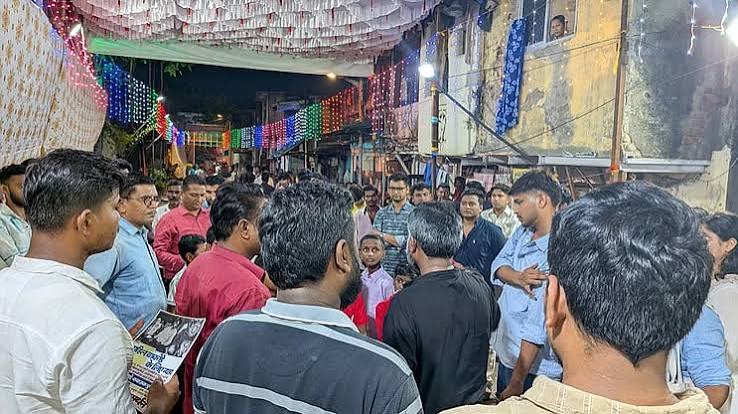
IIT Bombay has updated its anti-discrimination guidelines, stating that asking classmates about their caste, admission category, or entrance exam rank is inappropriate. Mumbai—Following the death of Sahil Wakode, protests are intensifying from the IIT Bombay campus to Azad Maidan. Deepali Salve, Maharashtra General Secretary of the All India Independent Scheduled Castes Association (AIISCA) and Director of the SRC, issued a stern warning ahead of the release of the institute’s internal report. She stated that if Professor Suryanarayan Dulla is not permanently expelled from the institute, they will protest on campus and that Director Professor Shirish Kedare will be held responsible for whatever happens next. Meanwhile, Sahil’s parents have been on a hunger strike at Azad Maidan for several days, and AIISCA has called for a protest there on October 16. Salve said that it is better to choose the path of rebellion than to succumb to injustice. According to him, this fight for justice for Sahil Wakode is no longer just a case, but a declaration of standing against oppression. He said, “This struggle will intensify until the perpetrators are put behind bars.” Regarding IIT Bombay’s internal report, Salve said it was forthcoming and that he believed it would be in favor of Professor Dulla. Addressing the institute directly, he said that if Professor Dulla was not permanently expelled, they would storm the campus and hold Director Kedare responsible for “whatever happens.” Sahil’s parents have been on a hunger strike at Azad Maidan in Mumbai for several days. A six-member delegation was allowed to meet with Kedare regarding the death of student Sahil Wakode and the allegations against Dulla. However, activists said the director did not provide any clarity regarding the ongoing investigation nor did he assure immediate action against the professor. Protest organizers alleged that more than 30 protesters were detained, assaulted, and taken to the Powai police station before being released. They warned that they would return to campus if Dula was not suspended. The protesters alleged that students were dragged onto the road and excessive force was used. AIISCA has appealed to all civil society organizations, Ambedkarites, community members, political parties, activists, and justice-minded citizens to show solidarity with them. The protest will take place at Azad Maidan on October 16th, starting at 10:30 am. Its slogan is “Justice for Sahil.” The Ambedkar Periyar Phule Study Circle (APPSC) protested the incident that occurred on October 14th. The group also alleged that the administration opened the gate for the police and kept it closed for others. According to it, the administration has taken no action toward the students who have been on strike for 27 days, and has done nothing to conduct a fair investigation into the Sahil case, instead spreading “fake news” and promoting a “media trial.” The APPSC condemned the “coalition” between the administration and the Powai police and demanded that all voices be heard and that there be dialogue with the protesting students. New Guidelines: What the Institute Said According to a Hindustan Times report, IIT Bombay has updated its anti-discrimination guidelines, stating that asking classmates about their caste, admission category, or entrance exam rank is inappropriate. An email sent by the Dean of Student Affairs’ office stated that asking about caste, admission category, or entrance exam rank, even out of curiosity, can create prejudice and negatively impact students. The institute urged students, faculty, and staff to avoid conversations that reveal someone’s caste or background and to build friendships based on shared interests. According to the email, while the question may seem innocent to the person asking it and may be motivated by mere curiosity, such a question can often have an adverse impact on another student. Sharing abusive, hateful, casteist, or gender-biased messages, as well as content that depicts prejudice based on religion or sexual orientation, is also prohibited. The institute reiterated its commitment to implementing the reservation policy “in letter and spirit” and warned of strict punishment for violations. Statements Recorded So Far in the Police Investigation According to the Hindustan Times, the Crime Branch has so far recorded statements from approximately 70 people, including Director Kedare, Professor Dulla, several students, and the deceased’s girlfriend and classmate. Police have gained access to the deceased’s phone, tablet, and laptop, but the iPhone has not yet been unlocked and is in the forensic laboratory in Kalina. Police have also sought documents from the institute, such as mark sheets, written complaints, and, if any, apologies. Prof. Dulla is named in a police FIR alleging abetment to suicide on the grounds of caste discrimination, and has been sent on leave to allow a fair investigation. Geetha Sunil Pillai Courtesy: Hindi News
The issue of caste discrimination and mental harassment of a Dalit M.Ed. student at CSJMU heats up, with Bhim Army and student organizations staging a violent protest.
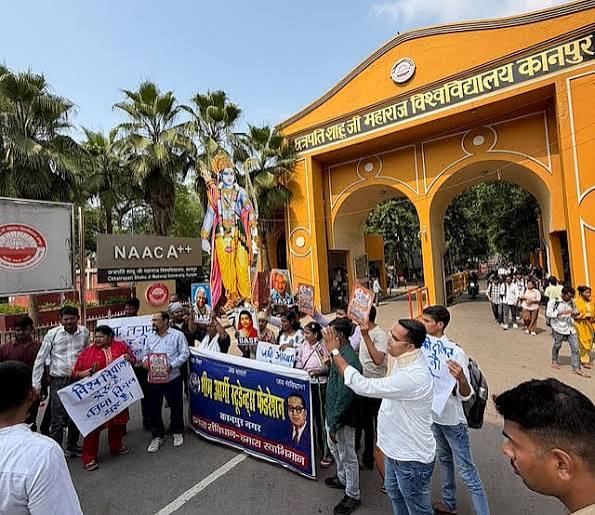
The Bhim Army Students Federation has launched a protest against the caste discrimination and mental harassment of an M.Ed. student at Chhatrapati Shahuji Maharaj University, leveling serious allegations against the administration and police. Lucknow: Student organizations, led by the Bhim Army Students Federation (BASF), have launched a protest to secure justice for Prema Devi, a Dalit M.Ed. (session 2024-26) student studying in the Department of Teacher Education at Chhatrapati Shahuji Maharaj University (CSJMU), Kanpur, with the support of the AISA student organization. As soon as the student organizations joined the protest, the police administration turned the entire campus into a cantonment, but the Bhim Army Students Federation remained firm on its demands and launched a vigorous protest. The Bhim Army Students Federation (BASF) submitted a detailed memorandum to the Vice Chancellor of the University, demanding strict action against the accused teachers. Student leaders accused the university administration of suppressing the ongoing cases of caste-based harassment and discrimination on campus. During the memorandum, Hemant Vidyarthi, District Coordinator of the Bhim Army Students Federation, stated that this is not the first case at the university, and that many previous instances of caste-based discrimination and administrative neglect have been reported against researchers and students. He alleged that whenever students raise their voices for their rights, the administration, instead of showing sensitivity, attempts to hush up the cases. During the protest, student leader Sachin Chandra stated that the Vice Chancellor is showing no urgency in providing justice to Prema Devi. Meanwhile, Abhishek Comrade, in his address, stated that casteism is rampant in the university and that if the victim does not receive justice, this place will be turned into Jantar Mantar. The organization has issued a strong warning that if the victim, Prema Devi, does not receive immediate justice, this fight will be escalated into a massive public movement from the university campus to the entire state. According to the complaint submitted by the victim, she was selected fourth in her class in the entrance examination, yet the Head of Department, Dr. Tanuja Bhatt, publicly discredited her by claiming that she had received admission through pleading. The student also alleges that teacher Dr. Vimal Singh targeted her with abusive language in class. The complaint further states that during the farewell ceremony, she was publicly humiliated, caste-based remarks were made that were derogatory to her dignity, and threats were made to ruin her future. The student alleges that when she protested, she was subjected to biased evaluation of answer sheets and undue pressure was exerted to enroll in mid-term examinations, contrary to the rules. Despite a previous complaint to the then Head of Department, Dr. Rashmi Gore, and the internal committee, an attempt was made to suppress the matter instead of conducting an impartial investigation. The memorandum submitted to the Vice Chancellor places a number of key demands. The first demand is that, given the sensitivity of the matter, an immediate administrative inquiry be initiated against the Head of Department, Dr. Tanuja Bhatt, and if the allegations are proven, legal action should be taken under the Scheduled Castes and Scheduled Tribes (Prevention of Atrocities) Act. The second demand states that, for a fair and transparent investigation, the accused teachers be removed from their current positions and an independent inquiry committee be formed, with no direct or indirect interest in the matter. The third demand calls for an independent review of the student’s answer sheets, internal marks, and evaluation records by impartial experts. The fourth and final demand calls for ensuring that any form of retaliatory action or psychological pressure against the student is completely prevented during the investigation process and that her legitimate academic rights are fully protected. Sachin Chandra, Abhishek, Kartik, Swarnkant, Rajesh, Amarkant, Riya, Neelam, Asha, Savita, and Govind, along with many other students, were present during the demonstration and memorandum program. Rajan Chaudhary Courtesy: Hindi News
Telangana doctor held for cheating Dalit woman over marriage
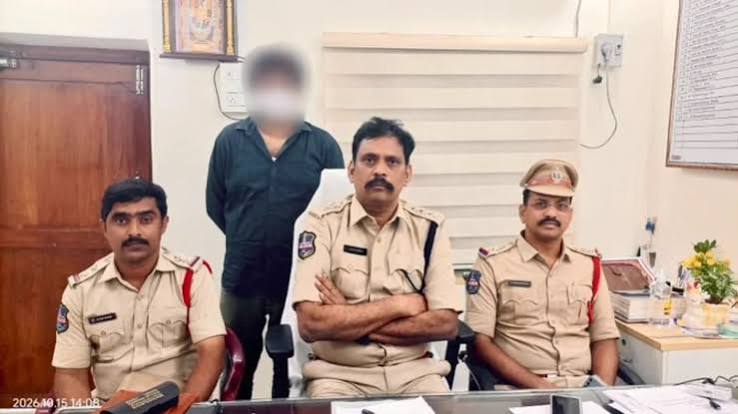
The woman alleged that the doctor had promised to marry her once his divorce was finalised. Hyderabad: A 39-year-old orthopaedic doctor was arrested by Chunchupalli Police in Bhadradri Kothagudem district for allegedly cheating a woman on false promise of marriage. According to local reports, the woman had approached the accused, Dr Nadikudi Shailesh Kumar, in June 2022 for treatment while he worked at a private hospital. In October of the same year, Kumar started working at Sri Krishna Multi-Specialty Hospital in Vidyanagar Colony and the woman continued her treatment there. The woman has alleged that the doctor took advantage of her dependence on him as a patient and sexually assaulted her multiple times over the course of four years. She claimed that she underwent spinal surgery at his hospital in April 2023, and the doctor forced her to have intercourse even though she was suffering from pain after the surgery. The woman has alleged that the doctor had promised to marry her after his divorce. The divorce was reportedly finalised in August, and the woman asked him to marry her. However, the man refused and allegedly used casteist remarks against her. A case was registered under sections 115(2) (voluntarily causing simple hurt) and 69 (sexual intercourse by employing deceitful means) of the Bharatiya Nyaya Sanhita (BNS), along with provisions of the Scheduled Castes and the Scheduled Tribes (Prevention of Atrocities) Act. Shailesh Kumar was sent to judicial remand on October 15. Courtesy : TSD Note: This news is originally published on https:/thesiasatdaily.com/bha and is used purely for non-profit/non-commercial purposes, especially human rights