
The khadi he wore, the Gandhi he kept: A Dalit memoir that refuses easy answers

Recently, I received a message from someone I had known since my Gandhinagar days, when I represented the Times of India from 1997 to 2012. He wanted to send me the English translation of a memoir he had written: “Homes Without Windows“. Thin, short, and darker in complexion than me, he would occasionally come down to my office in Akhbar Bhawan. His name is Chandu Maheria. Seen through a middle-class lens, Maheria had an unimpressive personality. But that didn’t concern me. I knew little about his background, except what he had told me — that he worked in the state education department, and if I am not mistaken, in its midday meal section. Whenever I met someone new, I would try to find out whether there was a story in them. Education interested me: that was my selfish reason for talking to him. Once, speaking on the phone, I asked Maheria to stop by my office on his way home to Gandhinagar, as he said he had a story. I was momentarily hesitant: he would have to arrange a drop to my office and back, since he did not drive a scooter. So I decided to meet him instead in the canteen of the Old Sachivalaya, where he had his office. Meeting him there directly, I felt, was also a better idea than going to his office, which might have exposed his closeness to a journalist. Much later, after my retirement, I discovered that he was regarded quite a buff — a respected one at that — in Dalit circles: an intellectual and a committed writer, one who could speak extensively on Dalit issues. I saw him speak at meetings at Dalit Shakti Kendra, an empowerment-cum-technical school for teenagers founded by the well-known human rights leader Martin Macwan, located off Ahmedabad. I found him very sharp. Until I received the book, all I knew about it was that it had been praised by the eminent historian of modern India, Ramachandra Guha, who called it a “truly remarkable and compellingly readable memoir” — a comment that had appeared on Facebook. With the book in hand, I began to randomly glance through it. But contrary to the anti-Gandhi views prevalent among most Dalit intellectuals across India, this is what I found him stating: “Gandhi might have been anything — call him whatever names — but one thing he was certainly not was anti-Dalit. Oh no, never. Alas!” This made me take a deeper look at the book and see what Maheria, a Dalit and a firm follower of Dr B.R. Ambedkar, thinks about Gandhi. Though a very reluctant reader, I read through its approximately 230 pages in a couple of sittings. Largely a personal account, the memoir describes how Maheria spent his early life in extreme poverty, growing up in a working-class chawl of Ahmedabad as the son of a mill worker — until he shifted to Gandhinagar on securing a government job. They lived in what he describes as “the squalid, tumble-down, cheek-by-jowl dwellings in the backstreets of the city, dubbed as the heart of the state.” Maheria describes how Dalits from different parts of Gujarat had settled in the chawls: “Our chawl was inhabited by the Rohits, people of the tanner caste, who had migrated from Charotar, a large swathe of fertile land covering districts like Kheda and Anand in central Gujarat”, and “the Vankars, people of the weaver caste, from Mehsana, a district in north Gujarat.” Belonging to different Dalit sub-castes, all of them would daily queue up for the dirty common toilet. He underlines, “A strange thing to say, but it was in these queues that I learnt my first lessons in social inequality.” According to him, “All these people were extremely beleaguered, a harried lot that had come here to escape poverty, untouchability, oppression and exploitation, and yet they saw hierarchy and hatred as natural ways of being, such that even the slightest breach in the set order resulted in exchanges of expletives and blows.” Pointing out that “all this cheek was for toilets that were no better than hellholes”, he states, “Though not untouchability in its conventional sense, these practices were rooted in direct discrimination, in an ordained difference between the high and the low, that had seeped right up to the bottom of the caste order.” Offering an example of intra-Dalit casteism, he gives the example of Neno Ma’raj, a man of the priestly Garoda caste, considered the highest among the Dalits. “A mill worker of no consequence, Ma’raj would, in a blatant exhibition of his caste pride, lay his string cot out on the footpath every evening and lounge there like a maharaja, a veritable badshah holding his royal court.” He explains, “In his exhaustive, eye-opening study of the forms of untouchability practised by non-Dalits and Dalits (among themselves) in Gujarat, my friend Martin Macwan has pegged the numbers at ninety-eight and ninety-nine, respectively.” Explaining caste discrimination and related issues through personal anecdotes, Maheria reveals why he believes a section of Dalit intellectuals’ anti-Gandhi stance has gone overboard. None of them, he feels, will admit that no other leader fought untouchability like Gandhiji. Indeed, the book’s chapter “That Fellow, Gandhido” particularly excited me. Maheria starts by stating that he likes wearing khadi as it suits his “short body and slim build”, and explains why his mother didn’t like it. The fabric was anathema to her. She would take a dig at him, saying, “You look like a ditto Gandhiyo in this pair.” An unlettered woman who had picked up the Gandhi-Ambedkar debate through household conversations, her “pet peeve was, ‘None but that fellow, Gandhiyo is responsible for erecting these caste enclosures’.” Yet Maheria graphically describes how, growing up in the working-class chawls, much of his early education happened in the suburb’s Municipal School No. 3-4, whose principal was a man called Balawantbhai Parmar. “A Dalit by birth, he was a thorough Gandhian. Clad in khadi kurta and khadi dhoti, with a topping of
Land dispute at Malayidamthuruth resolved, 7 Dalit families to get 5 cents each
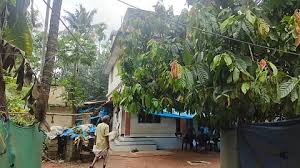
The resolution was arrived at a high-level meeting on Saturday attended by residents living on the disputed land, landowners, and government officials. The two-storey house is surrounded by dense greenery, including coconut and other trees, with a dirt courtyard in front. A man walks toward the house while a few people sit under a blue tarpaulin canopy near the entrance. Temporary structures and household materials are visible beside the house. One of the seven houses in Malayidamthuruth where families currently reside. The Paryathukavu-Malayidamthuruth land dispute has been resolved amicably, with residents agreeing to the proposal to allot five cents of land to each of the families within the same property. The state government also promised to build homes within a year. The resolution was arrived at a high-level meeting attended by residents living on the disputed land, landowners, and government officials, Kerala Minister for Higher Education Roji M John said on Saturday, June 14. The meeting was held at the District Collector’s chamber in Ernakulam. The decision ended a decades-old land dispute involving a private individual and seven Dalit families who have lived on the land for generations. The dispute centres on 2.65 acres of land occupied by seven families belonging to the Pulaya caste, classified as Scheduled Castes (SC) in the state. In the 1980s, a private individual, the late Sankaran Nair, staked a claim to the same parcel of land, resulting in a years-long legal battle. The legal battle favoured Sankaran Nair, and on May 25, the Kerala High Court gave the state government two weeks’ time to carry out the eviction. The two-storey house is surrounded by dense greenery, including coconut and other trees, with a dirt courtyard in front. A man walks toward the house while a few people sit under a blue tarpaulin canopy near the entrance. Temporary structures and household materials are visible beside the house. ‘We’ve lived here for 100 years’: The Dalit families resisting eviction at Malayidamthuruth Following the meeting, the minister stated that houses would be constructed for the seven families within one year. The houses will have an area of 1000-square feet each. Residents would also be allowed to cut or relocate the trees currently standing on the land they occupy. Residents may continue living in their existing houses until the new homes are completed. Speaking to TNM, Abhin, a resident, said they agreed to the conditions because they didn’t have any other option. “We requested the land on which the seven houses currently stand; however, they were unwilling to agree to that. This was the only option they gave to us,” he said. Under the new decision, the seven Dalit families will receive 35 cents of land instead of the 2.62 acres they currently occupy. Although the seven houses are located on the roadside with direct access to the main road, the new plan does not guarantee them the same land. “They will not provide any land with road frontage. Instead, they will allocate us five cents of land in a different area and, through sponsorship, provide a 1,000-square-feet house along with access to that property,” Abhin added. An agreement was also reached to withdraw cases registered against them over protests against eviction. The Advocate General will inform the High Court about the dispute resolution on June 16. Muvattupuzha Revenue Divisional Officer (RDO) and the Deputy Superintendent of Police (DYSP) have been assigned responsibilities to ensure that agreements reached are implemented smoothly until the construction of houses are complete. Courtesy : TNM Note: This news is originally published on https:/thenewsminute.com/bha and is used purely for non-profit/non-commercial purposes, especially human rights
Dalit Christians to participate in ‘Chalo Eluru’ on June 28
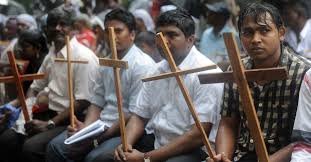
South India Baptist Association-founder president of Vizianagaram district R.S. John on Sunday urged Dalit Christians to participate in the ‘Dalit Christians Sankharava Sabha’ scheduled to be held in Eluru on June 28. The initiative aims to press for the protection of the rights of converted Christians in the State and across the country. Speaking to media here, Mr. John said that the Constitution guarantees the right to practice one’s chosen religion, and it should not be linked to the issue of reservation benefits given for Scheduled Castes. Mr. John added that over 5,000 Dalit Christians are expected to participate in the Eluru conclave to demand the government protect the interests of SC people who have embraced Christianity. He thanked the Jai Bhim party founder Jada Sravan Kumar for holding preparatory meetings across North Andhra region in order to make the Eluru Convlave as a success. He hoped that the government would come out with clear guidelines to protect the interests of Dalit Christians following the meeting. K Srinivasa Rao Courtesy : The Hindu Note: This news is originally published on https:/thehindu.com/bha and is used purely for non-profit/non-commercial purposes, especially human rights
‘Assaulted with belt, iron rod’: Dalit man beaten to death in UP’s Lalitpur after refusing to massage feet; 3 arrested

NEW DELHI: A 33-year-old Dalit man was allegedly beaten to death by three men in Uttar Pradesh’s Lalitpur district after he refused to massage their feet while they were drinking alcohol together, police said on Sunday. The accused allegedly dumped the victim’s body on a road in an attempt to make the death appear to be a road accident, as per news agency PTI. According to Lalitpur additional superintendent of police (ASP) Kalu Singh, Kotwali police received information on Sunday morning about a man lying unconscious on a road behind Varni Jain College near Gurunanak Dharamshala. The victim was identified as Rajkumar alias Chhannu (33), who belonged to a Scheduled Caste community. “The man was identified as Rajkumar alias Chhannu (33), who belonged to a Scheduled Caste community. He was taken to a hospital where doctors declared him brought dead,” Singh said, as quoted by PTI. Assault allegedly took place during liquor party During the investigation, police found that Rajkumar had attended a liquor party at the residence of Samyak Rajnayak alias Rahi Jain (38) in the Civil Lines area on Saturday night. Gajendra Narwaria alias Gajendra Singh Rajput (37) and Gaurav Raikwar (25) were also present. Police said the three accused, allegedly under the influence of alcohol, asked Rajkumar to massage their feet. “When he refused, the three men assaulted him with a belt and an iron rod, resulting in his death on the spot. To make the incident appear as a road accident, they later threw his body on the road,” the ASP said. Murder case registered Police have arrested all three accused and registered a case of murder along with relevant provisions of the Scheduled Castes and Scheduled Tribes (Prevention of Atrocities) Act based on a complaint lodged by the victim’s mother. The accused allegedly confessed to the crime during questioning. The victim’s body has been sent for post-mortem examination, while further legal proceedings are underway, police said. Courtesy : TOI Note: This news is originally published on https:/timesofindia.com/bha and is used purely for non-profit/non-commercial purposes, especially human rights
Dalit woman and son assaulted, caste-related abuse alleged: Victim’s family demands action from Superintendent of Police
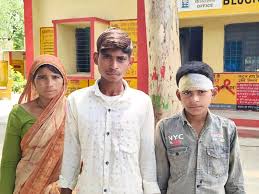
A woman in Bairaspur village, under the jurisdiction of the West Sharira police station in Kaushambi, has accused some villagers of using caste-related abuse, assaulting her, and threatening to kill her. The victim has submitted a complaint to the Superintendent of Police, demanding action. According to the complaint, Bairaspur resident Seema Devi stated that the incident occurred on June 12, 2026. She was at home with her son that day. It is alleged that a young man from the village arrived at her house and began calling her son out, using caste-related abuse. When Seema Devi’s son protested, the accused called other family members. The victim alleges that the accused attacked her son with a stick, causing serious head injuries and causing him to fall unconscious. Seema Devi, who tried to intervene, was also assaulted. Residents from the vicinity arrived at the scene, after which the situation was resolved. The woman says that after the incident, the accused threatened to kill her entire family if she complained. The victim also alleged that these men had previously assaulted her family. Seema Devi has urged the Superintendent of Police to conduct an impartial investigation into the matter, file a case against the accused, and take legal action. Jitendra Kumar | Manjhanpur, Kaushambi Courtesy: Hindi News
Sundargarh: Tribal and Dalit Contractors’ Association president attacked, two arrested

The president of the Tribal and Dalit Contractors’ Transport Association, Dilip Kumura, was allegedly subjected to a life-threatening attack in Odisha’s Sundargarh district. Sundargarh: The president of the Tribal and Dalit Contractors’ Transport Association, Dilip Kumura, was allegedly subjected to a life-threatening attack in Odisha’s Sundargarh district. Police have arrested two persons in connection with the incident and launched an investigation into the case. The arrested accused have been identified as Shiva Ghasi and Rukesh Khadia, both residents of Tileimal area in neighbouring Jharsuguda district. Police have booked them under various serious sections of the law and produced them before a local court. Two other individuals, identified as Biswa Majhi and Prakash Das, were initially detained for questioning but were later released after interrogation. Dilip Kumura alleges assault, death threats during return from Darlipali According to the complaint lodged by Kumura, he was returning to his residence in Sundargarh from the office of the association at Darlipali on June 11. The association is engaged in the transportation of fly ash from the NTPC Darlipali project. While on his way home, Kumura reportedly stopped by the roadside to attend a phone call. During that time, three youths — identified as Suraj Patel, Biswa Majhi and Prakash Das — allegedly arrived in a car and picked up a quarrel with him. The complaint alleges that Prakash Das took out an iron rod from the vehicle and attacked Kumura, striking him on the leg and causing serious injuries. It further states that Biswa Majhi and Suraj Patel allegedly brandished firearms and threatened to kill him. Hearing the commotion, some labourers passing through the area rushed to the spot, rescued the injured association leader and shifted him to a nearby hospital for treatment. Later that night, Kumura lodged an FIR at Bhasma police station, following which police detained Biswa Majhi and Prakash Das for questioning. During the course of the investigation, police reportedly found evidence suggesting the involvement of Shiva Ghasi and Rukesh Khadia in the assault and subsequently arrested them. By Chinmayee Dash Courtesy : Sambad English Note: This news is originally published on https:/sambadenglish.com/bha and is used purely for non-profit/non-commercial purposes, especially human rights
The khadi he wore, the Gandhi he kept: A Dalit memoir that refuses easy answers
Recently, I received a message from someone I had known since my Gandhinagar days, when I represented the Times of India from 1997 to 2012. He wanted to send me the English translation of a memoir he had written: “Homes Without Windows“. Thin, short, and darker in complexion than me, he would occasionally come down to my office in Akhbar Bhawan. His name is Chandu Maheria. Seen through a middle-class lens, Maheria had an unimpressive personality. But that didn’t concern me. I knew little about his background, except what he had told me — that he worked in the state education department, and if I am not mistaken, in its midday meal section. Whenever I met someone new, I would try to find out whether there was a story in them. Education interested me: that was my selfish reason for talking to him. Once, speaking on the phone, I asked Maheria to stop by my office on his way home to Gandhinagar, as he said he had a story. I was momentarily hesitant: he would have to arrange a drop to my office and back, since he did not drive a scooter. So I decided to meet him instead in the canteen of the Old Sachivalaya, where he had his office. Meeting him there directly, I felt, was also a better idea than going to his office, which might have exposed his closeness to a journalist. Much later, after my retirement, I discovered that he was regarded quite a buff — a respected one at that — in Dalit circles: an intellectual and a committed writer, one who could speak extensively on Dalit issues. I saw him speak at meetings at Dalit Shakti Kendra, an empowerment-cum-technical school for teenagers founded by the well-known human rights leader Martin Macwan, located off Ahmedabad. I found him very sharp. Until I received the book, all I knew about it was that it had been praised by the eminent historian of modern India, Ramachandra Guha, who called it a “truly remarkable and compellingly readable memoir” — a comment that had appeared on Facebook. With the book in hand, I began to randomly glance through it. But contrary to the anti-Gandhi views prevalent among most Dalit intellectuals across India, this is what I found him stating: “Gandhi might have been anything — call him whatever names — but one thing he was certainly not was anti-Dalit. Oh no, never. Alas!” This made me take a deeper look at the book and see what Maheria, a Dalit and a firm follower of Dr B.R. Ambedkar, thinks about Gandhi. Though a very reluctant reader, I read through its approximately 230 pages in a couple of sittings. Largely a personal account, the memoir describes how Maheria spent his early life in extreme poverty, growing up in a working-class chawl of Ahmedabad as the son of a mill worker — until he shifted to Gandhinagar on securing a government job. They lived in what he describes as “the squalid, tumble-down, cheek-by-jowl dwellings in the backstreets of the city, dubbed as the heart of the state.” Maheria describes how Dalits from different parts of Gujarat had settled in the chawls: “Our chawl was inhabited by the Rohits, people of the tanner caste, who had migrated from Charotar, a large swathe of fertile land covering districts like Kheda and Anand in central Gujarat”, and “the Vankars, people of the weaver caste, from Mehsana, a district in north Gujarat.” Belonging to different Dalit sub-castes, all of them would daily queue up for the dirty common toilet. He underlines, “A strange thing to say, but it was in these queues that I learnt my first lessons in social inequality.” According to him, “All these people were extremely beleaguered, a harried lot that had come here to escape poverty, untouchability, oppression and exploitation, and yet they saw hierarchy and hatred as natural ways of being, such that even the slightest breach in the set order resulted in exchanges of expletives and blows.” Pointing out that “all this cheek was for toilets that were no better than hellholes”, he states, “Though not untouchability in its conventional sense, these practices were rooted in direct discrimination, in an ordained difference between the high and the low, that had seeped right up to the bottom of the caste order.” Offering an example of intra-Dalit casteism, he gives the example of Neno Ma’raj, a man of the priestly Garoda caste, considered the highest among the Dalits. “A mill worker of no consequence, Ma’raj would, in a blatant exhibition of his caste pride, lay his string cot out on the footpath every evening and lounge there like a maharaja, a veritable badshah holding his royal court.” He explains, “In his exhaustive, eye-opening study of the forms of untouchability practised by non-Dalits and Dalits (among themselves) in Gujarat, my friend Martin Macwan has pegged the numbers at ninety-eight and ninety-nine, respectively.” Explaining caste discrimination and related issues through personal anecdotes, Maheria reveals why he believes a section of Dalit intellectuals’ anti-Gandhi stance has gone overboard. None of them, he feels, will admit that no other leader fought untouchability like Gandhiji. Indeed, the book’s chapter “That Fellow, Gandhido” particularly excited me. Maheria starts by stating that he likes wearing khadi as it suits his “short body and slim build”, and explains why his mother didn’t like it. The fabric was anathema to her. She would take a dig at him, saying, “You look like a ditto Gandhiyo in this pair.” An unlettered woman who had picked up the Gandhi-Ambedkar debate through household conversations, her “pet peeve was, ‘None but that fellow, Gandhiyo is responsible for erecting these caste enclosures’.” Yet Maheria graphically describes how, growing up in the working-class chawls, much of his early education happened in the suburb’s Municipal School No. 3-4, whose principal was a man called Balawantbhai Parmar. “A Dalit by birth, he was a thorough Gandhian. Clad in khadi kurta and khadi dhoti, with a topping of
‘He Abused Me With Caste Slurs’: Dalit Woman Alleges Assault by Village Head Representative in UP; Court Orders FIR
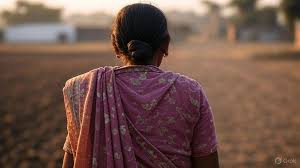
A Dalit woman from Uttar Pradesh’s Maharajganj district has accused a village head representative of assaulting her, abusing her with casteist slurs, and threatening to kill her. After allegedly receiving no help from the police, the woman approached the court, which has now ordered registration of an FIR in the case. The incident was reported from Lalkarpur village under the Bhitauli police station area. According to court documents, the complainant, Leelavati, wife of Deenanath and a resident of Lalkarpur, alleged that the incident took place on January 8, 2026, when she was travelling to her daughter’s in-laws’ house in Rajmandir. Dispute Over Money Led to Assault, Woman Claims Leelavati alleged that she met village head representative Ajay Patel, also known as Pintu, near a canal during her journey. She claimed that she had previously given ₹30,000 to the accused and had asked him to return the money. According to the woman, Patel became angry when she demanded the amount back. In her complaint, Leelavati alleged that the accused abused her using casteist remarks and verbally insulted her. “When I asked for my money, he got angry, abused me using caste-related words, and assaulted me,” the woman stated in her petition before the court. She further alleged that when she protested, the accused physically attacked her by kicking and punching her. Woman Says Accused Threatened to Kill Her The complainant said that a local woman reached the spot after hearing her cries and intervened, following which the accused allegedly fled. Before leaving, Patel allegedly threatened her with serious consequences. “The accused threatened to kill me before leaving the spot,” the woman alleged in her complaint. Police Allegedly Failed to Act Leelavati claimed that she immediately informed the local police about the incident, but no action was taken. She later sent a written complaint to the Superintendent of Police, but she alleged that authorities still failed to respond. With no police action, the woman moved the Special SC/ST Act Court seeking legal intervention. Court Orders FIR Against Accused Taking serious note of the allegations, the Special Judge under the SC/ST Act in Maharajganj directed Bhitauli police to register a case and initiate legal proceedings. Confirming the development, Bhitauli Station House Officer (SHO) Satyendra Kumar Rai said action is being taken following the court’s order. Courtesy : TOP Note: This news is originally published on https:/theobserverpost.com/bha and is used purely for non-profit/non-commercial purposes, especially human rights
SP MLA accused of occupying Dalit woman’s land: She claims he built a boundary wall and gate, threatened her when she protested; MLA calls allegations baseless
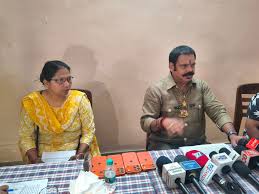
The land dispute between Rakesh Kumar Yadav, Samajwadi Party MLA from Balrampur’s Gasdi assembly constituency, and a Scheduled Caste woman has returned to the spotlight. Sanghmitra Gautam, a resident of Dhusah village in the Kotwali Dehat area, has accused the MLA and his brother, Adarsh Yadav, of illegally occupying her land. The MLA, however, has denied all allegations and called the matter an old dispute. In a petition to the administration, Sanghmitra Gautam stated that Khasra number 765, measuring 0.055 hectares (approximately 15 decimals), located on Church Road, is her ancestral land. She alleges that the MLA’s side occupied the land by dumping soil on it and constructed a boundary wall and gate. The woman claims that the land ownership and demarcation issue has been heard at various levels in the past, and objections have been dismissed. Despite this, the encroachment proceedings were allegedly carried out. Allegations of threats and indecency for protesting Sanghamitra Gautam alleges that when she protested the construction, she was insulted with casteist slurs and threatened with death. She alleges that attempts are being made to suppress the matter through influence. However, these allegations could not be independently confirmed. Claim of pending demarcation The woman stated that the land was to be re-demarcated after the dispute was pending in the revenue courts, but this process has not progressed since April 2025. During this time, a boundary wall and gate were allegedly constructed. She also alleged that despite numerous complaints, the concerned revenue officials did not take any effective action. Serious allegations also leveled against officials Sanghamitra has accused some revenue officials of trying to force a settlement through pressure. She says she was advised to vacate the land and accept compensation in exchange. The woman also claimed that she had approached the High Court in the matter, which directed the Superintendent of Police to monitor the case. She also alleged that a settlement agreement was filed in her name without her consent. MLA Says Measurement Has Been Done Multiple Times Meanwhile, Gasdi MLA Rakesh Kumar Yadav dismissed all allegations as baseless. He stated that the land in question has been measured multiple times, and records are available. The MLA stated that the woman has been filing objections for a long time. She can obtain the land where it is located. He also stated that the people from whom the land was purchased can be contacted and assured cooperation in resolving the matter. Demand for an Impartial Investigation Sanghamitra Gautam has demanded that the administration conduct an impartial demarcation of the land, remove alleged illegal encroachments, and take legal action against the culprits. Following the MLA’s statement, the truth of the entire matter will only be revealed after an administrative investigation and scrutiny of revenue records. Sujit Kumar | Balrampur Courtesy: Hindi News
No police help, Dalit woman approaches court over casteist abuse

The incident took place in Lalkarpur village under the Bhitauli police station limits on January 8. Lucknow: A Dalit woman from Uttar Pradesh’s Maharajganj approached a court alleging that a village head representative assaulted her, used casteist slurs, and threatened her life after local police reportedly failed to take action on her initial complaint. The incident took place in Lalkarpur village under the Bhitauli police station limits on January 8. The woman complainant, Leelavati, wife of Deenanath, said she met village head representative, Ajay Patel, alias Pintu, near a canal on the way to her daughter’s in-laws’ house in Rajmandir. According to the complainant, she asked Pintu to return the Rs 30,000 she had earlier lent him. Angered by the demand, the accused began hurling casteist abuses at her. Subhan Bakery “When I asked for my money, he got angry, abused me using caste-related words, and assaulted me,” the woman said in her petition. When she protested against the verbal abuses, the accused physically attacked her by punching and kicking her, she alleged. The Leelavati wrote in her petition that local women came to her rescue after hearing her cries. The accused fled when the women intervened. However, before leaving, he issued severe threats against her. “The accused threatened to kill me before leaving the spot,” the woman claimed. Police fail to take action Following the incident, she promptly informed the police, but the authorities took no action. She later even sent a written complaint to the Superintendent of Police, but the officers did not respond, the woman said. Seeing there was no serious action being taken in the case, the complainant approached the Special Scheduled Caste/Scheduled Tribes Court seeking intervention. The Court noted the allegations and the Special Judge directed Bhitauli police to swiftly register a case under the SC/ST Act and start legal proceedings against the accused. Bhitauli Station House Officer Satyendra Kumar Rai confirmed the court’s order. “An FIR has been registered against accused Ajay Patel as per the court’s direction, and legal action is underway,” the SHO told reporters. Courtesy : TSD Note: This news is originally published on https:/thesiasatdaily.com/bha and is used purely for non-profit/non-commercial purposes, especially human rights