
Viral video from Ganjam sparks outrage; Dalit youth alleges 3 days of illegal confinement and brutal assault

A disturbing video purportedly showing a youth being brutally assaulted inside a locked room has gone viral from Odisha’s Ganjam district, once again raising concerns over alleged vigilante-style violence. A disturbing video purportedly showing a youth being brutally assaulted inside a locked room has gone viral from Odisha’s Ganjam district, once again raising concerns over alleged vigilante-style violence. The incident is reported to have taken place under the jurisdiction of Berhampur Sadar Police Station. As per the allegations, the victim is a Dalit youth from the Sadar police station area. He was allegedly confined illegally in a locked room for nearly three days, during which he was physically assaulted and subjected to severe torture. The viral video allegedly shows the youth being mercilessly beaten inside the room. Four individuals can reportedly be seen in the footage, while one of them is seen assaulting the victim. The authenticity of the video, however, has not yet been independently verified. Along with the video, a written complaint naming the alleged attackers has also surfaced on social media. In the letter, the youth claimed that his life was under threat and stated that he had submitted written petitions to the President of India, the Prime Minister, the National Human Rights Commission (NHRC), the Director General of Police (DGP), and the Ganjam district administration, seeking immediate intervention. In the complaint, the youth alleged that he was pressured to participate in illegal activities. He claimed that after refusing to comply, he was beaten, unlawfully confined for nearly three days, and deprived of food and water during the period of his alleged captivity. The allegations contained in the viral complaint and video have triggered widespread concern, with many demanding a thorough investigation into the incident. As of now, there has been no official confirmation from the police regarding the authenticity of the video or the allegations made in the complaint. Further investigation in connection with the viral video and allegations is awaited. Author Vikash Sharma Courtesy : Odisha TV Note: This news is originally published on https:/odishatv.com/bha and is used purely for non-profit/non-commercial purposes, especially human rights
Moradabad: A Dalit woman was forced to convert at gunpoint; Muslim couple arrested following complaint

In Moradabad, a Dalit woman was held hostage by a Muslim couple, a cleric, and two unidentified accused and forced to convert. It is being reported that the accused husband had been harboring an evil eye on her for a long time. Police in Moradabad, Uttar Pradesh, have arrested a Muslim couple for allegedly forcibly converting a Dalit woman by holding her hostage. Acting swiftly on the victim’s complaint, the police filed a case against the main accused, a Muslim couple and a cleric, and arrested and sent them to jail. The cleric and two unidentified accused involved in the incident are being sought. The accused forced the woman to convert at gunpoint. The incident is reported to have occurred in the Majhola police station area. According to the FIR lodged, the victim, a resident of Prakash Nagar, had close and familial relations with the family of the accused, Sultan Salahuddin, and his wife, Mehnaz (Mehraj Begum), for the past three years. Both families celebrated all festivals together. The woman had no idea that Sultan Salahuddin had an evil eye on her. It is alleged that on February 6th, Mehraj Begum lured the victim to her home. As soon as she arrived, Sultan Salahuddin, his wife Mehnaz, a cleric, and two unidentified men took her hostage. The accused then held their licensed pistols to her head and, threatening to kill her, forced her to convert to Islam in front of the cleric. The victim told the police that after the conversion, she was put under intense pressure to marry. When the woman strongly protested, the cleric present at the scene declared the forced marriage illegal, calling it against Islam and Sharia. The main accused, Sultan Salahuddin, refused to budge and shouted, “I will keep her as my wife.” Police filed a case against the accused couple and the cleric under 10 sections. When she resisted, the accused used casteist slurs, abused her, and held her captive in their house for several days. The victim alleges that Sultan Salahuddin subjected her to obscene acts and molestation during her captivity. The victim, who somehow managed to escape, was threatened with death if she complained. It is reported that the accused, Sultan Salahuddin, has a criminal history and has previously been charged with attempted murder in Badaun district. Given the sensitivity and seriousness of the case, Moradabad police took immediate action. Police have filed a case against the accused couple, Sultan Salahuddin, Mehnaz, the cleric, and two unidentified individuals under 10 serious sections, including kidnapping, molestation, threats to kill, the Uttar Pradesh Prohibition of Unlawful Conversion of Religion Act (forced conversion), and the SC/ST Act. Both main accused arrested, search continues for the cleric and two other unidentified individuals. Providing information about the case, Moradabad SP City Kumar Ranvijay Singh said that yesterday (July 11), a complaint was received at Majhola police station from a woman living in Prakash Nagar. The victim alleges that an acquaintance, Sultan Salahuddin, and his wife invited her to their home, where she was abused, molested, illegally held captive, and forced to convert to Islam. Considering the seriousness of the matter, the police have immediately registered a case under relevant sections. The two main accused, Sultan Salahuddin and his wife Mehnaz, have been arrested and are being sent to jail. Teams have been formed to arrest the cleric and two other unidentified individuals involved in the incident; they will also be sent behind bars soon. Written By: Obaidur Rahman About the author Ubaidur Rahman is a senior and active TV journalist and ground reporter for ABP News. For the past 20 years, he has been covering political, criminal, wildlife, social, cultural, and investigative news in the Moradabad division of western Uttar Pradesh and Uttarakhand. Prior to ABP News, he worked at several prominent organizations. After a Bachelor of Science, he earned a Diploma in TV Journalism and Broadcasting and an Adeeb-e-Kamil from Jamia Urdu University, Aligarh. Courtesy: Hindi News
6 years later, UP man gets life term for murdering Dalit youth over love affair

MAHARAJGANJ: A court in Uttar Pradesh’s Maharajganj district has sentenced a 60-year-old man to rigorous life imprisonment for murdering a Dalit youth in 2019 over an alleged love affair, officials said on Friday. Special public prosecutor Fanindra Kumar Tripathi said Special Judge (SC/ST Prevention of Atrocities Act) Abid Shamim pronounced the verdict on Thursday, holding Ram Prasad Prajapati guilty of murder. Along with the life sentence, the court imposed a fine of Rs 40,000 on the convict. Failure to pay the amount would result in an additional six months of imprisonment, Tripathi said. According to the prosecution, Prajapati was booked under charges of murder and relevant provisions of the SC/ST (Prevention of Atrocities) Act for killing 19-year-old Achhelal. Tripathi said the accused allegedly attacked the youth with a stick and a sharp-edged weapon following a dispute linked to an alleged love affair. Police had registered a case against Prajapati after the incident, and the court has now convicted him six years later. Courtesy : TOI Note: This news is originally published on https:/timesofindia.com/bha and is used purely for non-profit/non-commercial purposes, especially human rights
Protest over Dalit student murder: NHRC seeks report from UP DGP, home secy as Meerut turns into fortress
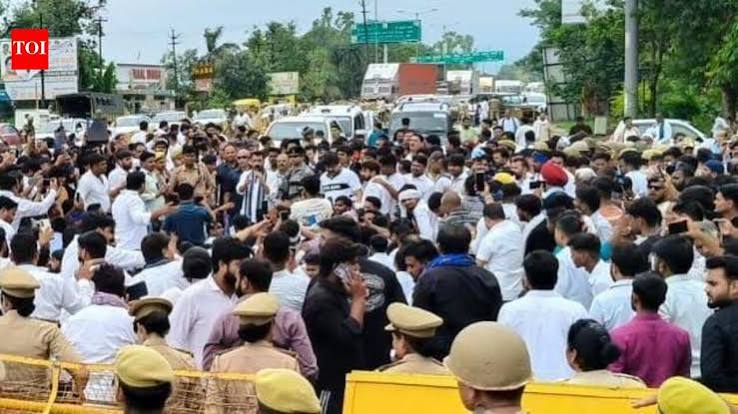
Meerut: Two days after alleged police high-handedness on protesting members of the Dalit community over a case involving the killing of a college student — Lalita Gautam, the National Human Rights Commission (NHRC) on Friday sought a detailed action-taken report from the UP DGP and the home secretary within 15 days. Police action also kicked up a political storm, evoking response from Opposition parties, prompting cops to turn Meerut into a fortress as a “precautionary step” and “sealing off” the student’s village. In the letter, accessed by TOI, NHRC bench has asked the UP top brass to furnish a report in reply to allegations by complainant Sunil Ahirwar of Jan Kalyan Samiti that, “police (Meerut) unleashed an unprovoked, brutal baton-charge inflicting severe injuries on many protesters.” The letter added that, “there is also video evidence that clearly depicts senior police officers committing custodial torture by mercilessly beating defenceless individuals while they were already in custody.” Ahirwar of Bhopal filed the complaint under section 12 of the Protection of Human Rights Act, 1993. On Thursday, police registered a case against 63 protesters under stringent BNS sections of “attempt to murder” and “assault on women with an intention to outrage modesty” for the alleged assault on female police personnel. Seven of them were later arrested. The thrashing of a Noida-based lawyer — Ravi Gautam — inside a police van on Wednesday also did not go down well within the advocate fraternity. Angry lawyers from the Meerut Bar Association submitted a memorandum at the Collectorate. Meanwhile, SSP Avinash Pandey issued a fresh statement: “Our Constitution starts with — We the People of India. It does not start with caste, creed or any community. Whatever action was taken, it was against criminals and we have justification of all the actions along with the proof.” Reacting to an alleged audio threat, SSP Pandey appealed to all his “supporters and opposers to plant trees in the forthcoming ‘Vriksharopan Mahotsav’ (plantation drive)… They must use their anger and energy on the betterment of the environment and society.” From early Friday, heavy police force was deployed at the city’s Commissionary Park, the protest venue. It was personally supervised by SSP Pandey. The district’s borders were sealed and the political leaders, including MP from Nagina Lok Sabha constituency, Chandrashekhar Azad, were stopped at the outskirts along with hundreds of his supporters. Addressing the public, Azad said, “If the Constitution has given the citizens the right to protest, then which are the sections under which the peaceful agitators were attacked, I want to know. I have come to Meerut to get the answer and also to meet the victim’s family.” Poonam Pandit, a Congress functionary, was allegedly detained at her house in Bulandshahr in the early hours of Friday. She was scheduled to meet the student’s family. She asked: “Is it a crime to meet the aggrieved family, to share their grief? The best answer to why I have been put under house arrest lies with the state govt.” Notably, people from the community, including various outfits, had joined Lalita’s parents in regular protests against the “shoddy probe” by local police after the body of the 20-year-old BA final-year student from Meerut was found in a sugarcane field. The Dalit student went missing on May 15, 2026, after leaving her home for an exam. Police arrested her alleged boyfriend, Ankush Kumar, claiming he killed her following an argument. However, her family questioned the police investigation, demanding a fair and comprehensive probe into the case. Courtesy : TOI Note: This news is originally published on https:/timesofindia.com/bha and is used purely for non-profit/non-commercial purposes, especially human rights
The word ‘Dalit’ has been banned from Rajasthan Police records. What is the reason?
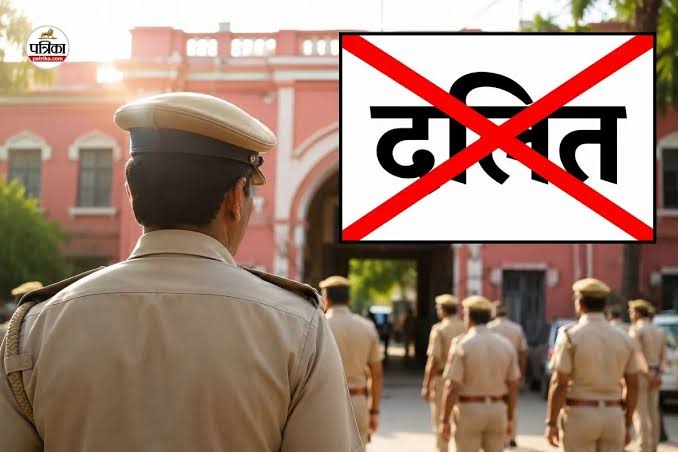
The Rajasthan Police has issued a circular stating that the word ‘Dalit’ will no longer be used in all official documents, certificates, and FIRs. The use of the word ‘Dalit’ has now been banned in Rajasthan Police records. The Rajasthan Police Headquarters has issued a circular stating that the word ‘Dalit’ will no longer be used in official documents, certificates, and FIRs. From now on, the term ‘Scheduled Caste’ will be used instead of ‘Dalit’ in all government documents. The Rajasthan Police has issued this rule in accordance with the directives of the Supreme Court and the Central Government. This change is said to have a positive impact on society. Now, the question arises: which Supreme Court directive has the Police Headquarters cited in making this change? Citing Supreme Court Directives Rajasthan Police Headquarters stated in a circular that this decision was based on the Supreme Court’s 2015 directives. On March 15, 2015, the Supreme Court directed that the use of the word “Dalit” be avoided in all official documents. Instead, the constitutional term “Scheduled Caste” be used. Rajasthan Police Headquarters clearly stated in its letter that the word “Dalit” will not be used not only in Hindi and English, but also in documents in regional languages. Strict Instructions to Police Stations and Officers This order was issued on July 2, 2026, and subsequently sent to all Superintendents of Police and Deputy Commissioners of Police in Rajasthan, ensuring that all officers enforce this rule in all police stations in their respective areas. Instructions have been given to implement this rule with immediate effect in police stations in other districts, including Jaipur. What will be the impact on the general public? This decision will bring legal sanctity and sensitivity to police operations. Furthermore, more constitutional language will be used in communications and written work conducted at police stations, thereby respecting the constitutional rights and dignity of ordinary citizens. Courtesy: Hindi News
Akhilesh Yadav met the family of Dalit student Lalita Gautam, saying, “We are with you.” Pinky Bhaiya announced a march to Meerut.
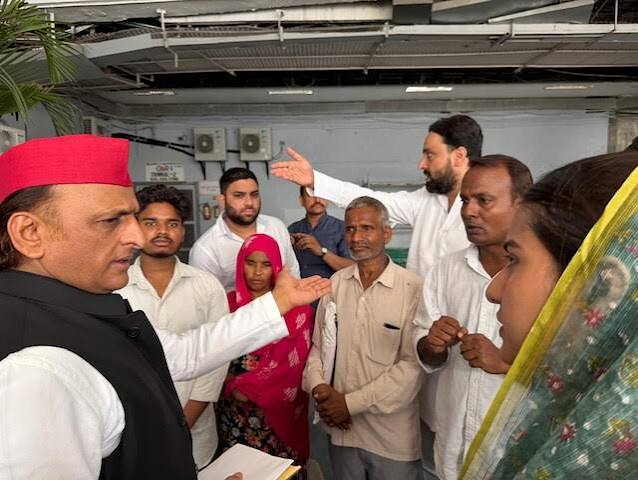
Dalit Student Murder Case: The murder of Lalita Gautam, a BA student from Meerut, has sparked an uproar across Uttar Pradesh. Following the murder of the 20-year-old Dalit student, the main accused has been arrested and sent to jail. Meanwhile, caste-based protests have intensified in connection with the case. The Samajwadi Party chief also met with the victim’s family. Meerut: The political and social atmosphere is becoming increasingly heated following the murder of Lalita Gautam, a BA student in Meerut, Uttar Pradesh. On one hand, Hindu Raksha Dal national president Pinky Bhaiya has announced a march to Meerut today. Meanwhile, Samajwadi Party president Akhilesh Yadav visited Lalita’s accusers. He pledged to stand with them in their fight for justice and appealed to the BJP government to fulfill all the family’s demands. Lalita Gautam, a 20-year-old BA student, lived with her family in Gagan Enclave, TP Nagar, Meerut. She left home on May 15th to take an exam, but when she did not return until late in the evening, her family began searching for her. However, no trace of her was found, after which the accused filed a missing person report at the TP Nagar police station. Police began an investigation and examined CCTV footage from nearby areas. CCTV footage showed Lalita with a young man named Ankush, a resident of Kalyanpur village. Following this, the police expanded the investigation and formed several teams to search for the accused. During the police investigation, the accused, Ankush, was taken into custody. During interrogation, he confessed to killing Lalita. According to the police, Ankush and Lalita were in a love relationship. They were together on the day of the incident. During this time, the accused saw some photos and chats on Lalita’s mobile phone, which led him to suspect that she was having an affair with another man. Due to this suspicion and dispute, Akhilesh murdered Lalita and dumped her body in a sugarcane field in the Upasiya forest in the Rohta police station area of Meerut. Police later recovered the body from there. The main accused in the case has been arrested and sent to jail, while investigations into other cases are ongoing. Akhilesh Yadav met with the victims and accused in the murder of Dalit student Lalita Gautam in Meerut. He pledged to stand with them in their fight for justice. He also urged the BJP government to fulfill all demands of the victim’s family and ensure justice for the deceased daughter. What did Pinky Bhaiya say? Pinky Bhaiya, National President of the Hindu Raksha Dal, has announced a march to Meerut on July 11, 2026. Speaking in support of Meerut accused Avinash Pandey, Pinky Bhaiya stated that strict action should be taken against those who used slogans like “Jai Bhim” and “Jai Mim” to divide the accused, and that Lalita Gautam’s daughters should receive justice. The government and administration at every level stand with the victim’s family and strict action should be taken against the perpetrators. Following his announcement of the march to Meerut, all eyes are focused on the events of July 11. Meanwhile, the administration has also gone into full alert mode. Meerut now scouts sports talent from schools and colleges, a united campaign Reporter: Alauddin Panwar Editor: Kavya Mishra About the Author Kavya Mishra works as a Senior Sub-Editor in the Regional Section (Uttar Pradesh, Uttarakhand, Haryana, and Himachal Pradesh) with News18 Hindi. She has been active in journalism for over 7 years. Courtesy: Hindi News
Dalit family attacked, casteist slurs used: Case filed against five named accused in Sadabad

A Dalit family in the village of Heli Bhag Midawali in the Sadabad police station area has been accused of entering their home, assaulting them, and using casteist slurs. Based on the victim’s complaint, police have registered a case against five named accused under various sections and the SC/ST Act and have begun an investigation. Sanjeev, son of Sonveer, a resident of the village of Heli Bhag Midawali, stated in his complaint to the police that he is financially weak and lives with his family in a room near a tubewell outside the village. According to Sanjeev, at around 12:30 pm on July 7, Bani Singh alias Bijendra Singh, Arvind Kumar, Rahul, Gopal, and Shubham arrived at his room with iron rods and sticks. The accused entered the house and began assaulting Sanjeev’s wife, Preeti, and children. Sanjeev alleged that when he resisted, he was also assaulted, resulting in serious head injuries. Hearing the noise, Mukesh Kumar and Brajesh Kumar, who were working in a nearby field, rushed to the scene. They attempted to intervene, but the accused assaulted them as well, resulting in injuries to their hands. The complaint also alleges that during the assault, the accused used casteist slurs and threatened to kill him. They reportedly threatened to kill Sanjeev’s entire family and demolish the room he was living in with a JCB. Sanjeev somehow escaped and reached the Sadabad police station, reporting the incident to the police. Based on the complaint, the police have registered a case against the five named accused under relevant sections and the SC/ST Act. Deputy Superintendent of Police JN Asthana stated that the matter is being investigated and further legal action will be taken based on the facts that emerge from the investigation. Kishore Kumar Varshney | Sadabad, Hathras Courtesy : Hindi News
Dr B. R. Ambedkar’s Views on the Bhakti Movement and the Upliftment of Dalits

The Bhakti Movement occupies an important place in the social and religious history of India. Emerging between the seventh and seventeenth centuries in different parts of the country, it emphasized personal devotion (bhakti) to God, rejected excessive ritualism, and sought to establish a direct relationship between the devotee and the divine. Several Bhakti saints, including Kabir, Ravidas, Chokhamela, Namdev, Tukaram and Nandanar, condemned social discrimination and proclaimed the equality of all human beings before God. Because many of these saints came from marginalized communities or openly criticized caste prejudice, the Bhakti Movement is often celebrated as a movement of social equality and Dalit emancipation. Dr. B. R. Ambedkar, however, offered a far more critical and historically grounded assessment. While acknowledging the moral courage and egalitarian spirit of several Bhakti saints, he argued that the movement failed to dismantle the caste system or bring about the social, economic and political liberation of the Dalits. In his view, the Bhakti Movement represented an ethical protest against caste discrimination but not a programme for structural social transformation. The distinction between spiritual equality and social equality lies at the heart of Ambedkar’s critique. Ambedkar’s Appreciation of the Bhakti Saints Ambedkar did not dismiss the Bhakti tradition in its entirety. He recognized that many saints challenged the religious orthodoxy of their time and gave voice to the aspirations of the oppressed. Saints such as Ravidas and Chokhamela, themselves born into communities regarded as “untouchable,” exposed the inhumanity of caste discrimination through their poetry and personal experiences. Kabir boldly attacked Brahminical ritualism as well as Islamic orthodoxy, emphasizing morality, reason and the unity of humanity over religious formalism. These saints questioned hereditary privilege, criticized priestly domination and insisted that devotion, rather than birth, was the true basis of religious worth. They affirmed the dignity of labour and rejected the idea that spiritual status depended upon caste. Their teachings inspired generations of oppressed people and enriched India’s ethical and literary traditions. Ambedkar acknowledged these contributions and regarded them as important voices of dissent within Indian society. Bhakti as a Spiritual Rather Than Social Revolution Despite recognizing these achievements, Ambedkar argued that the Bhakti Movement remained essentially a spiritual movement rather than a social revolution. Its central concern was the individual’s relationship with God rather than the reconstruction of society. While Bhakti saints preached equality before God, they rarely developed a systematic programme for abolishing caste, redistributing economic power or transforming social institutions. For Ambedkar, this constituted the fundamental limitation of the movement. A religion that teaches spiritual equality while accepting social inequality cannot produce genuine human emancipation. Equality before God has little practical significance if people continue to suffer discrimination in everyday life. A Dalit who is denied entry into a temple, prevented from drawing water from a public well, excluded from education or deprived of economic opportunities cannot be considered equal merely because religion declares all souls to be equal before God. Ambedkar therefore insisted that social equality must precede or accompany spiritual equality. Without changes in the structure of society, devotional teachings remain largely symbolic. Failure to Destroy the Caste System Ambedkar’s most significant criticism was that the Bhakti Movement failed to destroy the caste system. Although many saints condemned untouchability and emphasized human brotherhood, caste hierarchy continued to dominate Hindu society long after the movement had spread across India. He pointed to a striking contradiction in Hindu society. Upper-caste Hindus often revered saints like Ravidas and Chokhamela as holy men while simultaneously refusing to treat ordinary Dalits as equals. Temples celebrated Dalit saints, but living Dalits remained excluded from temples, schools, public wells and positions of dignity. This paradox demonstrated, according to Ambedkar, that admiration for exceptional individuals did not translate into equality for the oppressed community as a whole. The Bhakti Movement produced revered saints but failed to eliminate the social practices that degraded millions of ordinary Dalits. Consequently, caste survived largely intact despite centuries of devotional preaching. Individual Salvation Versus Collective Liberation Ambedkar also criticized the movement for emphasizing individual salvation instead of collective social struggle. Bhakti encouraged devotees to seek liberation through prayer, surrender and devotion to God. While such devotion might provide spiritual consolation, it did not equip oppressed communities with the political organization or social consciousness necessary to challenge systems of exploitation. Ambedkar believed that no oppressed community could secure justice merely through moral persuasion or religious devotion. Real emancipation required education, political representation, legal rights, economic resources and organized social movements. His famous call to “Educate, Agitate and Organize” reflected this conviction. Liberation could only be achieved through collective action and democratic struggle, not through individual acts of devotion. Bhakti and the Absence of Social Democracy For Ambedkar, democracy was not simply a political system but a way of life founded upon liberty, equality and fraternity. Although Bhakti occasionally promoted the ideal of fraternity, it failed to establish liberty and equality within the social order. Hereditary occupations remained unchanged, caste endogamy continued, Brahminical authority survived, and untouchability persisted. As a result, the movement did not create the social conditions necessary for democracy. Ambedkar argued that political democracy cannot endure where society itself remains deeply unequal. Social democracy requires equal opportunities, equal dignity and equal citizenship—objectives that devotional reform alone could not achieve. Critique of Saint Worship Ambedkar was also skeptical of the tendency to rely upon saints as agents of social transformation. He argued that history is changed not by isolated holy individuals but by organized and conscious masses. Saints may awaken moral awareness, but lasting social change depends upon institutions, laws, political movements and collective action. He believed that excessive reverence for saints often encouraged passive acceptance of injustice rather than active resistance against it. The oppressed, he argued, must become the makers of their own history instead of waiting for moral reform from privileged sections of society. Ambedkar’s Alternative Vision Unlike the Bhakti saints, Ambedkar proposed a comprehensive programme for the emancipation of Dalits. This programme included the annihilation of caste, universal education, economic justice,
Rajasthan SI Suspended After Dalit Youth Dies in Knife Attack; Family Alleges Police Ignored Prior Complaint

A police sub-inspector has been suspended in Rajasthan’s Sri Ganganagar district after a Dalit youth died following a knife attack, with the victim’s family alleging that police failed to act on an earlier complaint that could have prevented the incident. The action was taken after allegations of negligence surfaced against the officer, who had reportedly ignored a written complaint filed by the victim two days before the attack. Victim Had Filed Harassment Complaint Before Attack The incident took place on the evening of July 3 near the Shani Temple in Srikaranpur town, where two youths, Charanjit Singh and Shivraj, were allegedly attacked with knives. Charanjit, who suffered critical injuries, was shifted to a hospital in Sri Ganganagar, where he died during treatment on July 4. Shivraj is still undergoing treatment. According to the police, Charanjit had submitted a written complaint to Sub-Inspector Mala Singh two days before the attack, alleging that the accused had harassed a girl. However, no action was taken on the complaint. Police believe that after the complaint was ignored, the accused allegedly attacked Charanjit and Shivraj out of revenge. Family Alleges Police Negligence Following Charanjit’s death, his family staged a protest outside the police station on July 5, accusing the police of serious negligence. The family alleged that timely action on the earlier complaint could have prevented the attack and saved Charanjit’s life. District chief Dularam Meghwal also submitted a written complaint to the Inspector General of Police (Bikaner Range), alleging that SI Mala Singh had deliberately failed to act despite receiving the complaint. Meghwal further stated that Charanjit belonged to a Dalit family and urged strict action against those responsible. SI Suspended, Probe Underway After receiving the complaint, the Inspector General directed Sri Ganganagar Superintendent of Police Harishankar to take immediate action. The SP subsequently suspended SI Mala Singh pending an inquiry. Speaking on the matter, SP Harishankar said, “The investigation is underway. Teams have been formed to arrest the accused, and the entire incident is being thoroughly investigated.” Police said further legal action will be taken based on the findings of the investigation. Courtesy : TOP Note: This news is originally published on https:/theobserverpost.com/bha and is used purely for non-profit/non-commercial purposes, especially human rights
‘One Sewer Death Every 45 Hours’: Safai Karamchari Abhiyan Asks Prime Minister to Save Dalit Lives

After the law banning manual scavenging was passed, deaths while cleaning sewers and septic tanks rose from 39 in 2016 to 121 in 2025 and the figure is set to jump again in 2026. ‘One Sewer Death Every 45 Hours’: Safai Karamchari Abhiyan Asks Prime Minister to Save Dalit Lives A file photo from May 2019 of Delhi Univesity students and sanitation staff protesting. Credit: Riya Bhardwaj New Delhi: The Safai Karamchari Andolan (SKA) has questioned the government’s silence and delays in ending manual scavenging in India. Highlighting the death of 101 people across the country since January 2026 while engaged in manually cleaning sewers and septic tanks, SKA said that its figure – 121 deaths for the whole of 2025 – showed the situation was worsening. “Needless to say, Dalit lives don’t matter for government and they have turned into a new normal,” Bezwada Wilson, a Magsaysay Prize awardee and head of the SKA, said in a statement. The NGO’s figures show an “alarming” rise in the number of deaths in sewers and septic tanks ever since manual scavenging was banned by the Prohibition of Employment as Manual Scavengers and their Rehabilitation Act, 2013. “In 2016, only 39 deaths were reported, which jumped by 350% next year in 2017 to 137 deaths,” said the statement. It said over 1,726 deaths have been reported across the country since 2013. It said a sanitation worker’s death is being reported while cleaning sewers and septic tanks, on average, “every 45 hours”, while governments choose “shameless” silence. “We demand that our Prime Minister immediately announce a complete stop to deaths inside sewers and septic tanks,” it said. Governments in denial Wilson pointed out that the government has been denying sewer deaths though they were still taking place, more than a decade after the practice was outlawed. “No death has been reported due to manual scavenging, which is lifting of human excreta from insanitary latrines,” the government of India told parliament in 2023. “Further, no report from States/UTs has been received about the inhuman practice of manual scavenging,” Union Minister of State for Social Justice and Empowerment Ramdas Athawale said in parliament. A press release issued by the government based on this parliament (Rajya Sabha) response said in October 2023 that out of 766 districts, only 249 – fewer than 35% – had declared themselves manual scavengers-free “and uploaded the certificate on portal”. At the same time, in 2018, the Delhi government admitted that manual scavenging was ongoing in the capital, while the Superme Court asked the Union government to correctly assess the situation. The SKA statement records 12 deaths in Delhi-NCR, which are part of the “horrific” increase in cases across the country. It said 16 states had reported such deaths so far in 2026, an indication of the spread of the problem. Complete ban on dry toilets and manual cleaning Bezwada Wilson spent four decades battling the practice through SKA’s activism, a social movement and a court case (related to a 1993 law that has also proved ineffective in ending the scourge) before manual scavenging could be outlawed, without exception and across the country, by the 2013 law. Both the 1993 and 2013 laws are in place, seeking to address separate aspects of the practice: employment of people to clean sewers and septic tanks manually as well as building of dry toilets, etc., both of which perpetuate the practice. The statement also criticised state governments for not taking action to prevent manual scavenging and said it had expected better response to the law. Of the 1,726 deaths since 2013, 1,203 were just from Tamil Nadu (332), Gujarat (216), Delhi-NCR (157), Maharashtra (155), Uttar Pradesh (148), Haryana (104) and Bihar (94). “Despite such big numbers, none of these states have taken a single step to stop these deaths,” the statement said. State governments complicit The SKA statement was also critical of the government’s flagship ‘Swachh Bharat‘ scheme to build toilets across the country as well as of the scheme for mechanised cleaning of drainage systems, saying they neither mechanised the sanitation ecosystem nor completely eliminated dry toilets. Wilson said the failure of governments to elimitate the practice showed “how much they value the lives of safai karamcharis, who are still considered to be untouchable”. In 2019, the Supreme Court had come down heavily on the Union government over ambiguity in eradication of manual scavenging and passed an order banning the practice in six metropolitan cities. It had said it was “sick” of trying to get the Union and state governments to implement the 1993 law. India ranks very poorly in terms of its global sanitation status, for which are responsible lack of scientific cleaning methods and planning and caste- and gender-based inequality, as acknowledged by UNICEF, the Indian government’s partner in Swachh Bharat Abhiyan, in 2020. A survey by the Ministry of Social Justice and Empowerment revealed in 2024 that 91.9% of the 38,000 sanitation workers profiled (thus far) belonged to a Scheduled Caste, Scheduled Tribe or Other Backward Classes. Courtesy : The Wire Note: This news is originally published on https:/thewire.com/bha and is used purely for non-profit/non-commercial purposes, especially human rights