
YSRCP extends Rs 10 lakh aid to Dalit youth’s family
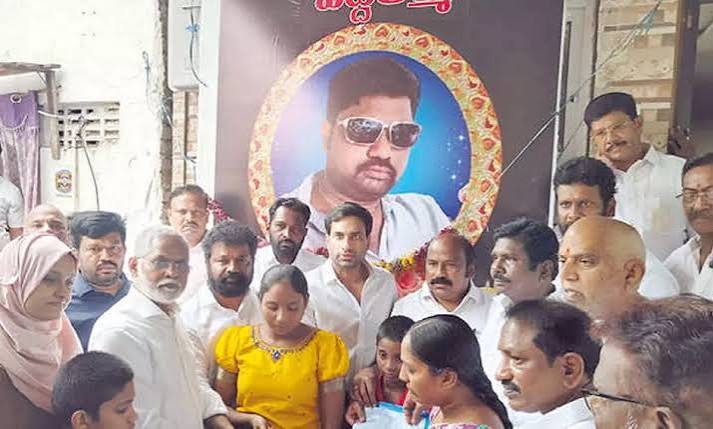
Vijayawada: The YSRCP on Sunday extended financial and humanitarian assistance to the family of Dalit youth Kranthi Kumar, who allegedly died by suicide following police harassment in Krishnalanka. Acting on the directions of YSRCP president YS Jagan Mohan Reddy, senior party leaders handed over Rs 10 lakh in financial assistance to the bereaved family. The assistance was handed over by YSRCP NTR district president Devineni Avinash, former MLAs Malladi Vishnu, Monditoka Jagan Mohana Rao and TJR Sudhakar Babu, former MP Nandigam Suresh, and SC Cell State working president Kommuri Kanaka Rao. The party also announced that it would bear the educational expenses of Kranthi Kumar’s three children. Of the total assistance, Rs 5 lakh was deposited in the name of his daughter, while Rs 2.5 lakh each was deposited in the names of his two sons. YSRCP further assured free medical treatment for Kranti Kumar’s son, who is reportedly suffering from a spinal tumour and has been shifted to a hospital in Hyderabad. Addressing the media, YSRCP leaders alleged that the coalition government had failed to ensure justice for the victim’s family and attempted to suppress the case initially. They claimed that the case was booked under the SC/ST (Prevention of Atrocities) Act only after the intervention of YS Jagan Mohan Reddy. The leaders further alleged that the government had failed to provide statutory benefits, including compensation, employment to the victim’s wife and other welfare assistance. They demanded the immediate arrest of Circle Inspector Nagaraju, who has been named in the case, and asserted that the party would continue to support the family and pursue justice until those responsible are brought to book. Courtesy : THI Note: This news is originally published on https:/thehansindia.com/bha and is used purely for non-profit/non-commercial purposes, especially human rights
Tamil Nadu prepares to establish a separate police station for SC/ST cases, identifying areas affected by untouchability | TM Special

On the instructions of the National Commission for Scheduled Castes, the state government has sought a report from the DGP. Chennai – The Tamil Nadu government has taken a significant administrative step in matters related to the Scheduled Castes and Scheduled Tribes (Prevention of Atrocities) Act and has initiated the process of identifying and establishing special SC/ST police stations in areas where incidents of untouchability-related atrocities are high. This action was initiated following a directive from the National Commission for Scheduled Castes. Currently, five states in the country have a total of 145 special police stations for the speedy and effective investigation of cases under the Scheduled Castes and Scheduled Tribes (Prevention of Atrocities) Act. Madhya Pradesh leads with 51 special police stations. The case relates to a petition filed by S. Venkatesan, a resident of Sunnambedu in Chengalpattu district and associated with the Neelam Cultural Centre. In his complaint to the National Commission for Scheduled Castes on June 13, 2025, Venkatesan demanded that the state government officially designate areas where such incidents are most frequent as “Areas Prone to Untouchability Atrocities.” He also demanded the immediate establishment of dedicated SC/ST police stations in these areas. Speaking to The Mooknayak, Venkatesan stated that the situation of caste-based atrocities in Tamil Nadu is complex and concerning at all three levels: social, legal, and political. Although the state is known for its progressive politics and Dravidian movements, caste discrimination and violence remain a serious challenge at the grassroots level. Taking cognizance of this complaint, the National Commission for Scheduled Castes issued a letter dated June 23, numbered APCR/OL/TN/2025/304819, directing the Tamil Nadu government to take necessary action. Following this, the Tamil Nadu Home Department issued letter number 12738/Police.15/2026-1 on July 7, 2026. This letter was issued by Deputy Secretary (Home Department), M. Srinan, and addressed to the Director General of Police, Chennai, and the Inspector General of Police, Social Justice and Human Rights Wing. The letter attached a copy of the complaint received from the National Commission for Scheduled Castes, urging the concerned officials to take necessary action in the matter. The Home Department directed that a detailed report of the action taken on the complaint be sent directly to the National Commission for Scheduled Castes, Chennai, and a copy be provided to the complainant, S. Venkatesan, and the state government. The letter also categorized the matter as “urgent,” directing that action be taken with special priority and that the Commission be promptly provided with an appropriate response. It is noteworthy that the main request of Venkatesan’s petition was that areas where incidents of untouchability and caste-based atrocities are frequently reported should be designated as a separate category and that special SC/ST police stations should be established there to ensure effective investigation and prompt action in cases related to the Scheduled Castes and Scheduled Tribes (Prevention of Atrocities) Act. What do NCRB data say? According to data presented in Parliament by the Ministry of Home Affairs and NCRB, Tamil Nadu has seen a steady increase in cases registered under the SC/ST (Prevention of Atrocities) Act. From approximately 1,274 cases registered in 2020, this number increased to over 1,700 to 1,800 by 2022-2023. Compared to the national level, the conviction rate for caste-based crimes in Tamil Nadu has been quite low (approximately 8% to 13%), while the pendency of cases remains over 80%. Major Forms of Caste Crimes Honor Killings: Violence against inter-caste marriages or love relationships (especially between non-Dalit women and Dalit men) is a major issue in Tamil Nadu. Such incidents are frequently reported in districts such as Tirunelveli, Madurai, Thanjavur, and Krishnagiri. Social Exclusion and Untouchability: Social barriers such as the “two-cup system” (separate cups for Dalits and non-Dalits at tea shops), restrictions on access to cremation grounds, temple entry bans, and the prohibition of Dalit sarpanches from performing administrative functions still persist in many rural areas of the state. Inhumane Harassment: Polluting water tanks (such as the Vengaivayal case), contaminating public drinking water sources, and social boycott of settlements have emerged as inhumane methods of demonstrating caste dominance. Caste Tension at the School/Educational Level: Reports of students wearing different-colored caste bands and violent clashes within schools in the southern districts of the state (such as Tirunelveli and Thoothukudi) have also become a matter of concern. The Social Justice and Human Rights (SJ&HR) wing under the Tamil Nadu Police Department is active, identifying and monitoring vulnerable areas prone to caste tensions. Highlighted Caste Crime Cases in Recent Years Prominent cases of atrocities and honor killings against the Scheduled Caste (SC/ST) community in Tamil Nadu in recent years include the Kavin Selvaganesh case in Tirunelveli (July 2025), where a 27-year-old Dalit software engineer was murdered in broad daylight for his love affair with an upper-caste woman. The Praveen murder case in Pallikaranai, Chennai (February 2024), in which a 26-year-old Dalit man was murdered by his inter-caste wife’s brother and associates. The Aishwarya murder case in Thanjavur (January 2024), where a 19-year-old woman was honor-killed by her own family for marrying a Dalit man, Naveen. The Uthangarai case in Krishnagiri (2023), in which a father (Dandapani) brutally murdered his own son, Sabash, for marrying an inter-caste Dalit woman, Anusuya. The Vengaivayal case (2023) in Pudukkottai, where the inhumane and serious caste crime of harassing an entire community by mixing human excreta into a water tank that supplied drinking water to a Dalit settlement, was exposed. Special Police Stations Exist Only in These States According to the latest data from the Union Ministry of Home Affairs and the Ministry of Social Justice and Empowerment, a total of 145 Special Police Stations have been established in five states across the country for the speedy and effective investigation of cases under the Scheduled Castes and Scheduled Tribes (Prevention of Atrocities) Act. Madhya Pradesh leads the network of these special police stations with 51, followed by Bihar with 40, Chhattisgarh with 27, Jharkhand with 24, and Kerala with three. Geetha Sunil Pillai Courtesy: Hindi News
Chirag Paswan’s LJP(R) To Contest Punjab Assembly Elections In 2027; Eyes Dalit Votes

Patna: Union Minister of Food Processing Industries and Lok Janshakti Party (Ram Vilas) president Chirag Paswan has announced that his party will contest the Punjab Assembly elections expected to be held early next year. Wearing a kesariya (saffron) colour Sikh turban, the Union Minister made this announcement on Sunday evening after paying obeisance at the Golden Temple in Amritsar. “Our party will enter the Punjab Assembly polls with full preparations to register its strong presence. We have launched the election preparation at the pious land of Punjab after taking blessings at the Golden Temple. We have taken a vow to serve the people of the state and strengthen our organisation,” Chirag, accompanied by his mother Reena Paswan, said. The Union Minister asserted that the LJP(R) would expedite the expansion of its network across the northern state, increase the activity of its workers and intensify its mass public contact programme. He added that all preparations for the polls would be completed at a swift pace. “We will go to the people with the issues of public service, development, and social justice. The LJP(R) will carve out a strong identity with the help of the people of Punjab and the hardwork of the party workers,” he added. The LJP(R) is a part of the National Democratic Alliance (NDA) governments at the Centre and in Bihar. It has a strong support base among the Scheduled Castes (SC) in the eastern state. Its founder, former Union minister Ram Vilas Paswan, was an eminent Dalit leader and the party has excelled as a progressive organisation under the leadership of his son Chirag Paswan. Chirag also visited the Jallianwala Bagh to pay floral tributes to the martyrs’ memorial there, Dera Sachkhand Ballan, which is a Ravidasia or Ramdasia Dera, Bhagwan Valmiki memorial and Babasaheb Bhimrao Ambedkar at Jalandhar. While travelling from Amritsar to Jalandhar, the LJP(R) chief stopped his convoy after noticing an injured young woman lying on the roadside near Dera Sachkhand Ballan. He immediately instructed his team to shift the injured woman to a hospital in his vehicle and ensured that she received prompt medical attention. The LJP(R) president’s visits indicate that he is seeking to woo the SC voters in Punjab. The state has around 32 percent Dalit population, the highest proportion among all the states in the country. Punjab has 39 Dalit castes, among which the Mazhabi Sikhs, Ravidasias or Ramdasias, Ad-Dharmis, and Valmikis account for about 84 percent. A majority of the SC population in the state is predominantly rural. Its highest concentration is in the Doaba region – the land between the Beas and Sutlej rivers. Incidentally, Chirag has strong personal links also with Punjab. His mother Reena (maiden name Reena Sharma) hails from Amritsar. Then an airhostess, Reena married Ram Vilas in 1982 as his second wife. Chirag Paswan is also known to have several relatives and friends in Punjab. His personal security detail includes several bodyguards from there. By Dev Raj Courtesy : ETV Bharat Note: This news is originally published on https:/etvbharat.com/bha and is used purely for non-profit/non-commercial purposes, especially human rights
A Dalit man died after being beaten by goons at a cowshed in Amethi. A case has been filed based on a family complaint.
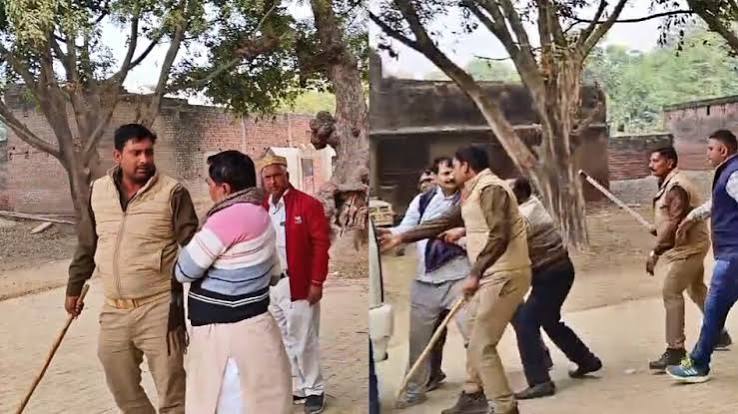
The family alleges the death was due to injuries sustained during the assault; police are investigating. Amethi: A Dalit man was found injured in a cowshed in the Dandupur village council on Sunday. Villagers rushed him unconscious to the local CHC, where doctors declared him dead. The family alleges the death was due to injuries sustained during the assault. Police have filed a case and begun an investigation based on the family’s complaint. Sahab told police that his father, Ram Dulare (a resident of Barnapur, Inhauna), a leather contractor, left home for the area at 6 a.m. on Sunday. He went to the cowshed in the Dandupur village council at 4 p.m. for some work. He then got into an argument with Rajesh, a worker at the cowshed. Dalit dies after being beaten by goons! In the ensuing altercation, Rajesh and his associates attacked him with sticks, causing serious injuries. Nearby residents took him to Singhpur CHC, where doctors declared him dead upon initial examination. The hospital informed the police about the incident. Upon receiving the information, the police arrived at the scene. They informed the family, prepared an inquest report of the body, and began further investigation. The police’s preliminary investigation revealed no significant injury marks on the deceased. Tiloi Circle Officer Dinesh Mishra stated that the inquest report has been prepared and the body has been sent for postmortem examination. No injury marks were found on the body. Based on the complaint filed by the victim’s family, a case has been registered and an investigation has begun. Courtesy: Hindi News
Attempted rape case in Barhalganj: On the orders of the SSP, a case has been registered against two named individuals based on the complaint of a Dalit woman.

Barhalganj. On the instructions of Senior Superintendent of Police Dr. Kaustubh, a case has been registered against two individuals late Saturday evening based on the complaint of a Dalit woman in Madaria village, under the Barhalganj police station area. They have been charged with attempted rape, assault, intimidation, and various sections of the Scheduled Castes and Scheduled Tribes (Prevention of Atrocities) Act. The victim stated in her complaint that on July 5, 2026, at around 8 p.m., she had gone to the toilet behind her house when two young men from the same village arrived. The woman alleges that the two men, using casteist slurs, grabbed her, tore her clothes, and attempted to outrage her modesty. When the woman raised an alarm, her family members arrived at the scene, after which the two accused fled, threatening to kill her. The victim stated that the incident was immediately reported to the local police station, but no action was taken. She subsequently complained to the Senior Superintendent of Police. On the instructions of the SSP, the Barhalganj police have registered a case against the accused under sections 75, 76, 352, and 351(3) of the Indian Penal Code and sections 3(1)(d), 3(1)(g) and 3(2)(va) of the Scheduled Castes and Scheduled Tribes (Prevention of Atrocities) Act and have begun an investigation. Station House Officer Atul Kumar Srivastava stated that further legal action will be taken based on the investigation. Attempts were made to contact the accused, but their version could not be obtained. Once their version is obtained, it will be published prominently. Rajiv Jaiswal | Barhalganj, Gorakhpur Courtesy: Hindi News
Minorities, Dalits and deprived sections must unite to fight for their constitutional rights, say intellectuals

Meeting presided over by Justice Ranjit Singh (Retd.), former Judge of the Punjab and Haryana High Court The representatives of the Sikh, Muslim and Dalit communities, along with intellectuals and social activists, on Saturday resolved to establish a common front to raise concerns over the constitutional rights and equal opportunities of deprived minorities and marginalised sections. The resolution was adopted at a joint meeting of Sikh, Muslim and Dalit thinkers held at Kendri Sri Guru Singh Sabha, here, to mark the 350th martyrdom anniversary of Sri Guru Tegh Bahadur. The meeting was presided over by Justice Ranjit Singh (Retd.), former Judge of the Punjab and Haryana High Court. GeographicReference Former Rajya Sabha MP Mohammad Adeeb said that the Muslims who remained in India after Partition and Sikhs who supported the Indian Union on the assurances of Jawaharlal Nehru and Sardar Vallabhbhai Patel now feel those promises have not been fulfilled. He said that if the BJP seeks to establish a ‘Hindu Rashtra’, it should obtain the people’s mandate through a national referendum. The gathering observed that although India adopted democracy, secularism and constitutional governance after Independence, the successive governments have increasingly pursued policies favouring the majority community and upper-caste interests. Former Chief Justice Iqbal Ansari alleged that the ruling establishment promotes religious polarisation by setting one community against another for electoral gains. Noted Sikh scholar Gurtej Singh, IAS (Retd.), endorsed the proposal for a united platform of minorities and deprived communities and recalled that Sant Harchand Singh Longowal had entrusted him with initiating dialogue with Muslim leaders as early as 1983. The participants further stated that many minorities and deprived communities have been reduced to second-class citizens and are being used as scapegoats for advancing Hindutva politics. They stressed the need for minorities, Dalits and other marginalised sections to unite on a common platform to safeguard their rights and dignity. Among those who addressed the gathering included Prof Sham Singh (President), Dr Pyara Lal Garg, Gurpreet Singh (Global Sikh Council), Daya Singh Delhi, Anzarul Bari, Rajwinder Singh Rahi, Senior Journalist Jaspal Singh Sidhu, Surinder Singh Kishanpura and several other distinguished speakers. Courtesy : The Tribune Note: This news is originally published on https:/thetribune.com/bha and is used purely for non-profit/non-commercial purposes, especially human rights
Dalit rights forum announces protest over ‘rise’ in atrocities across Haryana

The Dalit Adhikar Manch has announced a statewide protest in Haryana against the alleged rise in crimes against Dalits, social discrimination and what it termed government neglect. At a state-level meeting, the organisation decided to hold protests in all districts between July 20 and July 30. During the agitation, memorandums addressed to the CM will be submitted through the respective Deputy Commissioners. Dalit Adhikar Manch convener Ramkumar Bahbalpuria on Saturday alleged that the Dalits were facing increasing social, economic, political and caste-based discrimination under the present government. He claimed that several incidents of atrocities against the Dalits had been reported across the state over the past three months. Bahbalpuria also alleged an increase in cases of harassment and gang rape involving Dalit women and minor girls, claiming that victims were not receiving justice. He further alleged that attempts were being made in some areas to evict Dalit settlements to benefit land mafias. The body also expressed concern over the alleged reduction in and irregularities in scholarships for the Dalit students. It criticised the reported reduction in ration for pink ration card holders following changes to the Food Security Act and the discontinuation of mustard oil supply. Bahbalpuria said after the July protests, the organisation would launch a signature campaign in the Dalit colonies across the state in September and October. A detailed memorandum highlighting its demands will then be sent to the President during the Winter Session of Parliament. Anil Kakkar Courtesy : The Tribune Note: This news is originally published on https:/thetribune.com/bha and is used purely for non-profit/non-commercial purposes, especially human rights
Chandru panel’s reforms to curb casteism in TN schools yet to be fully implemented

The latest incident of assault on a differently-abled Dalit student has led to renewed calls for the comprehensive implementation of the Justice Chandru panel’s recommendations More than two years after retired Madras High Court judge Justice K Chandru submitted a comprehensive roadmap to address caste discrimination in schools, Tamil Nadu has implemented only a part of the recommendations. While the state government cites progress, Justice Chandru says many of the report’s most significant reforms remain unfulfilled, leaving schools vulnerable to recurring tensions. The latest incident of assault on a differently-abled Dalit student by his schoolmates inside a government higher secondary school at Mallal in Sivaganga district on June 14, once again brought the issue into sharp focus. Although the caste angle behind the attack is yet to be established, the fracas renewed calls for the comprehensive implementation of the Justice Chandru panel’s recommendations. Why was the panel constituted? The Chandru committee’s recommendations extend well beyond preventing caste-based clashes on school campuses. They outline a comprehensive framework to foster equality, social justice and a more harmonious atmosphere in educational institutions by addressing the structural and social factors that contribute to discrimination. Constituted in August 2023 after two Dalit siblings were brutally assaulted by their relatively upper-caste classmates in Tirunelveli, the Chandru committee submitted a comprehensive 680-page report. Justice Chandru visited several districts, meeting teachers, educationists and students, including those who were attacked, before finalising his recommendations. The report proposed a multifaceted approach to address the deep-rooted problem. What are the hits and misses? Though the DMK government never announced which of Justice K Chandru’s recommendations had been accepted or rejected, it implemented some of the suggestions. For example, on June 25, 2024, a Government Order was issued directing the removal of caste prefixes and suffixes from school names, one of the suggestions of the panel. The move was subsequently reinforced by the Madras High Court, which directed that no school or college in Tamil Nadu should carry a caste appellation from the 2025-26 academic year. The court specifically ordered the renaming of government-run Kallar Reclamation Schools and Adi Dravidar Welfare Schools. In a subsequent order, it fixed the 2026-27 academic year as the deadline for removing caste names from all educational institutions. However, the recommendation to bring all government schools under the umbrella of the School Education Department, though announced as a policy decision in the assembly, has not been implemented. What are the steps taken by the School Education Department? The School Education Department also issued detailed guidelines to curb recurring incidents of caste-based violence in schools. These included constituting district-level monitoring committees comprising the Chief Educational Officer (CEO), District Child Protection Officer (DCPO) and Superintendent of Police (SP). However, in many districts, these committees have remained largely inactive. The department also advised schools to prohibit students from wearing coloured wristbands or using bicycles with colours that may signify caste identity. Students displaying caste pride are to be counselled sensitively, while the use of mobile phones by students on school campuses has been ordered to be strictly prohibited. Orders have also been issued to transfer teachers found promoting caste or communal sentiments, install grievance boxes in schools, and conduct value education classes, all of which were recommended by the panel. In another reform, all 2,739 government hostels run by the Adi Dravidar and Tribal Welfare Department and the Backward Classes Welfare Department have been renamed Social Justice Hostels. What was the political reaction? However, the state BJP opposed the recommendations of the Chandru committee. The then state president of the BJP, K Annamalai, had argued that it would be counterproductive, adding the dominance of caste differences in schools would increase over the next five years. He suggested that the government factor in the views of all sections, and form a task force to implement the recommendations. On the contrary, the Dravidar Kazhagam, CPI, CPM, VCK, MDMK, and activists for human rights and anti-caste campaigners, welcomed the recommendations on the removal of caste names from schools, banning caste-identifying wristbands and symbols, periodic transfer of teachers, adopting a code of conduct for teachers, and creating institutional mechanisms to monitor caste discrimination. Why did the DMK government not implement it? Asked which of his recommendations needs to be implemented immediately, Justice Chandru said, “Implementation of my recommendations earlier was cosmetic, not substantive. After the submission of my report, the DMK government was in power for two years. Yet, they did not spell out their stand. They did not explain whether they would implement the report in full or issue an order stating which of the suggestions were acceptable. Except for a few like the removal of caste names from the schools, most of my recommendations remain pending.” Justice Chandru said recommendations like orientation programmes for teachers, revising the syllabus for teacher training, and recruiting teachers, should be implemented at the district level and not at the state level. The recommendation on non-posting of headmasters, CEOs, DEOs, and BEOs belonging to the dominant caste of that area in high schools and higher secondary schools is still awaiting implementation. Since his report was recommendatory, it was not placed before the assembly. As a result, the previous regime chose not to take a position on it, he said. What is the TVK’s take on it? As for the ruling Tamilaga Vettri Kazhagam (TVK) in the state, even before coming to power, its functionaries had questioned as to why the DMK government hadn’t implemented the report in full. After wresting power, School Education Minister A Rajmohan went on record saying his government will implement the panel’s report. “So, the present government should take steps to implement both short-term and long-term recommendations. The state government can make a strong statement on implementing them in stages and start discussions with the stakeholders, which can be a good starting point,” Justice Chandru suggested.The report had also recommended holding students’ union election, conducting orientation programmes for the students at the beginning of their academic year, conducting ethics classes, teaching social
CM Yogi sends min to defuse outrage over Dalit student murder in Meerut, orders wider probe into police role

Meerut: Days after the alleged police crackdown on Dalit protesters in Meerut snowballed into a major political flashpoint, the Yogi Adityanath govt has moved to contain the fallout by deputing Asim Arun, minister in charge of Meerut, former IPS officer and a prominent Dalit face in the BJP, “to personally intervene“ in the case. The controversy erupted after videos surfaced showing Meerut SSP Avinash Pandey allegedly assaulting Dalit protesters and a lawyer inside a police vehicle during demonstrations over the murder of a 20-year-old Dalit college student. The visuals triggered sharp opposition criticism, with rival parties accusing the govt of suppressing protests over the killing. After meeting the victim’s family, Arun sought to reassure them of a fair investigation. “I discussed their demands in detail. I am confident the probe will be impartial and the family will be satisfied with the outcome,” he said on Friday. Arun said CM Yogi had “personally“ directed him to visit Meerut and expedite action. “The CM has taken the matter very seriously and asked me to come to Meerut immediately. I met the family and officials concerned. I am confident the investigation will deliver the outcome the aggrieved family expects,” he said. He added that the inquiry would not be confined to the murder accused but would also scrutinise conduct of police. “If negligence or accountability is established at any level during the investigation, action will be taken against those responsible in accordance with the law,” he said. Arun confirmed that Brahmpuri circle officer Saumya Asthana had been transferred after the family expressed a lack of confidence in the investigation. He said DIG, Meerut rRange, had also ordered a departmental inquiry to examine why no effective action was taken during the 50 days between the student’s disappearance and the July 8 protests. “Appropriate action will follow based on the findings,” he said. The minister confirmed that a PAC constable, who is related to the main accused, has been suspended, arrested and sent to jail for his alleged involvement in the case. The main accused Ankush Kumar was already arrested and another accused Ankit is also behind bars. Responding to questions about the police’s use of force against protesters, Arun said, “Everything is under scrutiny. The police must also act with sensitivity so that situations do not escalate to a flashpoint.” The minister further announced an inquiry into circumstances under which an FIR was registered against Dalit protesters after police dispersed the July 8 demonstration by force and arrested eight protesters, who were later sent to jail. The victim, a 20-year-old BA final-year student, had gone missing on May 15 after leaving home to appear for an examination. Her body was later recovered from a sugarcane field. Police arrested her alleged boyfriend, Ankush Kumar, claiming he killed her following an argument. However, the family has consistently questioned the local police investigation, alleging serious lapses and demanding a comprehensive, impartial probe. Courtesy : TOI Note: This news is originally published on https:/timesofindia.com/bha and is used purely for non-profit/non-commercial purposes, especially human rights
No role in IPS postings, dalit representation in cabinet: Thiruma

Madurai: A false narrative was being built that VCK influenced IPS postings and dalit representations in cabinet, with the aim of portraying the govt as acting at his behest, VCK chief Thol Thirumavalavan said at a news meet in Madurai on Friday. Terming it “100% false,” he said TVK appointed only six scheduled caste ministers, while two others were selected separately by the Congress and VCK as coalition partners. Thirumavalavan said even these appointments were being used to ask whether TVK was “a party serving a particular caste” or giving importance to one community. He denied having any role in appointments, including that of a police officer, and asked why the officer was later removed if the claim was true. He said an OBC-versus-dalit narrative was being circulated to turn other communities against the govt. He asked why DMK and AIADMK had not been questioned for failing to provide scheduled caste communities cabinet representation based on their population, while traditionally limiting posts to representatives from three communities. Thirumavalavan said VCK had sustained itself in electoral politics for 25 years while several movements that began during the same period had lost momentum. He said the Aug 17 Tamil National Awakening Conference would focus on state autonomy and abolition of caste. Asked by reporters about TVK being cordial with PMK, Thirumavalavan said there was nothing wrong with maintaining cordial personal relations. “There is a good understanding between TVK and VCK. There is no gap between us,” he said. On an Ambedkar statue kept unopened for years at Pudaiyur near Gangavalli in Salem district, he asked the govt to simplify permission procedures, empower collectors to grant approvals, remove iron cages around Ambedkar statues and quash cases filed against those who protested demanding the statue. He also condemned the late-night questioning of journalist Vijayan, saying authorities must not intimidate journalists, and urged the chief minister to consider a CBI investigation sought by the family in the Sabari custodial death case in Kanyakumari. Courtesy : TOI Note: This news is originally published on https:/timesofindia.com/bha and is used purely for non-profit/non-commercial purposes, especially human rights