
Freedom fighter who opened Rajasthan’s first Dalit school:Rampratap Sharma quit police job after hearing Netaji’s speech, fought two battles in Pali
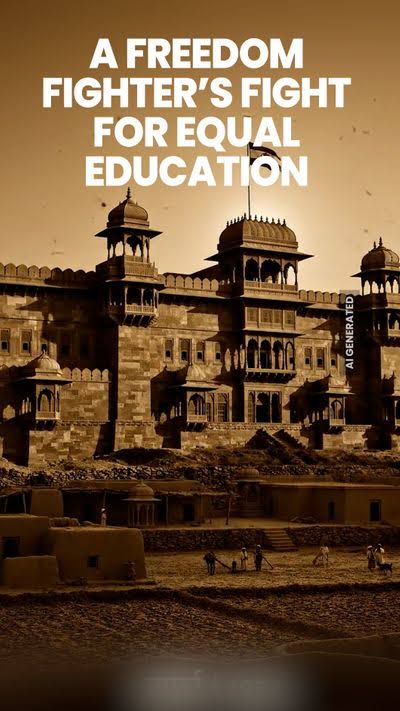
At an age when most children are busy playing, 12-year-old Rampratap Sharma lost both his parents. Jagirdars (landlords) seized his ancestral land, while incidents of oppression against weaker sections deeply disturbed him. After listening to Netaji Subhas Chandra Bose’s speech in Jodhpur, he resigned from his police job and joined the freedom struggle. He faced lathi charges during various movements and was also jailed. At a time when untouchability was widespread and schools refused admission to Dalit children, he opened Rajasthan’s first Dalit school in a rented house. He persuaded his younger brother to leave his job and take responsibility for teaching at the school. It later developed into a full-fledged school. Today, a Government Senior Secondary School operates in the same bungalow that once housed British officers. The Bhaskar team visited his village to trace the story of freedom fighter Rampratap Sharma, who fought not only against British rule but also campaigned against untouchability. Read this special report. Lost his parents at the age of 12 Gundoj village is around 20 kilometres from Pali. In the Brahmpuri area of the village stand the ancestral homes of freedom fighter Rampratap Sharma and his younger brother, Magraj. When we visited the house, his grandson and Magraj’s son recounted stories from that era. Grandson Mahesh Joshi recalls that Rampratap Sharma was 12 when he lost his parents. Under the feudal system, jagirdars had seized the family’s ancestral land. In these circumstances, he had to take refuge in his maternal grandparents’ village, Bagri. The land belonging to his maternal grandparents was also under the control of feudal lords. Assault on weaker sections deeply disturbed him In 1934, an open court was held in Bagri, his maternal grandparents’ village. There, prominent moneylenders and traders, along with people from weaker sections of society, were openly and brutally beaten. The incident deeply shook Rampratap. It was then that he decided to free both his family’s land and his maternal grandfather’s land from the control of the feudal lords. Sharma wanted to join the Indian Army and rise to a position of authority. However, according to the book Vande Mataram, Brahmins were not recruited into the British-Indian Army at the time. As a result, Rampratap Sharma joined the police and was appointed as a head constable. Quit police job after hearing Netaji’s speech in Jodhpur In 1938, Netaji Subhas Chandra Bose, who had returned from abroad, addressed a public meeting in Jodhpur. Head Constable Rampratap Sharma was responsible for maintaining law and order at the gathering. After hearing Bose’s speech, Sharma was deeply inspired by his nationalist spirit. The following year, in 1939, Rampratap Sharma resigned from the police service. He returned to his ancestral village, Gundoj, and began raising his voice against the jagirdari and feudal systems. That same year, he became a member of the Marwar Lok Parishad. Jailed during the Satyagraha movement Under the guidance of Jamnalal Bajaj and Hiralal Shastri, the Satyagraha movement was in full swing. For actively participating in the movement, the British government arrested Rampratap Sharma in 1943 and sent him to jail. Cases were registered against him under several sections, including robbery. After spending two years in jail, Sharma was acquitted in 1945 by Hakim Roopsingh Rathore and Gordhan Singh Bhandari. After being released from Jodhpur jail, he returned to his village and once again joined the farmers’ movement. He was also assaulted several times for opposing British rule and the feudal system. Opened Rajasthan’s first Dalit school in a rented house According to his biography published in Vande Mataram, Rampratap Sharma was a strong supporter of Vinoba Bhave’s movement against untouchability. He was therefore firmly opposed to the practice. At the time, Dalit or Scheduled Caste children were not admitted to Gundoj’s school. To educate these children, Sharma rented the house of Seth Pukhraj Jain, who had supported him during the Satyagraha movement. In 1945, an education committee was formed and the state’s first Dalit school was established. The responsibility for teaching was given to his younger brother, Magraj. He brought to the school children for whom getting an education had been little more than a dream. At the time, small bungalows for British officers stood near the village bus stand. After India gained independence, Sharma shifted the school to these bungalows in 1955. Today, the same school is known as Government Senior Secondary School, Gundoj. Adopted a Dalit girl as his daughter and arranged her marriage Badri Lal Joshi, 73, nephew of freedom fighter Rampratap Sharma, says Jaianarayan Vyas, under the guidance of Mathuradas Mathur, led a campaign against untouchability. He travelled on foot to several villages in Pali district to spread awareness. Badri Lal Joshi says, “Before independence, the first Dalit school in the state was opened by my uncle Rampratap Sharma. My father was a government teacher at the time. He left his job and taught at that school.” Became the village’s first sarpanch Freedom fighter Rampratap Sharma’s grandson, Mahesh Joshi, says his grandfather was the voice of the poor and deprived. After India gained independence, Sharma hoisted the Tricolour at the Dalit school and later became the village’s first sarpanch. Mahesh Joshi says his grandfather, Rampratap Sharma, became the first District Congress President in 1954. He also took a Dalit girl from the village into his family and raised her as his own daughter. He educated her and arranged her marriage. Even today, the family maintains regular contact with her family and continues to share a relationship based on mutual respect. Virendra Udesh/ Gundoj, Courtesy : Bhaskar English Note: This news is originally published on https:/bhaskarenglish.com/bha and is used purely for non-profit/non-commercial purposes, especially human rights
Mayawati expressed concern for Dalits and the most backward classes while extending greetings on August 15th, saying, “Higher institutions should be vigilant.”
Mayawati: BSP chief Mayawati extended Independence Day greetings to the nation. She urged those holding high constitutional and legal positions to be mindful of their responsibilities. Lucknow: The nation is celebrating its 80th Independence Day on Saturday. Bahujan Samaj Party National President Mayawati extended her best wishes to everyone on this occasion. She also raised the issue of the welfare of millions of Dalits, tribals, the most backward classes, and other religious minorities. On her X handle, Mayawati wrote, “Heartiest congratulations and best wishes to all Indian citizens and their families living across the country and the world on the 80th Independence Day today.” No matter how much joy and enthusiasm everyone celebrates Independence Day with, in harmony and brotherhood, it will be insufficient. It would be better if those in high constitutional and legal positions are more mindful of their responsibilities, as the public has come to expect more from them about their true and genuine responsibility towards the nation and public interest. “Higher Institutions Will Fulfill Their Responsibility Honestly” The BSP supremo further wrote, “On special occasions like Independence Day, people expect that the higher institutions here will fulfill the purpose and responsibility of the checks and balances of the Indian Constitution with complete honesty and integrity. Only then will the true benefits of India’s republic, especially the millions of Dalits, Adivasis, the most backward classes, Muslims and other religious minorities, as well as the poor, laborers, farmers, youth, women, and other working people, accrue in the form of a life free from unemployment and corruption, a life of happiness and prosperity, and that India’s democracy and sacred Constitution will prove meaningful as per everyone’s expectations. This is the message of today.” Vaibhav Pandey About the Author Vaibhav Pandey is a Senior Journalist/Assistant News Editor at Navbharat Times Online. He has 18 years of experience in the media industry. Vaibhav Pandey joined Navbharat Times Online in 2018. He currently covers news in Uttar Pradesh and Uttarakhand. Courtesy: Hindi News
DSS condemns ‘purification’ ceremony at Haldwani Ramlila ground after Kharge’s rally
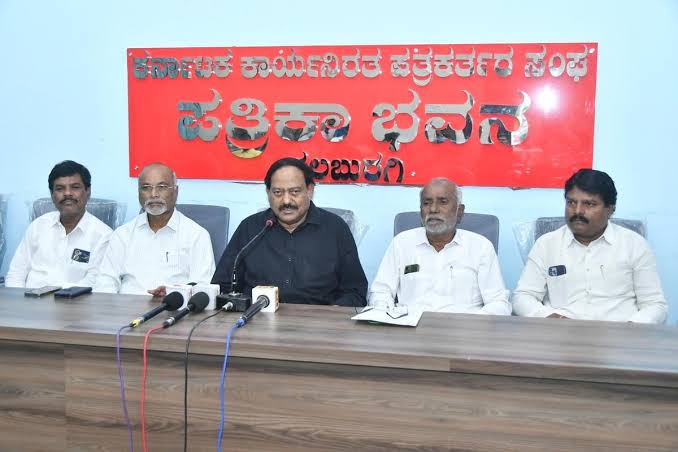
Dalit Sangharsha Samithi (DSS) State convener D.G. Sagar has condemned the reported purification ritual conducted at Haldwani’s Ramlila ground in Uttarakhand on August 10, two days after Congress president Mallikarjun Kharge addressed a public rally there. Mr. Sagar, addressing a press conference in Kalaburagi city on Friday, said that the purification ritual performed at the Ramlila ground was not only an insult to Mr. Kharge but also to the Scheduled Caste community. He said the incident showed that caste discrimination and untouchability continued despite constitutional safeguards. Recalling Dr. B.R. Ambedkar’s Mahad Satyagraha of 1927, Mr. Sagar said that similar purification rituals were performed after Dr. Ambedkar and Dalits drank water from the Chavdar Tank. “Nearly 100 years later, if such practices are repeated, it shows that the fight against caste discrimination is not over,” he said. Mr. Sagar said that the reported ritual at the Ramlila ground raised concerns about the constitutional values of equality and dignity; he urged Uttarakhand authorities to register cases under the Scheduled Castes and Scheduled Tribes (Prevention of Atrocities) Act, 1989, and laws relating to untouchability, and arrest those responsible. He warned that the Samiti would intensify its agitation across the State if action was not taken. The Hindu Bureau Courtesy : The Hindu Note: This news is originally published on https:/thenewindianexpress.com/bha and is used purely for non-profit/non-commercial purposes, especially human rights
A new twist has been taken in the Tehri Dalit teenager murder case, with the government taking this decision.
The investigation into the much-discussed Tehri Dalit teenager murder case has been handed over to the CBI. A fresh investigation is now underway, and it is expected that all the facts will be revealed. Tehri: The Dalit teenager murder case in Pratapnagar block is once again in the headlines. Amidst the ongoing police investigation, the government has taken a significant decision. As a result, the government has agreed to hand over the case to the CBI. Consequently, a fresh investigation will be conducted into the murder of the Dalit teenager. The Tehri Dalit teenager murder case, which garnered national and not just Uttarakhand headlines, has taken a major turn. The case was being investigated at the police level, but now the government has agreed to have the CBI (Crime Branch Criminal Investigation Department) investigate it. Consequently, the investigation into the murder will now proceed anew at the CBI level. The CBI will investigate the case: In fact, on August 3rd of this month, a letter was sent to the government by the Inspector General of Police, Crime and Law and Order, at Police Headquarters, requesting the CBI to investigate the case. Considering the gravity of the case and the current circumstances, the Police Headquarters’ proposal was considered at the government level. Following this, the government agreed to a CBI investigation. An order regarding this has been issued by Additional Secretary Tripti Bhatt. The order requires Police Headquarters to prepare an investigation report and provide it to the government as soon as possible. Based on this report, the CBI will proceed with the investigation. What is the full story? A Dalit teenager, resident of a village in the Pratapnagar block, died on June 8th. The night before, the teenager, along with his friend, had gone to the home of a minor girl. It is alleged that the girl’s family members locked them in a room and severely beat them with sticks. The seriously injured teenager was taken to the hospital, but died on the way. His friend was also seriously injured. On the complaint of the teenager’s family, the police registered a case and arrested four people, including the girl’s father and grandfather. This sparked outrage in the area, and demands for a fair investigation arose. The case later took a new turn when, based on the High Court’s directive and the minor’s mother’s complaint, the police also filed a case against the teenager and his friend under the POCSO Act. The case also received significant political and social backlash. On June 30, Nagina MP Chandrashekhar Azad met with the Dalit teenager’s family and demanded a CBI investigation. Now, following the government’s decision to conduct a CBI investigation, the entire case will be investigated by a new investigating agency. In this context, the CBCID will be crucial in examining the facts revealed during the investigation, previous actions, and allegations against both parties. Now, all eyes will be on what new facts emerge from the new investigation and the direction the case progresses. It’s worth noting that this case has been in the news for quite some time. Courtesy: Hindi News
Dalit farmer killed over goat grazing in Bidar
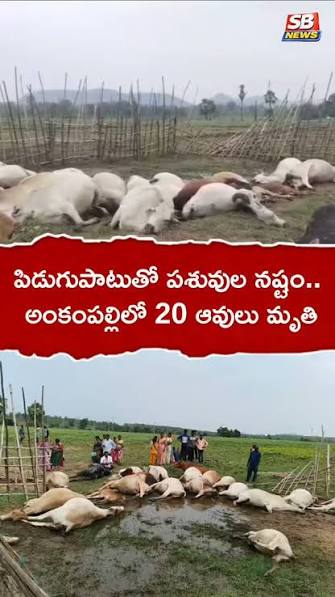
A 45-year-old Dalit farmer was allegedly killed after he was assaulted with an axe following a dispute over goats entering an agricultural field at Jirgyal village in Bhalki taluk, Bidar district, on Thursday. The deceased has been identified as Rajkumar Vitalrao Shinde, a resident of Jirgyal. The Mehakar police have registered a case against four persons — Pradeep Vamanrao Shinde, 52; Rajkumar Muralidhar Biradar, 42; Sharad Vamanrao Lade, 45; and Shubham Sharad Lade, 25 — all farmers from Jirgyal village. The FIR records them as belonging to the Maratha community. According to the complaint filed by Susheela, 70, the deceased’s mother, Rajkumar owned goats and regularly took them out for grazing. She alleged that about four or five days before the incident, some of the goats had entered Pradeepa Lade’s agricultural field and damaged the crop, following which Pradeepa had reprimanded Rajkumar. On Thursday, Rajkumar had gone to graze the goats at around 11 a.m. in the agricultural land belonging to Angad Dadarao. His brother Mahendra reportedly brought him lunch at around 12.15 p.m. The complaint states that Mahendra later telephoned his mother and told her that when he went to give lunch to Rajkumar, four persons — Pradeep Vamanrao Lade, Rajkumar Muralidhar Biradar, Sharad Vamanrao Lade, and Shubham Sharad Lade — had allegedly confronted Rajkumar over the goats entering their field. According to the complaint, the accused allegedly abused Rajkumar using caste-related slurs. It further alleges that Pradeepa took an axe and struck Rajkumar on the head, causing a serious bleeding injury. The complainant said that when she reached the spot, the accused had allegedly fled. She and her husband, Vitalrao Shinde, found Rajkumar with a severe head injury. He had died at the spot, according to the complaint. The Mehakar police have registered a case under Sections 103, 115(2), 352 and 3(5) of the Bharatiya Nyaya Sanhita, 2023, and Sections 3(1)(r), 3(1)(s), 3(2)(va) and 3(2)(v) of the Scheduled Castes and Scheduled Tribes (Prevention of Atrocities) Act, 1989. The FIR was registered on Thursday. The Hindu Bureau Courtesy : The Hindu Note: This news is originally published on https:/thehindu.com/bha and is used purely for non-profit/non-commercial purposes, especially human rights
Gujarat tribal farmers’ forest land protest intensifies as administrative boundary becomes new flashpoint
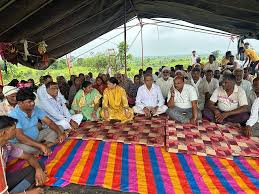
The protest, which entered its sixth day on Friday, intensified as tribal leaders and BJP representatives reached the site to extend support to the farmers. AHMEDABAD: A seven-day non-violent protest by tribal farmers in Sagbara taluka of Gujarat’s Narmada district has intensified over access to forest land cultivated by villagers for years. The standoff has now acquired a political and administrative edge, with BJP leaders joining the protest and Congress extending support, while the Forest Department maintains that cultivation is subject to provisions of the Forest Rights Act and a Gram Sabha resolution. At the heart of the dispute is a boundary complication: the farmers live in Narmada district, while the disputed forest land falls under the administrative jurisdiction of Surat district. The forest land dispute in tribal-majority Narmada district has turned into a growing political and administrative confrontation, with farmers from 12 villages, including Khopi in Sagbara taluka, continuing their non-violent dharna after being stopped from ploughing land they claim to have cultivated for years. The protest, which entered its sixth day on Friday, intensified as tribal leaders and BJP representatives reached the site to extend support to the farmers and assure them that their demands would be taken up with the government. The Congress has also backed the tribal community, adding a political dimension to what began as a dispute over cultivation rights. The immediate trigger came when farmers reached the fields to plough the disputed forest land but were stopped by Forest Department personnel. Rather than retreat, the farmers stayed back in the fields and began a sit-in, continuing their protest through the night. Their agitation has since continued, turning the issue into a wider demand for recognition of traditional cultivation rights. One of the protesting farmers, in a video message, said the community had been cultivating the land for years and questioned the sudden restrictions imposed by the authorities. “We have been cultivating this land for years, but now police have been deployed to stop us from ploughing it. We want to make it clear to the government that these are lands on which our farmers have traditionally cultivated. The government and Forest Department have introduced different rules and are preventing us from farming. We are therefore sitting in protest to reclaim our right to cultivate the land.” The farmer said the Forest Department, however, has put forward a different interpretation of the dispute. Surat Forest Department ACF Gaurav Kumar said the administration was acting in accordance with the Forest Rights Act, 2006, and that the dispute was complicated by the administrative location of the land. According to Kumar, the Act protects eligible claimants who were cultivating forest land before December 13, 2005. However, he said the disputed land is located within Surat district, while the farmers seeking to cultivate it reside in Sagbara, Narmada district. Kumar said the issue also involves the requirement of a Gram Sabha resolution from the village where the land is located. “The Forest Rights Act, 2006 provides protection where cultivation has been taking place since December 13, 2005. But in this case, the farmers are from Sagbara, while the forest land falls within Surat district. Under the relevant provisions, a Gram Sabha resolution is required from the area where the land is located. The people of Umarpada have informed us that their Gram Sabha has not passed any resolution permitting farmers from Sagbara to come and cultivate the land. Therefore, the present dispute is essentially linked to the administrative boundary. The Forest Department is acting according to the provisions of the tribal rights law.” The administrative boundary has now emerged as the central fault line in the dispute. According to the Forest Department, the area was part of the erstwhile Bharuch district before Narmada district was carved out, while the disputed forest land currently falls within Surat district. The result is an unusual situation in which the farmers demanding cultivation rights reside in one district while the land they seek to cultivate is administered by another. The farmers, however, insist that administrative boundaries cannot override their longstanding cultivation practices. Their argument is simple: if they have been cultivating the land for years, they should not be denied access because of a change or clarification in administrative jurisdiction. The dispute has also put the implementation of tribal forest rights under scrutiny. On World Tribal Day, when the focus traditionally turns to tribal rights over jal, jangal and zameen, farmers from these villages are instead sitting in the fields demanding access to the very land they claim as their traditional source of livelihood. The protest has meanwhile drawn growing political attention. BJP leader Leelaben Vasava joined the farmers, followed by Narmada MP Mansukh Vasava, Nandod MLA Dr Darshanaben Deshmukh and Dediapada BJP leaders, including former ministers Motilal Vasava and Shankar Vasava. The leaders assured the protesters that their demands would be conveyed to the state government. BJP MP Mansukh Vasava, who has urged the farmers to maintain a non-violent agitation, sharply questioned the manner in which the dispute was being handled by officials. “Listen to elected representatives like us as well. Do not listen only to Forest Department officials. Decisions should not be taken merely by sitting in an office and looking at satellite maps. Come to Narmada district and see the situation on the ground. Farmers from Surat district are cultivating, while farmers from Narmada are being stopped. We have been elected for seven terms, so our words should also be heard. Come here, understand the ground reality and deliver justice to these farmers.” He said the BJP leader’s intervention has added pressure on the administration, particularly because the protest involves farmers from a tribal belt where forest rights and access to land remain deeply linked to livelihood. For the protesters, however, the political support is secondary to their core demand. They have made it clear that the dharna will continue until the government provides what they describe as a fair, lawful and permanent solution to the cultivation dispute. The
“The attackers should be brought back,” Minister in-charge Krishna Paswan expressed his anger over the attack on a Dalit in Kaushambi.
In Kaushambi, a bullock disappeared after being taken after being requisitioned. A Dalit who went to complain was beaten and threatened with death. As the matter escalated, the Minister-in-Charge criticized the police administration and ordered strict action. Ashok Vishwakarma, Kaushambi: Minister-in-Charge Krishna Paswan’s anger reached its peak upon learning of the lack of police action against a Dalit family in Gaderian Ka Pura village, under the Saini police station in Kaushambi, four days ago. The Minister-in-Charge, who arrived at the victim’s home late Tuesday night with his entourage, strongly criticized the police officers. While reprimanding the Superintendent of Police for failing to reach the scene, he also instructed the Chief Superintendent of Police (CO) to bring back all the attackers. The disappearance of the bullock that was requisitioned and taken back is said to be the reason behind the incident. Learn more about the incident According to village resident Kesai Saroj, on the afternoon of August 6th, he was grazing his bull in the fields when Shankar Lal of Paras village borrowed it for some work. On August 8th, when the bull didn’t return, he went to retrieve it with his younger son, Chhavilal, nephews Aman and Ashok. Ehsan Usmani and Gufran, both villagers present, abused him and told him to turn back. Upon his protest, the men used casteist slurs and beat him severely with sticks. They threatened to crush him to death with a Scorpio if he complained. Someone recorded a video of the incident and made it viral. The victim, a Dalit family, who went to complain about the incident were ignored and chased away. The accused were charged with disturbing the peace and were released. Meanwhile, Minister of State in Charge Krishna Paswan, enraged by the viral video, went to the victim’s family’s home with her entourage at 9 pm on Tuesday. She contacted the SP via mobile phone, sharply criticizing him for failing to reach the scene, and demanded the immediate suspension of the outpost in-charge. Instructions given to the CO When asked about the action taken against the bullies, CO Satendra Tiwari stated that he was dissatisfied with their actions. Was something serious being awaited? He said that Shankar Lal, who had demanded the oxen and taken away, along with the bullies Ehsan Usmani and Gufran, should be dragged out and strict action should be taken. Authored by: Vishal Choubey About the author Vishal Choubey works for Navbharat Times Online. Vishal writes on politics, crime, governance, and law and order in Uttar Pradesh and Uttarakhand, among other issues. He has four years of experience in journalism. He joined Navbharat Times Online in April 2025. Courtesy: Hindi News
Purification at Haldwani’s Ramlila Maidan after Kharge’s rally, Congress says it’s an insult to Dalits
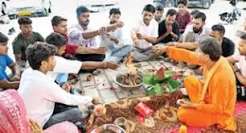
After the Congress’s Vijay Shankhnaad rally in Haldwani, the Ramlila Maidan was purified, which the Congress called an insult to Dalits. Jagran correspondent, Haldwani. Following the Congress’s Vijay Shankhnaad rally, the Shri Ram Sena Charitable Trust has sparked a new controversy by purifying the city’s Ramlila Maidan. The Congress, which has been on the back foot since the SSP was abused on the day of the rally, is now cornering the BJP on this issue. The party says that the rally included Congress National President Mallikarjun Kharge, State in-charge Kumari Selja, and Leader of the Opposition Yashpal Arya, all Dalits. The purification havan ceremony clearly demonstrates the BJP’s anti-Dalit mindset. The organization that organized the havan argues that slogans in support of the Muslim religion were raised from the stage during the rally. On August 8th, Congress National President and Leader of the Opposition in the Rajya Sabha, Mallikarjun Kharge, attended the Vijay Shankhnaad rally held at Ramlila Maidan. Controversy erupted even before the event began. A large number of activists, led by State President Ganesh Godiyal and Leader of the Opposition Yashpal Arya, stormed the SSP’s office after the police stopped the vehicles of the rally workers under the guise of checking. SSP Manjunath TC was not in the office at the time. Video went viral During this period, a video of abusive language being used against the SSP also circulated. Meanwhile, after the rally, the BJP, citing a video, alleged that slogans in support of the Muslim religion were raised during Kharge’s rally. Based on the video, on August 10th, an organization called Shri Ram Sena Charitable Service Trust reached Ramlila Maidan and performed a havan (fire ritual) and sprinkled Ganga water. The organization alleged that Ramlila Maidan, a venue for events related to Sanatan Dharma, had been violated. Its sanctity had been violated. On the other hand, Congress, calling the video fake (AI-created), staged a protest at the police multi-purpose building on Tuesday, demanding an FIR against the accused. Congress leaders, meanwhile, said that those with a BJP mindset do not want social harmony to prevail in the country. The BJP, which claims to be pro-Dalit, has been exposed. Congress workers burn BJP effigy On Wednesday, under the leadership of Indra Pal Arya, District President of the Congress Scheduled Caste Department, workers staged a protest at Buddha Park. Congress workers stated that after Kharge’s rally, a purification ritual was performed at Ramlila Maidan, along with the sprinkling of Ganga water. This act by the BJP is against social equality and brotherhood. It is an insult not only to Kharge but to the entire Scheduled Caste community. Radha Arya, coordinator of the Rajiv Gandhi Panchayati Raj Cell, said that the BJP has always promoted an anti-Dalit mentality. Along with the effigy burning, a memorandum was sent to the President through the Tehsildar, demanding an impartial investigation into the matter and action against the culprits. BY GOVIND SINGHE EDITED BY: SHIV GOVIND MISHRAA Courtesy: Hindi News
Dalit community enraged after all accused in Nagaur’s Dangawas massacre were acquitted, protest in Jaipur
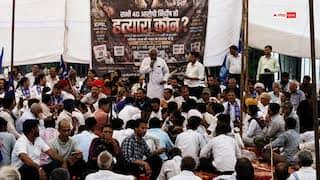
Dalit organizations have launched a protest after the court acquitted all 40 accused in the highly controversial Dangawas massacre in Rajasthan’s Nagaur district. The issue of the 11-year-old Dalit massacre in Dangawas, Nagaur district, has once again heated up. The court’s acquittal of all 40 accused in the case has sparked anger among Dalit organizations on the streets. On Wednesday (August 12), a large number of Dalit organizations, social activists, and family members of the victims staged a protest at the Martyrs’ Memorial in the capital, Jaipur, demanding justice. Speakers at the protest expressed deep disappointment and surprise at the court’s decision. The protesters’ primary concern was the brutal killing of six people, including five Dalits, in a land dispute in 2015. The investigation into the case lasted 11 years, and the CBI filed a charge sheet naming 40 people as accused. Despite this, how were all the accused acquitted? They said that if the murders occurred, someone must be responsible; then why is he not being punished? Questions Raised on the Justice System Dalit thinkers present at the protest said that this verdict is not just the end of a case, but it also raises a serious question mark on the right of Dalits to access justice. Such decisions shatter the trust of the vulnerable and deprived sections of society in the country’s judicial system. Warning to the Government: Appeal to the High Court The protesting Dalit organizations have clearly warned the state government that if a strong appeal is not filed in the High Court, the movement will be intensified. They clearly stated that they will not let this issue rest here and will continue their struggle until the victims get justice. What is the entire Dangavas incident? It is noteworthy that on May 14, 2015, a bloody conflict broke out between two parties in Dangavas village of Nagaur over a dispute regarding approximately 23 bighas of land. Six people, including five Dalits, were killed in this horrific violence. Given the gravity of the incident, the investigation was handed over to the CBI. The CBI filed a charge sheet against 40 people, but recently, on August 5, 2026, the Special SC-ST Court in Merta acquitted all the accused due to lack of evidence. Politics Also Intensifies Following this decision, rhetoric has intensified in Rajasthan politics. In addition to Dalit organizations, the Congress is also vocal on this issue. Several senior Congress leaders, including former Chief Minister Ashok Gehlot, have questioned the decision and demanded justice. Written By: Mohammad Moin About the author Mohammed Moin has nearly three decades of experience in journalism. He has worked across print, electronic, and digital media. He has been associated with ABP Network for the past 18 years, since his time at Star News. Courtesy: Hindi News
A Dalit man was tied upside down to a pole and beaten; he continued to plead for help in Balrampur, resulting in his death. A case has been filed under the SC/ST Act.
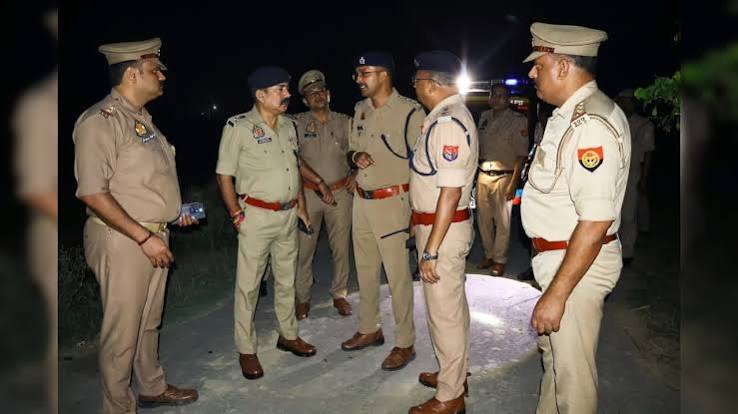
A case has been filed under murder and the SC/ST Act in the death of 38-year-old artisan Ram Sanehi in the Gasdi area of Balrampur. Efforts are now underway to uncover the truth based on video footage and other evidence. Balrampur: The case of the death of a Dalit youth in Balrampur district, Uttar Pradesh, is gaining momentum. A video of the alleged beating of 38-year-old artisan Ram Sanehi in Thakurpur village, located in the Gasdi police station area, has created a sensation in the area. In the viral video, a young man is seen tying him to a pole and beating him with a stick, while the victim is heard pleading for mercy. The family alleges that he was brutally beaten to death by goons. The accused party claims that Ram Sanehi had arrived with the intention of stealing. Police have registered a case of murder and under the SC/ST Act and have begun investigation. Viral Video Revealed The case is from Thakurapur village in the Gasdi police station area of Balrampur. The deceased has been identified as 38-year-old Ram Sanehi, a craftsman from Vishunpur Kalan. According to family members, Ram Sanehi earned his living as a laborer. His wife had left him, and he lived with his brothers. On Wednesday, a 33-second video went viral on social media. In the video, Ram Sanehi can be seen being tied to a pole and beaten. It is reported that the entire case took a new turn after this video surfaced. Brother Made the Video as Evidence The deceased’s brother, Phool Kumar, stated that someone had posted the video on Facebook. When the family learned of it, they downloaded the video and submitted it to the police as evidence. Phool Kumar alleges that Guddu, a resident of Thakurpur, his father Akbar Ali, Magghe Nau, and their associates beat Ram Sanehi, resulting in his death. The family has demanded strict action against the accused. What is the accused party’s claim? The accused party claims that Ram Sanehi arrived with the intention of stealing. He was then caught and beaten by the people. However, this claim is under investigation, and the police are investigating all the facts. Case filed based on video Based on the viral video and the family’s complaint, the police have filed a case against three named and one other accused. Sections of murder and the Scheduled Castes and Scheduled Tribes (Prevention of Atrocities) Act have been imposed in the case. According to sources, the police have detained some suspects and begun questioning them. Police said they will take further action based on the facts. Gasdi Kotwali in-charge Inspector Rajkumar Pandey said, “Some suspects are being questioned in connection with the young man’s murder. Initial investigations have revealed that the young man went there with the intention of stealing. People caught him and beat him. Further action will be taken based on the post-mortem report and the facts revealed in the investigation.” Reported by: Ranveer Singh Written by: Ajay Kumar Patel Courtesy: Hindi News