
Haryana: A woman arrived late for duty at MDU due to her period and was asked for ‘proof’ from the cleaning staff; made to remove her clothes in the washroom and…

Shameful incident at MDU, Rohtak: Two supervisors suspended, State Women’s Commission takes cognizance Rohtak – Alleged mistreatment of female cleaning staff at Maharshi Dayanand University (MDU) in Rohtak, Haryana, has shaken the entire campus. Four female employees who arrived late for duty have been accused of demanding ‘proof’ of menstruation. The women even allege they were asked to remove their sanitary pads and were photographed. After the incident came to light, other women and university students created a ruckus. The university management suspended the accused supervisors and ordered an investigation against them. According to reports, Haryana Governor Asim Kumar Ghosh visited Maharshi Dayanand University on October 26th. That day, some female cleaning staff were late for work. Supervisors Vinod Kumar and Vitender Kumar stopped them and asked the reason for their delay. According to the report, the women initially tried to avoid them, but when they refused, they explained that they were menstruating, which was why they were late. The supervisor reportedly told them they were making excuses and demanded proof if they were menstruating. The victims told the university administration that the supervisor had a female employee remove their clothes and examine their sanitary pads. According to the women, photographs of their sanitary pads were also taken for verification. After the incident, when the women told other fellow employees about the incident, they became enraged and began a commotion. When the university’s student organizations learned of the incident, they also arrived at the scene and began protesting against the incident. The report states that some female employees and students even tried to assault the supervisors, but university staff saved them. Following the incident’s disclosure, the MDU administration immediately suspended two supervisors, Vinod and Vitender Kumar. An investigation has been initiated based on a written complaint submitted to the Registrar. MDU Director (Public Relations), Prof. Ashish Dahiya, stated that the university administration has suspended the cleaning supervisors, initiated an investigation, and handed over the case to the police. State Women’s Commission Takes Cognizance The Haryana State Women’s Commission immediately took cognizance of the matter and sought a detailed report from the Rohtak Superintendent of Police. Commission Chairperson Renu Bhatia said, “Demanding proof of menstruation is a direct insult to women. This is not only physical but also mental harassment. Strict action should be taken against the culprits to prevent such incidents in the future.” Bhatia stressed that taking women to the washroom in the name of checkups and checking sanitary pads is unacceptable. In addition, Krishna Kumar, Chairperson of the Safai Karamchari Commission from Chandigarh, also visited Rohtak and spoke with the affected women. The Scheduled Caste Commission has also taken the matter seriously, as the victims include women from the Scheduled Caste category. The incident has also gone viral on social media, sparking a debate on women’s rights. Several organizations have accused the MDU administration of negligence. Experts say that workplaces should establish clear policies regarding health-related leave for women to prevent such inhumane incidents. Geetha Sunil Pillai Courtesy: Hindi News
Tamil Nadu ‘Honor Killing’: Chargesheet filed in Dalit engineer Kevin’s murder case, girlfriend’s policeman parents among 4 accused
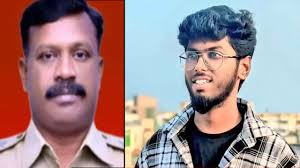
Sub-inspector father and policewoman mother also accused in Kevin’s murder; court declares it a ‘premeditated honor killing’ Chennai: The Crime Branch-CID (CBCID) has submitted its detailed chargesheet to the court in the sensational case of the ‘honor killing’ of Dalit techie Kevin in Tirunelveli, Tamil Nadu. The chargesheet names his girlfriend’s brother as the main accused in the brutal murder of the 23-year-old software engineer. The investigating agency reiterated that the accused, Surjeet, was deeply upset with his doctor sister’s relationship, which led him to kill Kevin. Policeman parents also named as accused CBCID chief T.S. Anbu informed that a total of four people have been charged in the case. These include Surjeet’s father, Saravanan, himself a police sub-inspector, and his mother, Krishnakumari, also a police officer. A relative, Jaipal, has also been named as an accused. The agency submitted its final report to the court on October 22nd, including statements from 69 witnesses and 37 other documents as evidence. Court’s Strict Comment, Father’s Bail Rejected for the Third Time Meanwhile, the Additional Sessions Court in Tirunelveli has rejected the bail plea of the accused father, Saravanan, for the third time. The court stated that this was an “open and deliberate honor killing.” The judge also stated that if Saravanan is released, his wife, Krishnakumari (who is also in the police force), could influence witnesses, potentially hampering the ongoing investigation. The court also noted that Kevin’s iPhone is still locked with facial recognition. Investigators hope that once the phone is accessed, further digital forensic examination may yield further evidence. What was the whole case? Kevin, originally from Arumugamangalam in Thoothukudi district, worked as a software engineer at an IT firm in Chennai. The incident occurred in July, when Kevin went to a hospital in Tirunelveli, where his girlfriend worked as a doctor, to treat his grandfather. It is alleged that Surjeet lured Kevin onto his bike under some pretext and then stabbed him to death with a sharp-edged weapon (a sickle). Demand for stringent laws against caste-based killings This brutal murder sparked widespread outrage across the state. Dalit organizations and human rights activists took to the streets demanding justice and calling for stringent laws against caste-based killings. Given the gravity of the case, the Tamil Nadu government has announced a special law against honor killings. A commission is also being formed to study such crimes and suggest measures to prevent them. Rajan Chaudhary Courtesy: Hindi News
‘They Put a Scorpion in His Pants’: 8-Year-Old Dalit Boy in Shimla District Subjected to Abuse by Teachers

An eight-year-old Dalit boy in Himachal Pradesh’s Shimla district was allegedly subjected to repeated caste-based harassment and physical assault by his school’s headmaster and two teachers, including an incident where they reportedly placed a scorpion inside his pants, police said on Sunday. The accused, headmaster Devendra and teachers Babu Ram and Kritika Thakur, have been booked under relevant sections of the Bharatiya Nyaya Sanhita, Juvenile Justice Act, and the Scheduled Castes and Scheduled Tribes (Prevention of Atrocities) Act. According to the complaint filed by the child’s father, the abuse had been ongoing for nearly a year at the Government Primary School in Khaddapani, under Rohru subdivision. He alleged that his son was regularly beaten, once so severely that his ear bled and his eardrum was damaged. In one horrifying instance, the teachers allegedly took the child to a toilet and placed a scorpion inside his pants. The father also accused the headmaster of threatening to expel his son and warning the family against approaching the police. “They told us not to file a complaint or post about the incident on social media, or we would lose our lives,” he said. The father further claimed that the school practised caste-based segregation, forcing Nepali and Dalit (Harijan) students to sit separately from Rajput students during meals. Local reports suggest this is not an isolated case in Rohru. Just last week, a teacher in Gawana area was suspended for beating a student with a prickly bush. Earlier this month, a 12-year-old Dalit boy in Limda village reportedly died by suicide after being locked inside a cowshed by upper-caste women for entering their house. Police have begun investigating the case. Officials said statements from the child and witnesses are being recorded, and medical examination reports are awaited. Courtesy : TOP Note: This news is originally published on https:/theobserverpost.com/bha and is used purely for non-profit/non-commercial purposes, especially human rights
Amethi: Dalit Farm Labourer Beaten to Death by Landlord for Demanding ₹2,500 Wages
A Dalit farm labourer was allegedly beaten to death by a landlord and his associates in an Amethi village for demanding unpaid wages of around ₹2,500, the victim’s family said on Sunday. The victim, 40-year-old Hausila Prasad, had been working on the field of Shubham Singh, an upper-caste landlord, for about a week earlier this month. His wife, Kirti, said Singh and his family had promised to pay him ₹350 per day but refused to clear his dues. “When my husband went to ask for his payment on October 26, they attacked him with rods. When he fell unconscious, they brought him in a jeep and dumped him near our door,” she said. Prasad suffered severe head injuries and was taken to multiple hospitals before dying at King George Medical University in Lucknow on Sunday. Police confirmed Shubham Singh’s arrest under charges of culpable homicide not amounting to murder, but the family has accused authorities of trying to shield the other culprits. “The police have named only one accused, even though everyone in the village knows at least four men were involved,” said Prasad’s relative, Manish Prasad. “When we tried to hold a protest with the body, the police threatened us and forced us to conduct the last rites quickly.” After a video of the assault went viral, police later arrested four men and upgraded the charge to murder, following widespread outrage. The killing comes just weeks after another Dalit man was lynched in Rae Bareli on suspicion of theft. In another incident, Ram Pal, a 65-year-old Dalit man, was allegedly forced to lick his own urine outside a temple in Lucknow’s Kakori area on October 20. Responding to the rising outrage, Ramchandra Kannaujia, head of the BJP’s Scheduled Caste Morcha in Uttar Pradesh, claimed the government acts swiftly in such cases. “Earlier governments ignored these crimes. We take quick action against the accused to set an example,” he said. Courtesy : TOP Note: This news is originally published on https:/theobserverpost.com/bha and is used purely for non-profit/non-commercial purposes, especially human rights
Bihar elections 2025: Tejashwi Yadav CONFIRMS deputy CM from Muslim, Dalit community, says, ‘everyone will get fair chance…’

Ahead of Bihar elections, Mahagathbandhan CM face and RJD leader Tejashwi Yadav has confirmed that if they come to power after winning elections, there will be multiple deputy CM including one from Muslim community. Ahead of Bihar elections, Mahagathbandhan CM face and RJD leader Tejashwi Yadav has confirmed that if they come to power after winning elections, there will be multiple deputy CM including one from Muslim community. In an interview with India Today, Tejashwi Yadav responded, “Yes, definitely,’ when asked will there be a Deputy CM from Muslim community. Muslim community constitutes nearly 17% of the electorate and could play a decisive role in the formation of next government in Bihar. During the announcement of Tejashwi Yadav as CM face for Mahagathbandhan Alliance, Mukesh Sahani was named as the deputy CM face. Mukesh Sahani ‘Son of Mallah’ belongs to the Extremely Backward Class. EBCs comprise 30% of Bihar’s voters.Following this, demand of Muslim deputy CM were raised. What did Tejashwi Yadav Said? RJD Leader Tejashwi Yadav confirmed that there will multiple deputy CM. He said, ‘The day this announcement was made, Ashok Gehlot ji had said that if Mukesh Sahani would be made Deputy Chief Minister, there would also be others. The concerns raised by various sections will be addressed.’ He also said, ‘Yes’, when asked if there will be deputy CM from two of the major communities from Bihar, Muslims and Dalits. ‘We will take everyone along, and everyone will get a fair chance of representation, ‘ he added. Bihar elections 2025 Both Mahagathbandhan and NDA have released their Manifesto for the upcoming polls. NDA in Bihar released their manifesto ‘Sankalp Patra’ in Patna on Friday. Few days earlier, the Mahagathbandhan has released its manifesto, Tejashwi ka Prann. The first phase of the Bihar Assembly polls will take place on November 6, and the second phase will happen on November 11. The counting of votes will take place on November 14. This upcoming electoral contest will be between the NDA, led by the BJP, and Janata Dal (United) (JD(U)), and the INDIA bloc, led by Tejashwi Yadav of the Rashtriya Janata Dal (RJD). Prashant Kishor’s Jan Suraaj is also contesting on all 243 seats in this high-stake battle. Vanshika Tyagi Courtesy : DNA India Note: This news is originally published on https:/dnaindia.com/bha and is used purely for non-profit/non-commercial purposes, especially human rights
MRPS condemns attack on CJI, takes out ‘Dalit self-respect rally’

Hyderabad: Madiga Reservation Porata Samithi (MRPS) founder Manda Krishna Madiga questioned why the Delhi police did not register a case against the lawyer who tried to attack Chief Justice of India (CJI) Justice BR Gavai. He said that all systems in the country have remained silent, displaying the persistence of untouchability. Condemning the attack on Justice Gavai, the MRPS, along with thousands of participants, took out a ‘Dalit self-respect rally’ from Indira Park to Babu Jagjivan Ram’s statue. Along with Krishna Madiga, MRPS national president Munnangi Nagaraju Madiga, MRPS Telangana state president Govindu Naresh Madiga, AP state president Rudrapogu Suresh Madiga, Karnataka president Narasappa Madiga, Tamil Nadu MRPS president Lokesh Madiga, Maharashtra president Ajit, Chhattisgarh state leader Johnson Madiga, Uttarakhand state president Ashish Kumar, and others participated. Speaking at the rally, Krishna Madiga said that the attack happened because Justice Gavai is a Dalit. “If a judge from a higher caste were in his place, would this attack have occurred?” he asked, adding that they view the incident as an attack on Dalits because of Gavai’s identity. He questioned why the Delhi police had not yet filed a case and why the Supreme Court had not taken suo motu cognisance of the matter. He also questioned the NHRC’s silence on the incident. Stating that the Dalit self-respect struggle in Hyderabad marks only the beginning, he said the movement would soon be intensified at the national level. Announcing ‘Chalo Delhi’ on Nov 17, he said a massive Dalit self-respect will be organised across the country. He criticised political parties for their double standards on Justice Gavai’s case, questioning why they haven’t demanded legal action or punishment against the lawyer involved. He condemned the failure to punish those who commit violence in the name of beliefs and traditions, calling such acts unlawful. Courtesy : TOI Note: This news is originally published on https:/timesofindia.com/bha and is used purely for non-profit/non-commercial purposes, especially human rights
Deepavali sparks the caste conversation in Tamil cinema
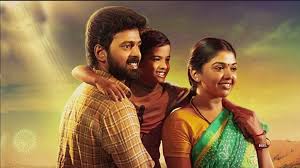
While Bison delves into the brutal, ancestral weight of caste oppression, Dude channels Gen Z energy to confront caste-based violence. Synopsis: Tamil Deepavali releases Bison and Dude delves into caste opressions. While Bison delves into the brutal, ancestral weight of caste oppression through the journey of a young kabaddi player, Dude channels Gen Z energy to confront caste-based violence. This Deepavali, Tamil cinema sparks a conversation on caste with two striking releases: Bison and Dude. While Mari Selvaraj’s Bison delves into the brutal, ancestral weight of caste oppression through the journey of a young kabaddi player, Dude channels Gen Z energy to confront caste-based violence with style, wit, and social conscience. Together, the films show how Tamil cinema challenges systemic inequalities, each in its own cinematic language. “Caste is not just a social hierarchy; it is a system that inflicts trauma and violence on its victims,” wrote Thenmozhi Soundararajan in The Trauma of Caste. Her observation captures how deeply caste shapes lives, far beyond mere social positioning. In Bison, Kittaan’s journey embodies this lived reality. His body, labour, and identity are marked by systemic oppression; he faces physical exploitation, social marginalisation, and emotional trauma imposed by the caste hierarchy. The violence he endures is structural, embedded in a society that categorises and controls him. Kittaan’s experiences echo Soundararajan’s argument: caste is not abstract or symbolic; it is a daily, brutal reality that shapes choices, relationships, and selfhood. As Nina Simone famously said, “An artist’s duty, as far as I’m concerned, is to reflect the times.” Mari Selvaraj stands as such an artist, reflecting his people, his land, and the collective grief of his community—while allowing them to breathe, dance, and live in his films. The poetry of defiance Mari’s cinema is remarkable not only for what it says, but for how it says it. Like Terrence Malick’s The Tree of Life (2011), which wove childhood, grief, and the cosmos into a symphony of light and silence — “There are no words. Just light, movement, and memory”— Mari’s frames flow like verses of a cinematic poem. In world cinema, resistance often finds its voice not in slogans but in poetic imagery, where defiance becomes a visual and emotional language. Mari carries this tradition forward. His dreamlike frames are rooted in reality: Blue-painted dogs as emblems of silenced loyalty, trains wailing over barren fields, runners fleeing oppression rather than chasing victory. Animals — pigs rooting in muddied honour, horses galloping through monsoon fury — become symbols of the oppressed, reflecting Dalit protagonists’ quest for liberation. Sweeping aerial shots of indifferent landscapes remind us of a society that watches cruelty from above, detached and complicit. Even desire in Mari’s films is radical. It is punished yet resilient — blooming in stolen glances, sweat-soaked triumphs, and acts of love that defy lineage. Mari transforms personal scars into collective anthems, each echoing like the beat of a parai, confronting audiences with the beauty and brutality of marginalised lives. Bison arrives as a fiery offering to southern Tamil Nadu’s soil, steeped in kabaddi, rage, and resilience. At its heart is Kittaan, a young kabaddi player crushed between caste politics and personal dreams. Inspired by real-life Arjuna Awardee Manathi Ganesan, Mari’s narrative portrays an athlete torn between faith, fate, and fury. While traditional sports dramas explore locker-room rivalries or personal sacrifices, Mari digs deeper. Like Pa Ranjith’s Sarpatta Parambarai, which examined boxing culture and its politics, Bison exposes the caste wounds and inherited injustices of the southern heartland. When Dhruv Vikram’s Kittaan asks, “Why should I leave this village? Why won’t they let me play? Why do the sins of our fathers stop me from living and loving?” Pasupathi’s quiet reply, “Because that’s our fate, son,” lands like a punch to the chest. Pasupathi, a broken father, carries the weight of generations—fighting, falling, praying, and howling with helpless rage. His performance is a masterclass in restraint and ruin. A land that still burns In one unforgettable scene, a bus journey becomes a bloodbath over something as trivial as a goat urinating on a rival’s leg. Mari stages this with terrifying precision, showing that violence in this land is never sudden — it simmers through generations of silence. Here, caste dictates not just marriage, but where one sits, what one eats, and whether one can play a sport. Kittaan’s rise highlights the near-impossible struggle of breaking invisible walls. His victory isn’t personal—it’s ancestral. When he storms the kabaddi court, every muscle and tear carries the grief of fathers, the defiance of sons, and the dreams of countless boys once told “No.” While Bison foregrounds the oppression faced by Dalits, it is crucial to recognise that much of the dominant caste’s behaviour around power and prestige is tied to caste. Even seemingly personal actions cannot be fully separated from caste dynamics. The animals speak for the land Mari’s cinema breathes through symbolism. Animals in his films are not props; they are the land’s soul: The dog in Pariyerum Perumal, the horse in Karnan, the pig in Maamannan and the bull in Bison. Each creature embodies defiance — the silent scream of the subaltern. Even love carries an earthy fragrance, with flowers and fallen petals creating tender poetry amid violence. Dhruv Vikram, expressing everything through his body, becomes a living metaphor — a Maadan whose silence roars louder than words. At a recent press meet, a journalist’s question, dripping with caste prejudice, attempted to challenge Mari, yet he responded with quiet resolve: “Your life is different from mine. I can’t satisfy everyone. I am a citizen of this country. I have the right to tell the stories that affected me, my father, and my grandfather — and I will tell them until my last breath.” This powerful retort encapsulates the essence of Bison — an ancestral cry, an unflinching archive of pain passed down through centuries of caste oppression. The journalist’s audacity reflects the entrenched hierarchical mindset that continues to provoke and question Mari’s narratives. Yet, Bison stands as
‘Kaalamaadan’ — Bison: Caste, colour, and anti-caste politics in mainstream cinema
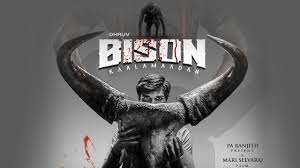
We live in an era where actors, regardless of their social background, eagerly await roles in movies by Dalit filmmakers such as Mari Selvaraj and Pa. Ranjith. Negating these historical and contemporary realities and confining the debate only to the ‘fair’ female leads in their movie is an elite conspiracy to subvert the political discourses constructed by Dalits. Kaalamaadan is a cultural icon associated with the beliefs and traditions of Dalit socio-cultural life. However, the term Kaalamaadan, especially in the cultural sphere of Kerala, often refers to people who act in ways that disturb public conscience, challenge morality, or defy social conditioning. Kaalamaadan has always carried a negative connotation and is used to blame or otherise people who adopt different perspectives or approaches in their thought processes or activities. This should also be understood as a historical continuity of caste practices to antagonise or defame the Dalit cultural symbols or icons. By naming the movie Bison, or otherwise known as Kaalamaadan, Mari Selvaraj is definitely dismantling the sarvarna gaze. Inspired by real-life incidents, the movie is set against the backdrop of socio-political happenings in southern Tamil Nadu during the 1990s. It discusses the survival, resilience, and triumph of Kittan, the Dalit protagonist. Relevance of Bison The social history of Tamil Nadu is, in fact, a history of caste conflicts. Especially the southern districts of Tamil Nadu are infamous for their brutal violence against Dalits. The (dis)honour killing of a Dalit IT professional, Kavin Selva Ganesh, by the family of his girlfriend was one of the latest caste atrocity reported from southern Tamil Nadu. The girl’s family hails from the dominant Maravar community, and both her parents are police inspectors. This reflects the current scenario of caste atrocities in southern Tamil Nadu, making the movie Bison more politically relevant. Though Bison doesn’t deal with the subject of honour killings, the film is presented in the larger context of the historical continuity of caste conflicts in Tamil Nadu. The Pandiaraj-Kandasamy rivalry in the movie actually refers to the Dalit-Nadar conflict that happened in southern Tamil Nadu during the 1990s and early 2000s. The disputes, retaliations, and the feud between the Dalit leader Pasupathi Pandian and the Pannaiyar family have been effectively referenced in the movie. And this narrative has been successfully conveyed through the life and struggles of the Dalit protagonist, Kittan, inspired by the life of the Arjuna Award-winning Kabaddi player Manathi Ganeshan. Dalit aesthetics The film is structurally built on the notion of Dalit aesthetics and socio-cultural nuances. As many critics have observed, a specific pattern or preset template is being followed in Mari’s filmography. And the repetition of these patterns has invited criticism of Mari’s films, including Bison. But what does this pattern really indicate? The heroic presentation of Dalit imagery, signifiers, gods, and belief systems is the fundamental characteristic of Mari’s style of filmmaking, and it is not an artistic limitation. In fact, these are counter-narratives against the epistemic violence in cultural representation created by the mainstream cinema for years. The symbolic presentation of animals pertinent to Dalit social life, and their incorporation into the aesthetics of cinema, are essentially political acts. Even if it is repetitive in his filmography, it is a deliberative aesthetic of resistance and a new technique among the established imaginations of mainstream cinema. Mari’s films, including Bison, subvert the established patterns, methods, and aesthetics of mainstream cinema and construct a counter-public discourse. It disturbs the public conscience, dominant perspectives, and morality constructed in films through different ages. So, the actual problem with critics is not the pattern of Mari but its content and politics. They are also triggered by the anti-caste politics occupying space in the public sphere through popular culture. Pride and prejudice Recently, veteran director Adoor Gopalakrishnan has made casteist and gendered remarks against aspiring Dalit and women filmmakers, saying that they should be given ‘special’ training for filmmaking if they are receiving government funds for making movies. This thought, which shares concerns about the public fund when it is allocated to the marginal communities, is fundamentally a casteist idea. This also stems from the belief that filmmaking is meant for people from elite social backgrounds, as they are ‘naturally’ talented, while those outside this social structure lack the skills and ‘merit’ to create movies. The criticism against Mari, based on the ‘patterns’ in his movies, also originates from a similar savarna gaze. Because Mari has not just made some random movies, he directed films that deconstruct existing belief systems, culture, and politics, and he also made them commercially successful. Had his movies been a failure at the box office, none of the critics would have even cared about the pattern, content, or quality. Therefore, the pattern he follows in his movies is successful in a political sense, as it disturbs the Gramscian idea of common sense. Loud questions and silence The criticisms that have erupted recently are negating the identities of Mari, Vedan, Arivu, and Dhruv, who are integral parts of the movie, and revolve solely around the ‘fair’ skin of non-Dalit female actors. It seems that even the skin tones—or the absence of dark skin tones—of female actors in Mari’s movies disturb the public, as they do not meet casteist expectations. The idea of equating Dalits with dark bodies is actually a casteist notion. Why do people never question the non-Dalit filmmakers for not casting dark-toned and/or Dalit actors? Why is this burden solely placed on Dalit filmmakers? How can Dalit filmmakers who entered the industry after years of struggle be held accountable for the absence of Dalits and dark-toned artists? These unfair criticisms emerge from a larger caste-ridden society. Furthermore, who decides that only Dalit actors should be portrayed as Dalit or characters with dark complexions? But suppose the intention behind this question stems from a democratic concern about the absence of Dalits or Dalit women in cinema, why is this question being raised only against Dalit filmmakers? Why is there no question directed against the elite
Dalit Farmer, Wife Assaulted and Abused with Caste Slurs in Aligarh’s Vijaygarh Area
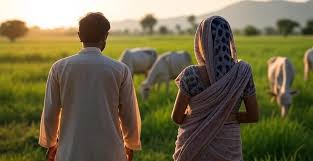
In Aligarh’s Vijaygarh area, a Dalit farmer and his wife were allegedly attacked and abused with casteist slurs by a group of men riding a tractor. The incident took place on Thursday night when the couple was returning home from their field around 8:30 pm. According to the complaint, the tractor riders stopped the couple and ordered them to move aside, hurling caste-based insults. When the farmer protested, the men allegedly assaulted him and his wife. Hearing their cries for help, the farmer’s father, Chetram, and a neighbour, Lalit, rushed to the spot, but they too were beaten and verbally abused. Chetram, son of Babulal and a resident of Bhankari Ahibasi village, lodged a complaint naming Yogendra Sharma alias Munna, Rohit, Deepak, and Ankur, all from the same village, as the accused. Police have registered a case under relevant sections and the SC/ST Act. The injured were sent for medical examination, and officials said an investigation is underway to verify the sequence of events and arrest those responsible. Courtesy : TOP Note: This news is originally published on https:/theobserverpost.com/bha and is used purely for non-profit/non-commercial purposes, especially human rights
Swami Prasad Maurya Accuses BJP of Fueling Violence Against Dalits and Muslims in Uttar Pradesh
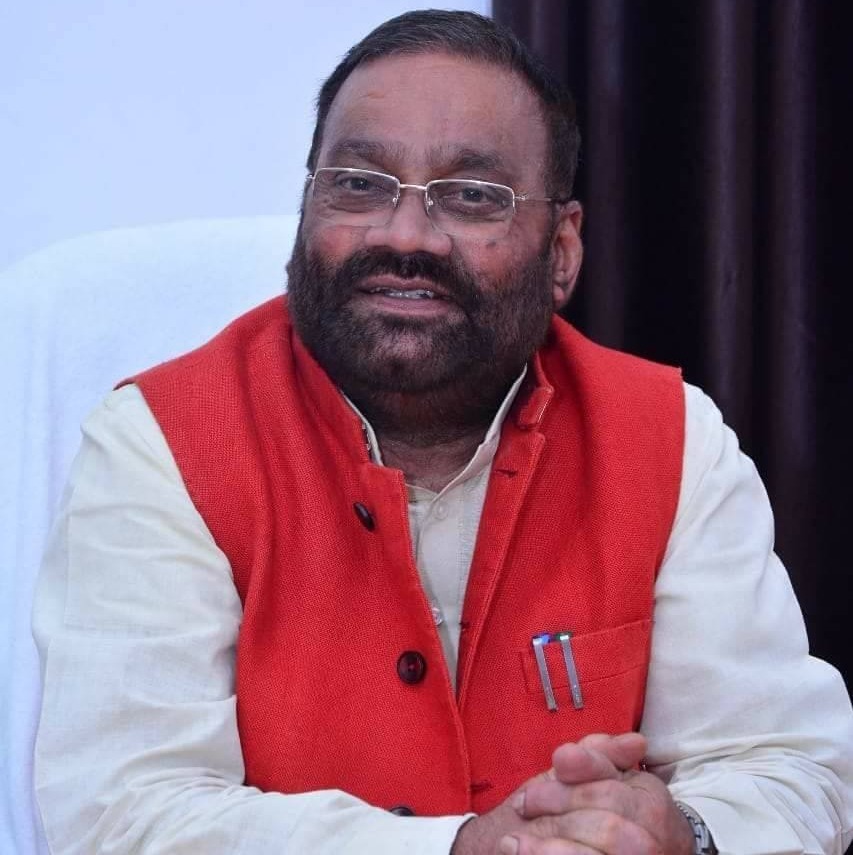
Former Uttar Pradesh cabinet minister Swami Prasad Maurya launched a scathing attack on the Bharatiya Janata Party (BJP), accusing it of allowing rising violence against Dalits and Muslims under its rule. Speaking to the media on Saturday, Maurya said, “Dalit and Muslim communities are being targeted. Homes of the poor are being bulldozed, while criminals linked to the BJP enjoy full protection. Law and order has completely collapsed in the state.” Maurya alleged that religious slogans such as “Jai Shri Ram” and “Jai Bajrangbali” were being misused to justify violence. “These chants have become tools to vandalize Muslim homes and mosques. Today, people of one religion have resorted to terrorist activities,” he said. He further claimed that the BJP was deliberately trying to disturb communal harmony. “The tomb in Fatehpur was attacked using the same slogan. In Aligarh, a conspiracy was hatched to incite Hindu-Muslim riots by writing ‘I love Mohammad’ on a temple wall,” he added. Citing the latest National Crime Records Bureau (NCRB) data, Maurya said, “Uttar Pradesh ranks number one in crime, rape, murder, and caste-related violence. The same situation exists in BJP-ruled states like Gujarat, Madhya Pradesh, and Rajasthan, where Dalits and backward classes continue to face oppression.” He accused the BJP government of shielding criminals. “Under BJP rule, the number of lawless elements has increased sharply. The Chief Minister neither takes cognizance of incidents nor takes action. This is why gangsters and the mafia are openly flouting the law,” Maurya said. Condemning recent attacks on the judiciary, Maurya said, “Two Presidents were stopped from entering a temple, and now a shoe has been thrown at a judge. This is an attack on the justice system and the Constitution. Even the judiciary is not safe under BJP rule.” Announcing statewide protests, Maurya said that if the person who threw the shoe at a Supreme Court judge is not arrested, demonstrations will be held outside every district magistrate’s office on November 3. During the protest, memorandums addressed to the President will be submitted, highlighting the breakdown of law and order, atrocities against Dalits, and government inaction. Courtesy : TOP Note: This news is originally published on https:/theobserverpost.com/bha and is used purely for non-profit/non-commercial purposes, especially human rights