
Kerala mob lynching: CM Pinarayi Vijayan vows strict action after mob beats Dalit labourer to death; orders probe
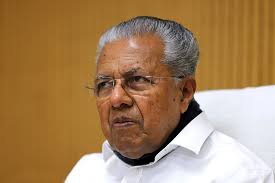
NEW DELHI: Kerala chief minister Pinarayi Vijayan on Monday assured strict action and justice for the family of Ram Narayan Bakel, who was killed in a mob assault in Walayar in Palakkad district, calling the incident unacceptable in a progressive society like Kerala. In a statement issued by the CMO, Vijayan said a special investigation team led by the Palakkad Superintendent of Police has been formed to probe the case. “Justice will be ensured for the family of Ram Narayan Bakel, who was killed following a mob assault in Walayar, Palakkad. Strict action will be taken against those responsible,” the statement read. — ANI (@ANI) The CMO added that instructions have been given to thoroughly examine the case, initiate necessary legal action and review compensation for the victim’s family. “Such acts, which tarnish the reputation of a progressive society like Kerala, are completely unacceptable. Everyone must remain vigilant to ensure that such incidents do not recur,” it added. The chief minister’s assurance comes after a chilling case of mob violence was reported in Palakkad. Ramnarayan Baghel (31), a Dalit migrant labourer from Chhattisgarh, was allegedly beaten to death by a group of people in Walayar. According to initial reports, he was mistakenly suspected of being a Bangladeshi national or a thief following a local theft incident. Baghel, a resident of Karhi village in Sakti district of Chhattisgarh, had arrived in Palakkad on December 13 in search of work and was employed as a daily-wage labourer at a construction site. Family members said he was extremely poor and is survived by his wife Lalita and two young sons, aged around eight and nine. Police said the incident occurred at Attappallam East in Walayar, where a group of residents allegedly assaulted Baghel with sticks, causing severe injuries. He was taken to Palakkad District Hospital in critical condition, where he later succumbed to his injuries. Before his death, Baghel reportedly told hospital staff that he had been attacked by a mob accusing him of theft. Preliminary postmortem findings revealed that Baghel died due to excessive bleeding caused by severe blunt-force injuries to the head and other parts of the body. The autopsy was conducted at the Government Medical College Hospital in Thrissur. Kerala police have arrested five people in connection with the alleged lynching. Those arrested were identified as Attappallam residents Anu (38), Prasad (34), Murali (38), Anandan (55) and Bipin (30). They were produced before a local court and remanded to judicial custody. Police said further arrests are likely as the investigation progresses. A case has been registered at the Walayar police station under Section 103(1) of the Bharatiya Nyaya Sanhita (BNS). Investigators are examining CCTV footage, videos circulated on social media and witness statements to identify others involved in the attack. Following the incident, tension prevailed in the area, prompting police to step up security to prevent any escalation. Police confirmed Baghel’s identity through his Aadhaar card and informed authorities in Chhattisgarh. Courtesy : TOI Note: This news is originally published on https:/timesofindia.com/bha and is used purely for non-profit/non-commercial purposes, especially human rights
Karnataka Dalit Sangharsh Samiti condemns ‘honour killing’, questions pro-Hindutva leaders
Condemning the honour killing of a pregnant young woman in Hubballi, Karnataka Dalit Sangharsh Samiti (DSS), founded by Prof. B. Krishnappa, has questioned the silence of various mutt heads and leaders of pro-Hindutva groups. Gurumurthy, State convener of DSS, at a press conference here on December 24 said that the brutal murder of the young woman by her father exhibited the deep-rooted caste-based hatred in society. The father killed his daughter because she married a boy from another community. The boy and his family members also suffered injuries in the incident. “Recently, RSS leader Mohan Bhagawat stated that there was no caste-based discrimination in society, but caste-related confusion has been created by politicians for their benefits. Then, how does RSS view the honour killing? Does the killing not show how caste-based atrocities have been continuing in society?” he asked. Mr. Gurumurthy alleged that Hindutva forces had been attempting to bring in Manusmriti in place of the Constitution. Recent statements by pro-Hindutva leaders exhibit their agenda, he added. Another RSS leader, Dattatreya Hosabale, advocated the removal of “secular” and “socialist” from the Indian Constitution. A group of saints who participated in the Maha Kumbh at Prayagraj announced that a draft Constitution for a Hindu nation had been prepared. “These statements show that these forces have no respect for the Indian Constitution, which promotes equality, irrespective of the caste. Such statements indirectly encourage the people who practise caste and perpetrate caste-based atrocities,” he remarked. He also demanded fair compensation for the boy’s family. Advocate K.P. Sripal opined that the honour killing had left the entire population with a sense of guilt. “We claim to be a civilised society. But the murder has shown how badly we behave. We all should bow our heads in shame. I don’t know why the religious heads of various mutts and so-called Hindutva leaders are silent over the death,” he commented. The Hindu Bureau Courtesy : The Hindu Note: This news is originally published on https:/thehindu.com/bha and is used purely for non-profit/non-commercial purposes, especially human rights
UP Assembly: CM Yogi Adityanath Slams Opposition Over Silence On Killing Of Dalit Hindu Youth In Bangladesh

CM Yogi Adityanath slammed the opposition in the UP Assembly over its silence on the killing of a Dalit Hindu youth in Bangladesh, accusing it of appeasement politics and selective outrage, and warning of strict action against infiltrators and illegal activities. Lucknow, 24 December: Chief Minister Yogi Adityanath, while speaking in the Legislative Assembly on an international issue, strongly cornered the opposition. Condemning the incident in Bangladesh, the Chief Minister said that a Dalit Hindu youth has been killed there, yet the opposition has maintained silence. Opposition accused of selective outrage Parties that stage protests and candle marches on issues like Gaza fall quiet when Hindus and Sikhs face atrocities in Bangladesh or Pakistan. The Chief Minister described this as a result of appeasement politics and asserted that atrocities against any innocent Hindu or Dalit are unacceptable. Dalit community treated only as vote bank, CM alleges The Chief Minister said that a Dalit youth has been murdered in Bangladesh, but not a single word has come from the opposition, even as they shed tears over the Gaza Strip. When that youth was killed, their voices were silenced because they viewed the Dalit community merely as a vote bank. Appeasement politics blamed for situation in Bangladesh This is the reality that reflects their policy of appeasement, which led to the creation of Bangladesh. Had Bangladesh and Pakistan not been formed, Hindus would not have been burnt in this manner. If anyone attempted such acts, they would have known the consequences. This is our guarantee of security. Demand for Assembly resolution condemning incident Hindus are being killed in Bangladesh, yet the opposition will not speak. They take out candle marches on the Gaza issue, but when Hindus are killed in Pakistan and Bangladesh, their mouths remain shut. This is their truth. A resolution condemning the Bangladesh incident should be passed, and it should come from the Leader of the Opposition. We condemn this incident. Warning against infiltrators and illegal activities We will show the way out to Bangladeshis and Rohingyas from the state who do not come forward to support them, because you have facilitated votes for many of them. You have also committed the sin of getting Aadhaar cards made for many of them. Keep these facts in mind. Every single matter will be screened. Very effective action will be taken. Strong message on national security and atrocities Living in our country and committing crimes against our people, and committing atrocities against innocent Hindus and innocent Sikhs there this cannot be acceptable. Courtesy : TFPJ Note: This news is originally published on https:/thefreepressjournal.com/bha and is used purely for non-profit/non-commercial purposes, especially human rights
Why did Dr. Ambedkar burn Manusmriti and What was its impact on Dalits and Hindu Society?
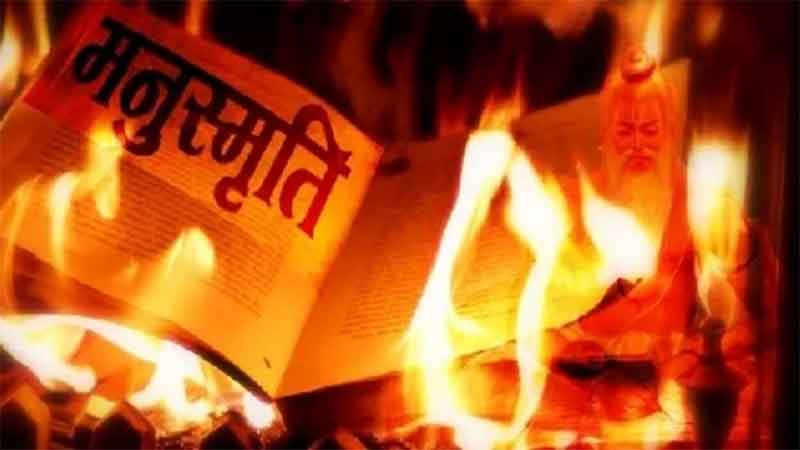
Dr. B.R. Ambedkar, a pioneering leader in India’s Dalit (formerly known as Untouchable) rights movement and the architect of the Indian Constitution, publicly burned copies of the “Manusmriti” (also known as the “Laws of Manu”) on December 25, 1927, during a massive gathering in Mahad, Maharashtra. This event, now commemorated annually as “Manusmriti Dahan Diwas” (Manusmriti Burning Day) or Equality Day, was a pivotal act of symbolic protest rooted in the Mahad Satyagraha—a non-violent campaign demanding Dalits’ equal access to public resources, particularly the Chavdar Tank (a water reservoir historically barred to them by upper-caste Hindus). in Annihilate Caste The “Manusmriti”, an ancient Hindu legal text attributed to the sage Manu (circa 200 BCE–200 CE), outlines the “Chaturvarna” system—a hierarchical social order dividing society into four castes (Brahmins, Kshatriyas, Vaishyas, and Shudras), with Dalits positioned outside as “untouchables.” Ambedkar viewed it as the scriptural foundation of caste-based discrimination, untouchability, and gender inequality, justifying practices like barring lower castes from temples, water sources, and inter-caste marriages. He argued that as long as Hindus revered such texts, genuine reform was impossible, stating in his speech at the event: “It would be futile to expect that any person who revered the Manusmriti could be genuinely interested in the welfare of the Untouchables.” His broader aim was not merely to end untouchability but to uproot the entire “Chaturvarna” system at its ideological core, ridiculing orthodox defenders by saying, “They have not read Manusmriti… we will never accept it.” Ambedkar likened the burning to revolutionary acts like Gandhi’s bonfires of foreign cloth during the independence struggle, emphasizing it as a necessary rejection of oppressive traditions: “If this has become ancient, then why do you have any objection to someone burning it?” He even issued a stark warning: “If unfortunately, Brahminism does not end by burning Manu Smriti, then we will have to either burn the people suffering from Brahmanism or leave Hinduism.” The ceremony itself was defiant: After upper-caste authorities blocked access to venues and supplies, Dalit organizers secured alternative land from a Muslim supporter. Ambedkar arrived by boat to evade transport boycotts, and participants—over 3,000 strong—took oaths affirming equality before the text was ritually torn and burned page by page on an open altar inscribed with slogans like “Bury Brahminism” and “Untouchability should be destroyed.” This act was not an attack on all Hindu scriptures (Ambedkar spared texts like the Vedas or Upanishads, which he saw as less prescriptive of caste) but a targeted strike against what he called the “casteist rulebook” enabling systemic oppression. Impact on Dalits The burning was a transformative moment for Dalits, serving as a clarion call for self-assertion and resistance against centuries of dehumanization. It empowered marginalized communities by rejecting the religious legitimacy of their subjugation, framing equality as a non-negotiable right rather than a charitable concession. For the first time, Dalits actively destroyed a sacred symbol of their oppression, fostering a sense of agency and unity—evident in the event’s scale and the subsequent resolutions passed, which declared Dalits’ equal claim to public spaces and inter-caste solidarity. This act catalysed broader Dalit mobilization, influencing movements like the temple entry campaigns and Ambedkar’s eventual mass conversion to Buddhism in 1956, where nearly 500,000 Dalits renounced Hinduism to escape caste dogma. It laid ideological groundwork for affirmative action policies (reservations) in the Indian Constitution and inspired ongoing Dalit literature, activism, and cultural assertions—such as annual “Dahan Diwas” celebrations that keep the fight against untouchability alive. Today, it remains a beacon for Dalit rights, highlighting persistent issues like caste violence and discrimination, and reinforcing the community’s resolve: as one observer noted, “People still face caste-based discrimination in every aspect of their life.” Impact on Hindu Society For Hindu society, the burning was profoundly disruptive, exposing fractures in the orthodox framework and igniting fierce backlash while sowing seeds of reform. Upper-caste Hindus, particularly Brahminical elites, decried it as an assault on tradition, with media outlets branding Ambedkar “Bhim Asur” (demon Bhim) and intensifying efforts to suppress Dalit gatherings. This polarization deepened communal tensions in Mahad and beyond, underscoring the chasm between reformist and conservative factions. Yet, it compelled introspection and debate on caste’s scriptural roots, challenging the notion that Hinduism was inherently egalitarian and pressuring leaders like Gandhi to engage more directly with untouchability (though Ambedkar critiqued Gandhi’s approach as paternalistic). The event contributed to a wave of social reform, influencing Hindu thinkers to question “Manusmriti’s” authority and paving the way for legal changes like the abolition of untouchability in 1950. Its legacy endures in contemporary Hindu society, where it fuels discussions on caste privilege, gender roles (as “Manusmriti” also subordinates women), and secularism—warning against “cultural fascism” from groups like the RSS that revive hierarchical ideals. Ultimately, Ambedkar’s act reshaped Hindu discourse, making caste critique a mainstream (if contentious) issue and advancing India’s trajectory toward constitutional equality. S.R. Darapuri I.P.S.(Retd), National President, All India Peoples Front Courtesy : Counter Currents Note: This news is originally published on https:/countercurrents.org/bha and is used purely for non-profit/non-commercial purposes, especially human rights
Yogi flags ‘vote bank politics’ over murder of Dalit in B’desh

Lucknow: Chief Minister Yogi Adityanath on Wednesday attacked the opposition for “shedding tears” over victims of the war in Gaza but not uttering a word for a Dalit youth who was murdered in Bangladesh recently. “This is because of your vote bank politics and communal appeasement,” he said. “A Hindu would not have been murdered and set on fire if Bangladesh did not become Pakistan,” he said, asking the opposition to put forward a censure motion against the Bangladesh incident. Yogi said he hoped the opposition would not protest when illegal migrants from Bangladesh and Rohingya are expelled from the country. He accused the opposition of getting illegal migrants registered as voters. “You have even committed the sin of providing them with Aadhar cards as well,” he said. “Everything is going to be screened soon, and action will be taken accordingly,” Yogi said. Responding to the CM, leader of opposition, Mata Prasad Pandey, said that his party was ready to pass a censure motion on the Bangladesh incident. He also countered the CM, questioning him on how he knew if the youth killed was a Dalit. Pandey categorically pointed out that it was the Indian govt which has given protection to exiled former Bangladesh PM Sheikh Hasina. Courtesy : TOI Note: This news is originally published on https:/timesofindia.com/bha and is used purely for non-profit/non-commercial purposes, especially human rights
Three get life term for murdering Thoothukudi Dalit farmer in 2015

The murder was allegedly committed after the victim refused to withdraw a complaint he had lodged against them under the SC/ST (Prevention of Atrocities) Act in 2013. THOOTHUKUDI: The Thoothukudi Protection of Civil Rights (PCR) Court on Wednesday sentenced three accused to triple life imprisonment, one to double life imprisonment, and another to rigorous imprisonment in connection with the murder of a Scheduled Caste farmer in 2015. According to sources, six persons — K Esakkimuthu (36), C Thalavai (45), M Sivaramalingam (34), P Duraimuthu, V Kasi (42) and E Kannan (45), all hailing from Vellur village — were accused of brutally murdering K Arumugaraja (42), a farmer, at Srivaikuntam on April 2, 2015. The murder was allegedly committed after the victim refused to withdraw a complaint he had lodged against them under the SC/ST (Prevention of Atrocities) Act in 2013. The SC/ST Act case was pending before the Srivaikuntam court, in which all the five accused, along with Kannan, were named. During the course of the trial, one of the accused, P Duraimuthu, died. Delivering the verdict, Sessions Judge P V Vasheeth Kumar of the Special Court for trial of cases under the SC/ST Act held the accused guilty of murder. While pronouncing the judgment, the court sentenced Esakkimuthu, Thalavai and Sivaramalingam to triple life imprisonment and imposed a fine of Rs 13,000 each. The court awarded double life imprisonment to Kasi along with a fine of Rs 7,000, and sentenced Kannan to five years of rigorous imprisonment with a fine of Rs 12,000. It may be recalled that prime accused Sivaramalingam, who was also wanted in another case, had attempted to slip away from police watch by sneaking into the Thoothukudi Bar Association premises and a section of advocates sheielded him from police arrest. However, the police contingent led by Assistant Superintendent of Police C Madhan Kumar forced him to surrender before the judicial magistrate. Courtesy : TNIE Note: This news is originally published on https:/thenewindianexpress.com/bha and is used purely for non-profit/non-commercial purposes, especially human rights
Haryana: Dalit minor confined, tortured over suspicion of theft in Palwal, 10 booked
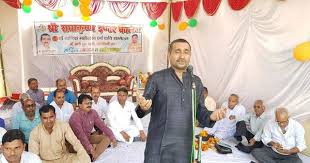
While one person accused in the matter had been arrested so far, three prime accused are absconding. The police in Haryana’s Palwal have filed a case against 10 members of a family for allegedly torturing and wrongfully confining a 12-year-old Dalit boy for several hours after accusing him of theft, the Hindustan Times reported. The incident took place on the night of December 10. While one person accused in the matter has been arrested so far, three prime accused are absconding, the newspaper reported. The members of the family have been charged with voluntarily causing hurt and wrongful confinement. They were also booked under provisions of the Scheduled Caste and Scheduled Tribe Prevention of Atrocities Act and the Juvenile Justice Care and Protection of Children Act. The police was quoted as saying that the family allegedly tied the boy’s limbs and repeatedly gave him electric shocks. The minor told the investigators that he had also been sexually abused by the family. He is being treated in hospital for burn injuries. The boy carries lights during wedding processions to financially support his family. On December 10, he was returning to Banchari village from Hodal town near Palwal with two other children when a car with persons who were allegedly drunk began chasing them at around 11.30 pm. The boy told the police that while trying to escape he jumped into the premises of a house and the other children ran towards the village. The family living in the house caught the minor, suspecting he was a thief, and assaulted him, the newspaper quoted the police as saying. They called the police hours later. The three prime suspects who are absconding filed anticipatory bail petitions on Monday. A hearing in the sessions court on Wednesday was adjourned after a medical report on the injuries sustained by the minor was presented, the Hindustan Times reported. The matter will be heard next on January 8. Courtesy : Scroll Note: This news is originally published on https:/scroll.in/bha and is used purely for non-profit/non-commercial purposes, especially human rights
Mayawati expresses concern over ‘anti-India and anti-Hindu incidents’ in Bangladesh
Referring to the recent killing of a Dalit youth in Bangladesh, the BSP chief said, “The public anger that has erupted on the streets across India over the brutal killing of a Dalit youth there is natural.” BSP president and former Uttar Pradesh chief minister Mayawati on Thursday expressed concern over “anti-India and anti-Hindu incidents” in Bangladesh and urged the Centre to take more effective steps. In a series of posts on her official X handle, Mayawati said, “In recent days, the manner in which anti-India and anti-Hindu incidents are taking place in Bangladesh makes it necessary for the central government to act with greater alertness and take more effective steps in line with people’s expectations.” She said it is well known that Hindu minorities in neighbouring Bangladesh are being subjected to communal violence and persecution. “The way Hindu minorities in Bangladesh are being harassed by targeting their life, property and religion has created a wave of concern not only in our country but also elsewhere,” she said. Referring to the recent killing of a Dalit youth in Bangladesh, the BSP chief said, “The public anger that has erupted on the streets across India over the brutal killing of a Dalit youth there is natural. The Government of India is expected to immediately take proper cognisance of this and play a more active role at every level, which appears to be the need of the hour.” Mayawati alleged that while atrocities, oppression and discrimination against Dalits and tribals had continued in India for centuries, the situation in Bangladesh is no less serious. “Although caste-based hatred, oppression and exploitation against Dalits and tribals continue in our country, the atrocities being committed in neighbouring Bangladesh are extremely painful and a matter of grave concern,” she said. She added that concerns in India over the condition of minorities in neighbouring countries remained constant. She expressed confidence that public support would be with the government on the issue and urged it to pay due attention. Courtesy : Money Control Note: This news is originally published on https:/moneycontrol.com/bha and is used purely for non-profit/non-commercial purposes, especially human rights
India’s shameful failure to grieve Dalits killed for love
A casteist society is built on boundaries: who can touch whom, who can eat with whom, and who can marry whom. These boundaries are not just social; they are moral and symbolic. In a casteiest society, love is never just love. It is regulated, guarded, and violently enforced. For Dalits, love—especially across caste lines—often becomes a crime punishable by death. The repeated killings of Dalits who have fallen in love are not isolated incidents driven by emotion or family anger. They are structured acts of caste violence, deeply rooted in the belief that Dalit bodies are impure, polluting, and undeserving of intimacy in a society where caste plays a dominant role. The recent killing of a Dalit youth in Nanded, Maharashtra for being in a relationship with a dominant-caste woman once again exposes how caste continues to operate through the control of bodies, emotions, and desire. Killings across states—Tamil Nadu, Telangana, Karnataka, Uttar Pradesh, Punjab and others—follow the same script. A Dalit crosses a forbidden boundary, and a casteist society responds with violence. These killings are not merely “honor killings” or “family matters”. They are caste killings, grounded in a long-standing social belief that Dalit bodies are inherently impure and must be disciplined when they challenge caste boundaries through love. Why such killings are brutal and public A casteist society is built on boundaries: who can touch whom, who can eat with whom, and who can marry whom. These boundaries are not just social; they are moral and symbolic. Dalits have historically been placed outside the zone of purity. Their bodies are imagined as polluting, excessive, and out of place. When a Dalit person enters a romantic relationship with someone from a dominant caste, a casteist society sees this as a violation of its moral order. Violence then becomes a means of re-establishing order. This explains why such killings are often brutal and public. They are not only meant to punish the individual but also to send a warning to the entire community: certain boundaries are not meant to be crossed. The killing in Nanded reflects this logic. It was not spontaneous rage. It was a calculated act to erase what caste society perceived as contamination. A silent approval that is disturbing Dominant-caste families treat their lineage, homes as sacred spaces. Dalits are placed on the opposite end, as profane, defiling, and dangerous. When a Dalit man loves a dominant-caste person, a casteist society does not see two consenting adults. It sees sacrilege. This is why caste killings often receive silent approval from families, neighbors, and sometimes even local institutions. The act of violence is normalised as “necessary”, “unfortunate”, or “provoked”. The Dalit body, already marked as profane, is considered expendable. The idea that Dalit bodies are impure is not natural; it is socially produced through repetition. Every act of exclusion, surveillance, humiliation, and punishment reinforces this fiction. From childhood, Dalits learn that they are watched more closely, judged more harshly, and disciplined more violently. Love becomes dangerous not because of emotion, but because a casteist society has trained itself to view Dalit desire as out of place. When violence follows, society asks not whether the killing was wrong, but why the Dalit crossed the line. The lack of grief One of the most disturbing aspects of caste killings is how quickly they disappear from public memory. Media coverage is brief. Public outrage is limited. Legal processes move slowly. The deaths of Dalits rarely become national moral crises. This is because a casteist society does not treat Dalit lives as valuable. Their deaths are not seen as losses that demand collective mourning. They are reduced to statistics, local news, or unfortunate incidents. When a Dalit is killed for loving, the focus often shifts to “family honor”, “social pressure”, or “cultural conflict”. The victim’s humanity disappears. This lack of grief is itself a form of violence. It confirms that Dalit lives are considered less worthy of protection, remembrance, and justice. Caste survives through strict control over marriage and sexuality. The regulation of women’s choices is central to maintaining caste boundaries. A casteist society treats women as carriers of caste purity, and any deviation is seen as a threat to lineage and status. Dalits, in this framework, are imagined as the ultimate danger, not because of who they are, but because of what their presence represents. A relationship between a Dalit and a dominant caste threatens the hereditary transmission of caste privilege. This is why the violence is often directed more harshly at the Dalit partner. Killing the Dalit becomes a way to restore caste order while controlling women through fear and surveillance. Dalit bodies are not only seen as impure; they are also seen as criminal. Dalit desire is portrayed as aggressive, illegitimate, and predatory. This stereotype allows caste society to justify violence as self-defense or moral protection. Police responses often reflect this bias. Complaints are delayed. Cases are diluted. Atrocity laws are underused. The system implicitly agrees with the idea that the Dalit body provoked its death. This criminalisation is not accidental. It is a structural feature of caste society, designed to keep Dalits within prescribed limits. Cases that reveal the pattern Across India, the killings of Dalits for loving across caste follow a disturbingly familiar pattern, revealing how caste power operates through surveillance, discipline, and exemplary punishment. In Nanded, the Dalit youth was murdered for being in a relationship with a dominant-caste woman, not because the relationship harmed anyone, but because it escaped the watchful control of caste society. His death functioned as a warning, a public lesson in what happens when Dalits refuse to remain within prescribed limits. Similar violence has unfolded in Tamil Nadu, where Dalit men have been hacked to death in public spaces after inter-caste marriages, their bodies displayed as proof that caste boundaries are enforced not just socially but physically. In Telangana, the killing of a Dalit groom through a planned contract murder showed how caste power does not act impulsively; it calculates,
Such a punishment for a minor mistake! Dalit shopkeeper surrounded and brutally beaten, head crushed with feet

NS Parmar, Chhatarpur: A video has surfaced from Chhatarpur that is a disgrace to humanity. The incident is reported to have taken place on Jawahar Road in the City Kotwali police station area of the city, where a Dalit youth was subjected to extreme brutality over a trivial matter. The CCTV video clearly shows about half a dozen people surrounding a Dalit shopkeeper. A few seconds later, two of them start attacking him with kicks and punches. The young man is thrown to the ground and brutally beaten. The attackers’ cruelty doesn’t stop there in the video. They are seen pinning the young man to the ground and crushing his head with their feet. He is continuously attacked with kicks and slaps, leaving him severely injured. Bystanders stand by and watch, with no one intervening. The young man who was assaulted runs a mobile repair shop. According to initial information, the dispute arose over a minor mistake during mobile repair, which quickly escalated into a violent attack. The young man was punished with a life-threatening beating for a small technical error. Courtesy: Hindi News