
Congress brought in laws against Muslims and Dalits, Owaisi reveals why Khalid and Imam were denied bail

Asaduddin Owaisi Statement: Owaisi said that the then Home Minister P Chidambaram had introduced the UAPA. He was the only person to oppose it in Parliament. Today, this law is not… Asaduddin Owaisi News: All India Majlis-e-Ittehadul Muslimeen (AIMIM) chief Asaduddin Owaisi has blamed the Congress for Umar Khalid and Sharjeel Imam not getting bail. He said that the stringent UAPA under which Umar Khalid and Sharjeel Imam have been booked was implemented during the Congress government’s tenure. The Hyderabad MP was speaking at a public meeting in the Chandni Chowk area under Amravati, Maharashtra, ahead of the municipal elections. Owaisi said that those who talk about secularism during elections are actually enemies of Muslims, Dalits, and tribals, as they use political secularism to get votes. He said that Khalid and Imam were denied bail by the Supreme Court in the 2020 Delhi riots conspiracy case based on Section 15A of the Unlawful Activities (Prevention) Act. Chidambaram had introduced the UAPA During this time, Asaduddin Owaisi also said that the then Home Minister P Chidambaram (during the Congress government) had introduced the UAPA. He (Owaisi) was the only person to oppose it in Parliament. I was the first to say that the police would use this law against Muslims, tribals, Dalits, and intellectuals who understand and oppose the government’s policies. You can see what has happened today. These two young men could not get bail because of the definition of terrorism in that law. Supported the amendment to UAPA in 2019 Owaisi said that Khalid and Imam have been languishing in jail for 5 years. Meanwhile, 85-year-old Stan Swamy, an accused in the Elgar Parishad case, died in jail due to this very law. He said that when the UAPA was amended in 2019, the Congress party had supported the BJP government, which is now ruining the lives of innocent people. This week, the Supreme Court rejected the bail applications of activists Umar Khalid and Sharjeel Imam in the 2020 Delhi riots conspiracy case, but granted bail to five others, citing their level of involvement. By Ranjan Kumar Courtesy: Hindi News
A village in Meerut is on edge after the murder of a Dalit woman and the abduction of her daughter; the terrified administration has turned the village into a fortress.

The murder of Sunita, a woman from the Scheduled Caste community, and the abduction of her daughter Ruby in Kapsad village of Sardhana in Meerut have sparked a new political storm in the state. In Uttar Pradesh, where Chief Minister Yogi Adityanath is being promoted as a strict administrator by BJP leaders, workers, and his supporters, who claim that the Yogi government has brought law and order back on track during its tenure, the incident in Kapsad village of Meerut exposes the hollowness of these claims. It also raises questions about the “Beti Bachao, Beti Padhao” (Save the Daughter, Educate the Daughter) slogan, which has been widely promoted for the past fourteen years. She too was someone’s daughter, who was abducted in broad daylight by thugs. Her mother was attacked and killed with a sharp weapon, and even after three days, the abducted girl has not been found. The incident took place in Kapsad village of Meerut district. The village has been fortified; if more than 50,000 police personnel, including 20 inspectors and 150 sub-inspectors, have to be deployed in a village, one can imagine that a major incident has occurred. Kapsad village in Meerut has currently been transformed into a military camp. Movement of people has become extremely difficult. The reason for this police crackdown is the abduction of a daughter from a Scheduled Caste family in Kapsad village and the murder of her mother while she was trying to save her daughter from the abductors. The atmosphere is so tense that the police had to conduct a flag march. How did the incident happen? This is an incident from Thursday, January 8th. Sunita, from a Scheduled Caste family, was going towards the fields with her daughter Ruby. It is alleged that Paras Som, Sunil, and their accomplices from Kapsad village attacked Sunita with an axe and abducted her daughter Ruby before fleeing. Ruby was scheduled to get married in April of this year. Ruby’s mother, Sunita, who was injured in the attack, died at a hospital in Modipuram during treatment. This sparked outrage throughout the entire area. Moreover, the abducted girl is still missing, and the police have not yet arrested the named accused. On Friday, the family kept Sunita’s body at home all day. The family categorically stated that they would not perform Sunita’s last rites until their daughter was found. What are the implications of Vinay Katiyar’s involvement? However, later, the family was given a check of Rs. 10 lakh by the government. They were also assured that a family member would be granted a firearms license. In addition, a police force would be deployed in the village for security. Following this assurance, Sunita’s last rites could finally be performed around 7:45 pm. Her son, Narsi, lit the funeral pyre. Earlier, Samajwadi Party, BSP, Bhim Army, ASPA leaders and workers, and local people continued to protest. The police had also transformed the village and the surrounding area into a fortified zone. There was also a commotion when SP MLA Atul Pradhan was stopped outside the village. The victim’s family allowed the MLA to enter the village. Ruling party and opposition face off: The murder of Sunita, a Scheduled Caste woman, and the abduction of her daughter Ruby in Kapsad village of Sardhana has heated up the politics of the state. On Friday, on one hand, there was the grieving family of the abducted daughter, and on the other hand, there was a barrage of accusations and counter-accusations between the leaders of the ruling party and the opposition in the village. Seeing the gathering of the opposition to corner the government, the village was transformed into a fortified zone with police deployed all around since morning. Barricades were erected 2.5 km before the village boundary. More than 500 police personnel, including the SSP, SP Rural, SP Traffic, four COs, 20 inspectors, and 150 sub-inspectors, were deployed in the village. The RAF team was also seen on alert. Samajwadi Party MLA Atul Pradhan was stopped at the border of Kapsad village, where tensions had reached a peak since 7:30 AM. The police had cordoned off the village. The family members refused to perform Sunita’s last rites until the accused were arrested. Samajwadi Party MLA Atul Pradhan, Bhim Army District President Charan Singh, and other activists, along with Congress leaders, set out for the village, but the police stopped them at the border. After nearly 19 hours of struggle, in the presence of former MLA Sangeet Som, SP Rural Abhijit Kumar, and ADM City, the police gave a written promise that Ruby would be found within 48 hours. A family member would also be given permanent employment at the local sugar mill. Following this, the MLA and others sat on a dharna (protest) on the road outside the village. The situation remained tense throughout. At one point, it seemed as if the police might resort to a lathi charge, although this did not happen. The Samajwadi Party MLA said that a Scheduled Caste woman had been murdered and her daughter kidnapped. If this had been a case involving another community, bulldozer action would have already been taken. The victim’s family sat on the dharna with the MLA. After about an hour and a half of slogans and arguments, Sunita’s husband Satendra and son also arrived and joined the protest. The situation became so volatile that the police had to give way. After this, everyone reached Sunita’s house. The most emotional moment during the protest came when Sunita’s eldest son, Narsi, weeping, hugged MLA Atul Pradhan. He asked, sobbing, “MLA, just tell me, will my sister ever come back?” This question brought tears to the eyes of everyone present. The family is demanding that their daughter, Ruby, be rescued from the clutches of the kidnappers and brought back safely. They are also demanding the immediate arrest of the main accused, Paras Som, and his accomplices. They want bulldozers to be used to demolish the houses of the accused. They
Book Review | The True Desperation of Odisha’s Dalit Lives

All in all, it’s a disturbing, provocative read, but the translation lets the story down occasionally This is a retelling of a true story. In 2012, an argument over a missing vest ignited a storm that ended in the destruction of forty Dalit houses in the village of Lathore in Odisha. Upper caste anger over the unproven theft of this vest by a Dalit youth led to hours of fire and violence. The author says in his preface that he contacted senior administrators and police officials asking them to persuade the District Collector to help the victims, but nothing ever happened: at the time the book’s translation was complete, the victims were still waiting. As the story begins, Makaru Suna, a young Odiya tribal, is on the train to Lathore from Raipur, Chhattisgarh. In his third-class compartment, he witnesses fellow passengers dumping garbage — peanut shells, for instance — or encouraging small children to urinate on the floor. The mess is wiped up later by a skinny lad who prefers cleaning up other people’s messes to begging, but the sight evokes an inexplicable rage in him. Makaru has boarded the train on hearing of the destruction by fire of the Dalit basti where his relatives live. Along the journey, he takes a walk in his mind, remembering his own departure, years ago, fromhis village, Banjipali, near Lathore. As a youngster, he had been forced to violence by an upper caste lad — a serious crime. The reparations demanded were a large sum of money to be paid by next morning, or his own life. He and his parents fled to Raipur, where he found work as a peon, his father got a rickshaw, and his mother began to work as a housemaid. They now live a life of poverty, but have hope and some dignity. His arrival in Lathore — Harishankar Road in Railways parlance — at the end of his present journey — opens up a whole new area of horror — and of the discovery of how his life in Raipur has let him drift so far away from the culture and gods of his childhood. And the focus shifts to the one thing that hasn’t changed in all these years — the troubles of Odisha’s Dalits. Makaru’s reminiscences include the troubles of his grandfather and his two brothers, who settled in three nearby villages, Lathore, Banjipali, and Larki, where they suffered at the hands of the upper castes and the British. In Lathore, he meets Chitrasen Suna, Chitra-da to Makaru, who had worked his way up from the bottom and achieved some kind of status in his society. In the destruction of the basti, Chitra-da has lost his all, and, perhaps due to age, the will to fight to get it back. The days that Makaru spends with Chitra-da in the relief camp leave him with a sense of quiet desperation, for he sees victims treated like criminals while the bullies walk free. And so, when Makaru boards the train back to Raipur, he carries this quiet hopelessness back with him. The story is enriched by insights into how the exploitation gathers momentum. For example, Marwari traders start with brass utensils for barter, then sell more wares, then lend money for interest, and, eventually, become usurers creating slavery through unpaid — and mounting — debt. They exploit the villagers hiding behind the more capable villagers, selecting them for better-paying activities than the traditional cattle-herding. All in all, it’s a disturbing, provocative read, but the translation lets the story down occasionally. From what this reviewer gathered, the Odiya version shines with simplicity and integrity. The translation dilutes both. Courtesy : DC Note: This news is originally published on https:/deccanchronicle.com/bha and is used purely for non-profit/non-commercial purposes, especially human rights
MP: Tribal Woman Gang-Raped in Harda; Four Accused, Including Dhaba Owner, Two in Custody

This incident once again brings to light the horrific reality of the exploitation of tribal women in the name of safety and employment. Bhopal. A very serious and shocking case of gang rape of a tribal woman has come to light in Harda district of Madhya Pradesh. Four people, including the owner of a roadside eatery (dhaba) located on Khudiya Road under the Sirali police station area, are accused of holding a 27-year-old tribal woman captive and raping her. The police have taken swift action and taken two of the accused into custody, while the search for the remaining two is underway. Lured with the promise of a job, then subjected to brutality In her statement to the police, the victim said that on January 6, the dhaba owner, Anand Rajput, lured her with the promise of a job at his eatery. Using this pretext, he took the woman to the dhaba on Khudiya Road on his motorcycle. According to the victim, she was given alcohol there at night, which rendered her semi-conscious. During this time, Anand Rajput, along with his three accomplices, raped her. The victim also stated that Kanha Rathore, a resident of Sirali, also played an active role in this inhumane act. According to the woman, she was threatened when she resisted and was held captive under duress. Giving details of the case, Robert Girwal, Sub-Divisional Police Officer (SDOP) Khirkiya, said that a case was immediately registered on Thursday based on the victim’s complaint. After preliminary investigation, the police have rounded up two of the accused. Separate teams have been formed to arrest the remaining two accused, and raids are being conducted at possible locations. The SDOP said that the case is being investigated seriously, and necessary evidence is being collected while the victim’s medical examination is being conducted. A case has been registered against the accused under stringent sections of the law. Questions raised again about the safety of tribal women This incident once again brings to light the horrific reality of the exploitation of tribal women in the name of safety and employment. Cases of women being lured from rural and tribal areas under the pretext of providing employment, being drugged and then subjected to crimes, and subsequently threatened and intimidated, are constantly coming to light. Social organizations say that incidents of crimes against women are increasing in the name of providing work at roadside eateries, brick kilns, and in the unorganized sector, but the system of monitoring and accountability is weak. In a conversation with The Mooknayak, tribal activist Sunil Adivasi said, “The gang rape of a tribal woman in Harda district is not just a single criminal incident, but it shows how insecure women in tribal society are. They are lured under the pretext of providing work and then exploited. This is a failure of the system. In such cases, not only should arrests be made, but the accused should receive the harshest possible punishment, and the victim should receive complete protection and justice. Until there is a strict policy and concrete action on the ground regarding the safety of tribal women, such crimes will not stop.” Tribal Congress attacks the government In a conversation with The Mooknayak, Ramu Tekam, the state president of the Tribal Congress, targeted the BJP government, saying, “The continuous incidents against tribal women in Madhya Pradesh show that law and order have completely collapsed under the BJP government. There is neither security nor sensitivity from the government in tribal areas. Tribal women are being exploited in the name of work and employment, but the government is turning a blind eye. In this case, not only superficial action should be taken, but the accused should be given strict punishment after a trial in a fast-track court, and the victim should be guaranteed justice and security at every level.” Investigation underway, arrests claimed The police say that the identities of the remaining accused are clear and they will be arrested soon. During the investigation, the activities at the roadside eatery, the statements of other people present there, and CCTV footage (if available) are also being examined. Situation alarming in NCRB data Madhya Pradesh has long been a subject of discussion across the country for crimes against women, especially rape cases. The situation did not improve much in 2023 either. The NCRB report shows that the state ranked third in the country in terms of rape incidents. 2,979 cases were registered here within a year. Rajasthan topped the list with 5,078 incidents, while Uttar Pradesh saw 3,516 cases. These figures clearly show that the safety of women in the state remains a major challenge. Although the government has launched several schemes and helpline numbers for the safety of women, their impact at the ground level is very limited. Ankit Pachauri Courtesy: Hindi News
Telangana: Police Officers Booked Under SC/ST Act in Dalit Prisoner’s Death Case; Action Taken on Mother’s Complaint
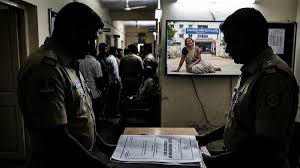
Major action taken in the death case of prisoner Karna Rajesh, who was lodged in Huzurnagar sub-jail; CI suspended, SI transferred, and a case registered against police officers under serious sections based on the mother’s complaint. Suryapet: Major action has been taken against police officers in the case of the death of a Dalit undertrial prisoner in Suryapet district of Telangana. Kodad DSP Sridhar Reddy confirmed on Friday that a second case has been registered against the police personnel following a complaint from the deceased’s mother, Karna Lalitha. Chilkur SI Suresh Reddy and Kodad Rural CI Pratap Lingam have been named in this case. What is the whole case? According to the DSP, this new case (Crime No. 245/2025) has been registered under sections of the SC/ST (Prevention of Atrocities) Amendment Act, 2025. The deceased, Karna Rajesh, was lodged in Huzurnagar sub-jail, where the incident occurred on November 16, 2025. Rajesh later died while undergoing treatment at Gandhi Hospital in Secunderabad. Initially, after the incident, Crime No. 223/2025 was registered at Huzurnagar Police Station under Section 196 of BNSS. This case is being investigated according to the guidelines of the National Human Rights Commission (NHRC). CI suspended, orders for impartial investigation Following the complaint filed by Rajesh’s mother, the administration has taken strict action. The Kodad Rural CI has been suspended with immediate effect, while the Chilkur SI has been transferred. To maintain transparency and impartiality in the investigation, the Additional Director General of Police (Multi-Zone II) has appointed DSP G. Ravi of Nalgonda DCRB as the Investigating Officer (IO) in this case. Victim’s family receives ₹4.12 lakh compensation DSP Sridhar Reddy said that the district administration had sanctioned a compensation amount of ₹4,12,500 for the victim’s family. This amount was approved based on proposals sent by Suryapet SP K. Narasimha. The Chairman of the Telangana State SC and ST Commission handed over the compensation check to Rajesh’s mother, Lalitha, on December 26. Police say that further action is being taken in both registered cases under the relevant legal provisions. Rajan Chaudhary Courtesy: Hindi News
Haryana police arrest social media influencer Hansi Khan for offensive remarks against Dalit community

Hansira, sitting in her car at a petrol pump, compared long CNG queue to Dalit community in an offensive and obscene manner PTC Web Desk: The Haryana Police have arrested Mewati social media influencer Hansira, also known as Hansi Khan, from Punhana sub-division after she allegedly made derogatory remarks against the Dalit community. The case has been registered under the SC-ST Act. According to a police spokesperson, the Punhana City Police Station registered an FIR following a complaint by a local youth. Due to the sensitive nature of the matter, Hansira was taken into custody during the investigation and later sent to jail under judicial custody. The complaint stated that in a viral Facebook video, Hansira, sitting in her car at a petrol pump, compared the long CNG queue to the Dalit community in an offensive and obscene manner. This hurt the sentiments of the community, prompting the complaint. Although Hansira later posted an apology video on social media, the police continued the investigation under the SC-ST Act and proceeded with her arrest. The police have described the case as highly sensitive and are carrying out further investigations. Reports also note that Hansira has a significant following on social media, with over 1 lakh followers across YouTube, Facebook and Instagram. – With inputs from agencies Courtesy : PTC News Note: This news is originally published on https:/ptcnews.com/bha and is used purely for non-profit/non-commercial purposes, especially human rights
Heart-wrenching incident in Meerut: Dalit mother murdered for resisting compounder’s molestation, daughter abducted by the accused who then fled.

Angry villagers pelted stones, and a large police force from Sardhana and surrounding police stations has been deployed to control the situation. Meerut – A heart-wrenching incident in a small village under the Sardhana police station area of Meerut district in Uttar Pradesh on Thursday shocked the entire area. Local compounder Paras Rajput murdered Dalit woman Sunita with an axe. Sunita, approximately 40 years old, was going towards the fields with her daughter when Paras attempted to molest Ruby. When the mother intervened, the accused angrily attacked Sunita’s neck with a sharp weapon. After this, Paras put Ruby in his Scorpio car and fled. Sunita was taken to the hospital where she died in the evening during treatment. Upon receiving news of her death, people created a ruckus and vandalized the hospital. Angry villagers created a disturbance as soon as Sunita’s body arrived in the village in an ambulance. They pelted stones at the ambulance and damaged the vehicle. When the police tried to send the body for post-mortem, the villagers stopped them, shouting slogans like “Give us justice, don’t take the body.” A large police force from Sardhana and surrounding police stations has been deployed to control the situation. The police somehow managed the situation and sent the body for post-mortem. Upon receiving the information, SSP Dr. Vipin Tada and SP Rural Abhijit Kumar reached the spot with their forces. The police conducted raids to arrest the accused, but no one was apprehended. The accused’s house was found empty by the police. The victim’s brother, Narsi Kumar, reached the police station and filed a complaint. Based on the complaint, the police have registered a case against the accused Paras. SSP Dr. Vipin Tada has formed five teams under the leadership of the SP Rural in this matter. Police have taken the grandparents of Paras Rajput, the accused in the murder and kidnapping case, into custody, while the accused’s parents and brother are reportedly on the run. Police teams are conducting raids in search of the main accused, Paras. There is still no trace of Ruby, and the family has appealed for her safe return. This sensational incident has raised serious questions about law and order in Uttar Pradesh. Samajwadi Party MLA Atul Pradhan visited the hospital and met with the victim’s family. He has demanded immediate justice from Chief Minister Yogi Adityanath. The Congress party also strongly criticized the state of law and order in the state and demanded justice for the affected family. Bahujan Samaj Party chief and former Chief Minister Mayawati issued a statement on social media describing the incident as “extremely tragic, shameful, and worrying.” She said that the government should take such incidents of molestation and murder of women very seriously and take immediate strict action against the culprits so that criminal elements are deterred from committing such heinous acts. Mayawati specifically drew the government’s attention to the issue of women’s safety. Geetha Sunil Pillai Courtesy: Hindi News
Dharamshala: Violent protest outside DC office over Dalit student’s death, fatherbreaks down in tears, says ‘We only want justice’

15-day ultimatum: In the absence of forensic evidence, a medical board will now conduct the investigation; father says, ‘We only want justice’ Dharamshala: The case of the death of a 19-year-old Dalit student in Dharamshala, Himachal Pradesh, is escalating. On Thursday, various Dalit organizations, along with the deceased’s parents, staged a strong protest outside the Deputy Commissioner’s (DC) office. They were demanding swift justice in the case of the student’s death, which occurred on December 26. It is noteworthy that the victim was a student at Government College, Dharamshala. Following her death, allegations of continuous ragging, along with severe physical, sexual, and mental harassment, have been made. Father’s pain: ‘We just want justice for our daughter’ The atmosphere became somber during the protest when the deceased’s father, Vikram Kumar, addressed the media. While speaking, he couldn’t control his tears and said with a choked voice, “We want justice for our daughter… that’s all I have to say.” He expressed gratitude to all the people and organizations who stood with the family during this difficult time and said that now they are only waiting for justice for their daughter. 15-day ultimatum to the administration The workers of Maharishi Valmiki Guru Ravidas Mahasabha and Baba Deep Singh Kalipul Seva Organization (Una), who participated in the protest, have given a clear warning to the administration. They clearly stated that if appropriate legal action is not taken within 15 days, they will be forced to intensify their movement. The organizations warned that they might even resort to measures such as blocking the Punjab-Himachal Pradesh border and staging a road blockade in Dharamshala city. Questions raised about the intentions of the police and administration Amit Valmiki, president of Maharishi Valmiki Guru Ravidas Mahasabha, expressed deep anger over the slow pace of the investigation. He said that many days have passed since the incident, but justice is still a long way off. Questioning the administration, he said, “If the government and the administration were serious, justice could have been delivered in a single day.” Valmiki expressed suspicion about the kind of pressure the administration and police were under, which was causing the case to be handled so sluggishly. He said that the parents’ participation in the protest shows how frustrated they are with the progress of the investigation. Meanwhile, Balwant Singh, a worker of Baba Deep Singh Kalipul Seva Organization, Una, submitted a memorandum to the Deputy Commissioner of Kangra, demanding swift action. He said, “Today this has happened to one student, tomorrow it could happen to someone else. If pressure is exerted for compromises, the crimes will not stop.” Lack of Forensic Evidence and Formation of a Medical Board Currently, several agencies, including the police, UGC, State Education Department, Scheduled Castes Commission, and Women’s Commission, are investigating the case. The police are meticulously examining the deceased student’s mobile call records and social media activity to find any clues related to ragging or the attack. However, the biggest challenge for the investigating agencies is the lack of crucial forensic evidence. The fact that the student’s post-mortem was not conducted and the cremation was done hastily has prevented investigators from obtaining DNA samples and vital medical inputs. To compensate for this deficiency, officials at Dr. Rajendra Prasad Government Medical College and Hospital, Tanda, have constituted a five-member medical board. This board will examine the records of the hospitals where the student was treated before her death. Kangra Superintendent of Police (SP) Ashok Ratan said that the board will submit an evidence-based report, which will help determine the exact cause and circumstances of death. Rajan Chaudhary Courtesy: Hindi News
Humanity shamed in Bijnor: Dalit youth returning with medicine brutally beaten with shoes and slaps, forced to touch their feet
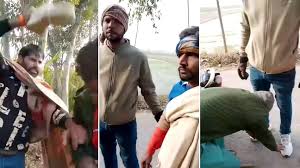
A video has surfaced showing a young man being brutally beaten in Bijnor. The incident is reported to have taken place near Dhokalpur village in the city’s Kotwali area. Dalit youth beaten in Bijnor Bijnor: In Dhokalpur village of Bijnor, Uttar Pradesh, a Dalit youth returning with medicine was stopped on the way by some influential young men who not only brutally beat him but also slapped him repeatedly and hit him on the head with shoes. After the video of the entire incident went viral on social media, the police took action and registered a case against three people and started searching for them. The viral video, which is about one minute and 36 seconds long, shows some young men surrounding the victim, first verbally abusing him, and then taking turns slapping and beating him with shoes. In the video, the victim is seen constantly pleading for forgiveness with folded hands. He even begs for mercy by holding the feet of the accused, but the bullies continued to beat him. According to local people, the accused first removed the victim’s cap and then continuously slapped his face and head. After that, one of the accused took off his shoe and hit the young man on the head with it. In just a few moments, the victim was hit with more than ten slaps and over a dozen shoes on his head. During the beating, the victim kept mentioning his mother’s illness and said that he was returning with medicine, but despite this, the accused did not listen to him. According to sources, the victim is a resident of Dhokalpur village, while the three accused are said to be from another nearby village. It is being said that the victim and the accused belong to different communities and the young man belongs to the Dalit community. A past dispute is also being cited as a possible reason behind the incident. Meanwhile, CO City Sangram Singh said that a video is going viral in which Kamal, a resident of Dhokalpur village, is being beaten by Himanshu and his two other companions from the same village. In this case, based on the victim’s complaint, the police have registered a case under serious sections of the law and are conducting raids to arrest the accused. Compiled by: Abhishek Shukla About the Author Abhishek Shukla is a Senior Journalist at Navbharat Times. He works here as a Senior Digital Content Creator. He has 9 years of experience in journalism. He has been working at Navbharat Times for the past 6 years. Courtesy: Hindi News
The plight of sanitation workers from the Valmiki community in Jodhpur: The District Collector is bent on making them do the work of four people, a complaint will be filed with the Human Rights Commission against this inhumane treatment!
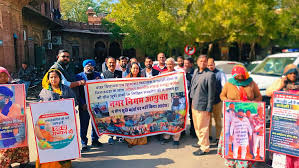
BJP government accused of ‘Manu mentality’ Jodhpur – The sanitation workers’ movement in the Jodhpur Municipal Corporation of Rajasthan is no longer limited to street protests, but has also become a sharp written struggle at the administrative level. Sardar Prakash Singh ‘Vidrohi’, the district president of the All India Safai Mazdoor Congress, has written a strong letter to the District Collector, directly targeting the shortcomings in the sanitation system. The letter makes serious allegations against Municipal Commissioner Siddharth Palanichamy of suppressing the Valmiki community, protecting non-Valmiki employees, and issuing arbitrary orders. Vidrohi has warned that if the demands are not met, the organization may file a complaint against the officials with the Human Rights Commission and pursue legal action. Vidrohi termed this the ‘Manu mentality’ of the BJP government, which is a violation of constitutional rights. This letter marks a significant turning point in the movement that has been ongoing for the past few months, starting from November 17, 2025. From semi-naked protests in the cold to threats of a broom-down strike, the sanitation workers’ struggle is centered on the dignity of the Valmiki community and the issue of equal workload. Vidrohi’s letter highlights the burning problems of the sanitation workers in three main points. This letter not only questions the policies of the Municipal Commissioner but also points a finger at the role of the District Collector, who himself is actively involved in sanitation system meetings. The main points of the letter are as follows: Impractical order for nighttime sanitation system: According to Municipal Commissioner’s letter number 3585, dated January 4, 2026, instructions have been issued to ensure sanitation services from 8:00 PM to 2:00 AM. Ward in-charges have been ordered to provide sanitation workers. The protesters have questioned the rationale behind such an order, given that ward in-charges do not have any reserve sanitation workers at their disposal. Even if employees were available, what arrangements are in place at the municipal level for their safety and security? Who will be responsible for the lives and property of sanitation workers who are forced to work in the dark of night? This order is not only impractical but also jeopardizes the safety of the employees. Opposition to undue pressure on Valmiki employees and the appointment of non-Valmikis: The letter directly questions the Collector, asking why he himself gives directives in sanitation meetings at the municipal office, but these directives only apply to Valmiki sanitation workers? Has he ever requested a list from the Commissioner of those sanitation workers who have not been performing sanitation duties for the past 7 years? Most of these are non-Valmikis, and their inaction is causing the entire sanitation system to collapse. The protesters argued that if the responsibility for sanitation rests solely with Valmiki employees, then why are non-Valmikis being appointed to sanitation positions? These employees accept the appointments but then shirk their primary duty of sanitation work. The Collector is accused of pressuring Valmiki employees in meetings – trying to make them do more and more work, even attempting to make one employee do the work of four. This is inhumane. The Municipal Act stipulates 5 sanitation workers per 1000 population, but in reality, a ward has a population of 10-15 thousand, and there are only 15-20 employees. The protesters suggested that if a well-organized sanitation system is desired, then sufficient employees should be appointed in each ward to reduce the burden and ensure proper functioning. Biased Use of the Monitoring Team: The Collector has formed a supervisory team to improve sanitation, but this team is only monitoring the working (primarily Valmiki) employees. The activist asked whether such monitoring has ever been imposed on the negligent, lazy, and non-performing non-Valmiki employees? The answer is no, because the administration itself is protecting them. This is why they are acting with impunity, and the commissioner remains a silent spectator. At the end of the letter, the activist issued a strong warning: “For this, the organization will be forced to file a complaint with the Human Rights Commission against such officers and initiate legal proceedings, for which you will be solely responsible.” BJP Government Accused of ‘Manu Mentality’ In a conversation with ‘The Mooknayak’, the activist delved deeper into the root of the movement. He said, “Things are very bad for sanitation workers in Jodhpur. The municipal commissioner is working to suppress the Valmiki community. The current BJP government has a Manu mentality towards the Valmiki community. They are giving benefits to non-Valmiki sanitation workers, not making them do sanitation work, and have placed them in other departments. This is against the Constitution, but the municipal commissioner is running his own law. He is issuing orders as he pleases, acting arbitrarily. The opposition Congress is also helpless. The struggle has been going on since November 17, 2025, but the solution is still zero.” The activist emphasized that there are 3300 sanitation workers in Jodhpur, of which 700 are non-Valmiki. Due to their failure to perform sanitation work, the entire burden has fallen on the Valmiki community. The area of 60 wards has now increased to 100, doubling the pressure. The ward changes for 2000 employees on November 15, 2025, added fuel to the fire. He reminded that the agreement reached in the presence of MLAs Atul Bhansali and Devendra Joshi is not being followed, where the promise was made to restore original positions and assign women and disabled employees to nearby wards. Geetha Sunil Pillai Courtesy: Hindi News