
Will restore glory of Parkal: Revuri
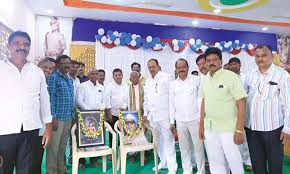
Hanumakonda: Parkal MLA Revuri Prakash Reddy stated that he would bring back the past glory of the historic town of Parkal and that Dalit settlements would be developed as model colonies. Reddy attended the Padmashali community cordial meeting in Parkal centre on Sunday, and the Madiga community cordial meeting. Prior to the programmes, he paid floral tributes to the portraits of Sri Bhakta Markandeya and Konda Laxman Bapuji. Addressing the gatherings separately, he said Dalits have always stood with the Congress and that the government gives top priority to their welfare. They played a significant role in the party’s victories in the Assembly and Parliament elections. He assured that Dalit settlements would be developed as model colonies with all basic facilities. Reddy alleged that the BRS cheated Dalits, stating that KCR had promised to make a Dalit the CM and claimed he would be a “protector of Telangana.” He emphasised that Sonia Gandhi’s contribution to State formation is unforgettable and that uplift and welfare of Dalits is the primary objective of the party. He said the Madiga and Padmashali communities played an active role in ensuring his victory. He appealed to the Madiga and Padmashali brothers who supported the party in the last elections to extend the same cooperation in the upcoming municipal polls and work for victory of Congress candidates. He called upon party workers to ensure the party wins all 22 wards in the municipal elections and to hoist the Congress flag on Parkal soil. He stated that drinking water supply, CC roads and drainage are being established under a special DPR system. Parkal would be developed as an educational centre; as part of this initiative, Young India International School, skill development centres, and TASK Centres are being set up. Courtesy : THI Note: This news is originally published on https:/thehansindia.com/bha and is used purely for non-profit/non-commercial purposes, especially human rights
Guru Ravidas for all, especially Dalits
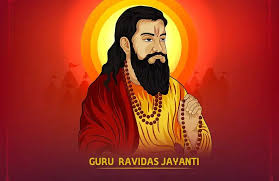
The visit of Prime Minister Narendra Modi to Dera Sach Khand Ballan un Punjab on February 1, 2026, to commemorate Ravidas Jayanti as well as the Padma Sri awarded to its patron saint Niranjan Das and all the attention has reinforced the contemporary relevance of Guru Ravidas, said Prof. Kumool Abbi. The unerring focus references the crystallisation of Dalit identity and the continuing patronage of various pilgrimage sites associated with Guru Ravidas. The most significant role in spreading the universal message of Guru Ravidas has been played by the Dera Sach Khand Ballan, in Punjab, which is a site of revitalised Dalit faith and continues to have a deep influence on Dalit lives across the globe. The building in Seer Govardhanpur in Benares has now become a very important pilgrimage site as well as a rallying point for the Dalits. Sri Guru Ravidas Janmasthan Mandir attracts visitors from across the world to commemorate his birth anniversary. A pilgrimage to the magnificent temple is consummate: it is where one goes for religious, political and social awakening. Guru Ravidas, a 15-16 Century bhakti poet, regarded as a contemporary of Kabir, is also said to have met Guru Nanak. Guru Ravidas firmly and steadfastly stood up for those on the marginalised sections of society and fought against Brahminical hegemony, dogma, ostentation, oppression, superstition and ritualism. He tried to reform the casteist and discriminatory practices dominant in that period. He was a voice of the oppressed and the subaltern. Born in a family of leather tanners, a profession he nobly practised and considered his Keerat (vocation), loftily continuing it all his life. His thoughts, poetry and life in practice, reflected his constant struggle to bring about social change by stirring the consciousness of the masses. He was consumed by the love of the divine. As he elucidates, “meri preet Gobind sio ji na ghatah, main mol mehngi lai jia satah (my love for the Lord of the universe does not decrease, I paid for it dearly in exchange for my soul)”. Forty-one shabdas of Ravidas bani have been included in the Guru Granth Sahib in the form of different ragas. Similarly, the Panchvani texts of the Dadupanthi tradition have incorporated some of Ravidas’ texts. His works contain the common thread of unflinching devotion to God who is projected in an abstract form as Nirguna (without attributes). It is believed Meera Bai, Queen Jhallan Bai of Chittorgarh and Raja Nagar Mel of Benares were his devotees. Guru Ravidas’ teachings and bani resonate across modern-day Punjab, Haryana, Rajasthan, Maharashtra, among others. He is regarded as the personification of Dalit identity and its subsequent assertion and expression. An icon of progressiveness and activism, Guru Ravidas visualised an ideal society of Begumpura, where no sorrow, discrimination, differences and oppression would exist. Courtesy : The Hindu Note: This news is originally published on https:/thehindu.com/bha and is used purely for non-profit/non-commercial purposes, especially human rights
Swami Prasad Maurya launches a major attack on Akhilesh Yadav’s PDA, says D sometimes means Dalit and sometimes Dimple
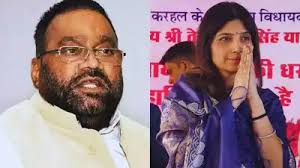
Swami Prasad Maurya on PDA: Swami Prasad Maurya has launched a major attack on Akhilesh Yadav’s PDA. In this context, he has also targeted Dimple Yadav. Lakhimpur Kheri: Swami Prasad Maurya, the chief of Apna Janata Party, who arrived in Lakhimpur Kheri, Uttar Pradesh, has targeted Samajwadi Party chief Akhilesh Yadav. Akhilesh Yadav has once again started sharpening his Backward, Dalit, Minority (PDA) politics ahead of the 2027 UP assembly elections. Meanwhile, Swami Prasad Maurya has targeted Akhilesh’s PDA politics. He also seems to be hinting at entering the electoral fray with his own separate political ideology. In the 2022 UP elections, Swami Prasad Maurya had left the BJP and joined the Samajwadi Party. However, at that time, Swami Prasad Maurya was not even able to save his own assembly seat. Swami Prasad Maurya targets Dimple Apna Janata Party chief Swami Prasad Maurya seems to be directly targeting Akhilesh Yadav’s PDA as well as his wife and Mainpuri MP Dimple Yadav. Swami Prasad Maurya is saying that for Akhilesh, the ‘D’ in PDA sometimes means Dalit and sometimes Dimple. Now, this issue is expected to heat up the political scene. What is the full statement? While talking to the media, Swami Prasad Maurya said that Akhilesh Yadav’s PDA is a hodgepodge. How can someone who doesn’t understand the meaning of PDA talk about PDA? Akhilesh Yadav explains the meaning of PDA according to his convenience. Sometimes he says the ‘P’ in PDA means Backward, and sometimes he calls it Pandit. The ‘D’ sometimes means Dalit and sometimes refers to Dimple Yadav. Swami Prasad Maurya further said that Akhilesh also gives different meanings to the ‘A’ in PDA. Currently, he says ‘A’ means Forward. He keeps changing the meaning of PDA according to the time and his convenience. Swami Prasad Maurya had recently attacked the upper caste community regarding the UCC law. Now he is seen targeting Akhilesh. Curated by: Rahul Parashar About the Author Rahul Parashar is a Senior Journalist at Navbharat Times Online. He has 20 years of experience covering politics, current affairs, development, bureaucracy, education, health, and ground reporting. In the early days of his career, he covered administration and civic issues. He also honed his skills in political journalism in Bihar, Jharkhand, and Uttar Pradesh. Courtesy: Hindi News
Report finds Adivasi, Muslim, and Dalit communities targeted through politically driven violence in Telangana
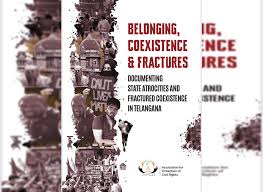
A fact-finding report released by the Association for Protection of Civil Rights (APCR) has concluded that recent incidents of communal violence and social tension across Telangana are not isolated events but part of a broader pattern of politically driven polarisation, institutional bias, and administrative failure, particularly affecting Adivasi, Muslim, Dalit, and other marginalised communities. Titled “Belonging, Coexistence & Fractures: Documenting State Atrocities and Fractured Coexistence in Telangana”, the report is based on field visits, survivor testimonies, interviews with local residents and activists, and an analysis of official records across multiple districts, including Hyderabad, Medchal–Malkajgiri, Narayanpet, Medak, Nizamabad, Nirmal, Adilabad, and Bhainsa. According to the report’s executive summary, many flashpoints in Telangana began as local disputes over land, religious practice, noise, interpersonal conflicts, or administrative decisions, but were subsequently escalated into communal confrontations through organised political mobilisation, misinformation campaigns, and provocative public actions. The report attributes a central role in this escalation to right-wing organisations and affiliated local networks, particularly during politically sensitive periods such as elections. A key outcome of the report is its finding that state institutions, especially the police and district administrations, have frequently failed to act impartially. In several cases documented by APCR, members of Muslim and other minority communities faced delayed police responses, excessive force, false criminal cases, custodial violence, or pressure to withdraw complaints. Oversight bodies such as the SC/ST Commission and the National Human Rights Commission were described as largely inaccessible or ineffective at the ground level, contributing to what the report terms a “climate of impunity.” The report also highlights how communal narratives are being used to divert attention from structural issues such as land alienation, unemployment, erosion of public services, and unequal access to welfare schemes. It notes that Adivasi, Dalit, and Muslim communities, despite sharing similar economic vulnerabilities, are increasingly positioned against one another through identity-based mobilisation, weakening possibilities for collective resistance. Importantly, APCR’s findings do not portray Telangana as uniformly divided. The report documents several instances where communities have resisted polarisation, continued everyday coexistence, and intervened to prevent violence. Civil society groups, women, and youth initiatives are identified as playing a critical role in supporting survivors and de-escalating tensions in the absence of effective state intervention. Concluding its assessment, the report states that communal violence in Telangana is neither inevitable nor driven primarily by grassroots hostility. Instead, it argues that such violence is increasingly “manufactured and sustained” through political strategies that benefit from social division. APCR said the report is intended to serve as a starting point for further public scrutiny, institutional accountability, and policy intervention aimed at safeguarding coexistence, dignity, and constitutional rights in Telangana. Speaking to Maktoob, Nadeem Khan, national secretary of APCR, said, “Our findings show that communal violence in Telangana is not spontaneous or inevitable. In most cases, local disputes are deliberately escalated through political mobilisation, misinformation, and selective state action.” He added, “What we repeatedly observed on the ground was the manufacture of communal flashpoints—small, resolvable issues being transformed into large-scale tensions through organised intervention by right-wing groups.” He further said, attributing this to the report, “Adivasi, Muslim, Dalit, and other marginalised communities are being pitted against one another, despite sharing the same vulnerabilities—land insecurity, unemployment, and weak access to welfare,” and that “instead of acting as neutral protectors, state institutions often became part of the problem. Delayed responses, biased policing, and false cases against victims were recurring patterns across districts.” “Communal violence in Telangana today is better understood as a political strategy than a social reality. Division benefits those in power, while ordinary people bear the cost,” Khan told Maktoob. The report calls for independent investigations into cases of custodial deaths and alleged fake encounters, accountability for hate speech and inflammatory mobilisation, protection of land and housing rights, and reforms to ensure equal treatment of all communities by law enforcement and administrative authorities. Ghazala Ahmad Courtesy : Maktoob Media Note: This news is originally published on https:/maktoobmedia.com/bha and is used purely for non-profit/non-commercial purposes, especially human rights
UP: Dalit Youth Playing ‘Ravana’ in Ramlila Loses Eye, FIR Filed Against Youth Playing ‘Rama’

Incident during Ramlila in Sonbhadra: ‘Rama’ shot sharp arrows into ‘Ravana’s’ eye from a distance of 5 feet, savings exhausted on treatment, now receiving death threats Sonbhadra: A shocking and disturbing incident has come to light from Sonbhadra district of Uttar Pradesh. Here, during a Ramlila performance, the interplay of faith and acting turned into lifelong darkness for a Dalit youth. The right eye of 35-year-old Sunil Kumar, who was playing the role of ‘Ravana’ on stage, was completely damaged by an arrow shot by the youth playing the character of ‘Lord Rama’. The victim alleges that this was not merely an accident, but a deliberate attack. Several months after the incident, an FIR was registered at Shahganj police station on Thursday. What is the whole matter? According to the complaint filed with the police, the incident took place on November 13 last year, on the concluding day of the Ramlila festival. The victim, Sunil Kumar, who had been playing the role of Ravana for the past eight years, was busy with his performance on stage. This year, the character of Lord Rama was being played by 22-year-old Naithik Pandey, for whom this was his first year. Sunil Kumar told the Indian Express, “I have been associated with Ramlila for many years. According to the script, on the last day, Rama has to shoot a wooden arrow at Ravana. The instructions were clear that the arrow would only be aimed at the crown placed on Ravana’s head. But Naithik Pandey did not use the arrow provided by the Ramlila organizing committee.” It is alleged that Naithik had brought a special sharp arrow made of hardwood with him. During the scene, he was supposed to shoot only one arrow, but he fired several arrows one after another from a very short distance of about 5 feet. One of these arrows hit Sunil directly in his right eye. Savings exhausted in treatment, job also lost Sunil Kumar, who worked on contract with the municipal corporation, has had his life completely changed after this incident. As soon as the arrow struck, blood started flowing from his eye, and people present at the scene immediately took him to the hospital. Sharing his pain, Sunil said, “Since the incident, I have undergone two surgeries, but my eyesight has not returned. My treatment is ongoing at a private hospital in Varanasi, which has consumed a large part of my savings. Due to this accident, I have also lost my job. Now, I, my wife, and my three-month-old child are completely dependent on my three brothers for financial support.” Casteist abuses and death threats The victim’s brother, Shivam Lal Kumar, has also named Ram Snehi Singh, the Ramlila organizer, as a co-accused in his complaint. The complaint states that the day after the incident, when the victim’s family went to Ram Snehi Singh’s house and said that since the artists were working under his supervision, he should bear the cost of the treatment, they were mistreated. It is alleged that Ram Snehi Singh and Naitik Pandey not only refused to pay for the treatment but also used “filthy and casteist abuses” against them and threatened to kill them. The victim’s family says that they went to the police immediately after the incident, but due to prioritizing Sunil’s treatment, they could not pursue the case at that time. Recently, when his brother contacted the police again, the case was finally registered. Police action Shahganj police station in-charge (SHO) Ram Singhasan informed that the investigation of the case has been handed over to Circle Officer (CO) Rahul Pandey. Currently, no arrests have been made in this case. The police have registered a case against the accused under sections 125 (endangering the life or personal safety of others), 351 (criminal intimidation), and 352 (intentional insult with intent to provoke breach of peace) of the Bharatiya Nyaya Sanhita (BNS). In addition, the accused have also been charged under various sections of the SC/ST (Prevention of Atrocities) Act. Rajan Chaudhary Courtesy: Hindi News
Interview | Atrocities against Dalits rising amid growth of communal forces in Tamil Nadu: VCK’s Ravikumar
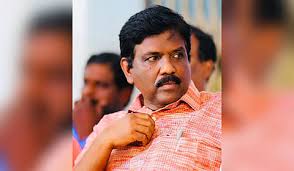
There is no denying that atrocities against Dalits are on the rise. This trend is closely linked to the growing presence of communal forces in the state. The government also has a responsibility to contain this situation. The Viduthalai Chiruthaigal Katchi (VCK), led by Thol Thirumavalavan, is a constituent of the ruling DMK-led alliance in Tamil Nadu. Originally formed as the Dalit Panthers Iyakkam (DPI), inspired by the Dalit Panthers movement in Maharashtra, the organisation underwent a significant transformation over the years. Thirumavalavan, who was earlier associated with the DMK’s student wing, assumed leadership following the death of the DPI’s founder, M. Malalchami, in 1989. After the disintegration of the Dalit Panthers movement in Maharashtra, Thirumavalavan reconstituted the organisation as the Viduthalai Chiruthaigal Katchi. In the 2021 Assembly elections, the VCK won four of the six seats allotted to it as part of the DMK-led front. As the state gears up for the 2026 polls, Thirumavalavan has indicated that the party will seek a larger share of seats from its ally. He has also made it clear that the VCK will not be part of any alliance that includes the BJP or the PMK. In this context, Online Desk of The New Indian Express (TNIE) spoke to VCK MP (Villupuram) and noted writer D. Ravikumar to understand the party’s political stance, its future course, and to respond to some of the allegations levelled against it. What do you perceive as the most serious political threat or challenge Tamil Nadu is facing in the run-up to the 2026 State elections? Our primary concern is the growing influence of communal forces. These divisive elements are deliberately raising issues to polarise people along communal lines. This strategy is not new; it has been consistently employed by such forces. The Thiruparankundram lamp lighting issue is a clear example. Tamil Nadu must be protected from these divisive forces that threaten its social harmony. How is the VCK shaping its strategy for the upcoming polls? We are part of a strong anti-BJP coalition. The BJP’s politics pose a direct threat to the Constitution of India. Our campaign will centre on safeguarding the Constitution, as any dilution of constitutional values would leave Dalits and minorities without protection. We will also highlight key issues such as increasing the percentage of Dalit reservation and extending reservation to the private sector. There is a perception that some allies, including the Communist parties and the VCK, have been relatively silent on major issues such as the alleged deterioration of law and order under the DMK government. How do you respond? First of all, Tamil Nadu is far better placed than many other states—especially those ruled by the BJP—when it comes to law and order. The fact that Tamil Nadu consistently ranks among the top states and remains a premier destination for foreign direct investment (FDI) demonstrates that the law-and-order situation is not as dire as opposition parties claim. Social media has also played a role in bringing crimes to public attention more rapidly, which is actually a positive development. It is ironic, and frankly ridiculous, that BJP leaders speak about women’s safety when their own governance record raises serious questions. What are the key issues Dalits in Tamil Nadu face today? There is no denying that atrocities against Dalits are on the rise. This trend is closely linked to the growing presence of communal forces in the state. The government also has a responsibility to contain this situation. While the state government has constituted a commission to make recommendations on laws against honour killings and caste-based hate crimes, we are not fully satisfied with this approach. Our consistent demand has been for a comprehensive and enforceable law. We are also deeply concerned about the increasing landlessness among Dalits. The Agricultural Census indicates a decline in Dalit landholdings in Tamil Nadu. We therefore demand the meaningful inclusion of Dalits in the economic development of the state. How would you respond to criticism that your party’s strategy has been more alliance-focused than issue-focused? That criticism is unfounded. The VCK stands firmly for the annihilation of caste and the pursuit of social justice. We go beyond narrow caste identities and follow the Ambedkarite path. Dr B.R. Ambedkar emphasised transcending caste identity as the true route to liberation and equality, and that remains our guiding principle. There are reports that some Dalit voters and activists are dissatisfied with the performance of the VCK. Do you acknowledge these sentiments? This perception is not accurate. Every political party has supporters from the Dalit community. There are also certain outfits representing Dalit sub-sects that operate primarily for personal or sectional gains. Such groups should not be mistaken as representative of the broader Dalit political sentiment. Your views on actor-turned-politician Vijay and his party, Tamilaga Vettri Kazhagam (TVK)? It is deeply concerning that people continue to support Vijay even after the Karur stampede, which claimed the lives of 41 of his fans. He did not visit the site and instead flew directly to Chennai. The kind of mob frenzy witnessed around Vijay is alarming. Fascism often evolves from the ground up, and such unchecked mass adulation is dangerous. Gladwin Emmanuel Courtesy : TNIE Note: This news is originally published on https:/thenewindianexpress.com/bha and is used purely for non-profit/non-commercial purposes, especially human rights
Meerut Dalit family under ‘house arrest’: Family alleges police pressure in kidnapping case
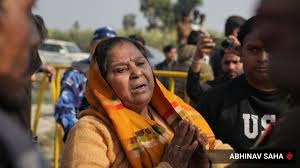
Paras Som and Sunil Som, both belonging to the Rajput community, had allegedly hacked to death 50-year-old Sunita Devi and kidnapped her 20-year-old daughter on January 8 The family members of the Dalit girl who was kidnapped after the murder of her mother at Kapsad village in Meerut district early this month have claimed that they were under house arrest and the police were pressuring them not to pursue the case against the accused. Paras Som and Sunil Som, both belonging to the Rajput community, had allegedly hacked to death 50-year-old Sunita Devi and kidnapped her 20-year-old daughter on January 8. The police arrested Sunil from Meerut and Paras from Haridwar and recovered the girl. Sunita’s husband Satyendra Kumar told reporters near his house on Saturday that the police had put them under house arrest. “We are not allowed even to meet our lawyers. Our family members who had come here to see us were not allowed to enter the house. We suspect that they are also recording our phone calls.” He claimed some cops warned them against pursuing the case against Paras. Piyush Srivastava Courtesy : The Telegraph Note: This news is originally published on https:/thetelegraph.com/bha and is used purely for non-profit/non-commercial purposes, especially human rights
Non-dalits attack, damage dalit youth’s house in Dharmapuri
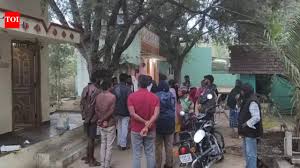
Dharmapuri: The communal disharmony between the residents of two neighbouring villages in Thalanatham panchayat in Kadathur union flared up on Friday night with a gang of Vanniyars from Guruparalli village attacking a house of Arundhathiyars in Nadur village, damaging the property and then locking up the inmates inside the house. According to the Kadathur police, Nadur village is home to more than 50 families belonging to Arundhathiyar community. “On Friday, Jaisimman, 25, and Santosh, 23, of Nadur village, headed to Guruparalli village to have food on a two-wheeler. Their vehicle broke down in Ayyampatti area, which is dominated by the people belonging to Vanniyar community. A few Vanniyar youths, who were passing by the area, asked them to leave the place immediately,” a police officer said. Youths belonging to the two communities subsequently entered into a verbal spat, which ended in physical assault. “More Vanniyar youths gathered in the area and attacked Jaisimman and Santhosh and used casteist slurs against the duo.” The two youths returned to their houses at 10pm after retrieving the two-wheeler and went to sleep without informing their parents about the fight, the officer said. “Later at night, more than 10 people belonging to the Vanniyar community gathered at the house of Jayasimhan, shouted obscene words and attacked the house with sticks and iron rods, breaking the windows and doors. They locked the main door from outside, and threatened to kill the family if they came out of the house,” the officer said. By the time neighbours arrived at the house, the gang fled the scene with Jayasimhan’s two-wheeler, the officer said. When alerted, the Kadathur police rescued the people trapped inside the house by breaking open the door. On Saturday, police arrested five residents of Ayyampatti area – Santosh, 25, Sakthi, 24, Chandaru, 25, Dhileepan, 24, and Surya, 25 – in connection with the incident. They were booked under the Scheduled Castes and the Scheduled Tribes (Prevention of Atrocities) Act and lodged in the Salem Central Jail under judicial custody. The Kadathur police also have registered a case against Jaisimman, Santosh and a few others for teasing women and harassing Vanniyar youths. Courtesy : TOI Note: This news is originally published on https:/timesofindia.com/bha and is used purely for non-profit/non-commercial purposes, especially human rights
PM Modi isn’t renaming Adampur Airport after Sant Ravidas without reason; it’s a major move in Dalit politics, here’s how.
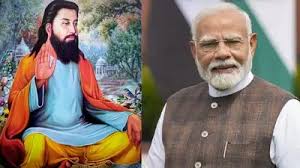
Prime Minister Narendra Modi is arriving in Punjab on Sunday on the occasion of the 649th birth anniversary of Sant Guru Ravidas. PM Modi will arrive at Adampur Airport at approximately 3:45 PM, where he will unveil the airport’s new name, ‘Shri Guru Ravidas Ji Airport, Adampur’. He will also inaugurate the terminal building at Halwara Airport in Ludhiana, Punjab. Adampur Airport’s name is changing Chandigarh: Prime Minister Narendra Modi is arriving in Punjab on Sunday. He will rename the Adampur airport after Sant Ravidas, who is revered especially among Dalits. He will also visit Dera Sachkhand Ballan, the headquarters of the Ravidassia community. This visit is part of his continued efforts to reach out to his followers, who are present in large numbers not only in Punjab but also in several other states. PM Modi’s decision to rename this airport as Shri Guru Ravidas Ji Airport comes on the occasion of the saint’s 649th birth anniversary, a demand that had been pending for a long time. By associating himself with this occasion and scheduling a visit to the Dera, PM Modi will send a strong message to the Dalit community. Focus on Sant Ravidas from Varanasi to Sagar The PM is emphasizing that he wants to nurture the community that is important for the BJP not only in terms of politics but also in terms of a broader cultural agenda. He has launched projects over the past few years for the development of the birthplace of the Bhakti movement poet-saint Ravidas. Born in Varanasi, he has also launched projects for building a memorial for him in Sagar, Madhya Pradesh, and has paid tributes at Ravidas temples. Meeting with Niranjan Das During his visit, Modi will participate in a public event and interact with the Dera’s spiritual head, Niranjan Das. Niranjan Das was also awarded the Padma Shri on the eve of this Republic Day. Punjab has the highest number of Dalits This Dera is located in Jalandhar, which is part of the Doaba region, where the Scheduled Caste population is higher than in the rest of the state. Dalits constitute approximately 32% of the population in Punjab, which is higher than in any other state, while in the Doaba region, this figure is around 42%. BJP’s focus on Punjab through Dalits Dalits in Punjab are divided into several sub-groups, with the Ravidasia community, which comprises 10-12% of the population, being a major sub-group, and Ravidas is a revered figure among the Scheduled Castes. Reaching out to members of marginalized castes has been a crucial part of the BJP’s Hindu unity agenda. This has helped the party’s growth. The Punjab Assembly elections are scheduled for early next year. Following the rapid rise of the Aam Aadmi Party (AAP) and the rift in relations between the BJP and the Akali Dal, four parties, including the Congress, are in the political race in the state. Curated by: Shashi Pandey Mishra About the Author Shashi Pandey Mishra is a Senior Journalist at Navbharat Times Online. She writes on politics, crime, health, and human interest stories. She also enjoys writing on issues related to women and children. She also writes ground reports and interesting stories. She has 18 years of experience in journalism. Courtesy: Hindi News
Dalit Man Attacked in Sultanpur: Three Men Beat Him in Front of His Children, Complaint Filed with SP
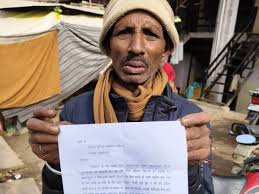
A Dalit man was attacked in Upadhyapur village under the Jaisinghpur police station area of Sultanpur district. In the incident, which took place around 7 am on Saturday, the victim, Ram Sundar, was beaten by three men from the village at his doorstep in front of his children. The victim has filed a complaint with the Superintendent of Police (SP) and demanded action. In his complaint, Ram Sundar stated that on the day of the incident, he was warming himself by a bonfire at his doorstep with his children. Three men from the village then arrived at his door. He alleges that they verbally abused him without any provocation. The attackers then grabbed Ram Sundar by the collar, threw him to the ground, and beat him with kicks and punches. Ram Sundar’s cries for help attracted nearby villagers. Following the intervention of the villagers, the attackers left, threatening to kill Ram Sundar. His daughter-in-law and neighbors intervened, saving his life. The victim also stated that this is not the first time these men have attacked him. The attackers had previously assaulted Ram Sundar twice. The lack of action by the police despite his previous complaints had emboldened the attackers. Ram Sundar had tried to file a complaint at the police station earlier, but he was turned away. Following the current incident, Ram Sundar has submitted a written complaint to the Superintendent of Police of Sultanpur. He has requested that his report be registered, that a medical examination of his injuries be conducted, and that strict action be taken against the attackers. No concrete action has been taken in the case so far. The Sultanpur Superintendent of Police has assured the victim that the matter will be investigated seriously and appropriate action will be taken. Surauli (Jaisinghpur), Sultanpur Courtesy: Hindi News