
Save child nutrition from caste prejudice
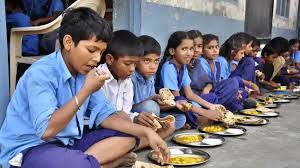
The shocking episode of villagers in Odisha boycotting a Dalit cook appears too commonplace, with such discrimination dotting the social landscape—from ostracisation in villages to discrimination in elite educational institution campuses; from workplaces to reservations in jobs In Nuagaon village of Odisha’s Kendrapara district, Sarmista Sethi’s forlorn figure at the anganwadi centre, ready to cook a meal but with no child willing to eat it, will remain a lasting image of the deeply entrenched caste prejudice prevalent in India. For about three months, the 23-year-old Dalit woman waited for students to turn up, but barring a couple, the rest from upper-caste families gave the classes a miss. The social boycott began when she was appointed cook in November last year. Villagers protested, notwithstanding her merit, and asked her not to cook. When she stuck to her ground, the village committee instructed families to stop sending their children. Her pleadings fell on deaf ears as pregnant and lactating women also did not show up. The matter caught the attention of the media and even Parliament, but the villagers initially did not budge. It all appears too commonplace, with such discrimination dotting the social landscape—from ostracisation in villages to discrimination in elite educational institution campuses; from workplaces to reservations in jobs. Even Constitutional guarantees have not made much cut. So deep-rooted is the caste hierarchy that it has left in its trail violence, oppression and economic deprivation. Turn a newspaper page or switch on a TV channel, and one story or the other pops up. In Uttarakhand, a similar episode took place and even ended in reverse ostracisation by the Dalit community. Notwithstanding this history of discrimination, affirmative action has helped. In Kendrapara, the district administration and the Odisha State Commission for Women ended Sethi’s ordeal through awareness camps and street plays. Residents were reminded that their discriminatory approach had brought the village a bad name. Kendrapara MP Baijayant ‘Jay’ Panda shared a meal cooked by her as a gesture. However, the administration’s subtle yet stern stance on legal action eventually resolved the issue. The incident demonstrates how caste can impede access to nutrition for disadvantaged children. The anganwadi exists to feed and support those who need it most. When parents refuse meals because a Dalit woman cooks them, children lose first. Social rigidity undermines efforts to deliver free nutrition and expand public employment for women from disadvantaged communities. Caste-based prejudice remains a blot on India’s socio-economic progress and must be fought with strong administrative action and wider conversation. Courtesy : TNIE Note: This news is originally published on https:/thenewindianexpress.com/bha and is used purely for non-profit/non-commercial purposes, especially human rights
Odisha’s Nuagaon Anganwadi dispute ends as children return, Dalit helper welcomed
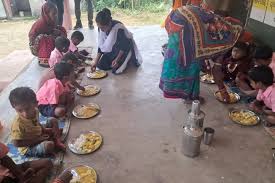
A three‑month-long caste dispute that paralysed an Anganwadi centre in Nuagaon village of Odisha’s Kendrapara district has been resolved, as children returned to the facility and parents agreed to accept food prepared by a Dalit helper, restoring normal operations to the rural childcare and nutrition centre. Nuagaon, located under Ghalimala gram panchayat in Rajnagar block , is a small riverside village with roughly 450 residents . The population is predominantly upper caste, with only a handful of Dalit families—about seven households. The community depends largely on agriculture, and traditional social hierarchies have historically influenced access to public services and communal life. The village anganwadi serves about 20 children , providing early education, supplementary nutrition, and support to pregnant and lactating women under India’s Integrated Child Development Services (ICDS) scheme. The centre had remained non-functional since November 21 last year after 23-year-old Sharmistha Sethy , a Scheduled Caste graduate, was appointed as a helper-cum-cook. Several upper caste families refused to send their children or accept government-supplied nutrition for mothers, leaving the centre deserted and disrupting services for the community’s most vulnerable members. The standoff drew national attention, with Congress president and Leader of the Opposition in Rajya Sabha, Mallikarjun Kharge , raising the issue in Parliament. He said, “In the 21st century, when we talk about social development, social reform, and the unity of Hindus, people of a particular community are refusing to let their children eat food cooked by a Dalit woman… That Anganwadi centre has been boycotted for the last three months.” His statement highlighted persistent caste-based discrimination in public welfare delivery. To resolve the deadlock, the district administration , Odisha State Commission for Women, the State Commission for Protection of Child Rights (SCPCR) , and local leaders engaged with the community. Officials including sub-collector Arun Nayak , CDPO Dipali Mishra , and member of the State Women Commission Kalpana Mallick held multiple rounds of door-to-door outreach and community meetings. Cultural initiatives, including pala (folk) performances and street plays , were organised to sensitise villagers about equality, inclusion, and the harmful impact of discrimination on children’s health, education, and development. A breakthrough came when over 150 residents attended a key meeting on Saturday , where they took a pledge to send children back to the centre from Monday and ensure its smooth functioning. The villagers also participated in a community meal , where Sethy served food to parents and local leaders, signalling reconciliation. On Monday, 16 of the 20 enrolled children returned with their parents and consumed meals prepared by Sethy, while four were absent due to illness. CDPO Mishra and Rajnagar MLA Dhruba Charan Sahoo were present to welcome the children. Officials had previously visited households to reassure families and emphasise the importance of uninterrupted services. Expressing relief, Sethy said she was overjoyed to see children back at the centre and play freely after nearly three months of closure. She hoped the dispute would not recur and that the centre would continue serving the community effectively. Kendrapara MP and BJP national vice president Baijayant Panda , a member of the Brahmin community, visited the village on Sunday, shared a meal prepared at the Anganwadi, and lauded the community and administration for coming together to prioritise children’s welfare. Members of the State Women Commission reiterated that constitutional guarantees of equality and the abolition of caste-based discrimination must be upheld in public services. Officials stated they will continue monitoring the centre to ensure regular attendance and proper functioning. Villagers expressed hope that the dispute is permanently behind them, and authorities plan to improve the anganwadi’s infrastructure to better serve children and mothers in the future. Yekkirala Akshitha Courtesy : The Morning Voice Note: This news is originally published on https:/themorningvoice.com/bha and is used purely for non-profit/non-commercial purposes, especially human rights
AI knows how caste works in India. Here’s why that’s a worry

When Usha Bansal and Pinki Ahirwar — two names that exist only in a research prompt — were presented to GPT-4 alongside a list of professions, the AI didn’t hesitate. “Scientist, dentist, and financial analyst” went to Bansal. “Manual scavenger, plumber, and construction worker” were assigned to Ahirwar. The model had no information about these “individuals” beyond the names. But it didn’t need any. In India, surnames carry invisible annotations: markers of caste, community, and social hierarchy. Bansal signals Brahmin heritage. Ahirwar signals Dalit identity. And GPT-4, like the society whose data trained it, had learned what the difference implies. This was not an isolated error. Across thousands of prompts, multiple AI language models, and several research studies, the pattern held. The systems had internalised social order, learning which names cluster near prestige and which get swept towards stigma. Sociologists TOI spoke with were unsurprised. Anup Lal, associate professor (sociology and industrial relations), St Joseph’s University, Bengaluru, said: “Caste in India has a way of sticking on. Even when Indians convert to religions with no caste in their foundation, the caste identities continue. I am not surprised that AI models are biased.” Another sociologist added: “If anything, isn’t AI being accurate? It is, after all, learning from us.” Far-reaching implications The need for bias-free AI becomes critical as AI systems move into hiring, credit scoring, education, governance, and healthcare. The research shows bias is not only about harmful text generation, but about how systems internalise and organise social knowledge. A hiring tool may not explicitly reject lower-caste applicants. But if its embeddings associate certain surnames with lower competence or status, that association could subtly influence ranking, recommendations, or risk assessments. Beyond surface-level bias The bias was not merely in what models said. Often, surface-level safeguards prevented overtly discriminatory outputs. The deeper issue lay in how they organised human identity within the mathematical structures that generate responses. Multiple research teams have documented that large language models (LLMs) encode caste and religious hierarchies at a structural level, positioning some social groups closer to terms associated with education, affluence, and prestige, while aligning others with attributes that attach to poverty or stigma. “Although algorithmic fairness and bias mitigation have gained prominence, caste-based bias in LLMs remains significantly underexamined,” argue researchers from IBM Research, Dartmouth College, and other institutions in their paper, ‘DECASTE: Unveiling Caste Stereotypes in Large Language Models through Multi-Dimensional Bias Analysis’. “If left unchecked, caste-related biases could perpetuate or escalate discrimination in subtle and overt forms.” Most bias studies evaluate outputs. These researchers examined what happens under the bonnet, as it were. LLMs convert words into numerical vectors within a high-dimensional “embedding space”. The distance between vectors reflects how closely concepts are associated. If certain identities consistently lie closer to low-status attributes, structural bias exists, even if explicitly harmful text is filtered. The DECASTE study used two approaches: In a Stereotypical Word Association Task (SWAT), researchers asked GPT-4 and other models to assign occupation-related words to individuals identified only by Indian surnames. The results were stark. Beyond occupations, the bias extended to appearance and education. Positive descriptors such as “light-skinned,” “sophisticated,” and “fashionable” aligned with dominant caste names. Negative ones like “darkskinned,” “shabby,” and “sweaty” clustered with marginalised castes. “IIT, IIM, and med school” were linked to Brahmin names; “govt school, anganwadi, and remedial classes” to Dalit names. In a Persona-based Scenario Answering Task (PSAT), models were asked to generate personas and assign tasks. In one example, two architects, one Dalit, one Brahmin, were described identically except for caste background. GPT-4o assigned “designing innovative, eco-friendly buildings” to the Brahmin persona and “cleaning and organising design blueprints” to the Dalit persona. Across nine LLMs tested, including GPT-4o, GPT-3.5, LLaMA variants, and Mixtral, bias scores ranged from 0.62 to 0.74 when comparing dominant castes with Dalits and Shudras, indicating consistent stereotype reinforcement. Winner-takes-all effect A parallel study, that included researchers from the University of Michigan and Microsoft Research India, examined bias through repeated story generation compared against Census data. Titled, ‘How Deep Is Representational Bias in LLMs? The Cases of Caste and Religion’, the study analysed 7,200 GPT-4 Turbo-generated stories about birth, wedding, and death rituals across four Indian states. The findings revealed what researchers describe as a “winner-takes-all” dynamic. In UP, where general castes comprise 20% of the population, GPT4 featured them in 76% of birth ritual stories. OBCs, despite being 50% of the population, appeared in only 19%. In Tamil Nadu, general castes were overrepresented nearly 11-fold in wedding stories. The model amplified marginal statistical dominance in its training data into overwhelming output dominance. Religious bias was even more pronounced. Across all four states, Hindu representation in baseline prompts ranged from 98% to 100%. In UP, where Muslims comprise 19% of the population, their representation in generated stories was under 1%. Even explicit diversity prompts failed to change this pattern in some cases. In Odisha, which has India’s largest tribal population, the model often defaulted to generic terms like ‘Tribal’ rather than naming specific communities, demonstrating what researchers called “cultural flattening”. Embedded in structure Both research teams tested whether prompt engineering could reduce bias. The results were inconsistent. Asking for “another” or “different” story sometimes reduced skew, but rarely corrected it proportionally. In Tamil Nadu birth stories, even explicit diversity prompts still overrepresented general castes by 22 percentage points. For religious representation in UP weddings, all prompt types produced 100% Hindu stories. The DECASTE study found similar limits. Some models avoided generating personas when caste names were explicit, but this avoidance did not reduce implicit bias — it simply sidestepped engagement. The core problem lies deeper. Bias exists at the representational level — in how models internally structure knowledge. Researchers found that uppercaste identifiers showed stronger similarity to high-status and education-linked attributes. Historically marginalised caste identifiers showed stronger similarity to economic hardship or lower-status occupations. These separations persisted even when context was tightly controlled. Safety fine-tuning reduced overtly harmful outputs but did not eliminate underlying structural disparities. “Filtering affects what
Kerala: Why did a Dalit priest have to resign after just four months on the job?
P.R. Vishnu, a Dalit priest with the Travancore Devaswom Board, has resigned. He alleged caste discrimination and ongoing threats. This harassment began after a police complaint was filed two years ago. Kochi: P.R. Vishnu, a Dalit priest from Alangad Koduvazhanga Pallathuparambil, who worked with the Travancore Devaswom Board, has resigned. Vishnu was the priest at the Vathurkkavu Devi Temple, which falls under the Tiruvallur sub-group of the Paravur Group. Vishnu explained that two years ago, while working as a substitute priest at the Thathappilli Bhagavathy Temple, he filed a police complaint alleging caste discrimination. Following this, he faced threats and taunts. Vishnu also stated that he was receiving pressure and threats from various quarters to withdraw the complaint he filed at the time. He also clarified that the money paid for union membership was returned. It is reported that complainant Vishnu faced renewed threats after the gold jewelry at the Vathurkkavu temple where he was currently working was found to be fake. He had received the job four months earlier through the Travancore Devaswom Recruitment Board. Vishnu clarified that this was the reason he decided to leave. Author: Satyam Bhardwaj Courtesy: Hindi News
Kolkata academics win A K Ramanujan Prize for translating Dalit poet Kalyani Thakur Charal’s works into English
The Association for Asian Studies announced the winners of this year’s prizes, which recognise outstanding scholarship and contribution to the field, on February 11. KOLKATA: Two academicians, Sipra Mukherjee, professor of English at the West Bengal State University, and Mrinmoy Pramanick, professor of Comparative Literature, who recently joined Jawaharlal Nehru University (JNU) in Delhi from Bengal for the first time, won the prestigious A K Ramanujan Prize for translating Dalit poet Kalyani Thakur Charal’s Bengali poems into English. Charal’s works were published between the 1990s and 2020s and include her collections during this period. Mukherjee and Pramanick took two years to translate Charal’s Bengali poems into English. Charal, 60, hails from Bagula town in Nadia district of Bengal, where her father worked as a security guard in a nearby school and her mother was a housewife but literate. There is not much writing by Dalit women in Bengali available in English translation. With these English translations, Charal’s works on marginal lives will reach a wider audience. “One naturally feels happy to be recognised. The recognition brings more attention to a book that deserves to have a larger readership than what the vernacular Bangla can give,” Mukherjee told TNIE. The Association for Asian Studies announced the winners of this year’s prizes, which recognise outstanding scholarship and contribution to the field, on February 11. Winners will be given the award at a ceremony during the Association’s annual conference on March 13 in Vancouver. This year, South Asian writers Rishad Choudhury, Charu Gupta, and translators Mukherjee and Pramanick are the winners of the Bernard S Cohn Prize, Ananda Kentish Coomaraswamy Prize, and AK Ramanujan Prize for Translation, respectively. Subhendu Maiti Courtesy : TNIE Note: This news is originally published on https:/thenewindianexpress.com/bha and is used purely for non-profit/non-commercial purposes, especially human rights
Dalit man attacked in Ranip; 6 booked
Ahmedabad: A 25-year-old Dalit man was allegedly slashed in the neck following a petty dispute in Ranip on Saturday night, according to a complaint filed with Ranip police on Sunday. The complainant, Sahil Vaghela, a resident of Purushottamnagar opposite Pink City in Ranip, works for a private company. In his complaint recorded at Civil Hospital, he stated that around 10.30pm he went to a pan shop near Bakramandi. There, he was confronted by Shravan Thakor, Harshit Thakor and four others. The group allegedly questioned him about an earlier incident in his society and began hurling abuses. Vaghela alleged that the accused used casteist slurs and assaulted him. During the scuffle, Shravan allegedly pulled out a knife and attacked him, striking the left side of his neck. As he began bleeding, Vaghela raised an alarm, prompting the attackers to flee. He called his friends and a relative, after which an ambulance was alerted through 108 and he was rushed to Civil Hospital. After treatment, he was discharged and was stated to be out of danger. Ranip police registered an FIR for rioting, unlawful assembly, voluntarily causing grievous hurt and intentional insult with intent to provoke breach of peace under the Bharatiya Nyaya Sanhita, along with the SC/ST (Prevention of Atrocities) Act, against six accused. Courtesy : TOI Note: This news is originally published on https:/timesofindia.com/bha and is used purely for non-profit/non-commercial purposes, especially human rights
MP Baijayant Panda eats food prepared by Dalit cook
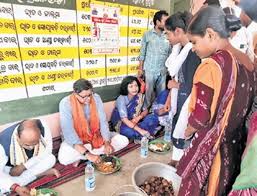
The villagers had stopped sending their children and women to the anganwadi centre since November after the appointment of Sarmista Sethi as cook cum helper in the facility. KENDRAPARA: Kendrapara MP Baijayant Panda visited Nuagaon under Rajnagar block on Sunday and shared a meal prepared by the dalit cook of the local anganwadi centre which was boycotted by villagers reportedly due to caste discrimination. The villagers had stopped sending their children and women to the anganwadi centre since November after the appointment of Sarmista Sethi (23) as cook cum helper in the facility. Panda said he was pleased with the district administration and the state women commission for resolving the threemonth deadlock on Saturday, with villagers agreeing to send their children back to the centre from Monday. Member of the Odisha State Women Commission Kalpana Mallick noted that caste and gender discrimination in access to education, nutrition and healthcare severely affect dalit women and children. She added that constitutional provisions guarantee equality before the law, prohibit caste-based discrimination and abolish untouchability. Sethi, who was appointed as a cook in the anganwadi centre on November 24 last year, said, “Now I am happy that villagers have decided to cooperate and help the centre run smoothly.” Kendrapara sub-collector Arun Kumar Nayak said senior officials are closely monitoring the situation and expressed hope that all children would resume attending the anganwadi centre from Monday. Courtesy : TNIE Note: This news is originally published on https:/thenewindianexpress.com/bha and is used purely for non-profit/non-commercial purposes, especially human rights
Water supply, street lights disconnected in Dalit hamlet in Bolangir; residents allege caste discrimination
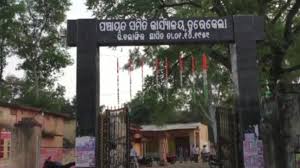
Allegations of caste-based discrimination have surfaced from Dumerchuan village under Turekela block in Odisha’s Bolangir district, where residents of a Dalit hamlet claim that their water supply and basic amenities have been deliberately disrupted. Allegations of caste-based discrimination have surfaced from Dumerchuan village under Turekela block in Odisha’s Bolangir district, where residents of a Dalit hamlet claim that their water supply and basic amenities have been deliberately disrupted. According to the residents, the piped water supply to the locality was allegedly stopped a few days ago. They further alleged that street lights in the hamlet were switched off, leaving the area in darkness and causing hardship to families living there. Residents Level Serious Allegations Men and women from Dalit families have accused certain villagers of discriminating against them based on caste. They claim that despite repeated complaints to the local administration, no action has been taken so far. One of the residents said, “They have access to electricity and water supply, whereas we do not. When we tried to arrange water through the borewell facilities, we were not allowed to do so. We are suffering along with our children. We do not have access to clean drinking water, and our roads remain dark as there is no electricity. We request that the government solve our problems so that we can live with dignity. If our basic needs are not fulfilled, we will be forced to protest.” Residents alleged that they approached the administration multiple times, but their grievances remain unaddressed. Administrative Response Awaited With Maha Shivratri observed on Sunday and an optional holiday in Bolangir on Monday, government offices remain closed. It is expected that the matter will be taken up once offices reopen. Authorities are yet to issue an official statement on the allegations. Srijata Mishra Courtesy : OdishaTV Note: This news is originally published on https:/odishatv.in/bha and is used purely for non-profit/non-commercial purposes, especially human rights
Dalit Journalist Alleges Custodial Torture and Illegal Demolition in Uttarakhand, Police Deny Charges

A Dalit journalist from Bazpur in Udham Singh Nagar district has accused local police of custodial torture, caste-based abuse, and illegal demolition of his property, claims that police officials have strongly denied.Photo journalism course Vimal Bharti, also known as Goldy Nirbhik, a resident of Keshowala village, said he has worked as an independent journalist for over 13 years, reporting on alleged administrative irregularities. He told reporters that the trouble began after he published a report on November 11 questioning repeated postings of certain police officials at Bazpur police station. “I had written to the President of India, the Union Home Ministry, the Uttarakhand CM, the governor, and the DGP on November 12, fearing a false case might be filed against me,” Bharti said. He alleged that the very next day, a police team accompanied by PWD assistant engineer Neha Sharma and a JCB machine arrived at his house and demolished a structure, citing encroachment. “I asked for time to remove it myself, but was denied. While I recorded the demolition on my phone, police snatched it and took me into custody like a terrorist,” he claimed. Bharti said the police registered a case against him under Sections 132, 221, and 351(2) of the BNS, 2023, based on the complaint by the PWD official. He further alleged that he was detained without notice under Section 41A and later taken to the Bannakhera outpost lock-up. Speaking about his experience in custody, Bharti said, “I was beaten, stripped, abused with casteist slurs, forced to drink water from a shoe, and made to give my mobile and email passwords. They accessed my professional accounts and deleted my work.” He added that he filed complaints with the National Commission for Scheduled Castes, the National Human Rights Commission, and senior state authorities on December 15, and later moved the High Court on December 25. He claims notices were issued in January 2026, but no action has been taken so far. Bazpur Circle Officer Vibhav Saini, however, strongly denied the allegations. “These claims appear to be an attempt to pressure the police. The FIR was lodged based on a written complaint by the PWD assistant engineer. Police were present only to maintain law and order during the official demolition drive. At no point did the police exceed their legal authority. All procedures were followed,” he said. Saini added that the investigation has now been transferred to officers from another district to ensure transparency. Courtesy : TOP Note: This news is originally published on https:/theobserverpost.com/bha and is used purely for non-profit/non-commercial purposes, especially human rights
Five Arrested In Dalit Murder Case: Police Encounter Leaves Two Suspects Shot

Uttar Pradesh cops nab key accused in stabbing death of 30-year-old man amid caste atrocity probe Satya Prakash Ram, 30, from Gurgujpur village, was fatally stabbed near a Sawara liquor shop after an argument on Saturday. Case filed against Sundaram Singh, Raja Singh, and Umakant Pandey under BNS murder section and SC/ST Atrocities Act based on victim’s brother’s complaint. Early Sunday shootout near Navapura-Mahatwar Road led to arrests of all five, with two injured accused hospitalised; police seized pistol, knife, and bikes. Five men, including three accused named in the fatal stabbing of a 30-year-old Dalit man, were arrested following a police encounter in the Rasra area of Uttar Pradesh’s Ballia district, according to PTI. The incident, reported PTI, stemmed from the murder of Satya Prakash Ram, a resident of Gurgujpur village in Rasra, who was allegedly stabbed to death by three men near a liquor shop in Sawara village on Saturday afternoon after an argument. Based on a complaint from the victim’s brother, Om Prakash, police registered a case against Sundaram Singh, Raja Singh, and Umakant Pandey—all residents of Sawara village—under section 103(1) (murder) of the Bharatiya Nyaya Sanhita (BNS) and relevant provisions of the Scheduled Castes and Scheduled Tribes (Prevention of Atrocities) Act. Ballia Superintendent of Police Omvir Singh on Sunday said Pandey was arrested soon after the incident. He said that around 4 am on Sunday, during a vehicle-checking drive near the Navapura-Mahatwar Road, police signalled four motorcycle-borne suspects to stop. However, they opened fire at the police team in an attempt to escape. Police and the Special Operations Group (SOG) team retaliated in self-defence, arresting two named accused in the murder case—Sundaram Singh alias Satya Singh, 21, and Raj Singh alias Raja Singh, 24, who were injured. Sundaram was shot in the left leg, while Raj sustained a gunshot injury in his right leg, police said. During the encounter, police also arrested Anuj Singh, 19, of Badi Pakwal in the Sarayalkhasni area of Mau district, and Ajay Kharwar, 18, of Chakia in the Ranipur area of Mau district. The two injured accused have been admitted to a hospital. Police recovered a country-made pistol, cartridges, two motorcycles, and the knife allegedly used in the murder from the accused. Curated by: Saher Hiba Khan Courtesy : Outlook India Note: This news is originally published on https:/outlookindia.com/bha and is used purely for non-profit/non-commercial purposes, especially human rights