
JNU VC’s ‘Dalit Victim Card’ Statement Sparks Row On Campus, JNUSU Demands Resignation

JNU VC Shantishree Dhulipudi Pandit remarked that Dalits “cannot always progress by portraying themselves as victims or playing the victim card,” leading to student protests. JNU VC Dalit Statement Controversy: Jawaharlal Nehru University (JNU) Vice Chancellor Shantishree Dhulipudi Pandit has sparked significant controversy on campus with a statement made in a podcast. She remarked that Dalit and Black communities “cannot always progress by portraying themselves as victims or playing the victim card,” leading to student protests and calls for her resignation. The Vice Chancellor clarified that her statement had been misunderstood, noting that she herself is from the Bahujan Samaj. What is the whole matter? The statement was made in a podcast released on February 16. The Vice Chancellor was discussing the University Grants Commission’s (UGC) Equity (Anti-Discrimination) Rules of 2026, aimed at preventing caste-based discrimination in higher educational institutions. However, following protests from some upper caste groups, the Supreme Court has currently stayed these rules. In the podcast, the Vice Chancellor described the UGC regulations as “unnecessary and irrational.” She mentioned that “it’s not easy to move forward by demonising someone or constantly portraying yourself as a victim. It’s like a temporary addiction.” This statement quickly went viral on social media, sparking controversy. What explanation did the Vice Chancellor give? As the controversy grew, the Vice Chancellor clarified that her statement had been misrepresented. She asserted that she did not intend to imply that the Dalit community always plays the victim card. She said that some people use such language as part of a “woke” ideology. She also expressed that unnecessary controversy had been created in this matter and that due care had not been taken in formulating the rules. She reiterated, “I myself am a Bahujan.” Protest on campus, demand for resignation The Jawaharlal Nehru University Students’ Union (JNUSU) labelled the Vice Chancellor’s statement as “blatantly casteist.” The student union demanded her resignation and called for nationwide protests on Saturday. They argued that such statements promote caste discrimination and inequality in universities. The student union also criticised the Vice Chancellor’s affiliation with the Rashtriya Swayamsevak Sangh (RSS). In the podcast, she had expressed pride in her RSS affiliation, saying it provided her with insight into diverse views and diversity. Following this statement, the atmosphere on the JNU campus has become tense. Student organisations have stated that protests will continue until the Vice Chancellor apologises or resigns. Meanwhile, the Vice Chancellor maintained that her words were taken out of context. The matter remains a topic of discussion within academic and political circles. Courtesy : News18 Note: This news is originally published on https:/news18.com/bha and is used purely for non-profit/non-commercial purposes, especially human rights
15-year-old Dalit in Rajasthan assaulted for entering temple bookmark_border text_fields

The complaint further alleges that the man continued to hurl casteist abuse, threatened to kill the minor if he returned to the temple, and then assaulted him by slapping, kicking and punching him. Chittorgarh: A 15-year-old Dalit boy from Rajasthan’s Chittorgarh district has alleged that he was verbally abused and physically assaulted on caste lines at the Laxmi Narayan Temple in Ghosunda village. In his complaint, Chetan Prakash Regar, the son of Mangilal Regar, said the incident took place on the morning of February 7 when he went to the temple to pray. While he was returning, an upper-caste man, identified as Shubham Sukhwal, allegedly stopped him and used caste slurs, objecting to his presence in the temple. The FIR accessed by Mooknayak states that the accused questioned how someone from the Dalit community could enter the temple and reacted aggressively when the boy asserted that the place of worship was open to everyone. The complaint further alleges that the man continued to hurl casteist abuse, threatened to kill the minor if he returned to the temple, and then assaulted him by slapping, kicking and punching him. It also names another man, Pawan, as having joined in the attack and allegedly attempted to cause serious harm, Siasat Daily reported. The boy told the police that even as he managed to escape, the accused continued issuing threats warning him and others from his community against visiting the temple in the future. The FIR also mentions the temple priest, alleging that he too used caste-based threats against the minor. Police have registered a case under sections 126(2) (wrongful restraint), 115(2) (intentionally causing harm) of Bharatiya Nyaya Sanhita (BNS) and the Scheduled Caste/Scheduled Tribe (Atrocities) Act. However, the family has said no arrests have been made so far and that they feel unsafe following the incident. Chetan belongs to the Regar community. Local Dalit organisations, including the Dr Ambedkar Civil Association in Rajasthan, have submitted a memorandum to the State Human Rights Commission through the district administration, condemning the attack and calling for strict action against those accused. Courtesy : Madhyamam Note: This news is originally published on https:/madhyamam.com/bha and is used purely for non-profit/non-commercial purposes, especially human rights
Dalits’ land in Madhapur Maujpur, Hapur: Questions raised about administrative negligence, and powerful people are issuing threats.
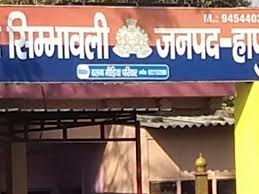
Hapur. A case of illegal occupation of agricultural land belonging to seven Dalit families by powerful people has come to light in Madhapur Maujpur village, within the Simbhaoli police station area of the district. The affected families allege that they are being prevented from accessing their fields and are being threatened with death. Meanwhile, the families are angry over the lack of concrete action at the administrative level to free the land from encroachment. Ceiling leases were granted in 1972 According to victim Gyan Chand, in 1972, the government allotted leases of ceiling land to seven members, including his family, for their livelihood. Since then, all the families have been cultivating these lands to support their families. He says that this land is their sole source of livelihood. Allegations of illegal occupation by a powerful man The families allege that after the formation of the Yogi Adityanath-led government in the state, Kaluram Tyagi, a local strongman, illegally occupied these leases. It is alleged that Kaluram Tyagi, in collusion with revenue officials, filed a lawsuit in the court of the Additional District Magistrate, Hapur, to have the leases cancelled. Won the case in the ADM Court The affected families say they fought a legal battle and won the case in the court of the Additional District Magistrate, Hapur, on May 31, 2025. Despite the court order, they have not been given back possession of the land. The families allege that even after losing the case, the powerful party is threatening to kill them if they enter the fields. Forced to run around officials The Dalit families say they have been making frequent rounds of the SDM Sadar and the Simbhaoli police station to free their land from encroachment, but no concrete solution has been found. They allege that they are unable to get justice due to administrative apathy at the local level. Police said the matter is revenue-related. Simbhaoli police station in-charge Suresh Kumar stated that no one can be given possession of land without the presence of a revenue department team. He explained that the matter is revenue-related and action will be taken as per the rules. Meanwhile, the state government has been making public claims that Dalits’ land will not be illegally occupied. In such a situation, this case in Madhapur Maujpur raises questions about administrative claims. Currently, the affected families are looking to the authorities for justice and the hope of getting their land back. Pitam Singh | Buxar (Garhmukteshwar), Hapur Courtesy: Hindi News
Water, electricity cut off in Dalit settlement of Odisha village

The Dalits claimed that their community was being targeted due to their caste. Bolangir: Water and electricity services were cut off in a Dalit settlement, with residents alleging caste-based discrimination in Odisha’s Balangir district. However, a village official attributed the disruption to a local feud. The settlement is located in the Dumerchuan village under the Turekela block of the district, and its residents reported that the drinking water supply in their area has been interrupted since February 12. According to local media, the settlement’s streetlights were also turned off, leaving families to struggle in the dark after sunset. The residents claimed that different areas of the village have faced no such disruption. “Houses in other parts of the village continue to receive water and electricity, but we are being deprived,” a local said. They were even stopped from drawing water from the borewell. “When we tried to draw water from the borewell, we were stopped. While commuting on village roads, we are treated as untouchables by members of other communities,” the resident said. The Dalits claimed that their community was being targeted due to their caste, since they face discrimination in other social and cultural events of the village as well. Despite alerting the officials of the issues, no steps were taken to correct the disruptions, they said. Disruption due to enmity between two local groups A village official, Padamanava Samantaray, dismissed claims of caste-based discrimination, stating that the initial investigation pointed towards a “feud.” An inquiry has been ordered, and the block development officer was directed to investigate at the ground level, Samantaray said. “Preliminary probe suggested that a few days ago, there was a feud between two groups of the village during a baraat procession. One group deliberately disrupted the water supply and electricity out of revenge,” he said. Courtesy : Scroll Note: This news is originally published on https:/scroll.in/bha and is used purely for non-profit/non-commercial purposes, especially human rights
India News | BRS Alleges Telangana Govt Attempting to Grab Dalit Land in Warangal; Approaches THRC
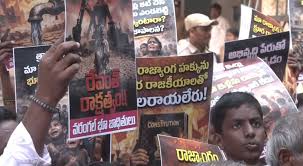
Get latest articles and stories on India at LatestLY. BRS Party on Thursday approached the Telangana State Human Rights Commission, alleging that the state government is trying to grab land belonging to Dalit families near Badrakali Temple in Warangal district. Hyderabad (Telangana) [India], (ANI): A delegation from the Bharatiya Rashtriya Samiti (BRS) members on Thursday approached the Telangana State Human Rights Commission, alleging that the state government is trying to “grab land belonging to Dalit families” near Badrakali Temple in Warangal district. BRS MLC Dasoju Sravan Kumar, while being part of the delegation, said that around 155 Dalit families, who have been living there for 70 years with proper civic amenities and legal documents, are facing eviction in the name of a development project, without following the Land Acquisition Act or the due legal process. Speaking to ANI, Kumar said, “Near the Badrakali Temple in Warangal district, approximately 155 Dalit families have been living for the past 70 years. The areas where these houses are built have civic amenities. All houses have legal drinking water connections and electricity connections. All the Dalit families living there have Aadhaar cards with the same address. They also have ration cards. They also have voter ID cards with the same address.” “And in the recent elections, they were asked to vote for the ruling party. Despite this, in the name of a development project, the ruling government is trying to forcibly evict them and grab their land without following the principles of the Land Acquisition Act or any due process under the law, which we strongly condemn,” he added. Earlier on Sunday, BRS working President KT Rama Rao said that their goal is to prevent the ongoing exploitation in Singareni. Keeping the interests of Singareni workers in mind, BRS announced its support for CPI in Kothagudem. BRS Working President KTR alleged that both the Bharatiya Janata Party (BJP) and the Congress are acting in collusion to exploit Singareni, functioning in a manner that directly harms the organisation. Speaking to the media, he stated that since the CPI and Congress are already in an alliance, sharing the Kothagudem Mayor’s post comes as no surprise. However, he questioned why the CPI-affiliated AITUC agreed to this alliance, noting that he could not comment on the specific pressures that may have influenced the decision. KTR made it clear that regardless of whether other parties join hands, the BRS will continue to fight for Singareni’s interests and the rights of its workers, as it has in the past. (ANI) (The above story is verified and authored by ANI staff, ANI is South Asia’s leading multimedia news agency with over 100 bureaus in India, South Asia and across the globe. ANI brings the latest news on Politics and Current Affairs in India & around the World, Sports, Health, Fitness, Entertainment, & News. The views appearing in the above post do not reflect the opinions of LatestLY) Courtesy : LatestLY Note: This news is originally published on https:/latestly.com/bha and is used purely for non-profit/non-commercial purposes, especially human rights
Gujarat: Unit to monitor atrocities against Dalits faces 18 vacancies
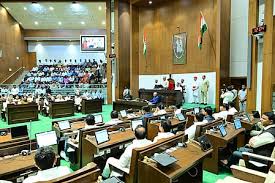
Crucially, while the unit carries a sanctioned strength of 76 posts, only 58 are filled, leaving 18 vacancies that directly dilute field oversight, data tracking, and policy responsiveness across districts. AHMEDABAD: In a candid admission on the floor of the Gujarat Legislative Assembly, the Social Justice and Empowerment Minister disclosed that the specialised civic unit set up under the Director, Scheduled Caste Welfare Department to monitor atrocities remains structurally understaffed thereby weakening the very surveillance mechanism meant to safeguard vulnerable communities. The sanctioned cadre strength of the unit includes: 3 posts of Joint Director (Vigilance), 1 post of Deputy Director (Citizen Cell), 5 posts of Social Welfare Officer (P.K.S), 42 posts of Assistant Social Welfare Officer (Project Officer), 6 posts of Social Welfare Inspector, 4 posts of Senior Clerk, 8 posts of Junior Clerk, 1 post of Research Officer, 3 posts of Research Assistant and 3 posts of Statistical Assistant, taking the total sanctioned strength to 76 posts. Crucially, while the unit carries a sanctioned strength of 76 posts, only 58 are filled, leaving 18 vacancies that directly dilute field oversight, data tracking, and policy responsiveness across districts. Out of 3 sanctioned posts of Joint Director (Vigilance), only 1 post is filled while 2 posts are vacant, both lying vacant for a period of one to three years. The post of Deputy Director (Citizen Cell) is filled. But the most alarming void surfaces in the Social Welfare Officer (P.K.S) cadre, all 5 sanctioned posts of Social Welfare Officer (P.K.S) are vacant. Of these, 2 posts have been vacant for less than one year and 3 posts have remained vacant for one to three years. Although operational cadres appear comparatively staffed 37 of 42 Assistant Social Welfare Officer posts filled the five vacancies here still mean fewer boots on the ground, weakening grassroots incident reporting and timely intervention. Even analytical backbones are missing: all three Statistical Assistant posts remain vacant for over three years, signalling a long-term data vacuum that can distort policy calibration and trend analysis. The absence of statistical and research personnel implies that incident pattern mapping, predictive risk alerts, and evaluation of preventive schemes may be operating on incomplete datasets. Without robust analytics, monitoring risks becoming reactive rather than preventive, undercutting the unit’s foundational mandate of evidence-driven vigilance under the Scheduled Caste Welfare framework. Overall, the data confirms: Total Posts 76; Filled Posts 58; Vacant Posts 18. Of these vacancies, 8 are within one year, 7 are pending for one to three years, and 3 have remained vacant for more than three years. Responding to the vacancy crisis, the minister informed the House that recruitment actions are underway through multiple channels. Requisitions have been sent to the Gujarat Public Service Commission for Social Welfare Officers, while Research Assistant and Statistical Assistant posts are to be filled via the General Administration Department. Vigilance-level posts remain “under consideration,” indicating procedural movement but no definitive timelines. Dilip Singh Kshatriya Courtesy : TNIE Note: This news is originally published on https:/thenewindianexpress.com/bha and is used purely for non-profit/non-commercial purposes, especially human rights
Kerala: 23-year-old Dalit priest resigns citing caste discrimination

Vishnu said he was drawn towards priesthood because of his love for Sanatan Dharma. A 23-year-old Dalit priest in Kerala resigned from his post, alleging caste discrimination, threats and false complaints against him. PR Vishnu initially served as a part-time priest in a temple in Malikampeedika Vathurakkavu Temple in Alangad, Ernakulam. He cleared a written test and interview conducted by the Travancore Devaswom Recruitment Board, and replaced the regular priest after four months. Speaking to The Telegraph, Vishnu said he was drawn towards priesthood because of his love for Sanatan Dharma. But ever since his appointment, he claims there have been deliberate attempts to paint him as a thief. “I was shocked to know that the gold jewellery on the idol was removed and replaced with fake ones. I had a doubt and consulted a goldsmith to check the quality of the jewellery on the idol. I had a narrow escape from being branded a thief,” he said. Vishnu’s father is a daily wage labourer and mother is a homemaker. The young priest said that even his family is not spared. In his police complaint, he has accused members linked to the Communist Party of India (Marxist)-affiliated Devaswom Employees Confederation for the intimidating work environment. State president of the Devaswom Employees Confederation, Prajith Kumar, said the organisation would not tolerate any caste discrimination against priests appointed by the TDB commissioner and warned of action against staff who allegedly humiliated Vishnu. Courtesy : Scroll Note: This news is originally published on https:/scroll.in/bha and is used purely for non-profit/non-commercial purposes, especially human rights
TSHRC orders water, power restoration to 30 Dalit families in Hanamkonda
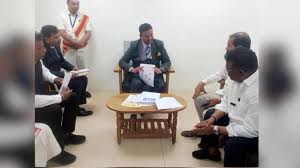
Alleging caste discrimination, the families said the disconnection took place despite holding valid house-site pattas. Hyderabad: Telangana State Human Rights Commission (TSHRC), on Thursday, February 19, issued an interim order directing immediate restoration of drinking water and electricity to 30 Dalit families of Hanamkonda district, which were disconnected despite holding valid house-site pattas. Commission Chairperson Justice Shameem Akther’s order was based on complaints filed by Dalit residents of Cherabanda Raju Nagar, who alleged caste discrimination and constant threats with drinking water and electricity disconnection, as well as demolition of their houses. The Commission directed the Hanamkonda District Collector, Greater Warangal Municipal Corporation and the Telangana Northern Power Distribution Company Limited (TGNPDCL) to immediately restore water and power supply and refrain from coercive eviction measures. “Such actions violate the constitutional guarantees of equality and the right to life with dignity. We have directed the Warangal Police Commissioner to prevent caste-based intimidation and ensure protection to the residents,” Justice Akther said. The Chief Secretary and Telangana Director General of Police (DGP) B Shivadhar Reddy have been directed to monitor the situation. The Commission has sought a detailed report by March 9. Courtesy : Scroll Note: This news is originally published on https:/scroll.in/bha and is used purely for non-profit/non-commercial purposes, especially human rights
Ahmedabad: Dalit youth stabbed, casteist slurs uttered; case filed against 6 people

A minor dispute at a paan shop in the Ranip area led to a bloody clash; police registered an FIR against 6 accused under sections of the SC/ST Act and the BNS. Ahmedabad: A minor dispute turned violent late Saturday night in the Ranip area of the city. A 25-year-old Dalit youth was stabbed in the neck and seriously injured. Following the incident, the victim filed a complaint at the Ranip police station on Sunday. What is the entire matter? The victim has been identified as Sahil Vaghela, a resident of Purushottam Nagar opposite Pink City in Ranip, and works at a private company. In his statement to the police at the Civil Hospital, Sahil stated that the incident occurred around 10:30 pm on Saturday night. He had gone to a paan shop near Bakra Mandi when he encountered Shravan Thakor, Harshit Thakor, and four others. Casteist Slurs and Stabbing It is alleged that these men began questioning Sahil about a past incident in his society. The accused immediately began abusing him. Sahil alleges that he was insulted with casteist slurs and assaulted. During the scuffle, the main accused, Shravan, allegedly pulled out a knife and attacked Sahil. The knife wound struck the left side of his neck. Accused absconding, victim out of danger Seeing blood flowing from his neck, Sahil raised an alarm, which frightened all the attackers and they fled the scene. The injured Sahil immediately called his friends and a relative. He was then taken to the Civil Hospital by 108 ambulance. After being treated by doctors, he was discharged from the hospital and is currently reported to be out of danger. Police Action Given the seriousness of the case, the Ranip police have registered an FIR against six accused. Police have registered a case under sections of the Indian Penal Code (IPC) for rioting, unlawful assembly, voluntarily causing grievous hurt, and insult with intent to provoke breach of the peace. The accused have also been charged under relevant sections of the SC/ST (Prevention of Atrocities) Act. Rajan Chaudhary Courtesy: Hindi News
Not every insult to a member of the SC/ST community is an atrocity: Understand this important Calcutta High Court decision

The court also clarified that it is not enough for the accused to know the caste of the victim. A crime is committed when the insult is committed “on the ground or by reason of the person being a member of a Scheduled Caste or a Scheduled Tribe.” Kolkata—In a landmark judgment delivered on February 11, the Calcutta High Court clarified that every insult or threat directed at a member of a Scheduled Caste (SC) or Scheduled Tribe (ST) is not automatically considered a crime under Section 3(1)(r) of the Scheduled Castes and Scheduled Tribes (Prevention of Atrocities) Act, 1989. A single bench of Justice Chaitali Chatterjee (Das), while hearing a criminal revisional application in the case of Moumita Bhattacharya v. State of West Bengal, quashed the entire proceedings at the Amherst Street Police Station, including the charge sheet filed therein. The case relates to a professional dispute in the Sanskrit Department. The complainant, who belongs to the SC community and joined as an Assistant Professor on November 14, 2018, alleged that Moumita Bhattacharya, as Head of the Department, humiliated him on the basis of caste, mentally harassed him, and harmed his career. The allegations included not inviting the complainant to departmental meetings, withholding meeting resolutions, stopping undergraduate classes, preventing him from conducting examination/evaluation duties, conspiring with students, and using abusive language in online meetings. The complaint was filed on December 4, 2021. Following an investigation, a charge sheet was filed on April 10, 2022, and the Special Court took cognizance. Petitioner Moumita Bhattacharya filed a petition under Section 482 CrPC seeking quashing of the proceedings. Citing his qualifications, he stated that he holds a PhD in Sanskrit from Visva Bharati University, a post-doctoral fellowship, passed SLET, and has held editorial positions in various journals, and stated that the allegations are false, motivated by vengeance, and lack the essential elements of an offence under the SC/ST Act. The Court, citing several Supreme Court judgments (Sajan Skaria v. State of Kerala, Hitesh Verma v. State of Uttarakhand, Swaran Singh v. State, etc.), clarified the essential elements of Section 3(1)(r). The Court stated: “The basic elements of an offence under Section 3(1)(r) are as follows: The accused must not be a member of a Scheduled Caste or a Scheduled Tribe. The accused must intentionally insult or intimidate a member of a Scheduled Caste or a Scheduled Tribe. Such insult or intimidation must be with the intent to humiliate that person. And such insult or intimidation must occur in a public place or in public view.” The court further made an important observation: “Not every intentional insult or threat directed at a member of a Scheduled Caste or Tribe will constitute caste-based humiliation. This is only the case if the insult or threat is due to the prevalent practice of untouchability or to reinforce notions such as the historical superiority of upper castes over lower castes/untouchables, or the notions of purity and impurity.” The court also clarified that it is not enough for the accused to know the victim’s caste. The offense is made out when the insult is inflicted “on the ground or by reason of the person being a member of a Scheduled Caste or Tribe.” The complaint mentioned a specific incident where the complainant was referred to as “Adarsh Sir” in an online meeting. The court made a strong comment on this: “‘Adarsh’ means ideal, and ‘Sir’ is a respectful address. This court is at a loss to understand how calling someone ‘Adarsh Sir’ can be derogatory, even if done sarcastically. This cannot, in any case, constitute an offense under the SC/ST (POA) Act, 1989.” Applying the principles of State of Haryana vs. Bhajan Lal, the court held that even if the allegations in the FIR are accepted as completely true, they do not constitute an offense. The proceedings appear to be motivated by personal enmity and revenge. Therefore, it is appropriate to quash them under Section 482 CrPC. Geetha Sunil Pillai Courtesy: Hindi News