
Dalit collective hits out at Congress over denied tickets; alleges RSS-NSS pressure in candidate selection
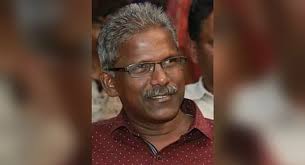
Speaking to media in Kottayam on Thursday, Dalit Samudaya Munnani leaders alleged that Congress denied the candidature for Sunny under the pressure from the RSS and NSS. KOTTAYAM: Amid ongoing challenges over the candidate selection for the assembly elections, the Congress encountered another jolt after dalit collective came out against it for reneging promised candidatures for dalit activist Sunny M Kapikad and tribal leader C K Janu. Speaking to media in Kottayam on Thursday, Dalit Samudaya Munnani leaders alleged that Congress denied the candidature for Sunny under the pressure from the RSS and NSS. They also warned that Congress’ decision to abandon the inclusive politics put forward by national leaders Mallikarjuna Kharge and Rahul Gandhi at the Raipur plenum will lead to a change in the political climate, which was favourable to the UDF. “RSS-Sangh Parivar leaders such as R V Babu and Sasikala were the first to oppose Sunny’s candidacy. It is evident that some Congress leaders were reluctant to challenge the RSS’s stance. The influence and pressure from the NSS on key Congress leaders in candidate selection highlight the oligarchic tendencies within the party,” said P A Prasad, organisation’s state general secretary. Courtesy : TNIE Note: This news is originally published on https:/thenewindianexpress.com/bha and is used purely for non-profit/non-commercial purposes, especially human rights
Dalit Samudaya Munnani: Dalit leaders announce new outfit ahead of Kerala polls
KOTTAYAM: Members of the dalit community are planning to launch a new political outfit in response to the alleged denial of candidacy to prominent thinker and writer Sunny M Kapicadu and tribal leader C K Janu. The party is set to be called Dalit Samudaya Munnani (DSM). Addressing a news conference in Kottayam on Thursday, DSM leaders said that the two were denied candidacy because Congress failed to politically include the dalit and adivasi communities. “The inclusive politics proposed by Congress national leaders Mallikarjun Kharge and Rahul Gandhi at the Raipur Plenary was abandoned by Congress in Kerala, which could lead to a change in the political climate that had turned favourable for UDF,” said DSM state committee members. DSM leaders said that initially RSS leaders like R V Babu and Sasikala opposed Kapicadu’s candidacy. “It is understood that some Congress leaders were afraid to counter the RSS stance. The influence and pressure from NSS in determining Congress candidates revealed the oligarchic governance within the party. This is extremely shameful and objectionable. If anyone suspects that RSS sleeper cells are operating within Congress, it would not be wrong. The lack of a stance by Congress in Kerala on the caste census proposed by the national leadership is a clear example,” they said. The DSM leaders added that Kapicadu received an assurance of a seat. “Even when it was a regular topic in the media, Congress leaders did not deny it. Only on the day the primary list was announced was his candidacy opposed. There is strong public sentiment against this in Kerala, which will undoubtedly be reflected in the elections,” they said. In the local body elections, the dalit and adivasi communities voted in favour of Congress, granting them a significant victory, which should not be forgotten, the DSM leaders said. Since Congress could not consider the dalitadivasi communities as a political entity, the unconditional support of these communities will be reconsidered, and they will support acceptable candidates, they added. “It is clear that neither the Left nor right fronts are interested in considering the dalit and adivasi communities, who hold a 20% vote share in Kerala. In this situation, it has been decided to form a broad Ambedkarite political party under the leadership of Kapicadu, bringing together marginalized communities, minorities, backward classes, fisherfolk, women, different gender groups, and democrats, and to actively participate in the electoral arena from the next general elections,” said according to DSM state general secretary P A Prasad and organization secretary Bijoy David. Courtesy : TOI Note: This news is originally published on https:/timesofindia.com/bha and is used purely for non-profit/non-commercial purposes, especially human rights
99 Years After Mahad Satyagraha: The Invisible Walls of the Chardar Tank
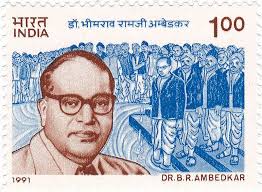
On March 20, 1927, Dr. B.R. Ambedkar led thousands of Dalits to the Chardar Tank in Maharashtra to drink water, a revolutionary act of reclaiming human dignity. While the physical tank may be open, the ritual codes of purity have merely migrated into the boardrooms of industry, the fields of science, and the hidden data of our national surveys. While the world admires the craftsmanship of Agra’s shoes, the Dalit artisans who create them remain trapped in a state of precariousness. From the manual scavengers cleaning sewer lines at night in Maharashtra to the Dome community in Banaras tasked exclusively with cremation, specific occupations remain caste-locked. Today, India marks the 99th anniversary of the Mahad Satyagraha. On March 20, 1927, Dr. B.R. Ambedkar led thousands of Dalits to the Chardar Tank in Maharashtra to drink water, a revolutionary act of reclaiming human dignity. In the popular imagination, this struggle is often viewed as a historical victory, a battle won before the ink of the Constitution was even dry. However, as we stand on the threshold of the centenary, a deep dive into the modern landscape suggests that while the physical tank may be open, the ritual codes of purity and pollution have merely migrated into the boardrooms of industry, the fields of science, and the hidden data of our national surveys. Professor Atul Thorat of JNU highlights that the exclusion Dr. Ambedkar fought against has become sophisticated and, in many cases, invisible to the urban eye. Nowhere is this more apparent than in the leather industry of Agra. While the world admires the craftsmanship of Agra’s shoes, the Dalit artisans who create them remain trapped in a state of precariousness. Thorat points out a stark contrast with Europe: in Italy or England, a handmade leather shoe is a brand of prestige where the artisan captures the full value and credit. In India, the system is designed to keep the creator hand to mouth. Because the retail, branding, and management systems have been captured by specific business communities, the Dalit worker, despite being the primary skilled worker, is denied the path to becoming an entrepreneur. They are forced to buy raw materials on credit, ensuring they never gather enough capital to start their own enterprise. They provide the skill, but the market system ensures they remain labourers rather than proprietors. This obsession with ritual hierarchy even acts as a barrier to scientific and medical innovation. Thorat recounts the story of an American-educated PhD engineer who returned to India to revolutionise agriculture using organic manure derived from human waste, what is known as Okla manure in Delhi. “Despite the scientific fact that organically decomposed waste is simply fertilizer, the project collapsed under the weight of caste-based perception. Farmers rejected it, claiming human excreta is defiling and polluting, whereas cow dung is celebrated as pure.” Thorat said. This unscientific divide mirrors a historical tragedy in Indian medicine. Thorat notes that Ayurvedic medicine historically failed to evolve as rapidly as Unani or Chinese medicine because practitioners, bound by codes of purity, refused to perform autopsies or examine polluting bodily fluids like urine and stool. Even today, this manifests in the fields: when truckloads of manure are delivered, the driver may be middle-caste, but the off-loaders are exclusively Dalits, relegated to the task because it is their traditional assignment to handle what the body gives up. This is rooted in the Bühler (1867) definition of Hindu ritualism: anything the body sheds—blood, sweat, spit, or excreta, is considered spiritually polluting for the priest-class, leading to the relegation of these tasks to a designated untouchable group. The persistence of these practices is backed by hard data that challenges the narrative of a post-caste India. Thorat, who co-authored research with Diane Coffey of Princeton and UT Austin, explains that traditional face-to-face surveys often hit a wall of survey guilt. When an urban interviewer asks a person if they practice untouchability, only about 30% admit to it. However, when the same questions were asked in an anonymised telephonic survey, the mask of political correctness slipped. In Delhi, 40% admitted to practicing untouchability; in rural Uttar Pradesh, that figure surged to 64%. This data provides a sobering context to the hidden-camera research conducted by the Indian Institute of Dalit Studies (IIDS). Their work documented the covert reality of 21st-century India: Dalit girls in villages sitting in corners for hours, waiting for the sun to set and for every other community to finish before they are allowed to touch the Chhapakaal (handpump). Once they finish, the pump is ritually washed and purified. At village tea stalls, the two-cup system persists, where Dalit men must wash their own glasses kept outside and receive tea poured from a height to avoid physical contact. From the manual scavengers cleaning sewer lines at night in Maharashtra to the Dome community in Banaras tasked exclusively with cremation, specific occupations remain caste-locked. National Sample Survey data reveals that across hundreds of occupational codes, categories like leather workers and tanners remain almost exclusively the domain of Scheduled Castes. Whether it is the Vaidyas (physicians) of old who were sidelined for their indigenous herb knowledge or the basket weavers of today, the Hindu fold has historically expanded by relegating frontier communities to the status of untouchables based on their proximity to polluting materials like dead hide. As we enter the 99th year of the movement at Mahad, the message is clear: Article 17 of the Constitution may have abolished the word untouchability, but it has not yet abolished the mind that practices it. The struggle of 1927 was not just about water; it was about breaking the monopoly on merit and purity. Until the skilled artisan in Agra can brand his own shoe and the farmer in Karnataka can see science instead of pollution, the Chardar Tank remains a mirror reflecting a journey that is far from over. Pritha Vashisth Courtesy : Outlook India Note: This news is originally published on https:/outlookindia.com/bha and is used purely for non-profit/non-commercial
Chirag Paswan’s Party Outraged Over Murder of Elderly Dalit Man in Bhadohi; Calls SP’s ‘PDA’ Slogan a Farce
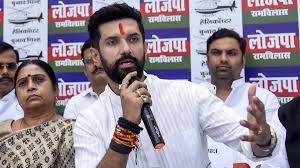
Bhadohi News: Politics has intensified in Bhadohi following the murder of an elderly Dalit man who was burned alive. On Wednesday, a delegation from the Lok Janshakti Party met with the victim’s family. **Murder of an Elderly Dalit Man in Bhadohi** The case involving the brutal murder of Jaislal Saroj—an elderly Dalit man from the Bhadohi district of Uttar Pradesh who was burned alive—continues to gain momentum. The incident has also sparked heated political debate. A delegation from the Lok Janshakti Party (Ram Vilas) met with the victim’s family and provided financial assistance of ₹100,000. During the visit, they launched a scathing attack on the Samajwadi Party’s ‘PDA’ (Pichhda, Dalit, Alpsankhyak—Backward Classes, Dalits, and Minorities) slogan, labeling it as completely deceitful. Following the brutal murder of Jaislal Saroj—an elderly Dalit watchman—in Peepargaon, Gyanpur, a high-level delegation from the Lok Janshakti Party (Ram Vilas) met with the victim’s family on Wednesday. Led by the party’s UP State President, Rajiv Paswan, the delegation offered condolences to the bereaved family and handed over the assistance amount of ₹100,000. This financial aid was provided under the directives of LJP President and Union Minister Chirag Paswan. **LJP Leaders Meet the Family** After meeting with the victim’s family, the LJP State President launched a strong attack on the Samajwadi Party, dismissing their ‘PDA’ slogan as a complete sham. He pointed out that the SP State President had visited Bhadohi and even traveled to a neighboring village, yet failed to reach the doorstep of the victimized Pasi family. He alleged that opposition parties merely engage in caste-based politics and maintain a deliberate silence regarding the injustices faced by Dalits, simply because the accused—the village *Pradhan* (head)—belongs to the Yadav caste. **SP’s ‘PDA’ Formula Dubbed a Farce** Rajiv Paswan stated that the extent of his party’s commitment to this issue was clearly demonstrated on Tuesday in the country’s highest legislative body—Parliament—when Jamui MP Arun Bharti forcefully raised the Jaislal Saroj murder case. Taking aim at the opposition parties, Arun Bharti remarked that while they were present in Bhadohi, the leaders of the PDA were indeed talking about caste-based protection; however, they could not spare the time to look after the victimized Dalit, Jayalal Saroj. The LJP has demanded that the Uttar Pradesh government take immediate and stringent action against the land mafia involved in this massacre, demolish the illegal properties of the culprits using bulldozers, and ensure that they are sentenced to death. Rajiv Paswan reiterated the party’s resolve to continue its struggle—from the streets to the Parliament—until justice is secured for the family of the deceased, Jayalal Saroj. By: Rohit Gupta Courtesy: Hindi News
After 2-Year Fight, Bengaluru Dalit Couple Enter Basaveshwara Temple Under Police Protection
Satish and Shwetha’s ordeal began two years ago when they travelled to the temple in Hulikere village of Maddur taluk in Mandya to perform a ritual for their son When the couple raised objections at being denied temple entry, they found little support locally, with village leaders failing to intervene or ensure access. (AI Generated) When the couple raised objections at being denied temple entry, they found little support locally, with village leaders failing to intervene or ensure access. (AI Generated) After a two-year battle that took them to multiple authorities, including the Human Rights Commission, a Bengaluru-based Dalit couple were finally able to enter the Basaveshwara Temple in Mandya district this week — a reminder that caste-based discrimination in places of worship continues to persist in parts of India despite constitutional guarantees. Satish and Shwetha’s ordeal began two years ago when they travelled to the temple in Hulikere village of Maddur taluk in Mandya to perform a ritual for their son. The priest, however, allegedly denied them entry on the basis of their caste. When the couple raised objections, they found little support locally, with village leaders failing to intervene or ensure access. With no immediate resolution in sight, the couple chose to pursue legal remedies — an often long and arduous process for victims of caste discrimination. They approached multiple authorities, including the Social Welfare Department, the Human Rights Commission, the Civil Rights Enforcement Directorate, and the Mandya district police, seeking enforcement of their basic rights. India’s Constitution guarantees equality before the law under Article 14 and explicitly abolishes ‘untouchability’ under Article 17, making its practise in any form a punishable offence. Additionally, the Scheduled Castes and Scheduled Tribes (Prevention of Atrocities) Act, 1989, criminalises the denial of access to public places, including temples, on caste grounds. Despite this legal framework, incidents of Dalits being denied entry into temples or facing segregation during religious practices continue to be reported from several states, pointing to a gap between law and on-ground implementation. In this case, the couple’s persistence eventually paid off. Officials facilitated their entry into the temple this week under police protection. Accompanied by Maddur Tahsildar Parushuram Sattigeri, Satish and Shwetha were able to offer prayers — an act that should have been routine, but instead became the culmination of a prolonged fight for dignity and equal access. Satish works as a driver, while Shwetha is an accountant in a private company. Their case underscores both the resilience required to challenge entrenched social practices and the continuing need for stricter enforcement of anti-discrimination laws in India. Courtesy : News18 Note: This news is originally published on https:/news18.com/bha and is used purely for non-profit/non-commercial purposes, especially human rights
“Give Us Justice or Let Us Die”: Injured Dalit Family Seeks Mass Suicide Permission After Alleged Assault
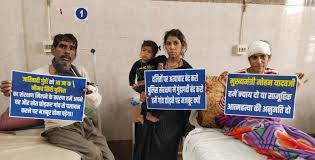
A Dalit family in Neemuch protests inside a hospital, alleging caste violence and police inaction, demanding justice and protection.Photo: Voice of MPSupport Us donations A Dalit family in Neemuch district, Madhya Pradesh, has staged a protest inside a government hospital, alleging caste-based violence and police inaction. The family, injured in an alleged attack, is demanding justice and has even sought permission for mass suicide if their pleas are ignored. Family Alleges Caste Abuse and Violent Attack The incident began on February 26 in Dasia village over a dispute related to a chickpea crop. Victim Premchand Mogiya accused local men, Mohan Singh and Babu Singh, of assaulting his daughter and abusing her with casteist slurs. The family claimed that when they approached the police, officials delayed registering an FIR. “We were forced to complain through the CM helpline because the police did not act,” the family said. They alleged that after filing the complaint, the accused attacked them again on March 15 with sticks, leaving Premchand, his wife, and daughter seriously injured. Protest Inside Hospital Currently undergoing treatment at the district hospital, the family is protesting with placards expressing fear and anger. Messages on the placards read: “Stop atrocities against Dalits,” “Stop hooliganism under police protection,” and “Give us justice or allow us to commit mass suicide.” The family also said they are being forced to leave their village due to fear. “Because of police protection to casteist goons, we may have to abandon our home and land,” one placard read. Allegations Against Police The victims have accused the police of protecting the accused and not applying relevant sections of the SC/ST (Prevention of Atrocities) Act initially. “They deliberately ignored serious charges and registered a weaker case,” the family alleged, adding that they were also pressured to withdraw their complaint. Police Deny Charges Police officials have rejected the allegations. Station House Officer Shabbi Mew said, “No protection is being given to the accused. At the time of the initial complaint, there was no assault reported, so we tried to resolve the matter.” Neemuch City police officer Pushpa Chauhan said an FIR was later registered after the assault. “The SC/ST Act was added once the caste certificate was provided,” she clarified. Appeal to Chief Minister The family has appealed to Madhya Pradesh Chief Minister Mohan Yadav for a fair investigation, strict action against the accused, and immediate security. “We have lost faith in the system. Either give us justice or allow us to end our lives,” the family said, highlighting their desperation. Courtesy : TOP Note: This news is originally published on https:/theobserverpost.com/bha and is used purely for non-profit/non-commercial purposes, especially human rights
A Decade After Una’s Shame, Justice Is Served But Its Taste Turns Bitter As Convicts Walk Free On Time Served
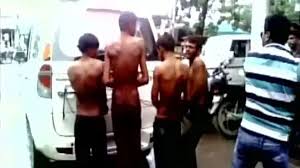
Ten years after the shocking 2016 Una flogging of Dalit youths in Mota Samadhiyala, Gujarat, the Veraval Sessions Court convicted five men. Each received five years under the Atrocities Act, with additional IPC sentences. However, concurrent sentencing and time served mean they are likely to be released soon, sparking debate over justice and accountability for caste-based violence. A decade after the shocking public flogging of Dalit youths in Gujarat’s Una sent shockwaves across the nation, a local court has finally delivered its verdict—closing a painful chapter, but opening fresh debate on justice and accountability. | Veraval: A decade after the shocking public flogging of Dalit youths in Gujarat’s Una sent shockwaves across the nation, a local court has finally delivered its verdict—closing a painful chapter, but opening fresh debate on justice and accountability. Five Convicted in Landmark Case The Veraval Sessions Court in Gir Somnath on Monday convicted five men for their role in the brutal 2016 assault that saw Dalit youths stripped and beaten in public in Mota Samadhiyala village. The incident, widely referred to as the Una flogging case, had become a flashpoint for Dalit rights movements across India. Pronouncing a detailed 340-page judgment, Sessions Judge Pandya held the accused—Ramesh Jadav, Rakesh Joshi, Pramod Goswami, Nagji Daya and Balwant Goswami—guilty of a premeditated attack and acts of torture. Five-Year Term Under Atrocities Act The court sentenced all five convicts to five years’ imprisonment under the Scheduled Castes and Scheduled Tribes (Prevention of Atrocities) Act. Additional sentences include three years under IPC Sections 523 and 524, and two years under Sections 342 and 504, along with a fine of ₹5,000 each. However, in a twist that has triggered mixed reactions, the court ordered that all sentences run concurrently. As the convicts have already spent over six years in jail during trial, they are deemed to have completed their sentence—effectively clearing the way for their release after due legal procedures. “This verdict is historic in terms of conviction, but the effective release of the accused raises serious questions,” said a social activist familiar with the case. “For the victims, justice feels incomplete.” The Incident That Shook the Nation The 2016 incident had drawn nationwide outrage after videos surfaced showing Dalit youths being tied to a vehicle, stripped and flogged for allegedly skinning a dead cow—an act they said was part of their traditional occupation. The case had become a symbol of caste-based violence and triggered widespread protests, including a massive Dalit uprising across Gujarat. Legal experts noted that while the conviction under the Atrocities Act is significant, the concurrent sentencing structure has diluted the punitive impact. “It underscores the gap between legal justice and societal expectations,” one lawyer commented. Security was tightened in and around the court premises and sensitive areas of the district to prevent any law and order issues following the verdict. Authorities remained on alert amid concerns over potential unrest. For the victims and their families, the judgment brings closure—but not necessarily solace. “We waited ten years for this day,” a relative of one victim said. “But seeing the accused walk free so soon is painful.” Courtesy : TFPJ Note: This news is originally published on https:/thefreepressjournal.com/bha and is used purely for non-profit/non-commercial purposes, especially human rights
‘Anti-Ambedkar’ BJP used money power, deployed ‘agent RO’ to defeat dalit activist in Haryana Rajya Sabha: Congress
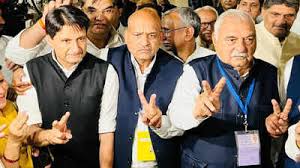
NEW DELHI: Congress on Tuesday said the governing BJP employed “money power, threats and misuse of returning officer” to win the Haryana Rajya Sabha election at any cost, as it slammed the rival for again “exposing its anti-Ambedkar character” by trying to steal the parliament membership of grassroots Dalit activist Karamvir Boudh. After scraping a victory in the Haryana RS polls, despite cross voting by five Congress MLAs and four of its votes declared invalid, Congress MP Deepender Hooda said BJP had appointed Gujarat deputy CM as the observer for the polls which showed that the BJP leadership wanted to win the election irrespective of the tactic used. “BJP tried to murder democracy in the dark of night. All the four votes declared as invalid were completely valid. They had even been put in the tray of valid votes by an official. But this was done by a blatantly partisan RO (returning officer) to contrive the numbers in favour of BJP,” he told a press conference with Congress’s scheduled castes department chairman Rajendra Pal Gautam. Deepender said Congress will take strong action against the MLAs who cross voted and betrayed the party, adding that people will not forgive the legislators who betrayed their mandate. He said BJP wanted to engineer cross-voting by nine or seven Congress legislators while securing two votes of INLD. He said INLD, “which is B-team of BJP”, declared its decision to abstain from polling barely half an hour before the voting ended, because it was sure that Congress was winning the election. He said when BJP’s “game of pressure and money” failed, BJP employed its third strategy of fixing the play through RO. “RO worked as a BJP agent,” he added. Courtesy : TOI Note: This news is originally published on https:/timesofindia.com/bha and is used purely for non-profit/non-commercial purposes, especially human rights
Una Dalit flogging case: 5 sent to 5 years in jail; 35 acquitted

All five convicted individuals, who are currently out on bail, have already spent over five years in jail, meaning they may not have to serve the sentence. Ahmedabad: A special court on Tuesday sentenced five individuals to five years in prison and imposed a fine of Rs 5,000 each in the Una Dalit flogging case, a day after finding them guilty even as it acquitted 35 other suspects All five convicted individuals, who are currently out on bail, have already spent over five years in jail, meaning they may not have to serve the sentence. The court of additional sessions judge Jignesh Pandya pronounced the quantum of sentence after finding them guilty under the charges of voluntarily causing hurt using dangerous weapons (IPC 324), wrongful confinement (IPC 342) and intentional insult with intent to provoke a breach of the peace (IPC 504) and charges under section of the scheduled castes and scheduled tribes (prevention) act. Those who have been sentenced are Ramesh Jadav, Rakesh Joshi, Pramod Giri Goswami, Nagji Daya, and Balwant Goswami. The court didn’t find evidence to prosecute them under charges of attempt to murder, unlawful assembly and conspiracy, the stringent sections which have provision of life sentence. They were beaten up for skinning a dead cow. Vasram, Ramesh, Ashok and Becher were caught by the accused and were paraded in public while they were tied to an SUV. Investigation revealed that the family was skinning a dead cow, which had been killed by an Asiatic lioness. The court found that the prosecution failed to prove the charges with sufficient evidence. The order states that nothing came on record to show that the cow was actually killed by the lioness, as there was no detail of any compensation given to the owner of the cow. Meanwhile, Vasram Sarvaiya told DH that they were “sad” with the judgment. He said that “the fight would continue as he will challenge the judgment.” Similarly, Dalit leader and Congress MLA Jignesh Mevani also expressed “shock” over the judgment. Noting that the provision for awarding compensation lies with the district magistrate, the court has directed the District Legal Service Authority to provide free copies of Mahatma Gandhi’s book, My Experiment with Truth, to the victims to “support their mental well-being and help them endure the wrongs they have faced within the limits of the law.” The judge further stated that a similar directive could have been issued for the accused persons also, but there is no provision in the law to do so. The court directed the government to look into cow slaughter offences thoroughly. Courtesy : DH Note: This news is originally published on https:/deccanherald.com/bha and is used purely for non-profit/non-commercial purposes, especially human rights
UP’s caste cauldron simmers as parties vie for Dalit vote pie
Lucknow: With state assembly elections round the corner, Dalit politics is back in reckoning. The remarks made by Congress MP and the leader of the opposition Rahul Gandhi on Kanshi Ram during an event to mark the Dalit leader’s birth anniversary drew a sharp response from BSP president Mayawati. Rahul said that had the Congress party not made mistakes, BSP founder Kanshi Ram would not have become a Dalit messiah. “Had Jawaharlal Nehru been alive, he would have made Kanshi Ram a chief minister from the Congress,” he said. Reacting to the statement, Mayawati said in a social media post that when Congress did not respect BR Ambedkar and did not mourn the death of Kanshi Ram even for a day, even though he was in the govt at the Centre, how could one expect the Congress to honour Dalits. “It was the anti-Dalit policies of the Congress which forced late Kanshi Ram to establish BSP,” she said. Later, Rahul Gandhi wrote to the PM seeking Bharat Ratna for Kanshi Ram. A similar demand was made by Samajwadi Party president Akhilesh Yadav earlier. The BSP chief did not spare Akhilesh too and said that even the then Samajwadi Party govt did not announce mourning for even a day when Kanshi Ram passed away. According to political observers, more than honouring Kanshi Ram, parties are vying for Dalit votes as assembly election is scheduled early next year. They believe that be the sense of insecurity surrounding BSP chief Mayawati, or the BJP’s aggressive Hindutva plank, the BSP’s march has slowed down, and the party is losing its grip on Dalit voters, including Jatavs. The opposition, however, has been claiming that Mayawati acts under the pressure of the BJP. The BSP could get only 9.88% vote share in the 2024 Lok Sabha elections and had lost all the seats in UP. It won 10 Lok Sabha seats in the 2019 polls with a vote share of over 19%. With BSP’s gradual downfall, the Congress, the Samajwadi Party, and the BJP are seeing it as an opportunity. More so when the poor performance by the BSP and the BJP resulted in the Congress-SP alliance winning 43 seats (37 by SP, the biggest win since the party was born, and 6 by Congress). The result boosted the morale of the SP-Congress combine. With elections due next year, both the parties are separately trying to prove themselves as the genuine claimant of Dalit votes. According to political observers, the reason is obvious. Even though the result has been in favour of the Congress-SP alliance, there has been a debate if the slight shift in Dalit votes towards the alliance was because of the Congress or the Samajwadi Party. Both the parties continue to take credit for the shift. Be it the Congress or the SP, whichever party proves its worth before the Dalits, it will be in a better position to negotiate on seats if they both decide to contest assembly elections hand in hand. Dalits are about 21% in Uttar Pradesh. Staking a claim on such a big chunk will be advantageous in the assembly polls. Wary of the Congress and SP tactics, Mayawati is leaving no chance to scuttle their moves by coming up with counterclaims. Just like Congress, which is struggling for its revival in UP since 1989, the BSP is also striving to make a comeback. BSP is also trying hard to attract the youth. While the older generation continues to be loyal to the BSP, young voters are seeing hope in Azad Party chief Chandrashekhar Azad. It is for this reason that Mayawati has presented her nephew Akash Anand as her alternative. However, Mayawati’s “blow hot and cold policy” towards Akash has failed to mobilise youths as expected. Even as the SP, Congress and the BSP try to prove themselves as the right party for Dalits, the BJP’s concern is to keep intact non-Jatav Dalits in party fold and ensure that Jatavs don’t shift towards the Congress or SP. The BJP is better placed if Jatavs remain loyal to the BSP as this will only allow Mayawati to win a few seats. However, if Jatavs shift towards Congress-SP alliance, the combination of Muslims and Jatavs could become lethal for the BJP, especially in west UP. Caste politics once again expected to take centrestage in the assembly polls. Courtesy : TOI Note: This news is originally published on https:/timesofindia.com/bha and is used purely for non-profit/non-commercial purposes, especially human rights