
Dalit youth assaulted and robbed of 36,000 rupees in Unnao: Thugs hurled casteist slurs at him; police accused of inaction

A Dalit youth was assaulted and robbed in the Bangarmau police station area of Unnao. 36,000 rupees were allegedly snatched from him and he was subjected to casteist slurs. The victim has filed a police complaint. A young man, son of Mishrilal, was carrying 36,000 rupees from his village to deliver to a man named Lattu in another village. On the way, two village boys stopped him. They began abusing and beating him. One of the accused held Ajay down, while the other was beating him. The men hurled casteist slurs at Ajay and said, “We will beat you wherever we find you.” During the assault, the accused also snatched 36,000 rupees from Ajay. Ajay comes from a poor family and was using this money to redeem his mortgaged land. After the incident, Ajay informed the family members of the bullies, but they threatened him. Ajay then filed a petition at the Moradabad police station. However, two days later, no action has been taken in the matter. Ajay is also being pressured to reach a settlement. The victim, Ajay, has stated that 36,000 rupees have been snatched from him. “How can I make restitution?” Ajay demands that his 36,000 rupees be returned and that he be given a written assurance that such an incident will not happen to him in the future. The Bangarmau police station in-charge stated that the matter is under his notice and that he will investigate and take appropriate action. Keshan Kumar | Ganjmuradabad, Unnao Courtesy: Hindi News
Dalit History Month | ‘They Never Wanted This Job’: How ‘Warsa Hakka’ Forces Women into Safai Karamcharis in Maharashtra

A study of 115 women sanitation workers across Mumbai, Nagpur and Kalyan documents the intersection of caste, gender, occupational health risks and institutional neglect Mumbai- Every morning, while the city is still asleep, a woman ties her hair, picks up her long-handled broom, and steps out to clean the very streets that others will walk on their way to offices. She is a safai karamchari, a government employee of the municipal corporation and yet, she is almost invisible to the very world she cleans. A research study conducted across Mumbai, Nagpur, and Kalyan has brought the stories of these women into the public domain. The study, conducted recently among 115 women employed in municipal sanitation services, found that these women aged between 19 and 46 years, simultaneously face caste discrimination, gender inequality, severe health disorders, and economic uncertainty. Titled “Intersectionality of Caste, Gender and Occupation: A Study of Safai Karamchari Women in Maharashtra,” this research has been authored by Hemangi Kadlak, Pradeep S. Salve, and Payal Karwade. Lead researcher Hemangi Kadlak has shared this study with ‘The Mooknayak’ as a special report for Dalit History Month. The study notes that the problems of safai karamcharis are among the least discussed and most neglected areas in academia. Within this gap, issues specific to women safai karamcharis remain particularly unattended, receiving less coverage than those of their male counterparts even in popular media. This study was undertaken to fill that gap by highlighting the problems women safai karamcharis face, the coping mechanisms they use, and by critically examining government policies made for them. After two months of my marriage, I joined this work; before marriage I was not into it. I married at the age of 16 years. Nobody told me to do this work, I myself started this when I was pregnant with my elder daughter. I thought gharwala should not have financial problem… Muze accha nahi lagata tha, so I started the work. — 39-year-old sweeper, Kalyan Almost three-quarters of the women surveyed entered the occupation through the Preferential Treatment (PT) case locally known as Warsa Hakka, meaning hereditary right. Under this system, a safai karamchari can nominate a wife, son, daughter, sister or other dependent to take over the post after retirement, death or permanent disability. The study found that the majority of women in Mumbai and Nagpur municipal corporations were widows recruited under this system following the death of the male safai karamchari and key earning member of the family. Direct recruitment in Mumbai municipal corporation has been closed since 1989, with current recruitment mostly based on PT. Male safai karamcharis are replaced by female workers when no male relative is available or when male members are below official working age. Among those recruited directly, caste was the decisive factor, almost all women came from Scheduled Caste backgrounds, with castes such as Rukhi, Mehtar, Valmiki, Mahar and Matang most predominant. The majority of women studied were second or third generation in this occupation. The study also found that most women entered sanitation work after marriage, as their parents had discouraged them from doing so beforehand. The researchers recorded an age of marriage below 18 years among most respondents. The researchers observed cases where female karamcharis were forced by family members to enter sanitation work under unfavourable financial conditions, and some women also stated they agreed because of the job security of a government post. My father died with the paralysis and permanent disability of lower back six years after he met with a road accident during working hours. He worked for 20 years in the municipal corporation as street sweeper… my mother continued his work and being an elder in the family, I took over the charge of family… since the past 3 years, I am working in her place as third generation sweeper. — 20-year-old woman safai karamchari, Mumbai Women safai karamcharis are vulnerable to a range of serious health conditions including chronic cough, headaches, respiratory infections, skin disease, anaemia, diarrhoea, musculoskeletal disorders and mental disorders. They also suffer from reproductive health problems and gynaecological issues. The study found musculoskeletal disorders to be particularly prevalent, attributed to the dual burden of heavy physical activity at work and daily household chores. About 88 percent of respondents at Nagpur municipal corporation and 72 percent at Mumbai reported joint or musculoskeletal pain. A high percentage of women also reported mental distress due to work burden and working schedules. Women karamcharis wake between 3 and 4 am, prepare food for their families, and begin work at 6:30 am, continuing until 2 pm without any scheduled break. This schedule results in inadequate sleep and daily health issues including headache, acidity, nausea, blood pressure fluctuations, hypertension and menstrual problems. The study observed that women do not seek treatment in the primary phase of illness unless it becomes intolerable, preferring home remedies first. Despite being entitled to medical claims as government employees, the ground observations showed that women were not provided with medical insurance in Nagpur and Kalyan. In Mumbai, women reported recently receiving medical insurance of around ₹2,50,000, and were demanding its extension to family members with coverage up to ₹5,00,000. Whatever treatment expenditure occurs, women pay out of pocket through family savings, borrowing from friends or relatives, or mortgaging household assets. In Nagpur, women reported that workplaces lacked even basic amenities such as toilets, drinking water, sitting arrangements and first-aid boxes. Women in Nagpur also reported not being provided protective gear for a long time. A similar situation was observed in Kalyan. The situation in Mumbai was found to be better, with women reporting basic facilities and protective measures at reporting places. Across all cities, women had no changing room at their reporting stations I was 40 years old when my husband (age 47) died due to alcohol addiction… When I married him, he would never touch alcohol, but over the period of years he became addicted to alcohol after being engaged in this waste collection work. Many times when he
Dalit Bride Forced Off Horse as Casteist Mob Attacks Wedding Procession with Swords, Pelt Stones in Udaipur
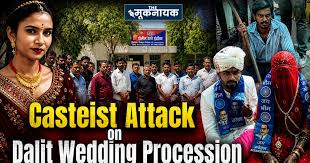
Udaipur- A shocking incident of caste-based violence has come to light in Hariyav village under Dabok police station area in Udaipur district. On the night of April 29, a wedding procession (Bindoli) of a Dalit family was allegedly attacked by a group of people who used casteist slurs, stopped the procession, forced the bride down from the horse, and assaulted the baraatis with stones, sticks, rods, and swords. According to the complaint filed by victim Bhairulal Meghwal, the marriage procession of his daughter, Pooja Meghwal, was passing through the main road near Dhira Talai in Hariyav around 10 PM when the incident occurred. The accused, identified as Laxman Singh, Madhu Singh, Kishan Singh, Uday Singh, Arjun Singh, Takhat Singh , Fateh Singh, Vikram Singh, and others including women from their families, allegedly blocked the procession. The attackers allegedly caught hold of Jitendra Meghwal’s turban and hurled casteist abuses, warning, “Ch%$m%r Meghwalo, do not take the procession ahead of my house, otherwise there will be bloodshed.” They then forcibly stopped the DJ, pulled the bride Pooja Meghwal down from the horse, and launched a violent attack on the wedding guests. Eyewitnesses reported that stones were pelted indiscriminately, injuring several people including women and children. Takhat Singh allegedly used a sword to attack the baraatis. In the scuffle, Mangalsutras of Manju Meghwal and Tulsi Meghwal were snatched, and a watch belonging to Jagdish Meghwal was also stolen. Several people, including Vardi Chand Meghwal, Ganesh Meghwal, Jitu Meghwal, Manju Meghwal, Lakshmibai, Hitesh Meghwal, Suresh Meghwal, and others, sustained injuries in the assault. An FIR was registered on April 30, 2026, at Dabok Police Station under Sections 189(2), 115(2), and 126(2) of the Bharatiya Nyaya Sanhita (BNS) and relevant sections of the Scheduled Castes and Scheduled Tribes (Prevention of Atrocities) Act, 1989 including 3(1)(za)(B), 3(1)(r), 3(1)(s), and 3(2)(va). The investigation has been handed over to IPS probationer Aashima Vaswani. Bhim Army Udaipur Vice President Roshan Meghwal told The Mooknayak that around 15 people, including 4-5 women, were involved in the violence. He said that immediately after the clash, police reached the spot and detained four accused under preventive sections. After the FIR was lodged the next day, statements of the victims were recorded. Roshan Meghwal further alleged that the same group had earlier created similar obstructions during another Dalit family’s wedding in the village. On Friday, a large number of Bhim Army supporters and Dalit community members gathered at Dabok police station demanding strict action. They have warned that if prompt and strict action under the SC/ST Act is not taken against all the accused, they will stage a major protest on Monday. Geetha Sunil Pillai Courtesy : The Mooknayak Note: This news is originally published on https:/themooknayak.com/bha and is used purely for non-profit/non-commercial purposes, especially human rights
Plates Apart, Gods Apart: Junagadh Temple Feast Exposes Gujarat’s Caste Fault Lines

Five men walked into the Dalit community’s lane in Bhutdi village, Junagadh district, on the evening of April 27. They had an invitation to deliver —to the consecration feast of a newly built Lord Ram temple scheduled for two days hence. But the Patostav invitation came with conditions. The Dalit residents were told to arrive only after the other castes had eaten. They were to bring their own plates and bowls. Their food and water would be kept separate. And they were to stay out of the temple itself. Ajay Chatur Boricha, 25, filed a complaint at Visavadar police station the next morning. By the time the temple was consecrated on April 29, the community feast had been cancelled, five organisers were facing FIRs under the SC/ST (Prevention of Atrocities) Act, and the case had acquired the attention of DySP Ravirajsinh Parmar of the Junagadh SC/ST Cell, who confirmed that statements have been recorded and notices issued to all accused under BNSS 35(3). As we file this news report, investigators are also searching for digital evidence. That a complaint was filed before any violence occurred — and that the Dalit community chose legal redress over participation on humiliating terms — marks a small but significant assertion of dignity. What happens to that complaint in the courts of Gujarat is another matter entirely. Above: The temple in Bhutdi village where Dalits were asked to bring their own plates. Picture via special arrangement by Vibes of India THE GRAMMAR OF EXCLUSION The conditions imposed on Dalits in Bhutdi — separate vessels, a later sitting, barred entry to the sanctum — are not inventions of rural backwardness. They are a grammar, fluent and consistent across the state. A Dalit manual scavenger from Ahmedabad district, whose testimony has been documented by civil society organisations, described the same logic at work in a city setting: separate tea tumblers at canteens, made to clean them yourself, barred from upper-caste water taps, sometimes forced to walk a kilometre for water. When he and his colleagues asked for their rights from the municipality, officials threatened to fire them. This sounds unbelievable but in most so called posh and high class and caste houses of Gujarat, there are two separate sets of vessels especially tea cups and drinking glasses which even the non Dalit domestic helps refuse to touch. In March last year, a Dalit man in Vadol village in Sabarkantha district was beaten, stripped naked, and paraded through the streets by dominant-caste men — his offence, allegedly entering a temple. Two Dalit men in Mandal village were assaulted by cow vigilantes for refusing to dispose of a dead animal, a task that caste hierarchy has historically pressed their community into. During Navratri, a young Dalit girl was dragged out by her hair from a garba event amid casteist abuse. A 38-year-old Dalit labourer named Shailesh Solanki was assaulted and abused with casteist slurs at a crossroads in Sabarkantha simply for declaring his intent to visit the Kal Bhairav temple in Himatnagar. As recently as February 2026, a Dalit groom’s wedding procession in Patan district was stopped at sword-point by upper-caste men who objected to his riding a horse — a ritual they considered their exclusive preserve. The video circulated widely. Elsewhere in Banaskantha, a Dalit lawyer named Mukesh Parecha wanted to arrive at his own wedding on horseback and requested police protection. A team of 145 policemen arrived in Gadalvada village to escort him. The wedding passed without incident. The spectacle of state force required for a man to exercise a social custom that others take for granted was, in itself, a statement about the distance between constitutional guarantee and ground reality. THE CONVICTION RATE THAT EXPLAINS EVERYTHING The Bhutdi FIR, once it travels the familiar path of Gujarat’s criminal justice machinery, will encounter a set of odds that are well documented. Between 2018 and 2021, the conviction rate in cases of atrocities against Scheduled Castes in Gujarat was 3.065 per cent. Of 5,369 cases registered during that period, only 32 were proven against the accused. In 1,012 cases — including cases of murder and rape registered under the SC/ST Act — the accused were acquitted. A further 1,044 cases were settled out of court. Martin Macwan, veteran activist and founder of Navsarjan Trust, has observed that in the rare cases where conviction has been reached, it is typically because Dalit rights NGOs sustained the case — because the complainant and witnesses face social pressure and threats to withdraw. Ahmedabad city alone reported 189 cases of atrocities against Scheduled Caste persons in 2022, the highest of any district in the state, out of a state total of 1,425 registered cases. In March 2019, Gujarat’s then-minister for social justice told the assembly that crimes against Dalits had risen 32 per cent between 2013 and 2018. The national conviction rate under the Atrocities Act stands at 3-4 per cent. Advocates working in the space have pointed to a structural explanation: a prejudiced or compromised police officer at the investigation stage, or a biased judge at trial, can ensure justice is never served while simultaneously encouraging the accused to file counter-complaints against the victim. The acquittal is, in this reading, not a failure of the law but of its gatekeepers. THE PROSPERITY PARADOX Gujarat’s governance record is frequently cited as evidence that development and social order can coexist. The state’s per capita income is among the highest in the country. Its industrial corridors, port infrastructure, and export numbers are points of pride in every Budget speech. The ‘Gujarat Model’ has been exported as a national template. Against this backdrop, the persistence of caste atrocity is not incidental — it is, researchers and activists argue, structurally connected to the prosperity rather than standing apart from it. A 2014 research paper found that an increase in the consumption expenditure ratio of Scheduled Castes relative to upper castes is associated with an increase in crimes committed by the latter against the former. Dalit
Dalit student abused, beaten by teacher for failing to bring textbook

The teacher Satish “pushed” Mohit, resulting in a head injury after impact with the bench Gurugram: A 14-year-old Dalit student was allegedly assaulted and insulted with casteist slurs by a teacher at a private school in the Gurugram district of Haryana. The incident is from Joginder High School in the Sohna area. Kishanlal, a resident of Javed Colony, wrote in the police complaint that a teacher identified as Satish allegedly hit his son, Mohit, for not bringing the required Hindi textbook to class. According to Kishanlal, Satish “pushed” Mohit, resulting in a head injury after impact with the bench. He said that his son already had health conditions, which he had informed the school about earlier. “After the beating, his condition worsened,” the complaint read. The injured student was initially taken to a local hospital in Sohna. However, due to his underlying conditions, he was referred to a hospital in Gurugram. The family alleged that the teacher, Satish, used derogatory, casteist and abusive language against Mohit and accused him of humiliating their child. They demanded strict action against the teacher. The school officials told Dainik Bhaskar the matter was being “unnecessarily exaggerated.” Denying all accusations, the school operator, Tejpal Saini, insisted that no such assault had occurred inside the classrooms. “There was no beating by the teacher,” he added. Meanwhile, the police have taken statements from both the teacher and the family. Posted by Khadija Irfan Rahim Courtesy : TSD Note: This news is originally published on https:/thesiasatdaily.com/bha and is used purely for non-profit/non-commercial purposes, especially human rights
Laborer assaulted in Sikriganj, case filed against 4: Case filed under serious sections including the SC/ST Act
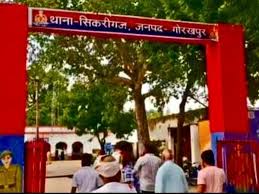
Police have filed a case against four accused in connection with the assault on a Dalit laborer on Friday in Bheusan, also known as Bankatan, village in the Sikriganj police station area. This action was taken based on the victim’s complaint. The victim, Rampreet, filed a named complaint at the Sikriganj police station on Thursday, April 30th. He stated that he was working as a laborer at the village’s Rai Bahadur Singh Master’s house when Ramsajivan Singh (also known as Guddu Singh, also known as Harendra Singh), Manish Singh, and Durgesh Singh suddenly arrived at his door. According to Rampreet, the accused surrounded him due to an old rivalry and began beating him with sticks. They hurled casteist slurs and threatened to kill him. Rampreet was seriously injured in the assault and his belongings were damaged. The victim stated that people present at the scene rescued him. Following a preliminary investigation and medical examination of the victim, the police took action on the instructions of Sikriganj Police Station Officer Anjul Kumar Chaturvedi. The Police Station Officer stated that a case has been registered based on the complaint. Khajani Circle Officer Deepanshi Rathore will investigate this case, registered under the SC-ST Act. Ardhachandra Dhari Tripathi | Khajani Courtesy: Hindi News
Transgender Rights In India: Law Vs Ground Reality

India’s journey toward recognising transgender rights has been progressive in law but uneven in reality. While constitutional courts have affirmed dignity, equality, and the right to self-identification, the lived experience of transgender persons continues to be shaped by discrimination, exclusion, and social stigma. The introduction of the Transgender Persons (Protection of Rights) Amendment Bill, 2026 has further intensified the debate between legal protection and ground realities. The foundation of transgender rights in India was laid in the landmark judgment of NALSA v. Union of India (2014), where the Supreme Court recognised transgender persons as a third gender and upheld their right to self-identify their gender identity under Article 21 of the Constitution. This was followed by Navtej Singh Johar v. Union of India (2018), which strengthened the broader framework of dignity, autonomy, and equality for gender and sexual minorities. These judgments positioned India as a country with a progressive constitutional vision on gender identity. However, the legislative framework has often struggled to match this constitutional vision. The Transgender Persons (Protection of Rights) Act, 2019 was introduced to prohibit discrimination and provide welfare measures. Yet, it was widely criticised for diluting the principle of self-identification by requiring a bureaucratic certification process for legal recognition of gender identity. The newly proposed Transgender Persons (Protection of Rights) Amendment Bill, 2026 has further deepened this debate. The Bill introduces stricter procedures for gender recognition, including mandatory verification through district authorities and medical boards, shifting away from the self-identification principle established by the Supreme Court. Critics argue that this medicalisation of identity undermines personal autonomy and violates the spirit of constitutional dignity under Article 21. The Bill also expands regulatory oversight over gender identity certification processes, raising concerns about privacy and state control over deeply personal aspects of identity. While the government argues that these changes aim to prevent misuse of welfare schemes and ensure administrative clarity, activists fear that it may create additional barriers for an already marginalised community. On the ground, transgender persons continue to face harsh realities. Despite legal protections, discrimination in education, employment, healthcare, and housing remains widespread. Many are pushed into informal work due to lack of opportunities in the formal sector. Social exclusion, family rejection, and violence further intensify their vulnerability. Even access to welfare schemes is often blocked by bureaucratic hurdles and lack of awareness. A major concern is the gap between constitutional promises and practical implementation. While courts have recognised dignity and equality as fundamental rights, enforcement mechanisms remain weak. Police insensitivity, social stigma, and institutional bias continue to deny transgender persons equal citizenship in practice. The introduction of the 2026 Amendment Bill thus raises a critical question: Are we strengthening rights or regulating identity? True equality cannot be achieved through procedural recognition alone; it requires social acceptance, institutional sensitivity, and respect for individual autonomy. In conclusion, while India’s legal framework has made important strides in recognising transgender rights, the proposed 2026 Amendment highlights the ongoing tension between law and lived reality. The challenge ahead is not just to legislate rights, but to ensure that those rights are meaningful, accessible, and respected in everyday life. Only then can constitutional promises of dignity and equality truly become a lived reality for every individual, regardless of gender identity. Written by Diya sharma Law student, voice of change, and believer in justice beyond books Courtesy : Youth Ki Awaaz Note: This news is originally published on https:/youthkiawaaz.com/bha and is used purely for non-profit/non-commercial purposes, especially human rights
Why Rahul Gandhi chose Great Nicobar as his next battlefield

As exit polls bring the Congress grim news except in Kerala, Rahul bets on the Great Nicobar narrative. But sustaining campaigns remains his enduring weakness If exit polls are right, May 4 will hand Rahul Gandhi a rarity: unambiguously good news. The Congress-led United Democratic Front (UDF) seems on course to dislodge Pinarayi Vijayan’s Left Democratic Front (LDF) government in Kerala, with Axis My India giving it 78-90 out of the legislative assembly’s total 140 seats and Manorama News-CVoter pushing the band to 82-94. The headache is what tends to follow a Congress win: a stampede for the chief minister’s chair. There are four men in the frame. K.C. Venugopal, AICC general secretary and Alappuzha MP, is Rahul’s most trusted aide. V.D. Satheesan, leader of the Opposition in the outgoing assembly and a sitting MLA, has the strongest claim from the floor. Ramesh Chennithala, a former home minister of Kerala, has waited two decades for his turn. K. Sudhakaran, the Kannur MP, has not entered his name, but his Facebook endorsement of Venugopal has already lit fires in the rival camps. Rahul has handled this kind of three-way contest before, not without some unwanted consequences though. Madhya Pradesh and Rajasthan in 2018 produced festering wars between Kamal Nath and Jyotiraditya Scindia, and Ashok Gehlot and Sachin Pilot, respectively. In both, it is the party that lost. Karnataka in 2023 ended in an awkward truce between Siddaramaiah and D.K. Shivakumar that already shows signs of fraying. Given all that, the Kerala squabble may be the easiest of Rahul’s problems. Beyond Kerala, the cupboard is bare. Assam looks set to elude the Congress again. In West Bengal, where some exit polls now predict a BJP majority, the party faces what every survey calls extinction. Tamil Nadu accommodates the Congress only at the DMK’s pleasure. With the Kerala victory, the Congress completes its transformation into a southern outfit, with Himachal Pradesh as a high-altitude footnote. This is why the BJP’s parliamentary upset of April 17 matters to Rahul in a way political punditry has under-priced. The defeat of the Constitution (131st Amendment) Bill—the Narendra Modi government’s attempt to bundle women’s reservation with delimitation—was the first time in nearly 12 years that a Modi-sponsored constitutional amendment failed the two-thirds test. Rahul’s circle now believes the Opposition has the floor strength in Parliament to dictate, not just react. The aim, they say, is to set the agenda rather than chase it. Rahul’s aides point to the caste census as proof of concept. From the day in 2023 that he reversed the Congress’s historical squeamishness on the question, Rahul pounded one slogan—“jitni abadi, utna haq” (rights in proportion to population)—until the BJP, which had once dismissed the idea as an “urban Naxal” plot, agreed in April 2025 to fold caste enumeration into the next census. The electoral pay-off in 2024 was modest, but the pressure was real. In Uttar Pradesh, where caste arithmetic decides everything, the BJP fell from 62 Lok Sabha seats to 33. Post-poll data from the Centre for the Study of Developing Societies (CSDS) showed the National Democratic Alliance (NDA) losing 19 percentage points among Koeri-Kurmi OBCs (Other Backward Classes) and 13 percentage points among other OBCs. This was on the back of an Opposition campaign that warned that a “400 paar” majority for the NDA would dismantle reservation. Rahul’s next slogan was “vote chori”—his charge was that the Election Commission (EC) and the BJP had colluded to inflate, prune and redirect electoral rolls. Rahul turned it into a series of high-decibel press conferences, complete with what he called “Hydrogen-bomb” evidence. In Bihar, where he timed his second presentation a day before the November 6 vote last year, the pitch sank: the Congress won only six of the 62 seats it contested, its second-worst showing in the state’s history, and forfeited deposits in most of the rest. The argument resurfaced only in West Bengal, where the EC’s invented category, “logical discrepancy”, was used to red-flag some 2.7 million voters during the Special Intensive Revision of rolls—a disproportionate share of them allegedly Muslim. The EC has dismissed every accusation. The Congress’s own fortunes in Bengal will be unaffected either way. Rahul’s pattern is now clear. He picks issues that may not win the next election but will deny Prime Minister Modi the comfort of an unchallenged narrative. After May 4, and especially if Bengal goes the BJP way, the saffron camp will want a chorus about the Opposition’s decimation. Rahul wants a counter-tune cued up for the rest of 2026, ideally one with a moral charge. Standing with the locally aggrieved is, by now, his most dependable register. The list runs from Yavatmal in 2008, when he sat in Kalawati Bandurkar’s hut in Vidarbha, through Niyamgiri (2008-10), where he marched with the Dongria Kondh against Vedanta’s bauxite plan, to Mirchpur (2010), Bhatta Parsaul (2011), Gopalgarh (2011), Satara (2012), Shakur Basti (2015), Una (2016), Saharanpur (2017), Mandsaur (2017) and Hathras (2020). The template never varies: travel to the wronged, embrace the cause, exit. In the era of the UPA (United Progressive Alliance), the pay-offs could be substantial—Jairam Ramesh’s 2010 rejection of Vedanta’s environmental clearance was a Niyamgiri trophy. In the NDA era, the land acquisition ordinance lapsed on August 31, 2015, with Modi citing farmer “fear” in his Mann Ki Baat radio message as the trigger. Since then, the splash has rarely converted: the Yavatmal-Washim seat in Maharashtra has voted the Shiv Sena (in its various avatars) in every Lok Sabha poll since 2009; in 2022, the Sikandra Rao assembly seat in Uttar Pradesh’s Hathras gave the Congress 1,159 votes against the BJP’s 98,094. Now, in the summer of 2026, Rahul has chosen Great Nicobar. On April 26, he flew to Sri Vijaya Puram (the renamed Port Blair). Two days later, despite a curiously timed suspension of helicopter services to the Nicobars from April 28 to May 1, he reached Campbell Bay. He met Nicobarese elders at Rajiv Nagar, settlers at Gandhi Nagar and
Five booked after dalits allege humiliation at temple event in Gujarat’s Junagadh
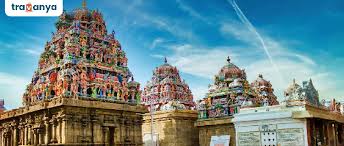
According to multiple people, the temple event invitation included a condition requiring them to bring their own plates and bowls if they wished to attend the meal. AHMEDABAD: Dalit residents in Bhutdi village of Visavadar, Junagadh, have alleged humiliating conditions during a temple event. Police have booked five accused under the IPC and the Atrocities Act, while the state government has ordered immediate arrests and protection for the victims. The controversy erupted during the grand consecration of an idol event of a Ramji Temple in Visavadar, where the entire village had gathered for rituals and a community feast. Organisers, who visited the Scheduled Caste locality to extend invitations, allegedly did not offer respect; instead, they delivered terms that triggered outrage. According to multiple people, the invitation came with a clause: “If you wish to attend the meal, bring your own plates and bowls from home.” The victims further claimed they were told that, “You will only be allowed to eat after others in the village have finished.” Local youth Ajay Boricha alleged, “This was not just about utensils, it was about humiliation. Separate seating, separate drinking water arrangements, everything was designed to isolate us”. Boricha described the incident as a systematic attempt to enforce caste segregation even in a temple setting. People filed formal complaints at the Visavadar police station. Local leader Umeshbhai said, “If arrests are not made immediately, we will escalate this to the Superintendent of Police. Such caste-based humiliation cannot be tolerated in independent India,” he said, invoking constitutional rights and equality. With tensions rising and public anger mounting, the police moved in, registering a case against five accused residents of Bhutdi village. The charges include multiple sections of the IPC along with stringent provisions of the Scheduled Castes and Scheduled Tribes (Prevention of Atrocities) Act. Later, the state government stepped in decisively, terming the incident not just discrimination but a case of social boycott. Orders were swiftly issued to the district administration, demanding immediate arrests and strict enforcement of the law. In a parallel move, directives were sent to the District Superintendent of Police and the Deputy Director of the Scheduled Caste Welfare Department calling for urgent action, victim protection, and a high-level, impartial investigation. “Zero tolerance will be maintained in such cases. A detailed report must be submitted immediately, and strictest action ensured,” the directive stated. Meanwhile, on the ground, police surveillance has intensified, and efforts to apprehend the accused have been accelerated. Dilip Singh Kshatriya Courtesy : TNIE Note: This news is originally published on https:/thenewindianexpress.com/bha and is used purely for non-profit/non-commercial purposes, especially human rights
Dalit community’s Bindooli attacked in Hariyav, Udaipur, pelted with swords and stones

Udaipur, The joy of a Dalit family in Hariyav village, under the Dabok police station area of the district, was disrupted last night when miscreants attacked the Bindooli while hurling casteist slurs. Applicant Bhairulal Meghwal stated in his police complaint that at around 10 pm on April 29, his daughter Pooja’s Bindooli was passing through the main road of Dhira Talai when Laxman Singh, Madhu Singh, Kishan Singh, Uday Singh, Arjun Singh, along with other family members and women from the village, blocked the way. It is alleged that Madhu Singh’s daughter, Manju Kunwar, grabbed a young man’s collar, hurled casteist insults at him, and threatened to cause bloodshed if the Bindooli continued. Then, the attackers suddenly stopped the DJ, forced the bride off the horse, and attacked the wedding party and guests with sticks, rods, and swords. In this violent clash, a man named Takhat Singh reportedly attacked with a sword, injuring several people, including Vardi Chand, Ganesh, Jitu, and Manju Meghwal. Stones were also pelted during the attack, seriously injuring women and children. The victims allege that, in addition to the assault, the attackers snatched gold mangalsutras from the women’s necks and committed robbery. The incident has created an atmosphere of tension in the entire area. The applicant has appealed to the Dabok police station officer to take strict legal action against the named accused and ensure justice. The police are now investigating the matter. By Sohail Khan Courtesy: Hindi News