
Dalit woman assaulted in Faridpur, accused of casteist remarks: Case filed against three named accused under serious sections
A case of assault, indecency, and casteist remarks against a Dalit woman has come to light in Chathiya Phase village, under the Fatehganj East police station area of Bareilly. Based on the victim’s complaint, police have registered a case against three named accused under serious sections of the Indian Penal Code (IPC) and the SC/ST Act and have initiated an investigation. According to information, Pinky, wife of Sudhir Kumar, a resident of Chathiya Phase village, was having foundation work done near her house on June 22nd. It is alleged that neighbors Kallu Singh, Satyabhan Singh alias Chhote Lala, and Omveer arrived and began abusing her. When the woman protested, the accused allegedly attacked her with a sharp weapon, injuring her head. In her complaint, the victim, Pinky, alleged that the accused insulted her with casteist remarks, tore her clothes, and threatened to kill her. After the incident, the woman immediately went to the police station and filed a complaint. The police have registered a case under sections 352, 115(2), 118(1), 74, 76, and 351(3) of the IPC, as well as sections 3(1)(d), 3(1)(dh), and 3(2)(va) of the SC/ST Act. Station in-charge Rajkumar Singh stated that a case has been registered. The case will be investigated by the Circle Officer (CO), Faridpur. He assured that further legal action will be taken based on the facts revealed in the investigation. Uttam Shankhdhar | Bhagwanpur Kundan (Faridpur), Bareilly Courtesy: Hindi News
Dalit youth’s hand broken in Barhalganj: Family threatened with death following complaint, accused booked under SC/ST Act

A Dalit youth was subjected to caste-related abuse, assault, and death threats in the Barhalganj police station area. Based on the victim’s complaint, police have registered a case against the accused under the SC/ST Act and other sections and have begun an investigation. In fact, Suraj Harijan, son of Murali Harijan, a resident of Bagaha village, stated in his complaint to the police that he was returning home from his farm at around 8 pm on June 21st. It is alleged that Prem Yadav, son of Rajkumar, a resident of Netwar Patti, stopped him at the village’s Distolia intersection and began abusing him. During the attack, the accused used caste-related slurs and insulted him. When he resisted the abuse, the accused attacked him with sticks and rods. He suffered serious injuries and a broken left arm. Hearing the commotion, people nearby rushed to the scene, and he was able to save his life. Suraj Harijan alleges that while leaving, the accused threatened to kill his entire family if he filed a complaint at the police station. The incident was immediately reported to the Patna outpost police. Based on the complaint, the police have registered a case against the accused under sections 117(2), 115(2), 126(2), 352, 351(3), 3(2)(va) of the IPC and sections 3(1)(d) and 3(1)(g) of the Scheduled Castes and Scheduled Tribes (Prevention of Atrocities) Act. Police say the matter is under investigation. Rajiv Jaiswal | Barhalganj (Gorakhpur) Courtesy: Hindi News
Soren, Rahul Gandhi now leaders of only 50 MLAs, not 56: JMM’s message to Left, RJD after cross-voting in RS polls
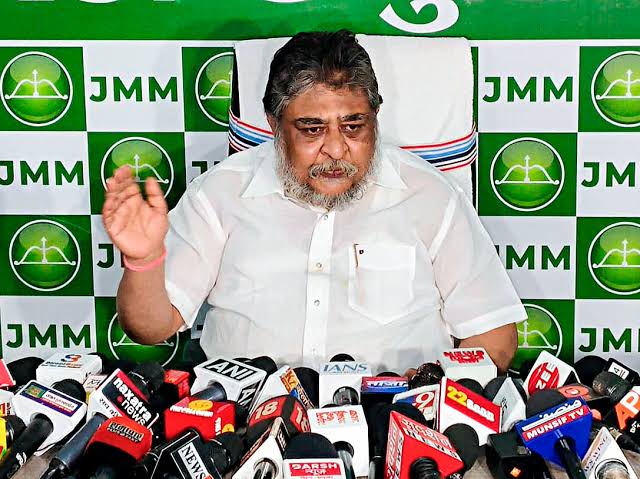
RANCHI: After the cross-voting, allegedly by RJD and CPI (ML) MLAs led to the INDIA alliance losing a crucial seat in the recently concluded Rajya Sabha elections, the Jharkhand Mukti Morcha (JMM) on Tuesday lashed out at its allies, saying Chief Minister Hemant Soren and Congress leader Rahul Gandhi are not their leaders anymore. Coming down heavily on the Left and the RJD, JMM General Secretary Supriyo Bhattacharya said both Soren and Rahul Gandhi are the leaders of the 50 MPs who voted for the alliance candidate. In the recent RS elections in Jharkhand, BJP-backed independent candidate Parimal Nathwani retained his seat despite the JMM-led INDIA alliance having 56 MLAs in the 81-member Assembly. The BJP-led NDA has 24 MLAs, four short of the minimum of 28 first-preference votes required to get a berth in the Upper House. Meanwhile, three votes, two from BJP and one Congress were declared invalid. According to JMM, out of the total 81 MLAs, 50 voted for the Congress and JMM candidates in the elections. Of these, JMM candidate Baidyanath Ram secured a seat by winning 30 votes, while Congress candidate Pranav Jha received only 20 votes, losing to the BJP-backed candidate. “Therefore, Hemant Soren and Rahul Gandhi are the leaders of these 50 MLAs,” said Bhattacharya, adding that Prime Minister Narendra Modi, Home Minister Amit Shah, and BJP National President Nitin Nabin are the leaders of the remaining 28 MLAs whose votes went to the BJP-backed candidate. Speaking to the media, the JMM General Secretary also noted that following his victory, BJP-backed candidate Nathwani had expressed his gratitude by specifically naming the three MLAs from the INDIA alliance who voted for him. JMM General Secretary also indicated –without explicitly naming them– that the ruling alliance MLAs who voted for Parimal Nathwani have been identified. He also talked about reviewing the Rajya Sabha election results very soon. Meanwhile, both the RJD and the CPI(ML) strongly rejected the allegations, stressing that their legislators sticked to the alliance plan and voted in favour of the Congress candidate. “As for speculations over Jharkhand Rajya Sabha voting, we can tell with full responsibility that our two MLAs voted for the Congress candidate as planned,” CPI (ML) General Secretary Dipankar Bhattacharya said in a post on X. RJD MLA and Minister Sanjay Prasad Yadav also rejected the charge, saying, “RJD is not treacherous like the Congress and maintains a distinct identity.” He asserted that all four RJD MLAs voted for the Congress candidate. RJD General Secretary Bhola Yadav echoed the criticism, saying that the Congress should introspect before blaming others. Story by Mukesh Ranjan Courtesy : MSN Note: This news is originally published on https:/msn.com/bha and is used purely for non-profit/non-commercial purposes, especially human rights
How Karnataka can set a model for rest of India by protecting transgender rights

Karnataka has not enacted any state-specific rules under the 2019 Act. The 2026 amendment, however, gives the DKS government the perfect opportunity to do so. The Transgender Persons (Protection of Rights) Act, 2026, notified in March, marked a significant regression from the rights framework built through the Transgender Persons (Protection of Rights) Act, 2019, and affirmed by the Supreme Court in NALSA v Union of India. It narrowed the definition of ‘transgender person’ to four socio-cultural groups, intersexed persons, and persons ‘compelled’ to present as transgender. It omits the right to self-perceived gender identity, and makes a medical recommendation mandatory for transgender identity cards. Finally, it inserts a new set of criminal offences based on harmful stereotypes about the transgender community by criminalising causing hurt by mutilation, emasculation, castration, amputation, or any surgical, chemical, or hormonal procedure with the intent to compel such person to ‘present a transgender identity’. Against the backdrop, what can the Karnataka state government do? The 2019 Act empowers state governments to make rules to operationalise the Act. Such rules must remain within the bounds of the parent Act. However, they do carry wide latitude to prescribe procedures, fill any silences, and protect rights on the ground. Currently, Karnataka has not enacted any state-specific rules under the 2019 Act. The 2026 amendment gives the Karnataka government the perfect opportunity to do so. First, the 2026 amendment restricts the definition of the term ‘transgender’ to four socio-cultural groups: hijras, jogta, aravanis and kinners. While jogta is a socio-cultural group in Northern Karnataka, it does not represent all transgender groups in the state. Further, these four terms do not have fixed or stable meanings. As the 2019 Act is a welfare law, it must be interpreted broadly, and, thus, it can be argued that the definition seeks to capture transgender groups by their indigenous names. Consequently, the Karnataka government can, through a government order, clarify which socio-cultural groups prevalent in the state fall within the scope of the definition. For this, it must consult diverse transgender groups. Further, it can also issue a Karnataka State Transgender Card, a la Tamil Nadu, and link all welfare benefits to it. Second, the 2026 amendment makes it mandatory for the district magistrate to account for the recommendations of a medical authority before issuing a certificate of identity to a transgender person. The Karnataka government cannot override this, but it can limit the role of the medical authority by mandating that the authority will not carry out a physical examination. Instead, self-declaration, and a Third, while the 2026 amendment omits the right to self-perceived gender identity, it is still a fundamental right. Karnataka must continue to recognise and uphold it. Fourth, unlike the 2019 Act, medical institutions where transgender persons undergo gender affirming procedures are now mandated to share such information with the district magistrate. This raises concerns about privacy, since personal data is being shared without the person’s consent. Karnataka must put in place rules for the manner in which this data will be processed, aligned with the Supreme Court’s judgment, which recognised the fundamental right to privacy. Only data which is necessary for verification of an applicant’s identity and change of gender marker must be processed, and such data must be stored in a secure manner. The data must be stored in a secure manner. The data must be shared only with authorities who play a role in issuing the identity card. Finally, the issuing authority must destroy the data once its purpose has been served. Fifth, the 2026 amendment has a chilling effect on the provision of legitimate gender affirming healthcare, as healthcare professionals fear prosecution. This, despite the refusal and discontinuation of healthcare to transgender persons, constitutes discrimination. The Karnataka government must issue a clarification that the provision of legitimate gender-affirming is not an offence and must be continued. Finally, the newly-inserted offences enable natal families to file criminal complaints against those extending support to transgender persons, claiming they are carrying out conversions. Karnataka must issue guidelines to the police to ensure that they carry out a preliminary inquiry when such a complaint is filed. If such an inquiry reveals that the individual is an adult and has voluntarily sought assistance or gender affirming care, such a statement must be recorded, no FIR must be registered, and the matter must be closed. Namrata Mukherjee Palomi Chaturvedi Disclaimer: The views expressed above are the author’s own. They do not necessarily reflect the views of DH. Namrata Mukherjee is Specialist, Governance & Rights, Vidhi, and Palomi Chaturvedi is Research Fellow, Vidhi Centre for Legal Policy Courtesy : DH Note: This news is originally published on https:/deccanherald.com/bha and is used purely for non-profit/non-commercial purposes, especially human rights
Andhra Pradesh: Suspended Inspector, embroiled in murder case, now faces charges of abetting Dalit youth’s suicide; YSRCP demands CBI investigation

Chief Inspector Nagaraju, embroiled in a custodial death case, is now accused of abetting Dalit youth Kranti Kumar’s suicide; YSRCP demands CBI investigation in the matter. The troubles of suspended Circle Inspector Nagaraju, embroiled in the alleged custodial murder of Gade Sai Krishna in Andhra Pradesh, have worsened. He now faces serious charges of abetting the suicide of a Dalit man. Following this new development, the YSR Congress Party (YSRCP) has strongly demanded a Central Bureau of Investigation (CBI) investigation into the entire matter. A video of Perugogu Kranti Kumar, a resident of Vijayawada, recently went viral on social media. In the video, he accuses Circle Inspector Nagaraju of harassment and threatens to take his own life. On Saturday, June 20th, two days after the video surfaced, YSRCP leaders met with the deceased’s family and demanded a CBI investigation into his death. Kranti Kumar was the son of Perugogu Venkateswara Rao, president of the Andhra Madiga Reservation Porata Samithi (MRPS). On May 21st, 42-year-old Kranti had recorded a video expressing his intention to commit suicide. He clearly stated that he could no longer tolerate the alleged harassment by Circle Inspector Nagaraju of the Krishna Lanka police station. This harrowing video began spreading rapidly on June 18th, after Inspector Nagaraju was suspended in connection with the disappearance of another man named Gade Sai Krishna. In the viral video, Kranti Kumar can be clearly seen consuming purple-colored grains (poison). Just before consuming the poison, Kranti says in the video that CI Nagaraju is solely responsible for his death. He emotionally stated that his only fault was being born into the Madiga community. Kranthi alleged that he has been targeted and severely beaten for the past three months, and that he no longer wants to live. Another murder and missing person case has been filed against suspended CI Nagaraju based on a complaint by Gade Sai Krishna’s mother, Gade Vijaya Lakshmi. Sai Krishna had been missing for over a month before the complaint was filed. Police now suspect he has been murdered. The case has been registered under sections 127(4) and 127(6) (wrongful confinement), 103(1) (murder), and 238 (destruction of evidence) of the Indian Penal Code (IPC). Vijaya Lakshmi has made serious allegations that her son was tortured and beaten to death in police custody. She has demanded that the state government conduct a judicial inquiry into the entire incident and take strict action against all those responsible. On June 17, Andhra Pradesh Chief Minister N. Chandrababu Naidu took a strong stance, citing the seriousness of the matter. He ordered a high-level investigation by a senior Indian Police Service (IPS) officer. Following this order, Circle Inspector Nagaraju was suspended with immediate effect. Rajan Chaudhary Courtesy: Hindi News
Dalit woman’s house bulldozed: Administration accused of taking action without notice, woman demands investigation
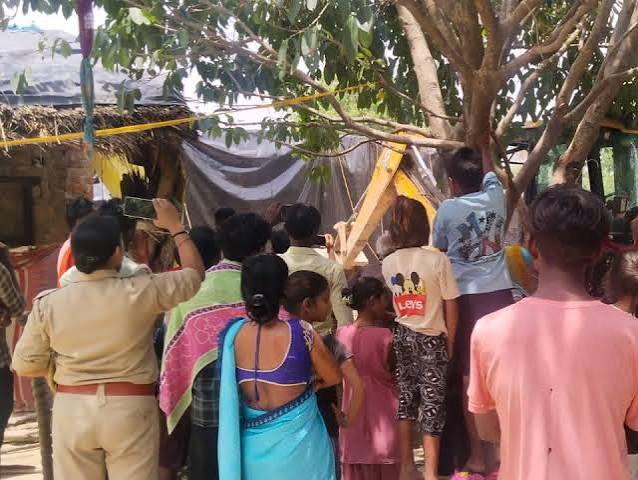
Mala Devi, a Dalit woman in Chhidi village of Prayagraj’s Bara tehsil area, has leveled serious allegations against the tehsil administration. She alleges that the administration bulldozed her house without notice. Mala Devi, calling this action illegal and unconstitutional, has demanded an impartial investigation and action against the culprits. According to Mala Devi, her family had been living in a makeshift house built on Arazi number 1014 for generations. This land is registered as barren land. She claims that her family had been living in this house for years. The woman alleges that after a complaint from the village head, the tehsil administration arrived at the scene with police force, bulldozers, and some local residents. Her house was subsequently demolished. Mala Devi stated that the administration did not provide her with any prior notice nor did they provide her with an opportunity to present her side of the story. They allege that their house was demolished without following any legal procedures, leaving their entire family homeless. Mala Devi filed her complaint at the Sampoorna Samadhan Diwas held on June 20th, pleading for justice. She says no effective action was taken on this complaint, and a bulldozer was used to demolish her house shortly thereafter. The victim and her family have demanded an impartial investigation of the entire matter from the district administration and the government. They have also stated that if rules were violated in the action, legal action should be taken against the responsible officials and those involved. The family has also demanded adequate compensation and rehabilitation. At present, the administrative authorities have not officially released their statement on this matter. Only after receiving their response will it become clear under what circumstances this action was taken. Shivam Verma | Bara Courtesy: Hindi News
Dalit farmer denied land despite measurement: Opponent builds wall at disputed site, seeks DM’s help

A Dalit farmer in Mainpuri has appealed to the District Magistrate for justice over the lack of demarcation and permanent fencing of his land. The farmer alleges that due to the negligence of the Revenue Department and the dominance of the opponent, a permanent fencing has not been completed on his land despite the measurement. The opponent has also illegally constructed a wall on the disputed land, deepening the dispute over ownership. This case is from village Adupur in the Mainpuri tehsil area. Village resident Ganesh, son of Lalaram, stated in his complaint letter to the District Magistrate that he had applied to the Sub-District Magistrate, Mainpuri, for demarcation of his land on September 30, 2025. According to the complaint, the revenue team arrived at the site and measured the land and also erected a temporary fencing. Ganesh says that the measurement was correct and he hopes that a permanent fencing will be completed soon. Ganesh alleges that on May 18, 2026, when revenue officials arrived at the site to construct a permanent boundary wall, they colluded with the opponent, Jaiveer Singh. According to the farmer, the revenue officials left the process incomplete and returned without properly measuring the land. Ganesh also alleged that the officials threatened him and threatened him with threats from the opposing party if he exerted more pressure. Ganesha then filed a second complaint with the Sub-Divisional Magistrate. Based on the complaint, the Sub-Divisional Magistrate, along with a revenue team, arrived at the site under the Mission Samadhan Yojana and inspected the land. Ganesh alleges that it became clear on the spot that the opponent, Jaiveer Singh, had illegally erected a wall on the disputed site. However, the process of removing the wall and constructing a permanent boundary wall has not yet been completed. Abhishek Jain | Mainpuri Courtesy: Hindi News
Dalit woman’s land illegally occupied, construction demolished: Casteist slurs and death threats for protesting in Shahabad
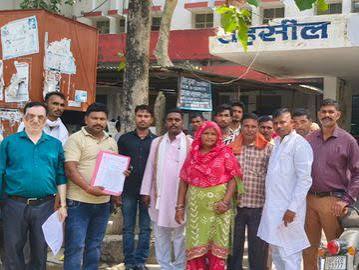
A Dalit woman in Shahpur Dev village, Shahabad tehsil of Rampur, has alleged illegal occupation and demolition of a construction on her purchased land. The woman says that some villagers occupied her land and, when she protested, used casteist slurs and threatened to kill her. The victim has filed a complaint with the authorities and demanded strict action against the accused. Demand for action against the accused Complainant Kranti, a resident of Shahpur Dev, stated that she purchased 0.0162 hectares of land in plot number 408 from Sonia of the village on May 11, 2026. After the sale deed, the seller handed over possession of the land to her. Kranti constructed the foundation and boundary wall on her purchased land. After this, she went to Chandigarh (Punjab) to work as a laborer. Some time later, she received information that some villagers had broken the foundation and boundary of her land and taken possession of it. The accused behaved rudely When Kranti returned home and questioned these people, they claimed the land as theirs and admitted to the occupation. It is alleged that when she protested, the accused behaved rudely with her, used casteist slurs, and threatened to kill her. Family terrified after the incident The victim stated that her family has been terrified since this incident. They have demanded the administration free the land from illegal occupation and take strict legal action against the accused. In this regard, Sub-District Magistrate Ashutosh Kumar stated that upon receiving the complaint, the matter will be investigated and necessary action will be taken. Vishal Kumar Joshi | Shahbad, Rampur Courtesy: Hindi News
Human Rights Commission Takes Strict Action on Liquor Shops in Dalit Settlements: Demands Report from Agra DM-Commissioner within Four Weeks
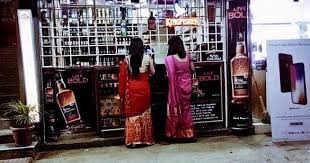
Agra: The National Human Rights Commission has taken a very serious view of liquor shops operating in Dalit, slum, and densely populated residential areas, issuing a notice to the Agra administration. Taking cognizance of a complaint filed by human rights activist and advocate Naresh Paras, the Commission has directed the District Magistrate and the concerned administrative officials to submit a detailed Action Taken Report (ATR) within four weeks. Issues of Security and Social Justice In the complaint, advocate Naresh Paras argues that the presence of liquor shops in these areas has made life difficult for women, students, and ordinary citizens. Incidents such as gatherings of antisocial elements outside the shops, molestation, abuse, and assault have become a daily occurrence, violating the fundamental rights of citizens. He also cited the recent tragic road accident in Nagla Budhi, New Agra, where five people lost their lives due to the negligence of a drunk driver. Proposed Solution: ‘Wine Zones’ and Strict Policies The complainant not only demanded the removal of liquor vends, but also suggested the development of ‘wine zones’ (controlled areas) as a concrete solution. He proposed that all liquor vends be relocated from residential and sensitive areas to the outskirts of the city or industrial areas. These zones should have CCTV surveillance and adequate police security. Liquor sales hours should be limited to 10 a.m. to 10 p.m. Emphasis on Constitutional Provisions In his complaint, Naresh Paras cited Article 21 (Protection of Life) and Article 46 (Protection of the Interests of Scheduled Castes and Scheduled Tribes) of the Constitution, demanding accountability of the administration. They have also appealed for an investigation against the excise officials who allowed the liquor shops to open in populated areas. Suggestions for the Future The proposals presented to the Human Rights Commission include important demands such as ensuring a minimum distance of 200 meters between liquor shops and schools, religious places, and residential complexes, making public hearings mandatory, and making a Social Impact Assessment a prerequisite for contract approval. This issue has now become not just about local law and order, but about social justice and the protection of women’s dignity. This directive from the Commission poses a major challenge to the administration, as it will now have to explain its stance on the operation of liquor shops in these sensitive areas. Courtesy: Hindi News
Deadly attack on Dalit youth in Balrampur: Casteist slurs hurled, FIR filed against 4

A case of assault, casteist slurs, and death threats against Dalit youth has come to light in Balrampur village, under the Narsena police station jurisdiction. The victims have filed a complaint against four named accused at the Narsena police station, demanding strict action. According to the complaint, Ankit Kumar, son of Dharamveer, Dharmendra, son of late Sukhdev Singh, and Bobby Kumar, son of Vijendra Singh, residents of Balrampur village, told the police that they were attacked by Shiva, son of Kiranpal Singh, Shailesh, and Mainpal, along with others from the same village. The attackers allegedly assaulted them with sticks and sharp weapons (shovels). The victims reported that when they protested, the accused abused them, used casteist slurs, and threatened to kill them. The victims allege that the accused have a domineering nature, creating an atmosphere of terror within their families. Following the incident, the victim’s family reached the Narsena police station and filed a written complaint naming the accused, demanding legal action by filing a case against them. Station House Officer Ram Kishore Gautam stated that the complaint has been received and the matter is being investigated. Further legal action will be taken based on the investigation. Dushyant Kumar Rana | Unchagaon (Syana), Bulandshahr Courtesy: Hindi News