
Moradabad: A Dalit woman was forced to convert at gunpoint; Muslim couple arrested following complaint

In Moradabad, a Dalit woman was held hostage by a Muslim couple, a cleric, and two unidentified accused and forced to convert. It is being reported that the accused husband had been harboring an evil eye on her for a long time. Police in Moradabad, Uttar Pradesh, have arrested a Muslim couple for allegedly forcibly converting a Dalit woman by holding her hostage. Acting swiftly on the victim’s complaint, the police filed a case against the main accused, a Muslim couple and a cleric, and arrested and sent them to jail. The cleric and two unidentified accused involved in the incident are being sought. The accused forced the woman to convert at gunpoint. The incident is reported to have occurred in the Majhola police station area. According to the FIR lodged, the victim, a resident of Prakash Nagar, had close and familial relations with the family of the accused, Sultan Salahuddin, and his wife, Mehnaz (Mehraj Begum), for the past three years. Both families celebrated all festivals together. The woman had no idea that Sultan Salahuddin had an evil eye on her. It is alleged that on February 6th, Mehraj Begum lured the victim to her home. As soon as she arrived, Sultan Salahuddin, his wife Mehnaz, a cleric, and two unidentified men took her hostage. The accused then held their licensed pistols to her head and, threatening to kill her, forced her to convert to Islam in front of the cleric. The victim told the police that after the conversion, she was put under intense pressure to marry. When the woman strongly protested, the cleric present at the scene declared the forced marriage illegal, calling it against Islam and Sharia. The main accused, Sultan Salahuddin, refused to budge and shouted, “I will keep her as my wife.” Police filed a case against the accused couple and the cleric under 10 sections. When she resisted, the accused used casteist slurs, abused her, and held her captive in their house for several days. The victim alleges that Sultan Salahuddin subjected her to obscene acts and molestation during her captivity. The victim, who somehow managed to escape, was threatened with death if she complained. It is reported that the accused, Sultan Salahuddin, has a criminal history and has previously been charged with attempted murder in Badaun district. Given the sensitivity and seriousness of the case, Moradabad police took immediate action. Police have filed a case against the accused couple, Sultan Salahuddin, Mehnaz, the cleric, and two unidentified individuals under 10 serious sections, including kidnapping, molestation, threats to kill, the Uttar Pradesh Prohibition of Unlawful Conversion of Religion Act (forced conversion), and the SC/ST Act. Both main accused arrested, search continues for the cleric and two other unidentified individuals. Providing information about the case, Moradabad SP City Kumar Ranvijay Singh said that yesterday (July 11), a complaint was received at Majhola police station from a woman living in Prakash Nagar. The victim alleges that an acquaintance, Sultan Salahuddin, and his wife invited her to their home, where she was abused, molested, illegally held captive, and forced to convert to Islam. Considering the seriousness of the matter, the police have immediately registered a case under relevant sections. The two main accused, Sultan Salahuddin and his wife Mehnaz, have been arrested and are being sent to jail. Teams have been formed to arrest the cleric and two other unidentified individuals involved in the incident; they will also be sent behind bars soon. Written By: Obaidur Rahman About the author Ubaidur Rahman is a senior and active TV journalist and ground reporter for ABP News. For the past 20 years, he has been covering political, criminal, wildlife, social, cultural, and investigative news in the Moradabad division of western Uttar Pradesh and Uttarakhand. Prior to ABP News, he worked at several prominent organizations. After a Bachelor of Science, he earned a Diploma in TV Journalism and Broadcasting and an Adeeb-e-Kamil from Jamia Urdu University, Aligarh. Courtesy: Hindi News
Cabinet expansion: Rahul Gandhi likely to summon CM DK Shivakumar, Siddaramaiah & BK Hariprasad to Delhi
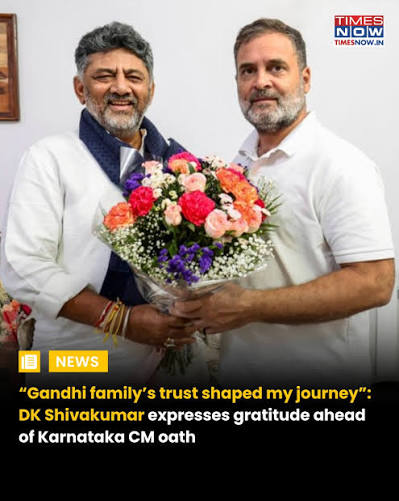
Shivakumar was sworn in as CM along with 13 ministers on June 3. There are 20 vacancies in the cabinet. BENGALURU: With the Leader of the Opposition in Lok Sabha, Rahul Gandhi, expected to return to India from his foreign tour on Sunday evening, Karnataka Chief Minister DK Shivakumar, his predecessor Siddaramaiah and KPCC president BK Hariprasad are likely to be summoned anytime soon to New Delhi by the Congress high command to discuss the much-delayed cabinet expansion. Shivakumar was sworn in as CM along with 13 ministers on June 3. There are 20 vacancies in the cabinet. Shivakumar, Siddaramaiah and Hariprasad are prepared with a list of their loyalists to be pushed into the cabinet, sources told The New Sunday Express. Besides the high command, including AICC president Mallikarjun Kharge, will have their own nominees to ensure that the party returns to power in the 2028 Assembly polls, sources added. “Cabinet aspirants are curious to know if the expansion will happen before the month of Ashada, which many believe is inauspicious. Aashada starts on Tuesday (July 14),” sources added. Meanwhile, Home Minister Priyank Kharge said that the cabinet expansion will happen soon. “The CM and AICC chief have said this very clearly. In circumstances where an emergency-like situation arises—whether it is a drought or a flood—having a full-fledged cabinet ensures that responsibilities can be assigned to everyone so that relief can be provided to people without any delay,” Priyank added. When asked if the expansion will happen before Aashada, he said, “I don’t believe in that… When giving or taking power, who looks at all that? There is no connection between the two. Our responsibility is to look after our people. As you said, whether it is Aashada or Rahu Kala, everyone has their own faith and beliefs, but it should not affect governance.” Meanwhile, Jewargi MLA Ajay Singh, son of former CM N Dharam Singh, is a strong contender for a berth in the Shivakumar cabinet. Ajay said that the high command may call the state leaders to Delhi any moment for talks. Chamarajnagara MLA C Puttarangashetty, another contender, said that the expansion may happen in a day or two or after a month when Aashada ends. Srirangapatna MLA A B Ramesh Bandisidde Gowda asserted that he deserved to be a minister. “I will also organise the party in Mandya. If I am proven wrong, they can remove me anytime”, he said. Several other MLAs, including those elected for 3-4 times, such as Ashok M Pattan, have openly staked claim. “Rahul Gandhi will come tomorrow (Sunday). He will call the CM, former CM, and the KPCC President on Monday or Tuesday. I will tell our leaders not to just look at caste, but consider seniority too. I am a senior legislator in Belagavi district and the state. I was a Congress student leader… been in the party since the days of former CM D Devaraj Urs,” he said. Trouble for Zameer? Ahead of the formation of the Shivakumar cabinet in the first phase, an audio clip leaked allegedly involving former minister BZ Zameer Ahmed Khan allegedly conspiring to defeat the Congress candidate in Davanagere bypolls. This ruined his chances of becoming a minister in the Shivakumar cabinet. This time around, the Lokayukta approached the Governor seeking permission to prosecute him in a disproportionate assets case. One has to wait and watch to see whether Zameer will this time make it to the cabinet or not. Devaraj B Hirehalli Courtesy : TNIE Note: This news is originally published on https:/thenewindianexpress.com/bha and is used purely for non-profit/non-commercial purposes, especially human rights
Akhilesh Yadav met the family of Dalit student Lalita Gautam, saying, “We are with you.” Pinky Bhaiya announced a march to Meerut.
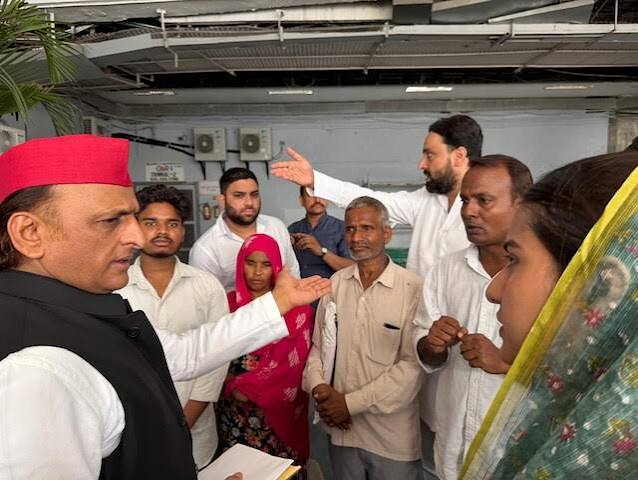
Dalit Student Murder Case: The murder of Lalita Gautam, a BA student from Meerut, has sparked an uproar across Uttar Pradesh. Following the murder of the 20-year-old Dalit student, the main accused has been arrested and sent to jail. Meanwhile, caste-based protests have intensified in connection with the case. The Samajwadi Party chief also met with the victim’s family. Meerut: The political and social atmosphere is becoming increasingly heated following the murder of Lalita Gautam, a BA student in Meerut, Uttar Pradesh. On one hand, Hindu Raksha Dal national president Pinky Bhaiya has announced a march to Meerut today. Meanwhile, Samajwadi Party president Akhilesh Yadav visited Lalita’s accusers. He pledged to stand with them in their fight for justice and appealed to the BJP government to fulfill all the family’s demands. Lalita Gautam, a 20-year-old BA student, lived with her family in Gagan Enclave, TP Nagar, Meerut. She left home on May 15th to take an exam, but when she did not return until late in the evening, her family began searching for her. However, no trace of her was found, after which the accused filed a missing person report at the TP Nagar police station. Police began an investigation and examined CCTV footage from nearby areas. CCTV footage showed Lalita with a young man named Ankush, a resident of Kalyanpur village. Following this, the police expanded the investigation and formed several teams to search for the accused. During the police investigation, the accused, Ankush, was taken into custody. During interrogation, he confessed to killing Lalita. According to the police, Ankush and Lalita were in a love relationship. They were together on the day of the incident. During this time, the accused saw some photos and chats on Lalita’s mobile phone, which led him to suspect that she was having an affair with another man. Due to this suspicion and dispute, Akhilesh murdered Lalita and dumped her body in a sugarcane field in the Upasiya forest in the Rohta police station area of Meerut. Police later recovered the body from there. The main accused in the case has been arrested and sent to jail, while investigations into other cases are ongoing. Akhilesh Yadav met with the victims and accused in the murder of Dalit student Lalita Gautam in Meerut. He pledged to stand with them in their fight for justice. He also urged the BJP government to fulfill all demands of the victim’s family and ensure justice for the deceased daughter. What did Pinky Bhaiya say? Pinky Bhaiya, National President of the Hindu Raksha Dal, has announced a march to Meerut on July 11, 2026. Speaking in support of Meerut accused Avinash Pandey, Pinky Bhaiya stated that strict action should be taken against those who used slogans like “Jai Bhim” and “Jai Mim” to divide the accused, and that Lalita Gautam’s daughters should receive justice. The government and administration at every level stand with the victim’s family and strict action should be taken against the perpetrators. Following his announcement of the march to Meerut, all eyes are focused on the events of July 11. Meanwhile, the administration has also gone into full alert mode. Meerut now scouts sports talent from schools and colleges, a united campaign Reporter: Alauddin Panwar Editor: Kavya Mishra About the Author Kavya Mishra works as a Senior Sub-Editor in the Regional Section (Uttar Pradesh, Uttarakhand, Haryana, and Himachal Pradesh) with News18 Hindi. She has been active in journalism for over 7 years. Courtesy: Hindi News
Mirwaiz says NC’s statehood protest in Delhi should also include demand for restoration of Articles 370, 35A
Hurriyat chairman says the proposed Jantar Mantar protest should go beyond the demand for statehood and include political prisoners’ rights and peaceful resolution of the Kashmir conflict. SRINAGAR: Hurriyat Conference chairman and cleric Mirwaiz Umar Farooq, who is among 52 political leaders invited by J&K’s ruling party National Conference (NC) for statehood protest at Jantar Mantar in New Delhi, has asserted that that protest should go beyond statehood and include restoration of Articles 370 and 35A, rights of political prisoners, and peaceful conflict resolution. In his Friday sermon at historic Jamia Masjid in Srinagar, Mirwaiz confirmed that he has received an invitation from NC president Farooq Sahib for attending the statehood protest at Jantar Mantar, New Delhi. The NC is planning a protest on the first day of parliament’s monsoon session at Jantar Mantar New Delhi to press for restoration of statehood to J&K. The party has invited 52 leaders of the country including Mirwaiz for the protest. The NC has applied for the permission for the protest and is yet to get go ahead. Referring to abrogation of Articles 370 and 35A and downgrading and bifurcation of erstwhile J&K state by centre, Mirwaiz said after the 2019 unilateral changes brought by the Government of India, the State of Jammu and Kashmir was downgraded to a Union Territory and its constitutional safeguards snatched from the people, leaving them vulnerable and disempowered. The Hurriyat chairman said any effort by any political alliance, organisation or individuals working for the restoration of the usurped rights of the people of Jammu and Kashmir , if based on sincerity , is the need of the hour. He said the protest agitation should go beyond statehood and include restoration of Articles 370 and 35A, rights of political prisoners, and peaceful conflict resolution. “It is the foremost responsibility of the NC government towards people of Jammu and Kashmir, who gave it a mandate on the clear promise that, once elected, it would revive the pre-2019 status of J&K, including restoration of statehood and Article 370 and 35A,” Mirwaiz said adding the agitation cannot be limited to the restoration of statehood, but has to be for all the seized safeguards and rights of the people of Jammu and Kashmir. The restoration of Article 370, which granted special status to J&K, was one of the main planks in NC’s campaign for the 2024 Assembly elections. “In fact, it should include the rights of our political prisoners and youth languishing in jails for years without trial or continued incarceration despite getting bail, and for people’s longing for lasting peace and life with dignity by conflict resolution,” added Mirwaiz. Other than Mirwaiz, NC has also invited Congress President Mallikarjun Kharge, Sonia Gandhi, Rahul Gandhi, Tamil Nadu CM C Joseph Vijay, TMC chief Mamata Banerjee, SP chief Akhilesh Yadav, NCP (SP) chief Sharad Pawar, Shiv Sena (UT) chief Uddhav Thackeray, former Odisha CM Naveen Patnaik, Asaduddin Owaisi, Y S Jagam Mohan Reddy, Sukhbir Singh Badal, Arvind Kejriwal, M A Baby CPI(M) General Secretary, D Raja of CPI, Kapil Sibal, BSP chief Mayawati, BRS President K. Chandrashekar Rao, AIADMK General Secretary Edappadi K. Palaniswami, former J&K Chief Minister Ghulam Nabi Azad, PDP chief Mehbooba Mufti, J&K Apni Party Chief Altaf Bukhari, J&K Congress chief G A Mir, J&K BJP president Satpal Sharma, Peoples Conference chairman Sajad Gani Lone and J&K Grand Mufti Nasir-ul-Islam for the statehood protest in national capital. Fayaz Wani Courtesy : TNIE Note: This news is originally published on https:/thenewindianexpress.com/bha and is used purely for non-profit/non-commercial purposes, especially human rights
Congress may name new KPCC president within a week
The exercise comes at a crucial juncture for the party. There is growing discontent among workers and leaders over the absence of a full-time KPCC president. THIRUVANANTHAPURAM: The Congress is set to kick-start the long-awaited organisational reshuffle in Kerala with the appointment of a new KPCC president. According to party sources, the high command could name a new state chief within a week. The process is likely to commence after July 10, once Leader of the Opposition in the Lok Sabha, Rahul Gandhi, returns to Delhi. Sunny Joseph, the incumbent KPCC president, had informed the high command his readiness to step down from the post after being inducted into the cabinet. However, he has been asked to continue until a replacement is appointed. The exercise comes at a crucial juncture for the party. There is growing discontent among workers and leaders over the absence of a full-time KPCC president. Though it’s been more than a month since the government assumed office in May, the committee meant to facilitate coordination between the government and the party has not yet been constituted. Leaders allege that the organisational inertia has affected the party’s ability to intervene on key policy matters. “The government has made U-turns on several appointments and courted controversy over some other decisions involving the party’s policy positions,” a Congress leader said. “Had there been a full-time working KPCC president and effective coordination between the party and government, contentious decisions such as the implementation of PM SHRI scheme, reduction of tax on low-alcohol beverages and private participation in mineral sand mining could have been avoided,” he said. Meanwhile, lobbying for the post of KPCC chief has also intensified, with former UDF convenor Benny Behanan and Lok Sabha Chief Whip Kodikunnil Suresh being seen as frontrunners. The reported rift between Chief Minister V D Satheesan and veteran leader V M Sudheeran has come as a setback for Suresh at a crucial juncture. The two were understood to have backed Suresh as the first Dalit KPCC president, in line with the party’s emphasis on social justice. Behanan, however, enjoys the support of different sections of the party. UDF convenor Adoor Prakash, V S Sivakumar, Anto Antony and Mathew Kuzhalnadan are also in the race. Party observers have submitted their assessment reports on prospective candidates to the high command. “The high command will initiate the appointment process once Rahul returns,” a leader said. Although a section in the party has demanded that the ‘one-person, one-post’ principle be applied while appointing the new president, the final decision will rest with the high command. Next steps The appointment of KPCC president is expected to set the ball rolling on a wider organisational overhaul, including the appointment of two working presidents and new general secretaries, followed by selection of new district chiefs. K S Sreejith Courtesy : TNIE Note: This news is originally published on https:/thenewindianexpress.com/bha and is used purely for non-profit/non-commercial purposes, especially human rights
Dalit family attacked, casteist slurs used: Case filed against five named accused in Sadabad

A Dalit family in the village of Heli Bhag Midawali in the Sadabad police station area has been accused of entering their home, assaulting them, and using casteist slurs. Based on the victim’s complaint, police have registered a case against five named accused under various sections and the SC/ST Act and have begun an investigation. Sanjeev, son of Sonveer, a resident of the village of Heli Bhag Midawali, stated in his complaint to the police that he is financially weak and lives with his family in a room near a tubewell outside the village. According to Sanjeev, at around 12:30 pm on July 7, Bani Singh alias Bijendra Singh, Arvind Kumar, Rahul, Gopal, and Shubham arrived at his room with iron rods and sticks. The accused entered the house and began assaulting Sanjeev’s wife, Preeti, and children. Sanjeev alleged that when he resisted, he was also assaulted, resulting in serious head injuries. Hearing the noise, Mukesh Kumar and Brajesh Kumar, who were working in a nearby field, rushed to the scene. They attempted to intervene, but the accused assaulted them as well, resulting in injuries to their hands. The complaint also alleges that during the assault, the accused used casteist slurs and threatened to kill him. They reportedly threatened to kill Sanjeev’s entire family and demolish the room he was living in with a JCB. Sanjeev somehow escaped and reached the Sadabad police station, reporting the incident to the police. Based on the complaint, the police have registered a case against the five named accused under relevant sections and the SC/ST Act. Deputy Superintendent of Police JN Asthana stated that the matter is being investigated and further legal action will be taken based on the facts that emerge from the investigation. Kishore Kumar Varshney | Sadabad, Hathras Courtesy : Hindi News
Dr B. R. Ambedkar’s Views on the Bhakti Movement and the Upliftment of Dalits

The Bhakti Movement occupies an important place in the social and religious history of India. Emerging between the seventh and seventeenth centuries in different parts of the country, it emphasized personal devotion (bhakti) to God, rejected excessive ritualism, and sought to establish a direct relationship between the devotee and the divine. Several Bhakti saints, including Kabir, Ravidas, Chokhamela, Namdev, Tukaram and Nandanar, condemned social discrimination and proclaimed the equality of all human beings before God. Because many of these saints came from marginalized communities or openly criticized caste prejudice, the Bhakti Movement is often celebrated as a movement of social equality and Dalit emancipation. Dr. B. R. Ambedkar, however, offered a far more critical and historically grounded assessment. While acknowledging the moral courage and egalitarian spirit of several Bhakti saints, he argued that the movement failed to dismantle the caste system or bring about the social, economic and political liberation of the Dalits. In his view, the Bhakti Movement represented an ethical protest against caste discrimination but not a programme for structural social transformation. The distinction between spiritual equality and social equality lies at the heart of Ambedkar’s critique. Ambedkar’s Appreciation of the Bhakti Saints Ambedkar did not dismiss the Bhakti tradition in its entirety. He recognized that many saints challenged the religious orthodoxy of their time and gave voice to the aspirations of the oppressed. Saints such as Ravidas and Chokhamela, themselves born into communities regarded as “untouchable,” exposed the inhumanity of caste discrimination through their poetry and personal experiences. Kabir boldly attacked Brahminical ritualism as well as Islamic orthodoxy, emphasizing morality, reason and the unity of humanity over religious formalism. These saints questioned hereditary privilege, criticized priestly domination and insisted that devotion, rather than birth, was the true basis of religious worth. They affirmed the dignity of labour and rejected the idea that spiritual status depended upon caste. Their teachings inspired generations of oppressed people and enriched India’s ethical and literary traditions. Ambedkar acknowledged these contributions and regarded them as important voices of dissent within Indian society. Bhakti as a Spiritual Rather Than Social Revolution Despite recognizing these achievements, Ambedkar argued that the Bhakti Movement remained essentially a spiritual movement rather than a social revolution. Its central concern was the individual’s relationship with God rather than the reconstruction of society. While Bhakti saints preached equality before God, they rarely developed a systematic programme for abolishing caste, redistributing economic power or transforming social institutions. For Ambedkar, this constituted the fundamental limitation of the movement. A religion that teaches spiritual equality while accepting social inequality cannot produce genuine human emancipation. Equality before God has little practical significance if people continue to suffer discrimination in everyday life. A Dalit who is denied entry into a temple, prevented from drawing water from a public well, excluded from education or deprived of economic opportunities cannot be considered equal merely because religion declares all souls to be equal before God. Ambedkar therefore insisted that social equality must precede or accompany spiritual equality. Without changes in the structure of society, devotional teachings remain largely symbolic. Failure to Destroy the Caste System Ambedkar’s most significant criticism was that the Bhakti Movement failed to destroy the caste system. Although many saints condemned untouchability and emphasized human brotherhood, caste hierarchy continued to dominate Hindu society long after the movement had spread across India. He pointed to a striking contradiction in Hindu society. Upper-caste Hindus often revered saints like Ravidas and Chokhamela as holy men while simultaneously refusing to treat ordinary Dalits as equals. Temples celebrated Dalit saints, but living Dalits remained excluded from temples, schools, public wells and positions of dignity. This paradox demonstrated, according to Ambedkar, that admiration for exceptional individuals did not translate into equality for the oppressed community as a whole. The Bhakti Movement produced revered saints but failed to eliminate the social practices that degraded millions of ordinary Dalits. Consequently, caste survived largely intact despite centuries of devotional preaching. Individual Salvation Versus Collective Liberation Ambedkar also criticized the movement for emphasizing individual salvation instead of collective social struggle. Bhakti encouraged devotees to seek liberation through prayer, surrender and devotion to God. While such devotion might provide spiritual consolation, it did not equip oppressed communities with the political organization or social consciousness necessary to challenge systems of exploitation. Ambedkar believed that no oppressed community could secure justice merely through moral persuasion or religious devotion. Real emancipation required education, political representation, legal rights, economic resources and organized social movements. His famous call to “Educate, Agitate and Organize” reflected this conviction. Liberation could only be achieved through collective action and democratic struggle, not through individual acts of devotion. Bhakti and the Absence of Social Democracy For Ambedkar, democracy was not simply a political system but a way of life founded upon liberty, equality and fraternity. Although Bhakti occasionally promoted the ideal of fraternity, it failed to establish liberty and equality within the social order. Hereditary occupations remained unchanged, caste endogamy continued, Brahminical authority survived, and untouchability persisted. As a result, the movement did not create the social conditions necessary for democracy. Ambedkar argued that political democracy cannot endure where society itself remains deeply unequal. Social democracy requires equal opportunities, equal dignity and equal citizenship—objectives that devotional reform alone could not achieve. Critique of Saint Worship Ambedkar was also skeptical of the tendency to rely upon saints as agents of social transformation. He argued that history is changed not by isolated holy individuals but by organized and conscious masses. Saints may awaken moral awareness, but lasting social change depends upon institutions, laws, political movements and collective action. He believed that excessive reverence for saints often encouraged passive acceptance of injustice rather than active resistance against it. The oppressed, he argued, must become the makers of their own history instead of waiting for moral reform from privileged sections of society. Ambedkar’s Alternative Vision Unlike the Bhakti saints, Ambedkar proposed a comprehensive programme for the emancipation of Dalits. This programme included the annihilation of caste, universal education, economic justice,
Allegations of extortion in the name of the second installment of the PM-Awas Yojana: Dalit youth beaten up for protesting, SDM says action will be taken after investigation

A case of alleged illegal extortion for the second installment of the Pradhan Mantri Awas Yojana has come to light in Amila Nagar Panchayat in Mau. It is alleged that a Dalit youth was assaulted for resisting the demand for money. A 36-second video of the incident is also circulating on social media. However, the viral video has not been independently verified. Vikas Kumar, son of Virendra, a resident of Saraya Dalit Basti, alleged that on Thursday afternoon, two young men, reportedly associated with the regional accountant, came to the village to photograph houses for the second installment of the PM-Awas Yojana. Vikas says that the construction work for the first installment of his house had been completed. When he asked for the photos, the young men allegedly demanded money in exchange for the photos. The victim alleges that when he refused to pay and started filming with his mobile phone, one of the young men seen in the video got up from his chair and began assaulting and abusing him. His mobile phone was also damaged during the incident. Vikas alleged that the two youths, under the protection of the regional accountant, extort money illegally in the name of photographing residences. He said that the government has designated authorized employees for this task, yet such activities continue to occur. According to the victim, similar complaints have been reported in the Nagar Panchayat area before, but the lack of effective action is encouraging such cases. The matter has gained traction after a video went viral on social media. However, the video could not be independently verified. Ghosi SDM Ashok Singh stated that an investigation will be conducted. If the investigation confirms irregularities or assault, appropriate action will be taken as per the rules. Mithilesh Kumar Rai | Amila, Mau Courtesy: Hindi News
NC invites 52 leaders across party lines for J&K statehood protest at Jantar Mantar
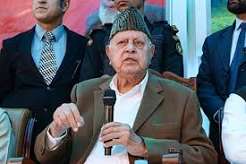
Farooq Abdullah reaches out to INDIA bloc, BJP, regional parties and Mirwaiz Umar Farooq ahead of Parliament’s Monsoon Session SRINAGAR: Jammu and Kashmir’s ruling National Conference has invited 52 political leaders of the country within and outside INDIA Bloc including J&K’s Grand Mufti and Hurriyat Conference chairman and cleric Mirwaiz Umar Farooq to join the protest at Jantar Mantar for statehood restoration to J&K on the opening day of Parliament’s Monsoon session. NC president Farooq Abdullah has reached out to political parties across J&K and leaders from across the country, inviting them to join the peaceful, democratic protest at Jantar Mantar on the opening day of the Monsoon Session of Parliament. “This is not about one party, one region, or one people. It is about defending India’s federal spirit, upholding the Constitution, and demanding the long-overdue restoration of J&K’s statehood as repeatedly promised,” he said. “We hope every democratic voice across the country will stand united in this collective cause”. Among the 52 prominent political leaders invited for the statehood restoration protest include Congress President Mallikarjun Kharge, Sonia Gandhi, Rahul Gandhi, Tamil Nadu CM C Joseph Vijay, TMC chief Mamata Banerjee, SP chief Akhilesh Yadav, NCP (SP) chief Sharad Pawar, Shiv Sena (UT) chief Uddhav Thackeray, former Odisha CM Naveen Patnaik, Asaduddin Owaisi, Y S Jagam Mohan Reddy, Sukhbir Singh Badal, Arvind Kejriwal, M A Baby CPI(M) General Secretary, D Raja of CPI, Kapil Sibal, BSP chief Mayawati, BRS President K. Chandrashekar Rao, AIADMK General Secretary Edappadi K. Palaniswami, former J&K Chief Minister Ghulam Nabi Azad, PDP chief Mehbooba Mufti, J&K Apni Party Chief Altaf Bukhari, J&K Congress chief G A Mir, J&K BJP president Satpal Sharma, Peoples Conference chairman Sajad Gani Lone, Hurriyat Conference chairman and cleric Mirwaiz Umar Farooq and J&K Grand Mufti Nasir-ul-Islam. In his letter, NC president said the central government had repeatedly assured in parliament that statehood would be restored after abrogation of Article 370 and bifurcation of the erstwhile State into two Union Territories by centre on August 5, 2019. He said despite successful conduct of Assembly elections in 2024 and formation of an elected government under Chief Minister Omar Abdullah, the promise of restoring statehood remains unfulfilled. “This is not merely a delay. It is an affront to the democratic will of an entire people,” he said, adding that the continued denial of statehood undermines the federal character of the Constitution and weakens democratic institutions. “Our protest shall be peaceful, democratic, and constitutional — as it must be, and as it shall be. We are not asking for anything beyond what was promised. Our demands shall not transgress from those which have already promised to us. The cause of federalism is not the cause of one party, one people or one region. It is the cause of every citizen of India who believes that the genius of our constitutional order lies in the balance it strikes between unity and diversity,” Abdullah said. He said the stand for restoration of statehood to J&K is to stand for the integrity of that balance — for the proposition that no people should be governed without their consent, and no promise made in parliament should be allowed to lapse into convenient oblivion. “People of J&K have chosen hope — we have chosen the ballot, the Constitution, and the democratic process that all of us in some way or another have been a part of. We deserve to be treated with the same dignity and respect,” the NC president said. “Together, let us send an unambiguous message that the people of J&K remain the guardians of the voice of those who have been made to wait too long,” he added. It would be interesting to see how many of the 52 leaders attend the NC leader’s protest for statehood restoration on July 20 at Jantar Mantar in New Delhi on the opening day of parliament’s monsoon session. After forming the government, CM Omar in his first cabinet meeting passed a resolution on restoration of statehood and handed copies of the resolution to PM Modi, Home Minister Amit Shah, Defence Minister Rajnath Singh and other central leaders but there has been no forward movement on the issue in over one and half year’s rule of NC government. Fayaz Wani Courtesy : TNIE Note: This news is originally published on https:/thenewindianexpress.com/bha and is used purely for non-profit/non-commercial purposes, especially human rights
TN: After being sent to jail for a bike theft complaint three years ago, a Dalit woman journalist became the target of casteist hatred and police indifference.

The entire family, including her pregnant sister-in-law, was beaten up. The family alleges that the police deliberately withheld action despite video evidence. Villupuram – A 27-year-old Dalit woman journalist, who filed a theft complaint three years ago in V. Sithamur village in Villupuram district, Tamil Nadu, is now facing “punishment” for that very complaint. She has been a constant target of casteist hatred since two influential caste brothers were jailed. On June 22nd, her brother and entire family were fatally attacked, including her pregnant sister-in-law, who was beaten with slippers. Two weeks later, the main accused remain at large, and the Tamil Nadu police’s callousness is evident. What is the whole matter? In January 2023, two bikes were stolen from the journalist’s home. She filed a complaint and named two local youths, Raghu and Ambu. Police investigations revealed that the two brothers were habitual bike thieves. Fifteen bikes and two tractors were recovered from them. However, the journalist’s bike was not recovered. Both brothers were arrested and later released on bail. Since then, the brothers had been angry with the female reporter. They threatened her that she would pay the price for complaining against influential caste people. On June 22, a fight broke out between Ambu and an insurance agent in front of a shop outside the journalist’s house. The woman’s brother, Sanju (31), asked them to peacefully leave the shop. Ambu left, but returned a short time later with Raghu and other associates. The gang began hurling casteist abuses at Sanju and assaulting him. Hearing the noise, Sanju’s pregnant wife, his brother’s wife, and his mother (58) came out of the house. The accused men also hurled casteist abuses at the women and attacked them. Raghu hit the pregnant woman three times with a slipper and pushed her. The mother’s saree was torn. The accused openly threatened the family, “Whenever the journalist goes out for work, they will target her too.” The entire incident was captured on CCTV installed at home. On June 23, the victims filed a complaint at the Arakandanallur police station. Police charged the accused under the SC/ST (Prevention of Atrocities) Act, the Prevention of Women Harassment Act, and the BNS Act. However, two weeks later, Raghu, Ambu, and another key accused remain at large. Police have only arrested the fourth accused, Kumar. Police claim the accused are in Bengaluru, but their exact location is unknown. The family and activists allege that despite video evidence, the police are deliberately withholding action. Human rights activist V. Lalitha, who is providing legal assistance to the family, told TNIE that several villages (Vadakaraithalanur, Vasantha Krishnapuram, Veerapandi Pulikkal, Kadakkanur, etc.) under the Arakandanallur police station have witnessed cases of gang violence and murder against Dalits over the past decade, but none have resulted in convictions. Lalita says, “Immediate arrest is required under the SC/ST (PoA) Act. Excuses like ‘can’t be traced’ point to police complicity. This police station continues to fail in cases involving Dalits.” The victim, a female journalist, says, “My sister-in-law is in her second trimester of pregnancy and is experiencing severe pain. We are all scared, but I am not going to give up my job out of fear.” Geetha Sunil Pillai Courtesy: Hindi News