
Two decades on, hunger still haunts Gujarat: Survey exposes stark gap behind poverty claims
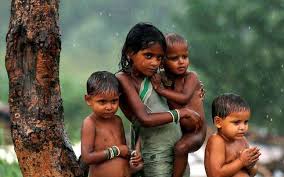
A Niti Aayog report, released about two years ago, estimated that in Gujarat — which our powers-that-be have long considered a model state — 11.66% of people are “multidimensionally poor,” a term referring to an index that seeks to estimate “multiple and simultaneous deprivations” at the household level across three macro categories: health, education, and living standards. The report suggests that multidimensional poverty in Gujarat declined by around 7% over a period of five years, pointing out that in tribal-dominated districts, where poverty levels were particularly high, there has been a clear improvement: in Dahod from 54.93% to 38.27%, in Dangs from 57.33% to 26.61%, in Narmada from 37.11% to 22.62%, and in Panchmahal from 41.52% to 18.11%. Basing its estimates on the National Family Health Surveys of 2015–16 and 2019–21, the report claims the “most rapid reduction” in multidimensional poverty occurred in districts located in four states: Gujarat, Madhya Pradesh, Uttar Pradesh, and Rajasthan. While not directly disputing what the Government of India report highlights regarding Gujarat, a new survey carried out by a civil rights group in two tribal districts — Dahod and Panchmahal — and two non-tribal districts — Bhavnagar and Morbi — suggests that things aren’t as rosy as they are made out to be. A follow-up to a similar survey carried out in 2004, the new survey — conducted in 2025 by Anandi (Area Networking and Development Initiatives or ASAA) — reveals that, even after two decades, total food security continues to elude nearly 80% of the population in the surveyed areas. To quote Sejal A. Dand, a senior activist directly involved in both the 2004 and 2025 surveys, two decades ago, 10% of people were found to be “food secure,” and this percentage has gone up by just 2% over the years — to 12%. Releasing details of the 2025 survey, which was conducted with the help of senior academic Prof. Dipa Sinha, currently with Azim Premji University, another Anandi activist, Neeta Hardikar, told the Ahmedabad media that there is certainly a change: unlike in 2004, there is “no full day hunger” as found then, “but our survey suggests that a large number of households often don’t have access to food, especially in the tribal areas.” The survey results confirm this: in 2004, it was found that in the sample households of the tribal area of Panchmahal, a staggering 73.66% were food insecure for more than six months in a year. In contrast, the 2025 survey shows that 7.06% “live in hunger,” while a whopping 86.38% have “incomplete meal,” and only 6.56% have a “full meal.” Conditions are worse in Dahod district: here, 24.61% live in hunger, 58.78% have “incomplete meal,” and only 16.61% have a “full meal.” The 2025 results indicate that the situation is not much better in the non-tribal areas of the Saurashtra region of Gujarat where the survey was also conducted. In Malia (Morbi district), 9.10% “lived in hunger,” 75.51% had “incomplete meal,” while only 15.38% had a “full meal.” Similarly, in Shihor and Umrala of Bhavnagar district, 15.98% “lived in hunger”, 54.84% had “incomplete meal,” and just 14.13% had a “full meal.” The 2025 survey was undertaken specifically to assess how effectively the National Food Security Act, 2013 — which aims to provide subsidized food grains to approximately two-thirds of the country’s 1.4 billion people — has been implemented since it became operational in Gujarat about a decade ago. A total of 1,261 households were included in the survey, mostly belonging to marginalised communities, with a deliberate effort to include those facing social vulnerabilities such as single women, the disabled, and the elderly. “The results are therefore not representative of the state on average, but they give an indication of what is happening among some of the vulnerable communities in the state — these were the communities and families that the NFSA was expected to help,” a survey note underlines. It adds, “Over a third (34%) belonged to Adivasi communities and more than half (54%) to OBC communities. Most of the Adivasi respondents are from Dahod and Panchmahal, and the OBCs from Bhavnagar and Morbi. The remaining were SCs and OBCs, with only 21 respondents belonging to the ‘general’ category.” While 86% of the respondents reported having a smartphone in the household — the lowest in Dahod (77.3%) and highest in Morbi (93.1%) — only 43.7% had cultivable land. Most of the households in Bhavnagar and Morbi owned no cultivable land (over 80%), while in the tribal districts of Dahod and Panchmahal, most households were engaged in their own cultivation, although the land size was less than 2 bighas. Respondents were asked about the frequency of consumption of different foods for each season (summer, monsoon, winter) — cereals, pulses, fruits and vegetables, milk and milk products, and flesh foods (chicken, meat, eggs) — to define what qualifies as a “full meal.” The “incomplete meal” category was used to identify households where not all members consume rice, dal, fruits, vegetables, milk, curd, meat, eggs, oil, etc., on a regular basis. These households rely mainly on carbohydrate-based food to satisfy hunger. The “living with hunger” category identified households whose meals are “donated, borrowed, and largely cereal-based, infrequent and inadequate.” The note observed: “In spite of the legislation, which covers 75% of rural households under the targeted public distribution system, the proportion of households which are not food secure is very high. Only around 12% of the households are able to entirely meet their food security needs in the sense of having a diverse diet regularly, including foods from different food groups.” By Rajiv Shah Courtesy : Counterview Note: This news is originally published on https:/counterview.com/ and is for use by the non-military/non-commercial community, especially those in the human rights sector.
Global NGO slams India for media clampdown during conflict, downplays Pakistan
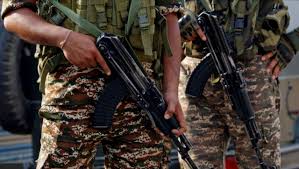
A global civil rights group, Civicus has taken strong exception to how critical commentaries during the “recent conflict” with Pakistan were censored in India, with journalists getting “targeted”. I have no quarrel with the Civicus view, as the facts mentioned in it are all true. However, what surprised me was that the global NGO was conspicuously silent on how the military-controlled Pakistan government is known to have propped up terrorists — which is actually the first trigger — while continuing to target mediapersons critical of the regime. After receiving the Civicus email, I decided to check whether it had a commentary on Pakistan as well. I did find a comprehensive commentary under the heading “Government criminalises activists, increases online controls and cracks down on protests by the opposition and ethnic groups”, but there is no update on how the authorities behaved during the conflict — even as rating India’s civic space as ‘repressed’ — the same as Pakistan’s. Let me first recount what Civicus has to say about India in the context of the Pahalgam terror attack and Operation Sindoor. It starts off by offering background on how, in recent years, the government has “misused the draconian anti-terror Unlawful Activities (Prevention) Act (UAPA) and other laws to keep activists behind bars and fabricate cases against activists and journalists for undertaking their work.” It states, “The authorities have blocked access to foreign funding for NGOs and human rights defenders, using the restrictive Foreign Contribution (Regulation) Act (FCRA). Travel restrictions have been imposed on academics, journalists and human rights defenders by suspending their work visas, denying them entry to the country and cancelling their Overseas Citizen of India status.” Civicus quotes the Geneva-based United Nations-linked Global Alliance of National Human Rights Institutions’ (GANHRI) Sub-Committee on Accreditation (SCA) report from March 2025, which recommended downgrading India’s National Human Rights Commission (NHRC) from category ‘A’ to category ‘B’. “Among the concerns was the failure to address shrinking civic space and increased instances of targeting human rights defenders, journalists and perceived critics,” it notes. This is followed by how, in the aftermath of the dastardly terrorist attack in Pahalgam, followed by Operation Sindoor, “India blocked social media accounts and YouTube channels, while journalists and others were criminalised.” Thus, on 29 April 2025, the Indian government ordered the blocking of the YouTube channel 4PM News Network, citing national security and public order following its coverage of the anti-war movement. “The channel remains offline at the time of writing. The Editors Guild of India said that it was ‘deeply concerned’ by the government’s directive ‘without any disclosure of the specific reasons or evidence, and without following principles of natural justice’,” said Civicus. Then, Civicus noted how, in the same month, “police in Uttar Pradesh launched criminal investigations into political commentators and satirists Neha Singh Rathore and academic Madri Kakoti, for allegedly ‘inciting unrest and threatening national unity’ through their online posts about the attack.” It further stated, “The government also ordered the blocking of accounts of some international news organisations, as well as 16 YouTube news channels linked to Pakistan,” adding, “In May 2025, the authorities ordered the blocking of over 8,000 social media accounts on Twitter (X), including the Kashmir-based news outlets Free Press Kashmir, The Kashmiriyat, and Maktoob Media, which focuses on human rights and minorities.” Civicus continued, “The Ministry of Electronics and IT also temporarily blocked the Indian news website The Wire on 9 May 2025, apparently in retaliation for an article it published about India’s fighter jet procurement. The Wire reported that its site went dark without notice after posting a CNN-sourced story about Rafale jets, and though it was later unblocked, the outlet is now pursuing legal action against the government for this blatant infringement of press freedom.” Giving more details, Civicus said that in May 2025, the Nagpur police arrested Rejaz M. Sheeba Sydeek, a Kerala-based journalist, for posting a social media message criticising Operation Sindoor. On 16 May 2025, he was charged under various laws, including the UAPA. Similarly, journalist Hilal Mir, a Srinagar-based senior journalist who has worked with leading Indian and international news organisations, was placed under preventive detention from 7 to 13 May 2025 for allegedly “spreading anti-national content and promoting secessionist ideology online.” Then, said Civicus, there were academic arrests. In May 2025, Ali Khan Mahmudabad, an associate professor and head of the political science department at Ashoka University, was arrested for stating in a social media post that while there was praise for one of the armed forces spokespersons for media briefings on Operation Sindoor, there was silence around “victims of mob lynchings, arbitrary bulldozing,” and the ruling party BJP’s “hate mongering.” Citing more examples of how civic space is narrowing in India, Civicus said that on 29 April 2025, eight students were arrested in Kochi while holding a peaceful demonstration in solidarity with victims of the Kashmir conflict and those killed in the Indo-Pakistani strikes. And on 10 May 2025, police blocked an anti-war rally in Thrissur organised by the People’s Anti-War Front. Eleven activists were arrested and taken into preventive custody. Then, Civicus noted that as of 1 June 2025, at least 81 individuals in Assam had been arrested and labelled “anti-national” for allegedly expressing sympathy toward Pakistan in the wake of the Pahalgam terror attack. “This sweeping action — justified by the state government as a measure against ‘pro-terror sentiment’ — has drawn sharp condemnation from civil rights groups, journalists, and political commentators. Many have pointed out the dangerous precedent it sets for criminalising expression and dissent in an already fragile rights environment,” claimed Civicus. In sharp contrast to its commentary on India, the Civicus commentary on Pakistan, while also rating the country as “repressed”, gives no details of how the media curbs took place in Pakistan during the conflict. While it does say, based on 2024 facts, that Pakistan has seen “criminalisation of human rights defenders and journalists, crackdown on human rights movements and protests,” it offers no specifics in
After Rahul Gandhi’s big experiment in Gujarat, Congress announced city and district presidents, see full list
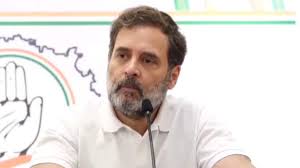
Gujarat Congress District President List: To defeat BJP in the 2027 Gujarat assembly elections, Congress started the organization creation campaign in March. Under this, Congress had decided to give strength to the district and city presidents. Congress has announced the names of new district and city presidents for the state. Ahmedabad: Congress has announced the new district and city heads of the state after the exercise of organization creation campaign in Gujarat. On the initiative of Congress leader Rahul Gandhi, the party had changed the process of appointment of district presidents from Gujarat. The party has made Sonal Patel the Ahmedabad city president, while the old heads have been retained in Vadodara city and district. Rahul Gandhi had visited Gujarat. After this, he appointed PCC observers along with the appointment of AICC observers. After this the party has appointed new city / district presidents. The presidents have been repeated in the list announced by the Congress, but according to an estimate, there are about 50 percent such names. Those who have got the responsibility of district / city president for the first time. Congress announced 40 city and district presidents for Gujarat. 2027 assembly election target A statement issued by the Congress said that the party’s national president Mallikarjun Kharge has approved the appointment of District and City Congress Committee (DCC) presidents in Gujarat with immediate effect. These appointments have been made after a long exercise done under a rigorous organizational under the Organization Creation Campaign. To give a tough fight to the BJP in the 2027 Gujarat Assembly elections, the Congress has started the process of change in the organization from Gujarat. Its goal has been set to revive the party structure from booth to district level. List of new district and city presidents of Gujarat Congress Sl. No. Name of District/City President 1 Ahmedabad City Sonal Patel 2 Ahmedabad Rural Rajesh Kumar Gohil 3 Amreli Pratap Dudhat 4 Anand Alpesh Padiyar 5 Aravalli Amubhai Patel 6 Banaskantha Gulab Singh Rajput 7 Bharuch Rajendra Singh Rana 8 Bhavnagar Rural Pravinbhai Rathore 9 Bhavnagar City Manohar Singh Lalbha 10 Botad Himmat Kataria 11 Chhota Udepur Shashikant Rathwa 12 Dahod Harshadbhai Ninama 13 Dang Snehil Thackeray 14 Devbhoomi Dwarka Palbhai Ambalia 15 Gandhi Nagar Arvind Singh Solanki 16 Gandhinagar City Shakti Patel 17 Shakti Patel Punjabhai Vansh 18 Jamnagar City Virendrasinh Jadeja alias Diggubhai 19 Jamnagar Rural Manoj Kathiria 20 Junagadh City Manoj Joshi 21 Kheda Kalusingh Dabhi 22 Kutch V.K. Hambal 23 Mahisagar Harshad Shantilal Patel 24 Mahesana Baldevji Thakor 25 Morbi Kishorbhai Chikhlia 26 Narmada Ranjitsinh Tadvi 27 Navsari Shaileshbhai Patel 28 Panchmahal Chetansinh Parmar 29 Patan Ghembarbhai Patel 30 Porbandar Rambhai Maru 31 Rajkot City Dr. Rajdeepsinh Jadeja 32 Rajkot Rural Hitesh M Vohra 33 Sabarkantha Rambhai Solanki 34 Surat Rural Anand Chaudhary 35 Surat City Vipul Babubhai Udhnawala 36 Surendranagar Naushad Solanki 37 Naushad Solanki Naushad Solanki 38 Naushad Solanki Jashpal Singh Padhiyar 39 Vadodara City Ritwik Joshi 40 Valsad Kishanbhai B Patel Observers were announced in April The party had announced Gujarat Assembly polls on April 12, 2025 43 AICC observers and 183 PCC observers were deployed in all the districts of the state. These included state in-charges, MPs, MLAs and former PCC presidents. After this, the AICC observers along with the PCC observers visited all 26 Lok Sabha constituencies, 182 assembly constituencies and almost all 235 block Congress committees. After this, the names of the district and city presidents were decided. Congress is in the worst position in Gujarat till now. Out of 26 Lok Sabha seats, Congress has only Banaskantha seat, while it has only 12 MLAs in the assembly. Congress state chief Shakti Singh Gohil is the only Rajya Sabha member. His term is till April next year. Written by: Achalendra Katiyar Achalendra Katiyar has studied from Jamia Millia Islamia Delhi. After this, he worked in reputed national newspapers of Meerut, Kanpur and Delhi. Since June 2020, he has been active in understanding the politics and culture of Gujarat. Courtesy: Hindi News
Andhra Pradesh: 15-year-old Dalit girl sexually abused by 14 men for two years, now in hospital eight months pregnant..

The painful truth of a 15-year-old pregnant girl: Sexual abuse by 14 men, failure of the system In a district hospital in Andhra Pradesh, a 15-year-old girl, who is eight months pregnant, is spending her days in a 150-bed ward among other pregnant women and newborns. Officials have called it dangerous to terminate the pregnancy at this stage and have also considered it unsafe to send her back to her village. The girl, who was sexually abused by 14 men for two years, belongs to a Scheduled Caste (Madiga) community and her village is dominated by upper castes. The investigation, which began after the girl’s mother filed a police complaint in the first week of June, has exposed the very system that was created to protect such vulnerable girls. “Due to her young age, poverty and caste, she became an easy target for exploitation. Systems like school monitoring and community welfare checks failed completely,” said Superintendent of Police V. Ratna. The teen’s horrific experience began when she was 13 and studying in Class 8. After her father’s death, her mother, who was single, moved to a village near the Karnataka border. According to the police, one of the accused found the teen and her classmate, who was also from the Scheduled Caste, alone after school and clicked their photographs. Threatening to leak these photographs on social media, the two men forced her to sexually abuse them through physical violence and fear and also made a video of it. These videos and photographs were used by others to further exploit the teen. When the teen’s pregnancy was discovered, her mother approached the police. On June 9, the police arrested six of the accused and later detained 11 more. There are a total of 17 accused, of whom 14 allegedly sexually abused her for two years and three, including her minor classmate, did not inform the authorities. All have been arrested. The accused include three minors and 11 men aged between 18 and 51. They have been booked under the Indian Penal Code, Protection of Children from Sexual Offences Act (POCSO) and the Information Technology Act. The police are also investigating why the teenager’s Class 10 teachers did not report her long absence. “In such a crucial academic year, her non-residentship should have been noticed,” said SP Ratna. Local welfare systems, such as Grama Mahila Sanrakshan Karyakarsh volunteers and Accredited Social Health Activists (ASHA), also failed to take note of the family’s situation even though it was known that the mother was suffering from depression and financial hardships after her husband’s death. Of the 17 accused, 14 are from the influential Boya community, while three, including the classmate, are from the Scheduled Caste. Officials say leaders of the Boya community tried to get the teenager married to her classmate to hush up the case. For safety reasons, the teenager will be kept in the hospital till her delivery, scheduled after July 21. “Sending her back to the village is risky,” an official said. After the delivery, the teenager and her baby will be shifted to a government women’s shelter. According to hospital sources, the teenager is anaemic and suffering from depression. She is being provided medical care and counselling. “As Dalits, she and her mother are vulnerable,” an official said, and stressed the need to ensure their safety during the investigation. Courtesy : Rajan Chaudhary, Hindi News
“SC hai? To neeche khada raho!” — Video of BJP MLA removing Dalit Sarpanch from stage goes viral, creates ruckus

A video went viral on social media, in which BJP MLA PV Parthasarathy is seen stopping a Dalit Sarpanch from coming on stage, public is deeply angry about the incident. Kurnool (Andhra Pradesh): A video from Adoni in Kurnool district of Andhra Pradesh has gone viral on social media, in which BJP MLA PV Parthasarathy is seen stopping a Dalit Sarpanch from coming on stage during a public program and allegedly insulting him. It is alleged that he did this after knowing the caste of the Sarpanch. This incident is said to have taken place on June 16, when the MLA was addressing a gathering in his constituency. In the video, Parthasarathy calls out to a Sarpanch standing in the crowd, “Hey Sarpanch, come here, why are you standing there?” When the Sarpanch hesitates to move forward, the MLA asks, “Are you Christian?” In response, a Telugu Desam Party (TDP) leader standing near him says, “He is from the Scheduled Caste (SC), Sir.” The video then shows the BJP MLA and the TDP leader pointing to the ground in front of the stage and asking the sarpanch to stand there instead of coming on stage. The MLA says, “Okay, then stand here,” and the sarpanch stands there quietly. During this, the TDP leader is seen repeatedly covering her face from the camera, as if she is uncomfortable with the recording. After the video surfaced, there are sharp reactions on social media. Many users have called it a casteist insult in public. A user wrote on X (formerly Twitter), “Who is more responsible – the casteist leader who insulted the Dalit Sarpanch, or the Sarpanch who remained silent, putting power above self-respect? This silence gives courage to those who insult Dalits, Muslims and marginalized people every day.” Another user wrote, “BJP MLA publicly says to Dalit Sarpanch – ‘Oh, SC hai?’ This is not a slip of tongue, this is the real face of caste supremacy.” So far, there has been no official response from either MLA Parthasarathy or the BJP on this entire matter. Courtesy : Rajan Chaudhary, Hindi News
Andhra Pradesh: BJP MLA accused of insulting Dalit sarpanch

Danapuram (Andhra Pradesh), June 20 (Language) Bharatiya Janata Party (BJP) MLA from Adoni constituency of Andhra Pradesh PV Parthasarathy has been accused of insulting the Dalit Sarpanch of Danapuram village in Kurnool district. The Sarpanch has lodged a complaint with the police. Parthasarathy was on a tour to Danapuram on Monday and the alleged incident took place while overseeing the implementation of the Jal Jeevan Mission program at a temple complex here. A video circulated on social media shows Sarpanch Chandrashekhar being called to the stage by Parthasarathy in the temple complex. However, when he did not come, Parthasarathy called him three-four times and then asked if he was a Christian and therefore hesitant to come on stage. The video then shows the local woman leader of the Telugu Desam Party (TDP) whispering in the MLA’s ear that the sarpanch belongs to the Scheduled Caste (SC), after which the MLA gestured to the sarpanch and asked him to stand on the ground in front of the stage. The MLA’s act is being criticised as caste-based discrimination. On the controversy that erupted after the video surfaced, the MLA said he had only asked about the chairman’s religion as he “seemed reluctant to step on the temple platform”. “I called him to stand with me. He was hesitant, so I asked if he belonged to another religion…,” Parthasarathy told reporters. Meanwhile, the YS Jagan Mohan Reddy-led Yuvajana Sramika Raithu Congress Party (YSRCP) condemned the MLA’s behaviour and accused the ruling National Democratic Alliance (NDA) government of “blatant caste discrimination”. “Naidu, why is there so much hatred towards Scheduled Castes in your alliance?” the YSRCP questioned in a post on social media platform ‘X’. Similarly, the Human Rights Forum (HRF) condemned the BJP MLA for failing to prevent the public “humiliation” of a Dalit sarpanch during a Jal Jeevan Mission programme. It claimed, “The TDP leader blocked the way of the sarpanch citing his caste.” The HRF demanded action against the BJP MLA and the TDP leader under the Scheduled Castes/Scheduled Tribes (Prevention of Atrocities) Act, 1989 and warned of protests if this was not done. Courtesy: Dheeraj, Hindi News
BJP-RSS don’t want poor children to learn English… Rahul Gandhi’s strong attack

Leader of Opposition Rahul Gandhi posted on X that English is a bridge, not a dam. He alleged that BJP-RSS don’t want poor children of India to learn English and move forward. He stressed that every language of India has a soul, culture, knowledge. New Delhi: Former Congress President Rahul Gandhi on Friday alleged that the Bharatiya Janata Party (BJP) and Rashtriya Swayamsevak Sangh (RSS) don’t want poor children of India to learn English because they don’t want people to ask questions, move forward and be equal. He also said that we should teach English to every child because in today’s era, as much as Hindi is important as mother tongue, so is English. English is not shame, but power The Leader of Opposition in Lok Sabha made this comment a day after an alleged statement by Home Minister Amit Shah. Rahul Gandhi posted on ‘X’ that English is not a dam, but a bridge. English is not shame, but power. English is not a chain – it is a tool to break chains. He alleged that BJP-RSS do not want poor children of India to learn English because they do not want people to ask questions and be equal. What else did Rahul Gandhi say? Rahul Gandhi also said that in today’s world, English is as important as your mother tongue because it will provide employment and boost self-confidence. He stressed that every language of India has soul, culture and knowledge. We have to cherish them and at the same time teach English to every child. This is the way to an India that competes with the world. Give equal opportunity to every child. Authored by: NBT Desk Courtesy : Hindi News
Dalit youth in Bihar allege that Bank of Baroda discriminates in loan processing, complaint written to RBI

Pappu Kumar alleges that the bank discriminates against small applicants. While his small loan application is being strictly scrutinized, the bank waived off Rs 44,481 crore of bad debts (NPAs) of 144 corporate companies in the last 8 years, which included many rich and influential borrowers. This difference shows that the bank is not treating the poor and Scheduled Caste youth fairly, which is against RBI rules. Rohtas- Many schemes are running on paper to provide employment opportunities to the deprived and marginalized community, but do the Dalit and backward class youth get the benefit of it in reality? Probably not! One such scheme is the ‘Suvidha’ loan of National Scheduled Caste Finance and Development Corporation (NSFDC) under which various types of loans are provided to economically empower the Scheduled Caste persons. “Suvidha Loan” provides financial assistance to Scheduled Caste individuals to start small business or expand existing business. In the hope of self-employment, two youths from Bihar have been visiting Bank of Baroda for the last three months to get this loan, but despite being eligible and fulfilling all the documents, the bank refused to give loan to both of them. Pappu Kumar, a resident of Mauna village in Bihar, has filed a formal objection against Bank of Baroda (BOB) with the Reserve Bank of India (RBI), in which he has accused the Bank of not following the guidelines of the National Scheduled Caste Finance and Development Corporation (NSFDC) and discriminatory behavior. Pappu Kumar, an unemployed Scheduled Caste youth with an annual family income of Rs 1.25 lakh, had applied for a commercial vehicle loan under the NSFDC Suvidha Yojana on March 28, 2025. Pappu said the bank’s Dehri on Sone branch discriminated and harassed him, deliberately delayed disbursing loans and arbitrarily rejected applications, undermining the scheme’s objective of promoting financial inclusion and self-employment for marginalised communities. Vikas Kumar also has a similar complaint. NSFDC, a central public sector enterprise under the Ministry of Social Justice and Empowerment, has a scheme under which Scheduled Caste individuals with annual family income up to Rs 3 lakh can apply for loans. The applicant is provided loans up to Rs 10 lakh for small business activities, commercial vehicles such as jeeps and car taxis, without any collateral/security requirement or assessment of repayment capacity based on the applicant’s current income. Pappu and Vikas Kumar had applied under this scheme. Pappu told The Mooknayak that he had applied for a loan on 28-03-2025 to purchase a Tata Tigor XT CNG model for self-employment/business. The scheme provides loans at subsidized rates for purchasing vehicles, which he wanted to promote self-employment. Pappu says the BOB branch manager initially insisted on submitting income tax returns, which is not required under NSFDC guidelines. His application was accepted only after repeated clarifications. Despite submitting the application, the bank kept the loan “in process” pending for two months without any valid justification and kept citing vague reasons like approval from higher authorities. When he filed an RTI application to clarify the reasons for the delay, he received an incomplete and misleading response, which further strengthened his allegations of caste-based discrimination and misuse of position. Pappu argues that the bank’s actions violate NSFDC’s mission to promote prosperity among the Scheduled Castes through financial assistance and skill development initiatives. Similarly, the bank expressed its inability to give a loan to Vikas Kumar, writing that Vikas’s annual income is Rs 1.25 lakh and he has applied for a loan of Rs 8,90,689 for a commercial vehicle. As per the bank’s guidelines, loans are given only up to three times the income. In such a situation, the bank said that Vikas can be given a loan of only Rs. 3,75,000/- as per three times his annual income. If he is given a loan for seven years (84 months), then according to this, the average EMI will be Rs 12000 to 15000, whereas Vikas’s average monthly income is Rs 10416/-. The bank wrote in its letter, “According to this, you do not have the repaying capacity, so we are unable to approve your loan as per the above documents and bank guidelines.” The applicant says that the bank misrepresented his loan application by processing it under the agricultural finance conditions in a wrong manner, which is inconsistent with the objectives of the NSFDC scheme. The NSFDC framework evaluates repayment capacity not based on the applicant’s current income but on the expected income from the proposed venture such as commercial vehicle operation. Kumar estimates that a self-employed taxi driver can generate an income of Rs 25,000 to Rs 30,000 per month, which can easily cover the EMI of Rs 15,000-16,000, yet BOB neither approved the loan nor considered this income possibility, but applied business loan norms that are inappropriate for this scheme. Pappu Kumar has made several serious allegations against Bank of Baroda (BOB). He says that the bank changed the terms of his loan, breaking the rules of NSFDC (National Stadium Finance Development Corporation). According to NSFDC, the loan repayment period should have been 66 months, but the bank increased it to 84 months. Also, the bank offered him loans at normal commercial rates instead of subsidized low interest rates (4-6%), which increased his financial burden. Kumar also alleged that the bank discriminates against small applicants. He said that while his small loan application is being strictly scrutinized, the bank waived off Rs 44,481 crore of bad debts (NPAs) of 144 corporate companies in the last 8 years, which included many rich and influential borrowers. This difference shows that the bank is not treating the poor and Scheduled Caste youth fairly, which is against RBI rules. Kumar has demanded RBI to direct BOB to approve his loan of Rs 8.91 lakh on NSFDC terms. He should be compensated Rs 8.91 lakh for financial loss and Rs 1 lakh for mental stress. RBI has been demanded to take action against the wrong practices of the bank and implement the NSFDC scheme properly. Courtesy: Geetha Sunil
Friendship broke, then Dalit youth was publicly humiliated by shaving his head! Shocking incident in Faridabad
After the friendship with Dalit youth broke, a conspiracy was hatched to beat him, the accused shaved his hair and hurled casteist abuses at him. Faridabad: Faridabad Police on Wednesday arrested a 19-year-old youth and detained two minors. They are accused of assaulting, holding hostage and humiliating a Dalit youth in Subhash Colony of Ballabhgarh. The incident is reported to have taken place on Monday evening. According to the police, the victim has been identified as Sahil (aged 25 to 30 years). The accused thrashed him, shaved his head, eyebrows and moustache and allegedly hurled casteist abuses at him. Apart from this, Rs 3,000 was also taken from the victim’s pocket and later he was left outside his house. Police investigation has revealed that the main accused and Sahil were close friends in the past, but their relationship had deteriorated in recent times. The two knew each other for about eight years. The police said, “The reason for the quarrel is the changing relations of friendship. At present, no caste angle has emerged, but since the victim belongs to the Scheduled Caste, a case has been registered under the SC/ST Act. Sahil is not in a position to give a statement right now, but we are expecting his statement today.” The case was registered at Adarsh Nagar police station on the complaint of Sahil’s cousin Suraj. The police also clarified that there is no truth in the viral reports claiming that the victim was made to drink urine or hung upside down. On Wednesday, the main accused was produced in court and sent to judicial custody, while the two minors were produced before the Juvenile Justice Board. Adarsh Nagar police station in-charge Inspector Nafe Singh said that the victim has suffered minor injuries. Courtesy : Rajan Chaudhary, Hindi News
Domestic workers urge Union government to enact law for fair wages, social security
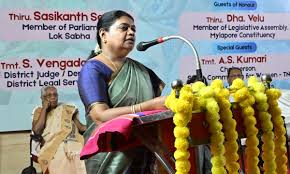
Tamil Nadu Domestic Workers Welfare Trust submitted a petition to the State govt. to extend the Sexual Harassment of Women at Workplace (Prevention, Prohibition and Redressal) Act to domestic workers, among other demands Geetha Jeevan, Minister for Social Welfare and Women Empowerment, speaking during an event organised as part of the International Domestic Workers Day, in Chennai on Monday. Geetha Jeevan, Minister for Social Welfare and Women Empowerment, speaking during an event organised as part of the International Domestic Workers Day, in Chennai on Monday. | Photo Credit: M. SRINATH In the 25 years that R. Rajeshwari has been a domestic worker, only in the last 10 years did she come to know about her right to a weekly holiday and bonus. “We think domestic work is not important. Back in the village, people don’t value workers who clean the house or the bathroom. But now, we understand the dignity and social security in the work,” she said at an event here on Monday. On the occasion of the International Domestic Workers Day, the Tamil Nadu Domestic Workers Welfare Trust (TNDWWT) urged the Union government to enact a legislation ensuring decent work, fair wages, social security and legal rights to domestic workers. “Domestic work helped me to educate my daughter only in a matriculation school. Its vital that we receive better wages and that people recognise our work as important,” said Rajeshwari. Better awareness needed Speaking at an event organised on the occasion, Social Welfare and Women Empowerment Minister P. Geetha Jeevan said, “Even with the government’s support, there is a need for better societal awareness. A lot of improvements for women have come about through law. However, many problems persist due to constraints faced within the family set up.” Further, the Tamil Nadu Domestic Workers Welfare Trust submitted a petition to the State government to extend the Sexual Harassment of Women at Workplace (Prevention, Prohibition and Redressal) Act to domestic workers, revise their existing minimum wage to ₹100 per hour and establish regulations and monitoring mechanisms for domestic worker recruitment by agencies to prevent exploitation, among other demands. Member of Parliament Sasikanth Senthil, Member of Legislative Assembly of T. Nagar J. Karunanidhi, District Judge and Deputy Secretary District Legal Services Authority S. Vengadalakshmi, chief functionary TNDWWT Josephine Amala Valarmathi and members of the TNDWWT also spoke at the event. Courtesy : The Hindu Bureau, The Hindu Note: This news is originally published on https:/thehindu.com/ and is for use by the non-military/non-commercial community, especially those in the human rights sector.