
Dalit beaten up for playing Shiv Bhajans on E-Rickshaw in Sawan, case against 25
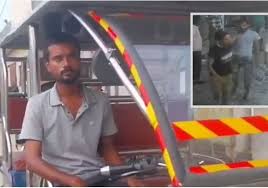
Dalit beaten up for Playing Shiv Bhajans on E-Rickshaw: A case of attacking a Dalit e-rickshaw driver for playing Shiv Bhajans has come to light in Rustam Nagar Sahaspur of Bilari police station area of Moradabad district of Uttar Pradesh. It is alleged that some Muslim youths first beat up the Dalit youth and then dragged him to a house. CCTV footage of this incident has also surfaced, in which the attackers can be seen dragging the victim. The victim e-rickshaw driver Ankit said that he was playing Lord Shiva’s bhajans in his e-rickshaw as the month of Sawan is going on. Angered by playing Shiv Bhajans, some youths attacked him. The attackers first insulted him with casteist words and then started beating him. When Ankit tried to run away, he was dragged to a house, where he was beaten up fiercely. Police arrested three As soon as the information about the incident was received, the police took immediate action and registered a case against 5 named and 15-20 unknown people on the basis of the complaint of the victim. At the same time, the police took action in the case and arrested 3 accused and sent them to jail. Additional police force has been deployed to maintain peace in the area. This incident is being thoroughly investigated. So that all the culprits can be punished. The police have appealed to the people not to pay attention to rumors and maintain peace. Also, the police expects the cooperation of the public for any new information in this case. Search for other accused continues Taking the matter seriously, the police arrested three accused and sent them to jail. SP Rural said that strict action is being taken against the accused and further legal process is going on. On the basis of CCTV footage, the police has started searching for other unknown accused. By Sorit Chaudhary Courtesy: Hindi News
Purnia massacre: Rahul Gandhi spoke to the victims over the phone, said- Congress is with you in the fight for justice
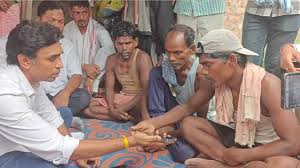
Purnia News: A heart-wrenching incident of burning alive 5 members of a tribal family has come to light in Purnia district of Bihar, which has shaken the entire state. Rahul Gandhi shared his grief by talking to the victim’s family over the phone and assured all possible help. Purnia: A heart-wrenching incident took place in Purnia district of Bihar. Here 5 people of a tribal family were burnt alive. This incident shook the entire state. It is alleged that more than 50 people attacked the house of a woman of the family, calling her a witch. In this case, Congress MP Rahul Gandhi, an ally of the Grand Alliance, spoke to the victim’s family over the phone on Sunday. He shared the family’s grief and took full details of the incident. Rahul Gandhi talked to the victim’s family for about 5 minutes Today, All India Tribal Congress President Dr. Vikrant Bhuria met and talked to the family members of the victim’s tribal family in Tetgama village of Purnia district. During this, he assured justice by making the Leader of Opposition in Lok Sabha Rahul Gandhi talk to the victim’s family over the phone. He told the victim’s family that the Congress family will stand firmly with them in this fight for justice. Congress leader Rahul Gandhi, in a phone conversation, took information about the entire incident from the victim’s family and assured all possible help. Rahul Gandhi talked to the victim’s family for about 5 minutes. Criminals’ rule in Nitish government: Vikrant Bhuria Vikrant Bhuria said that the barbaric incident of burning alive five members of the tribal family has shamed humanity. Criminals’ rule is established in the Nitish government of Bihar. He said that the current situation in Bihar has become such that murders, massacres and rapes of women are being carried out by criminals whenever they want. The police and law and order have become completely inactive and have surrendered before the criminals. The entire village along with the victim’s family is scared: Bhuria He alleged that the pace of arresting the criminals in the brutal murder case of Purnia is very slow. The entire village along with the victim’s family is scared and frightened. The law is not able to do its work because a situation of distrust in the government has developed among the common people. The criminals have established a parallel power to the government. Curated by: Sudhendra Pratap Singh About the author Sudhendra Pratap Singh is a senior digital content producer at Navbharat Times Digital. Started his journey in journalism with the local newspaper Agrabharat. From here the caravan grew and reached NBT.com via Kalpataru Express, Hindustan News Paper, News18. Courtesy: Hindi News
Khati Corner
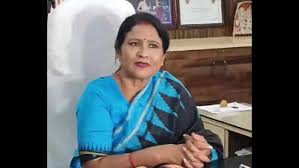
Cameras in focus AI cameras were supposed to be game-changers, or so Odisha Police had thought. They were supposed to help the cops control crowds and keep tabs on suspicious people during Rath Yatra. But a series of incidents has put a question mark on the use of AI cameras. Delay in the pulling of chariots due to crowd surge, a stampede and a security breach when four unidentified individuals scaled the temple’s boundary wall have forced many to question the efficacy of the AI cameras. Missing in action The statewide protest by drivers’ association affected private bus services and supply of fuel as well as essential commodities. On the first day of the strike, transport minister Bibhuti Bhushan Jena convened a meeting with drivers who are taking lead in the protest. Surprisingly, president of the association, Prashant Menduli, was absent from the meeting. When asked about the reason behind his absence, Menduli said he had an important work. Many wondered what was so important that he skipped a meeting with the minister. Prince charming Rahul Gandhi’s recent visit to Bhubaneswar had all the makings of a political spectacle. The crowd turnout was impressive, showing that the Congress leader’s charm hasn’t entirely faded. The most eyebrow-raising and photo-worthy moment was when a group of women poured milk over a life-sized cutout of Rahul, treating him with the kind of reverence usually reserved for a prince. While Congress may be struggling to regain its political footing, the gathering showed Rahul still knows how to stir up emotions, and a bit of drama too. Cold water Excitement was high among Congress supporters over Rahul Gandhi’s arrival. The excitement was even more so for Congress veteran Suresh Kumar Routray, popularly called as Sura Routray, who went to the airport to receive Rahul. Along with hundreds of his supporters, Sura reached the airport with traditional swords, and planned to perform the Paika dance before Rahul. But he had to face disappointment after the on-duty security personnel snatched all the swords citing security protocols. Noble visit Jharsuguda collector Aboli Naravane, known for her modesty, recently made a surprise visit to an Anganwadi centre in the district. Aboli inspected the centre and posted an adorable photograph of her on social media platforms in which she was seen looking at the kids happily having their midday meals. “It is always a special feeling to watch them tuck into their afternoon meals. These kids are given 2 meals in the Aanganwadi centres, one as a morning snack and one full meal with an egg,” Aboli wrote. Praises poured in for her with comments lauding her dedication. (Contributed by Team TOI) Courtesy : TOI Note: This news is originally published on https:/timesofindia.com/ and is for use by the non-military/non-commercial community, especially those in the human rights sector.
Dalit Youth Hanged Upside Down From Tree, Brutally Beaten By Villagers Over Suspicion Of Theft In UP’s Fatehpur
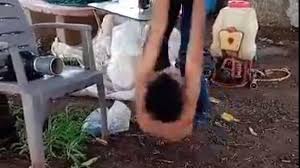
After being alerted, the police arrived at the spot and rushed the victim to the Community Health Centre (CHC), from where he was referred to the district hospital. A young Dalit man was brutally assaulted by villagers on suspicion of theft in Uttar Pradesh’s Fatehpur. A shocking video of the assault has surfaced online. The video shows the victim hanged upside down from a tree while villagers beat him mercilessly. According to reports, the villagers also beat another young man who tried to intervene. After the video went viral, police filed a case on Saturday evening. Naresh Paswan, a resident of Chhimi village in the Kotwali area, has alleged that villagers caught him on Thursday night when he was going towards his field. They later accused him of intent to steal and created a commotion, causing several villagers to gather at the scene. Villagers allegedly tied him to a tree and hanged him upside down. During this, Vijay Singh, a resident of Munna Ka Purwa hamlet in Chhimi, arrived. He tried to intervene and mediate. He was also beaten and chased away. He suffered head injuries during this. After being alerted, the police arrived at the spot and rushed the victim to the Community Health Centre (CHC), from where he was referred to the district hospital. Based on Vijay Singh’s complaint, police have registered a case under serious sections against Arjun, Phool Singh, Khanna alias Rajesh, Raju, Shivkaran alias Bauwa, Amarjeet, Ramchandra, and four to five others. Station Officer R.K. Singh said that a report has been registered and the investigation will be conducted by Khaga CO. Naresh’s condition is stable. Vinay Mishra Courtesy : TFPJ Note: This news is originally published on https:/thefreepressjournal.com/ and is for use by the non-military/non-commercial community, especially those in the human rights sector.
UP: Dalit youth killed in Rampur, two accused arrested after encounter with police, know the whole matter
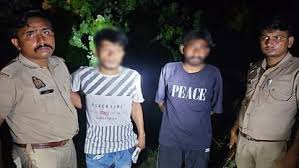
In the case of murder of a Dalit youth, the police have arrested two accused during an encounter. One accused was injured by a bullet in retaliatory action by the police. On July 8, Suraj was attacked with sticks and iron rods, after which he died during treatment. After the death of a Dalit youth resident of village Bhainsia Jwalapur, who was injured in the fight, the police arrested two accused youths during an encounter on Friday night. One accused was injured by police bullets and is admitted in the district hospital. On July 8, Ranjit, son of late Mohan Lal, resident of village Bhainsia Jwalapur, filed a report against eight people, naming three people of village Saktua. It was alleged in the report that his brother Suraj (19) was injured by eight youths on the Nainital highway by beating him with sticks and iron rods. CO Ravindra Pratap Singh said that on Friday the police arrested Imran and Rizwan, residents of village Saktua and Nitin, resident of village Tamra, who came to light. After this, Suraj died during treatment in Rudrapur hospital on Friday night. According to the CO, Kotwali in-charge Balwan Singh was patrolling with his team late on Friday night. On the Nainital highway, an informer informed that two youths related to the incident of Dalit youth Suraj were seen on the road near GD Goenka School in village Dibdiba, adjacent to the Uttarakhand border. After this, the police surrounded Shakir son of Mohammad Sabir, resident of Mohalla Paharganj, Ward No. 15, Police Station Rudrapur Udham Singh Nagar and Vishal son of Rajkumar, village Tamra and tried to catch them. According to the Kotwali in-charge, at 2:45 in the night, both the youths started entering the guava orchard on the roadside. During this, Shakir fired at the police party with a pistol, in which the policemen narrowly escaped. During this, the police retaliated in self-defense. The police bullet hit Shakir’s right calf due to which he got injured and fell on the spot. The police caught the accused. A pistol and two cartridges were recovered from the accused’s possession, while Vishal was caught from a guava orchard. It is claimed that two cartridges have been recovered from Vishal. The police brought the injured Shakir to the community health center. After this, the doctors referred him to the district hospital. The police have taken action to arrest both the accused youths. Senior officials also inspected the spot at night. The forensic team also reached the spot and collected evidence. CO Ravindra Pratap Singh said that so far five people have been arrested in the assault incident. The police is conducting raids to arrest the remaining accused, who will be arrested soon. Published by: Vimal Sharma Courtesy: Hindi News
Food Habits as Marker of Caste
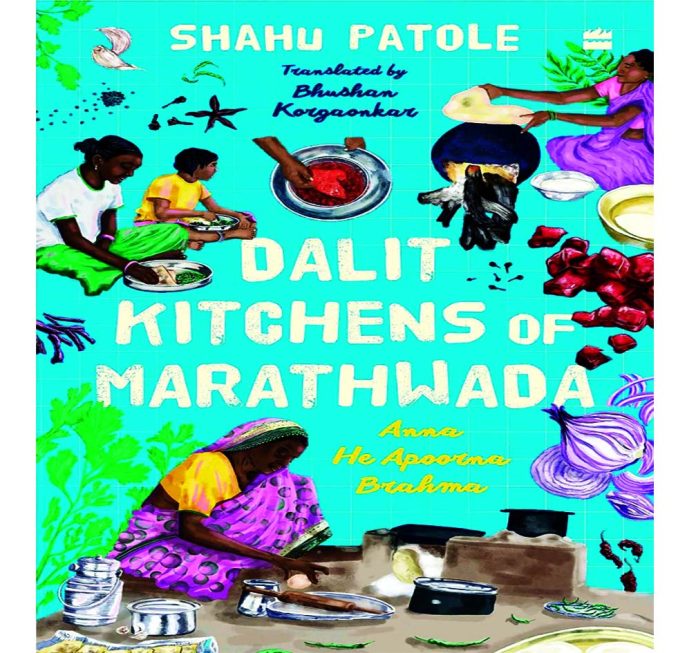
Dalit cuisine is not about choice; it’s about accessibility. Their food practices are a result of deprivation, not abundance. Even today, most Dalits navigate meals not as a matter of taste, tradition, or celebration-but as a question of survival. As one Dalit writer, Anita Bharti, pithily puts it, “The upper-caste minimum is our maximum.” I came face-to-face with this unsettling reality during a conversation that began warmly, reflectively, but left a deep impression on me. I met Shahu Patole the author of much acclaimed book ‘Dalit Kitchens of Marathwada’ at the Jaipur Literature Festival earlier this year. Expecting a discussion on regional variations or perhaps culinary culture viewed through a sociological lens, I was instead led into a world I had neither experienced nor fully imagined. That single interaction-and later, the book itself-influenced me more deeply than I had anticipated. Perhaps that’s because of where I come from. As a Kashmiri Brahmin, I grew up in a cultural setting where caste-as it manifests in much of India-was virtually absent. Kashmiri society was historically divided along religious lines, not fragmented into caste hierarchies. Terms like “impure,” “untouchable,” or even the notion of “separate kitchens” were alien to our vocabulary. We never had to confront the daily violence of caste. It was not part of our lived reality. That explains why ‘Dalit Kitchens of Marathwada’ revealed a world I had never encountered-not even in the margins of my upbringing. I had naively assumed that food was a great equalizer, a universal act of sharing. The book showed me how wrong I was. It spoke of denied ingredients, segregated utensils, and the humiliation wrapped into everyday meals-not as distant history, but as current lived experience. What emerges from reading the book is that food is not just what we eat-it is who we are, where we belong, and how we are perceived? Whether through caste in India or class in Western societies, cuisine reflects deep-rooted structures of power, identity, and aspiration. Recognizing this helps us understand not just eating habits, but also the underlying social dynamics, and in the case of Indian Dalits, of inclusion, exclusion, and resistance. ‘Dalit’ refers to the over 16% of Indians historically excluded from the Hindu caste system and relegated to menial, hereditary occupations with no scope for upward mobility. Though un-touchability was outlawed in 1947, caste-based exclusion continues to persist across different regions – though not as sharp as it used to be. The term ‘Dalit-meaning “broken” or “scattered”-was first used by Jyotirao Phule and later championed by B.R. Ambedkar. It was further politicized by the Dalit Panthers in 1972 as a symbol of anti-caste assertion. Denied access to land, markets, and communal kitchens, Dalits have had to make do with what remained-scraps, discarded parts, and coarse grains. Their culinary traditions have emerged from this exclusion, eating beef, pork, wild greens, and offal not by preference but by compulsion. These methods have evolved into rich food heritages, yet their cuisine carries the deep scars of stigma and shame, and remains marginalized in both popular culture and academic study. No wonder, Indian food taboos divide not only humans from gods but also upper castes from oppressed communities. The Brahmin obsession with satvik food-devoid of meat, garlic, onion, or root vegetables-is projected as morally superior, while Dalit and tribal diets, born out of scarcity and survival, are dismissed as impure. Therefore, from what we eat to how it’s cooked and who serves it, every layer of food culture is shaped by centuries of social stratification. Shahu Patole has been bold in arguing that in India, food is never just food-it is memory, identity, status, and most critically, caste. His book is a manifesto of remembrance, dignity, and defiance. The issue is not whether bee larvae are nutritious or jowar rotis are fashionable, but why some are mocked for what they eat while others are applauded. Shows like Master Chef India and critics like Vir Sanghvi promote a sanitized, upper-caste version of Indian cuisine-glossy thalis and dairy-laden desserts-while ignoring the food of the oppressed. Another Dalit writer, Chittibabu Padavala, elaborates on this point by asserting that in India, food is far more than sustenance-it is a social identifier shaped by caste, hierarchy and purity politics. “The push for vegetarianism-especially when backed by state coercion, vigilante violence, or digital food policing-is not about health or climate alone, but about enforcing Brahmanical norms across society.” One wonders whether Shahu Patole is familiar with the large sections of Brahmin communities-Kashmiri, Bengali, Assamese, etc.-who are non-vegetarians. Needless to mention, that Hitler was vegetarian and therefore food habits are not indicators of one’s moral character. The irony is stark. The second-largest meat-eating population in the world is now being subjected to culinary uniformity. The myth of a unified Indian cuisine-by attempting to erase Dalit food practices from literature and media-is bound to fail. Coming back to Shahu Patole, his book, originally published in Marathi as Anna He Apoorna Brahma, documents the food customs of the Mahar and Mang communities of Maharashtra. The work serves both as cultural archive and political critique. He offers recipes for dishes made from every part of the animal-bones, blood, intestines, bee larvae plucked from walls, and the epiglottis of the goat-all treated as delicacies. A dish made from dill easily foraged in the village is common, as are onions toasted on an open flame, and chutneys made from fat chilies pounded into a fiery mash with salt. When I asked Shahu if bee larvae is a good source of protein, and if bhakris provide good nutrition, he was indignant. “It doesn’t matter,” he insisted. “That’s not what people were thinking when they foraged. It was what was accessible, and it was what was cooked. These analytical frameworks that assign one meaning to each dish are luxuries our communities never had.” Patole notes, “We all know the plates of the upper castes, but our meals remain in the shadows.” His work brings those shadows into visibility. While India faces twin
NOS funding cuts signal systemic exclusion of Dalits, minorities from educational opportunities

In a manner, it is an extension of the violence visited upon the Dalits and the minorities by Hindutva proponents on the streets and in homes A recent piece of news reported by a few national English dailies, but which didn’t seem to get much traction in regional newspapers or in public discussions, was regarding a substantial cut in the number of National Overseas Scholarships (NOS). The NOS programme was instituted in 1954-55 to provide financial support to students from Scheduled Castes (SC), Denotified Nomadic Tribes (DNT), semi-nomadic tribes, landless agricultural labourers, or traditional artisan categories, with a family income below Rs 8 lakh per annum, for study and research in foreign universities. Left in limbo On July 1, the Ministry of Social Justice and Empowerment announced provisional scholarship awards to only 40 of the 106 candidates selected for NOS for the academic year 2025-26, with a statement that letters for the remaining 66 candidates “may be issued… subject to availability of funds.” In previous years, all students in the selected list had received provisional scholarship letters at the same time, but this year less than half of the selected candidates received the award letters, leaving the rest in limbo, not knowing what the outcome is going to be. A Ministry official was quoted as saying by Hindustan Times, “It is an issue with the Cabinet Committee on Economic Affairs not approving the money allocated to these scholarship schemes. We have the money but we also need green signal from above to give it out.” The Cabinet committee is headed by Prime Minister Narendra Modi. BJP govt’s larger agenda While this may appear to be a minor glitch in the flow of funds — which will be rectified in a short time and all the selected candidates allowed to pursue their higher studies and further their careers — a closer look will suggest there is much more to the picture than what is apparent. And that it is in line with a much larger agenda of the BJP government of systematically denying students of the SC, ST and minority communities scholarships and much needed support for their education. A simple enumeration of developments in the last few years will serve to place the matter into perspective: In the 2022-23 Union Budget, there was a huge reduction of over 99 per cent in funds allocated to the Maulana Azad Education Foundation (MAEF), which works for the educational upliftment of minority communities such as Muslims, Christians, Sikhs, Buddhists, Parsis and Jains. While the previous year’s Budget allocated Rs 90 crore, the 2022-23 Budget allotted a paltry Rs 1 lakh to the foundation. As a result, the stipend payments of more than 1,400 PhD scholars from these communities have been stalled since January 2025 and some from even earlier. Funds for the National Fellowship for SC and ST students were cut by 99.99 per cent as the allocation dropped from Rs 240 crore in the revised estimates (RE) for 2024 to just Rs 0.02 crore in the budget estimates (BE) for 2025. The National Testing Agency (NTA) initially released a selection list of 865 scholars in March 2025 for the National Fellowship for SC and ST students, but a ‘revised list’ was issued in April which cut down selections to only 487 of the previously chosen candidates. The NOS scheme, mentioned earlier, saw a reduction of 99.8 per cent from Rs 6 crore in RE 2024 to Rs 0.01 crore in BE 2025. In 2022, the Union Ministry of Social Justice and Empowerment had excluded “topics/courses concerning Indian Culture/heritage/History/Social studies on India based research topics” from the NOS scheme. The Pre-Matric Scholarship for Minorities was reduced by 72.4 per cent to Rs 90 crore in BE 2025 from Rs 326.16 crore in RE 2024. It has also been restricted to students of classes IX and X. The Post-Matric Scholarship for Minorities has been decreased by 69.9 per cent, from Rs 1,145.38 crore in RE 2024 to Rs 343.91 crore in BE 2025. The Merit-cum-Means (MCM) Scholarship first saw a reduction 42.6 per cent to Rs 19.41 crore in the 2025 Budget. According to the latest reports, it has been discontinued due to “overlap with similar schemes of other ministries.” The Dr Ambedkar Scheme of Interest Subsidy on Educational Loan for Overseas Studies for OBC and OEC students incurred a cut of 56.66 per cent to Rs 8.16 crore from Rs 15.30 crore in BE 2025. An RTI enquiry filled by activist MA Akram brought to light that more than 50 per cent of the funds slotted for minority educational programmes have not been used. Specifically, of the Rs 305.8 crore allocated for fee reimbursement scheme, Rs 174.23 crore remained unutilised. Maulana Azad Foundation shut Even more tellingly, on February 7 of this year, the Ministry of Minority Affairs (MoMA) issued an abrupt order to close down the Maulana Azad Education Foundation, without assigning any reasons for the decision. The Foundation was established in 1989, coinciding with the birth centenary of Maulana Abul Kalam Azad, the first Education Minister of India, as a non-profit organisation under the MoMA to address the educational disparities faced by minority communities, particularly Muslims, in India. Over the years, it has provided significant service for the educational upliftment of minorities through a variety of schemes spanning across the entire spectrum of education from the primary to higher education and research. Despite this, the order of closure came without any warning. It also mandated the transfer of surplus funds worth Rs 669.71 with the Foundation to the Consolidated Fund of India. Criticism of MoMA It is crucial to note that the Parliamentary Standing Committee on Social Justice and Empowerment, chaired by BJP lawmaker PC Mohan, was quite caustic in its criticism of the Ministry of Minority Affairs for the sharp reduction in funding and the inordinate delays in funding approvals. In its report of January 2025, the Committee stated that the delays and cuts have left students and institutions
Witness protection granted to Dalit complainant in Dharmasthala mass burial case
Additionally, the complainant recorded his statements before the Principal Civil Judge and JMFC, Belthangady Taluk. However, the advocates expressed concern over being barred from being present during the statement recording, citing the complainant’s difficulty with the legal process. Synopsis: A Dalit man who alleged a decades-long cover-up of murders and sexual assaults at the Dharmasthala temple in Karnataka has been granted protection under the Witness Protection Scheme, 2018. His advocates described the authorities’ response as “positive”, though raised concern that he was made to record his statement before the court without their presence, despite his explicit request. A week after a Dalit man, formerly employed as a sanitation worker at the Dharmasthala Manjunatha temple in Karnataka’s Dakshina Kannada district, alleged a 20-year cover-up of murders and sexual assaults, his request for protection under the Witness Protection Scheme, 2018, has been granted. In a statement issued on Friday, July 11, advocates representing the complainant, Ojaswi Gowda and Sachin Deshpande, described the response from the relevant authorities as “positive.” “A communication to this effect was sent to us on the evening of 10-Jul-2025 by the authorities concerned,” the statement reads. “The Complainant conveys his gratitude to the District judiciary, Dakshina Kannada, the Police authorities in Dakshina Kannada and the Government of Karnataka for acting expeditiously on the request for Witness Protection for the Complainant.” Additionally, the complainant recorded his statements before the Principal Civil Judge and JMFC, Belthangady Taluk, on Friday under Section 183 of the Bharatiya Nagarik Suraksha Sanhita (BNSS), which corresponds to Section 164 of the Code of Criminal Procedure. However, the advocates expressed concern over being barred from being present during the statement recording, citing the complainant’s difficulty with the legal process. “We, the advocates, were firmly and clearly instructed by the complainant beforehand that one of us should be present in court while he made his statements to the court. He is illiterate, has never been to court before, and had expressed serious difficulty with the process. We clearly informed the Court of this concern,” the statement reads. “However, the Court did not agree to the presence of the advocates and commenced the recording of the complainant’s statement in our absence. This is for your information and record.” Shocking allegations of criminal conspiracy spanning decades In a detailed complaint addressed to the Dakshina Kannada Police Commissioner on July 3, the survivor, who has requested anonymity, alleged that between 1995 and 2014, he was forced under death threats to dispose of hundreds of bodies, many showing signs of sexual violence and brutal murders. Dakshina Kannada police have registered an FIR (Crime Number 39/2025) under Section 211(a) of the BNS, after obtaining court permission. In a statement, they said the complaint will be investigated in accordance with the law. The complainant said he was coming forward after all these years because he could no longer remain silent, and described three specific incidents, including being forced to bury a teenage sexual assault victim in 2010. Other incidents included the burning of the body of a woman whose face had been disfigured with acid, and several instances in which the destitute were allegedly suffocated to death in a systematic manner. The complainant said he fled Dharmasthala in 2014 after a member of his own family was sexually harassed, and returned recently to exhume one of the “hundreds” of bodies he said he had buried, to present as evidence. Attaching photographs of the exhumed body with his complaint, he urged an immediate investigation. He said he was unable to reveal the identities of the accused until he and his family were accorded witness protection. He also requested that the buried bodies be exhumed and given proper last rites. On Thursday, a week after the initial complaint, advocates Ojaswi Gowda and Sachin Deshpande urged all 788 Members of Parliament to take note of the case ahead of the Monsoon session. (Edited by Dese Gowda) Courtesy : The South First Note: This news is originally published on https:/thesouthfirst.com/ and is for use by the non-military/non-commercial community, especially those in the human rights sector.
Lucknow police files chargesheet within 24 hours in rape case of Dalit minor
Seven-year-old survivor’s statement recorded, forensic and medico-legal procedures completed swiftly; officials seek fast-track trial In a rare instance of expedited legal action, the Lucknow Police on Friday (July 11, 2025) filed a chargesheet within 24 hours in a case involving the rape of a seven-year-old Dalit girl. The incident took place in the Gauri Gali area of Swanapur village, under the jurisdiction of Malihabad police station, on Wednesday (July 9, 2025) evening. Minor dalit girl raped in UP’s Rampur The accused, identified as 20-year-old Suchit Yadav, was arrested within 10 hours of the alleged assault. “All evidences were collected, accused arrested, forensic and medical formalities were completed. Judicial magistrate recorded statement of victim. The court-related legal duty was performed and Lucknow Police Commissionerate completed the investigation and chargesheeted the above case within 24 hours, first time in U.P. The government will be requested for considering the above case in fast-track court,” Assistant Commissioner of Police (ACP), Malihabad, Vineet Singh told The Hindu. According to the police, the minor had gone to bathe at a nearby tubewell when the accused lured her to an isolated room near a drain in Madhavpur village, where the alleged assault occurred. District Magistrate, Lucknow, was closely involved in the investigation, directing the Chief Medical Officer and Director of Health Services to ensure that medico-legal formalities were completed during the night. “Modern technology, mobile locations, CCTV footage and intelligence systems were used to promptly nab the accused within 10 hours of the crime to expedite the legal process,” ACP Singh added. Mayank Kumar Courtesy : The Hindu Note: This news is originally published on https:/thehindu.com/ and is for use by the non-military/non-commercial community, especially those in the human rights sector.
In-charge Collector adopts Dalit family
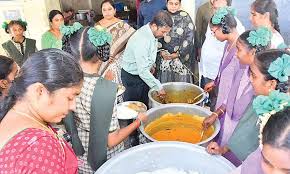
Naresh NandamOngole: Prakasam district in-charge Collector Ronanki Gopala Krishna conducted a surprise inspection of Social Welfare Department Boys’ Hostel and Residential Girls School in Ammanabrolu on Friday. He reviewed attendance and stock registers, finding discrepancies between recorded inventory and actual stock in the storeroom. Expressing dissatisfaction with the maintenance standards, the Collector issued immediate directives to install mosquito mesh on windows by Monday, repair toilets and improve general maintenance, set up complaint boxes and menu charts, arrange first aid kits, and establish a kitchen garden in available space. At Residential Girls School, he interacted with students, assessed their academic progress, and personally served them lunch to check food quality. He emphasised strict adherence to the state government’s prescribed menu and ensured students receive education kits, uniforms, and shoes as mandated. As part of P-4 scheme designed to connect the bottom 20 percent of society with the top 10 percent of wealthy citizens, Collector Gopala Krishna personally adopted the family of Gollapati Mariyamma, a Dalit widow from Mallavam village in Maddipaddu mandal. He met with the family and interacted with them. Mariyamma, who lost her husband and struggles with daily wage work while caring for her daughter and son, was promised comprehensive support by the Collector. The Collector assured immediate house construction approval on her ancestral land, additional financial support for construction, help establishing a grocery or tiffin shop for livelihood, skill training in tailoring and craft work for her daughter, educational support to complete her daughter’s Intermediate studies, and provided monthly grocery supplies and vegetables as immediate help. During his visit to Mallavam village, locals highlighted lack of cremation grounds and drainage systems. The Collector directed Tahsildar Adilakshmi to resolve the cremation ground issue and ordered MPDO Jyoti to implement phased construction of drainage canals. Naresh Nandam Courtesy : The Hans India Note: This news is originally published on https:/thehansindia.com/ and is for use by the non-military/non-commercial community, especially those in the human rights sector.