
She forced my son to meet, family killed him: Dalit man’s father claims caste hatred
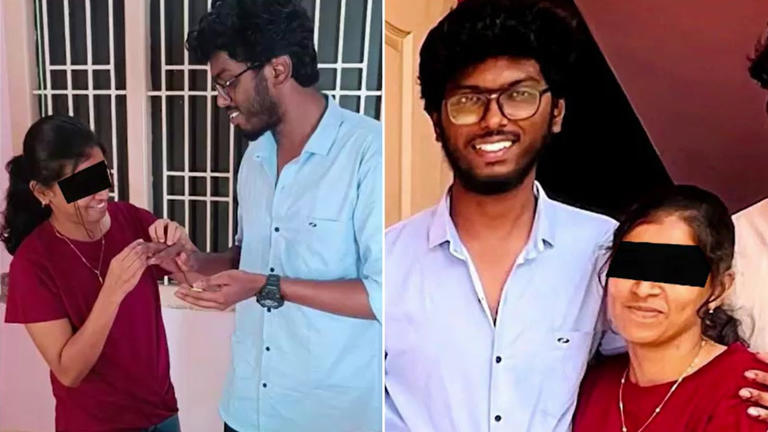
A 27-year-old Dalit man was hacked to death in broad daylight in Tamil Nadu’s Thirunelveli district, in what his family alleges to be a caste-based honour killing. The victim, Kavin Selva Ganesh, a software engineer, was employed at a leading IT firm in Chennai and was reportedly in a long-term relationship with a woman from an Other Backward Class (OBC) community. Speaking to reporters in Thoothukudi, the victim’s father, Chandrashekar, said, “My son had finished engineering and was working in Chennai. They were in love since the time they were in 11th standard. The girl was the one who was torturing my son into meeting her. He would not go. We are from the Scheduled Caste (SC) community and they are from the Thevar community. The girl’s parents and brother made my son meet them and killed him. We demand justice and the partners should be arrested.” The murder took place outside a private hospital in KTC Nagar, Thirunelveli, on Sunday. The victim, Kavin Selva Ganesh, was visiting his partner, when her brother Surjeet allegedly lured him away under the pretext of a conversation. Police say Surjeet then pulled out a sickle and hacked Kavin to death around 200 metres from the hospital premises. Surjeet initially fled the scene but later surrendered at Palayamkottai police station and has been detained under the Goondas Act. Police sent Kavin’s body for post-mortem to the District Government Hospital and collected CCTV footage from the area as part of the investigation. Kavin’s family had refused to accept his body, demanding the arrest of not just Surjeet but also his parentsâSaravanan and Krishnakumariâboth serving Sub-Inspectors in the Tamil Nadu Police. They allege the girl’s entire family plotted and carried out the murder. The police department has since suspended both officers. The Palayamkottai police have registered a First Information Report under Sections 296(b), 103(1), and 49 of the Bharatiya Nyaya Sanhita, read with Sections 3(1)(r), 3(1)(s) and 3(2)(v) of the Scheduled Castes and Scheduled Tribes (Prevention of Atrocities) Act, 2015. The incident has sparked outrage across Tamil Nadu, with several political leaders and public figures condemning the murder and the rising trend of caste-based violence. AIADMK chief Edappadi K Palaniswami called it another example of the ruling government’s failure to uphold social justice. “Under Stalin’s so-called ‘Failure Model’ government, caste-based honour killings are alarmingly on the rise. Caste clashes and violence against marginalised communities continue unabated I strongly condemn this Failure Model government,” he said in a post on X. Actor-politician Kamal Haasan said the killing was “shocking” and urged the Tamil Nadu government to ensure the culprits receive severe punishment. “All political movements must unite against the social disgrace of caste-based atrocities. We must recognise that caste is our primary enemy,” he said. Zoho founder Sridhar Vembu wrote, “This senseless murder of Kavin Selvaganesh, a young man who rose from humble rural roots to become a software engineer, is shocking. The fact that this murder was allegedly at the behest of a couple who work in the police force is even more shocking We have to do more work at the roots of our society.” AIADMK spokesperson Kovai Sathyan said the killing was symptomatic of growing caste violence under the DMK rule. “The Sub-Inspector mother and father behind the murder show the caste-based aberrations. For DMK, social justice and equality are only on paper.” Arumugam, a local Scheduled Caste community leader, echoed the family’s allegations. “A boy named Kavin has been killed in the name of honour. He had finished engineering and was working in TCS. The girl had called him and along with her family brutally killed him. We condemned the killing and protested since morning. The Deputy Superintendent of Police, Inspector and Assistant Commissioner said they will arrest the girl’s parents who are both Sub-Inspectors. Believing that, we are leaving from here. Today fifty of us have come. Tomorrow hundreds of us will come and protest.” Further investigation is ongoing. Story by Anagha Courtesy : MSN Note: This news is originally published on https://msn.com/bha and is used purely for non-profit/non-commercial purposes, especially human rights.
Promises unfulfilled: How Ayushman Bharat leaves the transgender community behind
Three years after the inclusion of gender-affirmative healthcare in the AB-PMJAY scheme, the community is unable to avail its benefits. The Transgender Persons Act 2019, mandates provision for coverage of medical expenses by a comprehensive insurance scheme. Arvinda dreams of becoming a psychologist. But the 21-year-old transwoman from Hyderabad had to discontinue her education in 2023, after finishing her polytechnic diploma, so she could work and raise money for her sex reassignment surgery. That’s the price she had to pay for living as her true self. Arvinda now earns ₹25,000 a month after taking a job at a BPO, of which around ₹12,000 goes towards repaying the loan she took to cover her medical expenses and afford other gender-affirming healthcare, including regular hormone treatments. “I had to take a loan just to be who I am,” she says, lamenting the lack of government support to ease such a financial burden. She is not alone in this struggle. The transgender community continues to face challenges in accessing healthcare, especially procedures that would help affirm their gender identity. In 2022, the Ministry of Social Justice and Empowerment (MoSJ&E) signed an MoU with the National Health Authority to launch a comprehensive health package for transgender persons under the Ayushman Bharat-Pradhan Mantri Jan Arogya Yojana (AB-PMJAY) scheme. The scheme promised health insurance coverage for transgender healthcare, including gender affirmation surgeries. However, there’s no relief for the community due to a lack of implementation of the scheme. Three years on, many like Arvinda are waiting for help, struggling to pay lakhs of money for their gender affirming healthcare. When Kalki Subramanian, Southern representative of the National Transgender Council, raised the issue of the delay, she received a positive response, but no action was taken. The council is an advisory body under the MoSJ&E, which evaluates and gives recommendations on existing policies. “The ministry has conducted a few meetings, where we demanded speeding up the process,” Kalki says. What is gender-affirming care? Gender-affirming care, as defined by the World Health Organization, encompasses a range of social, psychological, behavioural, and medical interventions designed to affirm an individual’s gender identity when it conflicts with the gender they were assigned at birth. It includes medical and psychological support, such as surgeries, hormone therapy, and counselling, that help transgender individuals align their bodies with their gender identity and improve overall mental and emotional well-being. The cost of gender affirming surgeries could range anywhere from ₹2 lakh to ₹8 lakh, and the cost for hormone treatments and therapy could range between ₹48,000 and ₹72,000 a year. What was promised The Ayushman Bharat scheme, launched on September 23, 2018, aims to provide health insurance to underprivileged rural families and selected urban worker groups based on the Socio-Economic Caste Census (2011). As of now, the AB-PMJAY dashboard reports over nine crore hospital admissions under the scheme. More than 41 crore Ayushman cards have been issued, including 4.57 lakh cards for individuals identified under the gender category marked as ‘other’. While this card could help transgender persons access general healthcare, it excludes gender-affirming services. Meanwhile, the special package announced in 2022 introduced the Transgender Healthcare (TG Plus) card, which allows transgender individuals to access over 50 medical procedures and treatments free of cost. The ministry will fund ₹5 lakh worth of health insurance per person each year under this scheme. However, the revised list of health benefit packages, released in November 2021 (before the announcement to include transgender healthcare), does not include any gender-affirming procedures. Neither has a new list of services been released. Delay in implementation The community seems to have lost hope in the scheme. “There is no step-by-step plan on how this will be implemented,” says Koyel Ghosh, Managing Trustee at Sappho for Equality, a Kolkata-based organisation working for the rights and social justice of individuals with non-normative gender-sexual orientations. Detailed information about the implementation—how to get these cards, what medical procedures are covered, etc.—is missing, Koyel adds. Obtaining the TG Plus card is essential to get gender-affirming healthcare benefits. Neither the AB-PMJAY website nor the National Portal for Transgender Persons has a provision to apply for the card. Instead, beneficiaries with a transgender certificate from the portal must visit any empanelled hospital to get a TG Plus card. This process makes the scheme inaccessible to many. “We have provided the ministry with a list of medical procedures and cost estimations last year, but there has been no progress,” said Dr Sanjay Sharma, CEO and Managing Director of the Association for Transgender Health in India (ATHI). Moreover, the requirement to possess a certificate and to visit an empanelled hospital gatekeeps many from accessing the benefits, experts suggest. Gatekeeping access to welfare Zainab Patel, a trans activist and one of the petitioners in the landmark NALSA case and the marriage equality case, says that the issue of entitlement should be separated from identity. “We have been rallying behind the government to ensure that access to welfare is not contingent on proving one’s identity. But they are making the transgender certificate/ID Card incumbent on getting the entitlement,” Zaineb says. This also goes against the Transgender Persons (Protection of Rights) Act, 2019, which does not mandate a transgender certificate to get gender affirming healthcare. Transgender certificates issued Number of applications and transgender certificates issued so far. Chart: National Portal for Transgender Persons Transgender individuals can apply for a certificate online through the National Portal for Transgender Persons or at the nearest Social Welfare Department office, using an affidavit or medical certificate. However, the process is slow, and community awareness remains low. Arvinda, despite updating all her identity documents, including her Aadhaar card to reflect her transgender identity, is still unaware of how to obtain the certificate or ID card. According to the 2011 Census, 4.8 lakh individuals identified as ‘other’ gender. But this number has grown considerably, as reported by Down to Earth. Despite this, only around 27,300 certificates have been issued so far, and more than 5,000 applications are pending approval. Because
Dalit beaten for worshipping in temple: Gold chain and 10 thousand rupees snatched in Kanpur, car damaged; Victim said- I will sacrifice my life
Worshipping in a temple proved costly for a Dalit man in Shivrajpur area of Kanpur. A person named Surendra Kumar Katheria was getting agricultural work done by laborers on his farm on Tuesday. Meanwhile, Abhishek Pal, Ashish Pal, Ankush and another friend from the village reached there. Objection raised on worship The accused objected to Surendra worshipping in the temple and driving the car. They abused him using casteist words. When Surendra protested, the accused surrounded him and beat him. They broke the gold chain from his neck and snatched Rs 10,470 from his pocket. The accused also damaged Surendra’s car and fled from the spot after threatening him. At the time of the incident, people named Lucky and Sumit from the village were present. Complained in the police station After the incident, the victim informed the police on 112 and reached the police station and lodged a complaint. Surendra expressed deep sorrow over the mistreatment meted out to him due to being a Dalit. He said that he is thinking of committing suicide. The police station in-charge said that the complaint has been received and further action will be taken after investigating the matter. Anand Kumar Tiwari Courtesy: Hindi News
Dalit youth beaten to death in Lakhimpur: Dispute over drinking alcohol and casteist remarks, family refuses to pick up the body
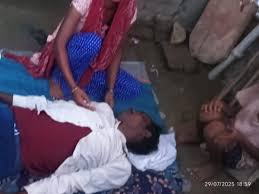
A Dalit youth was beaten to death in Tanaja village of Shardanagar police station area of Lakhimpur. The deceased has been identified as Jaiprakash Gautam (35) son of Mallu Gautam. The incident took place in the evening when Jaiprakash was returning to his home from Shardanagar. On the way, he got into a dispute with some people of the village over drinking alcohol and casteist remarks. It is alleged that Jai Singh, Mangal Singh, Nikku Singh and Gurpej Singh of the village attacked Jaiprakash with sticks. Seeing the youth being beaten, the people nearby informed the family. When the family members came to rescue him and were taking him home, Jaiprakash died on the way. The death of the youth created an uproar in the family. As soon as the information was received, the police reached the spot and tried to take possession of the body. However, the family members did not allow the body to be lifted, demanding registration of a case and immediate arrest of the accused. At present, the police is trying to convince the family members. The family members say that until the accused are arrested, they will not allow the body to be lifted. Gopal Giri Courtesy : Hindi News
Every day 7 Dalit-tribal women are raped in Madhya Pradesh, shocking figures placed in the assembly
Crime Against Women: The scale of a civilized society is the condition of the women living there. The figures placed in the assembly regarding violence and crime against Dalit and tribal women in Madhya Pradesh are horrifying, which are pointing towards the condition and plight of women living in the society. Rape Victim In MP: In response to the question of opposition MLA Arif Masood in the Madhya Pradesh Assembly on Tuesday, the Madhya Pradesh government presented shocking figures of sexual crimes against Dalit and tribal women in the state every day. These figures have once again brought to the fore the horrific truth of caste and gender violence present in the society. The scale of a civilized society is the condition of the women living there. The figures placed in the assembly regarding violence and crime against Dalit and tribal women in Madhya Pradesh are horrifying, which are pointing towards the condition and plight of women living in the society. A total of 7418 SC-ST women were raped between 2022 and 2024 According to the data presented in the house of the monsoon session of Madhya Pradesh Legislative Assembly, a total of 7418 incidents of rape of Scheduled Caste (SC) and Scheduled Tribe (ST) women occurred in the state between the last three years i.e. 2022 to 2024. In these, 558 women were murdered, and 338 women were gang-raped. On an average, 5 SC/ST women were victims of sexual violence every day in the state The data shows that on an average, 7 Dalit or tribal women were raped every day in the state. In this period, a total of 1906 women became victims of domestic violence. That is, every day two SC/ST women continued to face harassment in their own house. During this period, 5983 incidents of molestation of women were registered, that is, every day 5 SC/ST women were victims of sexual violence. In the last three years, a total of 44,978 crimes against Dalit and tribal women were reported in Madhya Pradesh, which shows that on an average every day in Madhya Pradesh, 41 Dalit or tribal women are subjected to some form of crime. Women from marginalized sections are still the most insecure It is worth noting that about 38 percent of the total population of Madhya Pradesh comes from SC/ST communities, in which 16 percent are SC and 22 percent are ST, despite this, crime on such a wide scale shows that women from the most marginalized sections of the society are still the most insecure. The horrifying government data presented in the assembly also revealed that tribal women became more victims of sexual and fatal crimes, while Dalit women had to face more domestic violence and molestation. Even after 76 years of independence, the safety of SC-ST women is not guaranteed? These figures presented in the assembly raise the question that are our laws, our system, and our thinking still unable to guarantee the safety of women from these sections? And the most serious question is, are these just statistics, or the cries of thousands of lives that never reached the court? Reported by: Akash Dwivedi Edited by: Shiv Om Gupta Courtesy : Hindi News
Dalit teenager gangrape case: Case registered against four accused in Sant Kabir Nagar, action taken on the complaint of the victim’s mother
A case of gangrape and video recording of a Dalit teenager has come to light in Sant Kabir Nagar’s Kotwali Khalilabad area. The police have registered a case against four accused on the complaint of the victim’s mother. The incident took place on 27 July 2025 at around 4 pm. According to the victim’s mother, her minor daughter had gone to the pond outside the village to defecate. There, Ansh Kumar, Aryan, Rohan Kannaujiya and Shivam Singh of the same village surrounded her. It is alleged that Ansh pushed the teenager to the ground. Shivam and Aryan held both her hands. After this, Ansh raped the victim. Rohan made a video during this time. After the incident, all four accused started watching the video together. The victim reached home crying and told the whole incident to her mother. Inspector Kotwali Khalilabad Pankaj Kumar Pandey said that on the complaint of the victim’s mother, a case has been registered against the four accused and the matter is being investigated. Devilal Gupta Courtesy: Hindi News
17-year-old youth shot by police after he attacks scheduled caste youth, sub-inspector

The injured has been admitted to the Tirunelveli Medical College Hospital. A 17-year-old teen was shot at and injured, by police at Paappaakudi in Tirunelveli, early on Tuesday (July 29, 2025), after he and his associate attacked a Dalit youth with a machete and attempted to attack the police personnel who tried to arrest them. According to police, two 17-year-old boys from Paappaakudi in the district, both belonging to most backward community and already facing a few cases, attacked Sakthi, 22, of Rastha near Paappakudi, with a machete around 1.30 a.m. He was injured in the attack. Paappaakudi police, led by Sub-Inspector Murugan, rushed to the spot. As the boys, carrying machetes, chased the police also, they scurried away for safety. Mr. Murugan entered a house nearby. The dwellers of the house locked the main door once the police officer entered. “The armed teens who followed Mr. Murugan landed multiple blows on the door with machetes. However, the Sub-Inspector of Police opened fire at one of the attackers, who was injured in the hip. On seeing his associate fall, the other fled the spot,” police said. The injured has been admitted to the Tirunelveli Medical College Hospital. A few villagers said the problem started after a minor scuffle broke-out between two caste groups who left the spot after the police entered the village. “However, the two teens, carrying arms, tried to attack the police, which led to the firing,” the villagers said. The Paappaakudi police are on the hunt to nab the teen who escaped. The Hindu Bureau Courtesy : The Hindu Note: This news is originally published on https://thehindu.com/bha and is used purely for non-profit/non-commercial purposes, especially human rights.
What Happens When The Margins Are Marginalised? Mx. Yashika, Caste, And The Crisis Within India’s Trans Movement

The pain in Mx. Yashika’s voice isn’t just from this smear campaign. It’s from being betrayed by movements she’s worked tirelessly to uplift. Mx. Yashika’s story begins not with triumph, but with a tremor. One that cuts through the tattered jacket of solidarity in India’s trans rights movement. A Dalit trans scholar from Saharanpur, she recently became the target of public, casteist allegations by none other than a senior member of the Uttar Pradesh Transgender Welfare Board, per a January 2025 report by The Probe. The Hindu reports, Devika Devendra S. Manglamukhi, alleged that Yashika had fraudulently obtained her caste and transgender identity certificates. These are claims which Yashika vehemently denies and has legally contested. The notice served by Yashika (with pro bono help from Chambers For Justice, a New Delhi-based law firm) demands not just a retraction, but reparations for a betrayal that feels as institutional as it is personal. “Caste atrocities against Dalit trans and queer people were never even taken into consideration,” she says. At stake here is more than one person’s dignity. It’s the erasure of Dalit trans voices from movements that claim to speak for all trans people. It’s the reproduction of caste supremacy within LGBTQIA+ spaces that purport to be inclusive. And it’s the heartbreak of being ghosted (not just by dominant-caste-led queer institutions) but also by platforms dedicated to Dalit rights. As Yashika puts it, “[Most people] ignore Dalit trans issues.” What does the notice reveal? On July 6, 2025, Devika posted on Instagram, alleging that Mx. Yashika had forged her Scheduled Caste and Transgender ID certificates. These accusations were echoed in news platforms like UP Tak and TNF Today (the latter has since been deleted but was referenced in the legal notice served by Yashika), claiming NHRC intervention, which the legal notice debunks as entirely fabricated. The UP Tak report falsely stated: “Yashika (…) has violated the rules and fraudulently got two certificates made for herself. One of these is a Scheduled Caste certificate, and the other is a Transgender Identity Card issued by the District Magistrate.” The article further insisted that trans persons should only be recognised under the OBC category as per a 2014 decision, thus implying that caste-based reservations are illegitimate for trans individuals. Such assertions not only misrepresent the NALSA judgment but also overlook the lived realities of caste and gender-based oppression. SDM Ankur Verma, cited in the same report, clarified that his office had received no formal complaint. Despite this, Devika allegedly weaponised WhatsApp groups like ‘National Network of Trans’ and ‘Webline Transgender’ to circulate defamatory content, including urging others to shame Yashika. The notice also claims Devika “used and circulated photographs of [Yashika] without her consent, which constitutes a gross invasion of her privacy.” Over and above deadnaming her repeatedly, the screenshots from these groups reference Yashika’s caste identity, her father’s name, and calls to ostracise her. The legal notice that was issued was acted upon by Advocate Sourabh Rai of Chambers for Justice, who accused Devika of criminal defamation under the Bharatiya Nyaya Sanhita and of violating provisions under the SC/ST (Prevention of Atrocities) Act and the IT Act. Devika mangalmukhi message national network of trans Devika has previously publicly targeted another Dalit trans activist. An April 2025 report by The News Minute says she had also levelled similar accusations against activist Grace Banu, another fierce advocate of horizontal reservation, at the Talkatora Police Station. She alleged that Grace had robbed and threatened her on December 22, 2024. The parallels are impossible to ignore. Transgender activists who advocate for horizontal reservation are among the other complainants listed by Devikai in her formal complaint. Ritwick Das, an activist based in Lucknow and Delhi, and Jane Kaushik, an activist based in Delhi, are among them. A pattern of casteism within queer spaces Yashika is not new to exclusion. She tells FII that while pursuing an M.A. in Human Rights at Panjab University, Chandigarh, she was denied hostel access solely due to her gender identity. This was until a 2022 Punjab & Haryana High Court order forced the administration to comply. “My family never helps me. I experienced gender exclusion from Dalit spaces as well as caste oppression among trans or cis people in the upper caste,” she explains. The very institutions she turned to for protection replicate the same hierarchies she tried to escape. The current attack, she alleges, stems from a long-standing disagreement over reservation policy. While Yashika and several Dalit trans activists advocate for horizontal reservations (recognising caste and gender identity as overlapping systems of oppression), Devika has publicly argued that all trans persons should not be categorised under SC/ST/OBC on the WhatsApp group named National Network of Trans. Yashika believes this erases the unique oppression faced by Dalit trans individuals and flattens the community into a monolith. The structural vulnerability deepens these wounds. “I never had family support. I faced intentional and systematic exclusion,” Yashika says. Even in queer spaces, caste determines who gets platformed and who gets policed. In Uttar Pradesh, she adds, “Dalit trans persons are living in fear, which is why they don’t come out openly in Uttar Pradesh,” due to fear of harassment from both the state and dominant-caste queer groups. “I feel very unsafe due to casteism and misgendering.” Where is our media? The silence around Yashika’s case is deafening. Despite the clear legal record and digital evidence of defamation, several well-known platforms (including those focusing on Dalit rights) have refused to cover her story. “Some promised they would and ghosted me,” she says. The media’s silence only shows their underlying discomfort with intersectionality. Dalit trans persons often find themselves erased from both the Dalit movement (which tends to be cis-heteronormative) and the queer movement (dominated by upper-caste voices). “They ignored our visibility and alienated us,” Yashika says. “There is no Dalit liberation without the appropriation and inclusion of Dalit trans persons in the Dalit movement.” Dalit Queer India, a collective Yashika is in conversation, affirmed her experience.
Yes, I went to China but you… External Affairs Minister S Jaishankar reminded Rahul Gandhi of old things
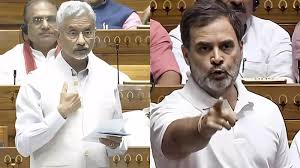
External Affairs Minister S Jaishankar targeted Congress leader Rahul Gandhi in Parliament and said that he did not go to China for any secret meeting. He expressed surprise at an opposition leader meeting the Chinese ambassador secretly during the 2017 Doklam crisis, while the Indian Army was facing the Chinese Army. New Delhi: External Affairs Minister S Jaishankar on Monday attacked Congress leader Rahul Gandhi without naming him during a discussion on the Pahalgam attack and Operation Sindoor in Parliament. S Jaishankar said that yes, I went to China but I did not go for any secret meeting. At the same time, an opposition leader used to hold secret meetings with the Chinese ambassador. Referring to the 2017 Doklam crisis, Jaishankar said that an opposition leader did not consider it appropriate to seek information from the government or the Ministry of External Affairs on this issue, instead he met the Chinese ambassador and got the information. Jaishankar said that it is surprising that they do not want to listen to the elected foreign minister of the country, but want to listen to the people of other countries. He said that this happened when our army was strongly confronting the Chinese army in Doklam. At that time there was a need for national unity, not behind-the-scenes meetings. Some people were enjoying the Olympics sitting in China Jaishankar further said that when China was issuing staple visas to the citizens of Arunachal Pradesh and Kashmir, some leaders were watching the Olympics sitting in China. I neither went to China to watch the Olympics nor for any secret agreement. Amit Shah stood up in the middle of the debate and defended the foreign minister At the same time, when the opposition repeatedly started interrupting the foreign minister’s statement, Amit Shah got furious and stood up in the middle of the debate and reprimanded the opposition leaders. Amit Shah said that I object that they do not trust the foreign minister of their country but trust the leaders of another country. All except 3 countries including Pakistan supported Operation Sindoor Rejecting the opposition’s claims that India did not get support from abroad after the Pahalgam attack, External Affairs Minister S Jaishankar said in the Lok Sabha on Monday that out of the 193 members of the United Nations, all except Pakistan and three other countries supported Operation Sindoor. Participating in the discussion in the Lok Sabha on the subject of Operation Sindoor, Jaishankar rejected the opposition’s allegations on China’s support to Pakistan and said that the partnership of the two countries has been going on for 60 years since the time of Congress. The Foreign Minister said in the House that it was necessary to give a clear message to Pakistan after the Pahalgam attack. If our limits were crossed, then it was necessary to send a message that the results would not be good. Curated by: Sanjeev Kumar About the author Sanjeev Kumar is a Senior Digital Content Producer at Navbharat Times Online. He has more than 6 years of experience working on national, politics, current affairs and Bihar-Jharkhand news. He is currently covering national news, politics and Delhi news for Navbharat Times Online. Courtesy : Hindi News
Congress’s big rally in Patna before Bihar elections, Rahul Gandhi will be involved, plan to show strength
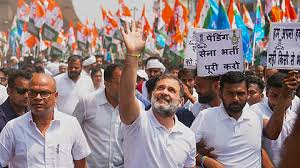
Before the Bihar assembly elections, Congress is going to hold a big rally at Gandhi Maidan in Patna. Many big leaders including Rahul Gandhi will attend this rally. Congress wants to show its strength by holding an election rally before the code of conduct is imposed, so that they can get enough time for election campaign. Patna: Before the Bihar assembly elections, the Congress party is going to hold a big rally in Patna. This rally will be held at Gandhi Maidan in Patna. Rahul Gandhi and many big leaders of the party will attend the rally. Congress has planned to hold an election rally before the code of conduct is imposed. The rally can be held in the last week of August or in September. The date of the rally will be decided after getting Rahul Gandhi’s approval. This decision was taken by Congress leaders in a meeting today. Plan to show its strength by holding a big rally Congress is fully prepared for the assembly elections to be held in Bihar. The party wants to show its strength by holding a big rally in Patna. The rally will be held at Gandhi Maidan, so that more and more people can be reached. Rahul Gandhi will also attend the rally, which will increase enthusiasm among the workers. More time will be available for election campaign Congress wants to hold a rally before the code of conduct is imposed. This will give them more time for election campaign. The date of the rally has not been decided yet. But, it can be held in the last week of August or in September. The date will be announced after Rahul Gandhi’s approval. In the meeting held today, Congress leaders discussed the preparations for the rally. They made many plans to make the rally a success. Ajay Maken’s screening committee will recommend the names of the candidates Earlier, a screening committee has been formed under the chairmanship of Ajay Maken for Bihar elections by Congress President Mallikarjun Kharge. The committee will recommend the names of the candidates. Meanwhile, an attempt will be made to instill enthusiasm and zeal among the Congress workers through the rally at Gandhi Maidan in Patna. Edited by: Ravi Sinha About the author Ravi Prakash Sinha is a Senior Journalist (Principal Digital Content Producer) at Navbharat Times Online. He has 25 years of experience in current affairs, Jharkhand-Bihar politics and ground reporting. Ravi Sinha has been working with NBT (Digital) for the last 3 years. Courtesy : Hindi News