
Dalit woman’s house wall broken in Raebareli: Gram Pradhan forcibly got Kharinja installed, victim complained to DM
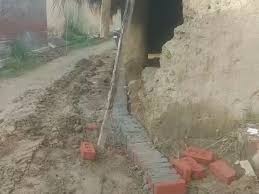
A case of breaking the wall of a Dalit woman’s house has come to light in Barha village of Lalganj area of Raebareli. A woman named Meena has accused Gram Pradhan Kishore. On January 24, 2025, there was no one in Meena’s house. During this time, the Pradhan along with his associates demolished the wall of her kutcha house. Meena immediately informed the police. When the police arrived, the accused threatened the victim that they would demolish the entire house if she complained. The victim told that the Kharinja installed by former Pradhan Mahendra Singh was at the right place. The current Pradhan has demolished the wall of the house and got Kharinja built from the other side. Meena went to the police station, tehsil and block office for justice. But no officer reached the spot for investigation. On August 2, at 12 noon, Meena gave a complaint letter to District Magistrate Harshita Mathur. She has demanded to register a case against the accused under the SC-ST Act. They have also demanded removal of illegal Kharinja and their own security. Arvind Bharti Courtesy: Hindi News
UP: Occult practitioner booked for raping Dalit woman
According to the complaint, Alfaz sent the woman’s mother out of the room on some pretext during the ritual and allegedly raped the woman before fleeing the spot. Saharanpur: Police have booked an occult practitioner for allegedly raping a 20-year-old Dalit woman under the pretext of performing rituals, police here said on Monday. The survivor’s family filed a complaint at the Deoband Police Station, accusing Alfaz of raping the woman during a “treatment session” on Sunday night. Additional Superintendent of Police, Rural Sagar Jain, told PTI that Alfaz, a resident of Mohalla Khankah in Deoband, claims to cure serious ailments through occult practices. The victim’s family had called him to their house to treat their ailing daughter. According to the complaint, Alfaz sent the woman’s mother out of the room on some pretext during the ritual and allegedly raped the woman before fleeing the spot. When the woman’s condition worsened, she confided in her mother, who immediately informed her father. The family then approached the police, and the woman was sent for medical examination. Jain said two police teams have been formed to arrest Alfaz. Posted by Marziya Sharif Courtesy : TSD Note: This news is originally published on https:/thesiasatdaily.com/bha and is used purely for non-profit/non-commercial purposes, especially human rights.
3 men sentenced to life imprisonment for killing Dalit man, injuring his children
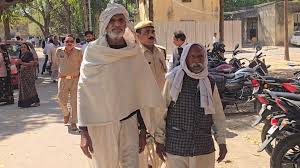
Balmiki died on the spot, while his three children suffered bullet injuries. The attack was motivated by an old enmity. Muzaffarnagar: A special SC/ST court here sentenced three men to life imprisonment for killing a Dalit man and injuring his three children last year, officials said. Special Judge Smt. Asharani Singh also imposed a fine of Rs 35,000 each on Rajender Jat, his son Mohit Jat, and Virender. The court found them guilty under Indian Penal Code sections 302 (murder), 307 (attempt to murder), 452 (house trespass), 504 (insult), 506 (criminal intimidation), and sections of the SC/ST (Prevention of Atrocities) Act, government counsel Parvendra Kumar told PTI. He said that on February 14, 2023, the accused stormed into the house of Sanjiv Balmiki at Rajpur Kala village under Jansath police station, hurled abuses, and opened fire. Balmiki died on the spot, while his three children suffered bullet injuries. The attack was motivated by an old enmity. Posted by Marziya Shar Courtesy : TSD Note: This news is originally published on https:/thesiasatdaily.com/bha and is used purely for non-profit/non-cif ommercial purposes, especially human rights.
First made the family members unconscious, then raped the Dalit girl on the pretext of exorcism, brutality of a tantrik in Deoband
A case of rape of a Dalit girl on the pretext of exorcism by a tantrik has come to light in Saharanpur, Uttar Pradesh. It is alleged that a youth from another community raped the Dalit girl on the pretext of exorcism. On the complaint of the victim’s father, the police have registered a case against the accused youth and started investigating the matter. A case of rape of a Dalit girl has come to light in Saharanpur, Uttar Pradesh. It is alleged that a youth from another community raped the Dalit girl on the pretext of exorcism. The victim’s father has alleged that during the exorcism, the accused made the entire family members unconscious and then raped his 20-year-old daughter. The police have registered a case against the accused and have started investigating the matter. Apart from this, the girl is also being medically examined. The incident is from a village in Deoband police station area of Saharanpur. Here a Dalit villager has filed a complaint with the police accusing a youth named Alfaz of another community of raping his daughter. According to the complaint filed by the Dalit villager, his wife was ill for a long time. Due to this, he felt that she was possessed by ghosts. The tantrik raped her on the pretext of exorcism The victim’s father told that his wife was being treated by a man named Alfaz, who lives in Deoband, for several months. Alfaz was a tantrik and he assured the family members that he would cure his wife completely. Along with this, Alfaz used to visit their house often. On Sunday, Alfaz had come to the victim’s house to treat her. Alfaz locked all the people in the house in another room to treat his wife and he raped his twenty-year-old daughter. It is alleged that Alfaz made the family members unconscious and raped the girl. Police engaged in investigation In the complaint given by the girl’s family, it was written that Alfaz first made everyone unconscious due to tantric rituals. After this, he raped the girl. Police has registered a case against the accused Alfaz after the complaint of the girl’s father. The girl’s medical examination is also being done by the police. Police officials say that the matter is being investigated. Necessary action is being taken by the police in this incident. Vikas Kapil Courtesy: Hindi News
Respond to PIL seeking transgender-inclusive school textbooks, SC tells Centre, Punjab & 5 other states
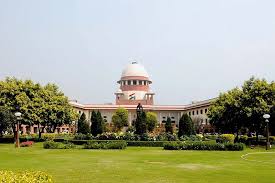
The NCERT and most SCERTs have failed to comply with the top court’s binding directions in the NALSA versus Union of India case (2014), the PIL alleges The Supreme Court on Monday issued notice to the Centre, Punjab and five other state governments on a PIL seeking inclusion of transgender-inclusive Comprehensive Sexuality Education (CSE) in school textbooks prepared by the National Council of Educational Research and Training (NCERT) and State Councils of Educational Research and Training (SCERTs). A Bench led by Chief Justice of India BR Gavai asked the Centre, NCERT and governments of Punjab, Maharashtra, Andhra Pradesh, Telangana, Tamil Nadu and Karnataka and SCERTs to file their replies in six weeks to the PIL by Kaavya Mukherjee Saha—a Class XII student – after senior advocate Gopal Sankaranarayanan highlighted the issues raised in the petition. The NCERT and most SCERTs have failed to comply with the top court’s binding directions in the NALSA versus Union of India case (2014), the PIL alleged. Despite statutory obligations under Sections 2(d) and 13 of the Transgender Persons (Protection of Rights) Act, 2019, the NCERT and most of the SCERTs neglected to integrate structured and examinable content on gender identity, gender diversity and the distinction between sex and gender into school syllabi, it alleged. The exclusion not only violated fundamental rights like right to equality but also undermines Directive Principles of State Policy, the PIL contended. The petitioner sought a direction to the authorities concerned to incorporate “scientifically accurate, age-appropriate” and transgender-inclusive CSE into examinable school syllabi across India. It also demanded binding guidelines to ensure effective implementation of gender sensitisation and transgender-inclusive sexuality education across all public and private educational institutions. Textbook reviews conducted in Maharashtra, Andhra Pradesh, Telangana, Punjab, Tamil Nadu, and Karnataka reportedly revealed systemic omissions, with Kerala being a partial exception, it submitted. The International Technical Guidance on Sexuality Education, published by UNESCO and the WHO, provides a globally accepted framework for CSE, it said. Author Satya Prakash Courtesy : The Tribune Note: This news is originally published on https:/thetribune.com/bha and is used purely for non-profit/non-commercial purposes, especially human rights.
Bihar Election 2025: What did Rahul Gandhi achieve from ‘Voter Rights Yatra’? Know all about it

Bihar Vidhan Sabha Chunav 2025: The 16-day Voter Rights Yatra of the India Alliance of opposition parties led by Congress leader Rahul Gandhi ended on Monday in Bihar. This journey can prove to be an important event in Bihar politics. Patna: The ‘Voter Rights Yatra’ of the leaders of the India Alliance (INDIA bloc) in Bihar, led by Congress MP Rahul Gandhi, took place. This 16-day journey passed through 25 districts and 110 assembly constituencies of the state. The purpose of this journey of about 1300 kilometers was to raise voice against the alleged removal of names of lakhs of voters from the voter list. Rahul Gandhi called it a “moral” fight. Opposition parties showed unity during the journey. He accused the Bharatiya Janata Party (BJP) and the Election Commission of stealing votes. Rahul Gandhi said that this is not just an issue of Bihar, but an issue of Indian democracy. Rahul Gandhi’s ‘Voter Adhikar Yatra’ started from Sasaram and ended in Patna. The aim of this yatra was to raise voice for the lakhs of voters whose names have been removed from the voter list. The names of 65.5 lakh voters of the state have not been included in the draft voter list of the Election Commission. The Yatra was presented as a moral battle The opposition presented this yatra not just as a campaign but as a “moral” battle. Rahul Gandhi said that he wants to protect the voting rights of lakhs of people whose names have been removed from the voter list. The yatra saw political drama, appeals to the constitutional system and a demonstration of opposition unity. Slogans like ‘Vote Chor, Gaddi Chhod’ were raised during this yatra. Many leaders of the India Alliance of opposition parties joined the Voter Adhikar Yatra at different times. This demonstrated opposition unity. Congress leaders Priyanka Gandhi Vadra, Mallikarjun Kharge, Revanth Reddy, Ashok Gehlot, KC Venugopal, Siddaramaiah participated in the yatra. Tejashwi Yadav from RJD remained in the yatra throughout and Lalu Prasad Yadav also joined it in the middle. Akhilesh Yadav from Samajwadi Party, MK Stalin and Kanimozhi from DMK, Hemant Soren from Jharkhand Mukti Morcha (JMM), Yusuf Pathan and Lalitesh Tripathi from Trinamool Congress, Supriya Sule and Jitendra Awhad from NCP (Sharad Pawar), Sanjay Raut from Shiv Sena (UBT), Dipankar Bhattacharya (CPI-ML), D Raja (CPI), MA Baby (CPI-M) from Left parties and Mukesh Sahni from VIP also participated in the yatra. Message of protecting the Constitution Rahul Gandhi said that the main message of his yatra is – ‘one person, one vote’. He accused the BJP and the Election Commission of removing the names of more than 65 lakh voters from the voter list. He said that the voters who were removed include Dalits, OBCs, Muslims and poor people. Rahul Gandhi said, “This is not just about Bihar, it is about the democracy of India.” He said that this yatra was to protect the Constitution. Congress has been continuously weakening in Bihar in the last four decades. But this yatra established Rahul Gandhi as the main face of the opposition. The yatra has also encouraged Congress workers. This gave the party a chance to strengthen its organization before the Bihar assembly elections. Congress tried to regain the lost support base Congress has presented this fight as a fight for rights and democracy, different from caste politics. The party is trying to make its place again in Bihar politics on these issues. Through the yatra, the opposition made sharp attacks on the Election Commission. On the last day of the Voter Rights Yatra in Patna, Rahul Gandhi marched from Gandhi Maidan to Ambedkar’s statue. He mentioned the legacy of both Gandhi and Ambedkar. He described the yatra as a “revolution for electoral justice”. Rahul Gandhi tried to portray himself as a grassroots leader During the Voter Rights Yatra, Rahul Gandhi was wearing a gamchha over a white T-shirt. He was seen talking to people in villages while riding an open jeep. The party shared these pictures a lot on social media. He was presented as a grassroots and reach-out leader. Rahul Gandhi also visited makhana fields. He saw how this superfood is grown. He said that 99 percent of ‘Bahujan’ people work hard, while only one percent of middlemen get the benefit. He promised to fight against this “injustice”. There were some controversies during this yatra. A police constable in Rahul Gandhi’s convoy was injured. BJP attacked on this issue. Allegedly derogatory remarks were made against PM Modi during a rally in Darbhanga. BJP got an opportunity to attack the opposition from this and strongly criticized it. There was also a clash between ruling and opposition party workers in Patna, which increased the tension. Hope infused among Congress workers in Bihar The yatra has infused hope among Congress workers. Rahul Gandhi has been projected as a strong challenger to PM Modi. The yatra has sent a message of opposition unity in the state. But the question is, will this momentum continue, or will it fizzle out like Congress’ previous attempts? Rahul Gandhi has made “vote theft” a political issue. He is hoping that his yatra will be remembered not just as a roadshow, but as the start of a movement that will bring results in the upcoming elections. Many controversies during the yatra Rahul Gandhi’s ‘Voter Adhikar Yatra’ was an important political event in Bihar. It was aimed at protecting the rights of voters and reinvigorating the Congress party. There were many controversies during the yatra, but it has certainly created a stir in the state’s politics. Rahul Gandhi used many symbols in the yatra. He wore a white T-shirt and gamchha. It was an attempt to look like a common man. He tried to show that he is with the poor and backward people. The gathering of opposition leaders during the yatra was important. This gave the message that all the opposition parties are united against the BJP. The yatra raised the temperature of Bihar politics Rahul
Revisiting Periyar: Dialogues on caste, socialism and Dravidian identity
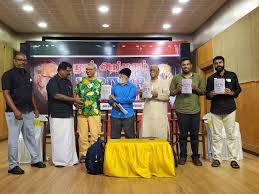
S. V. Rajadurai and Vidya Bhushan Rawat’s joint effort in bringing out a book on the most original iconoclast of South Asia, Periyar E. V. Ramasamy, titled Periyar: Caste, Nation and Socialism, published by People’s Literature Publication, Mumbai, is now available on Amazon and Flipkart. This volume presents an innovative method of documenting the pioneering contributions of a leader like Periyar, and it reflects the scholarship of Rajadurai, who has played a pivotal role in popularizing Periyar in English. What makes the book distinct is its dialogic structure, inspired by Paulo Freire’s conversational method, in which Rajadurai responds to Rawat’s carefully crafted questions across 14 chapters, covering a wide range of themes from Periyar’s conception of Dravidanadu to his engagements with Ambedkar, Buddhism, caste annihilation, Pakistan, the Constituent Assembly debates, and several lesser-known episodes of his North Indian tours and Bombay conferences organized largely by RPI and Ambedkarite groups. The book records Periyar’s nuanced positions, including his candid defense against accusations from certain Dalit activists, his contentious relations with leaders like Rajagopalachari and Kamaraj, and his interactions with communists and Dalit dissenters. A significant addition lies in three appended chapters that reveal aspects of Rajadurai’s own life and mission, unavailable elsewhere. Particularly notable is the exploration of Ambedkar’s Annihilation of Caste, a text Periyar translated into Tamil and serialized in Kudi Arasu. Rajadurai details Periyar’s solidarity with Ambedkar’s anti-Brahminical struggles, his acknowledgment of the Round Table Conferences, and his critiques of Gandhi. Beyond his reputation as an atheist and iconoclast, the book underscores Periyar’s deep engagement with Buddhism—his participation in conferences in Ceylon, his organization of meetings in Erode, and his collaborations with Ambedkar and RPI workers. Such narratives enrich our understanding of Periyar as a comprehensive humanist and reformer, later recognized by UNESCO. The chapters also revisit Periyar’s fraught relations with the Justice Party, the Congress, and the subsequent formation of the Self-Respect Movement, with Rajadurai illustrating how leaders like Anna, Karunanidhi, and Veeramani shaped and sustained the Dravidian movement under his influence. Rawat’s probing questions bring depth to these narratives, particularly in relation to controversies such as Kilvenmani and Meenakshipuram, Dalit massacres during and after Periyar’s time, and the persistence of caste violence in Tamil Nadu today. Interestingly, the chapter on land reforms is a mere page and a half, exposing the movement’s inadequacies in addressing Dalit economic deprivation. Rajadurai highlights that Tamil Nadu still has the highest proportion of landless Dalits in the South—around 73 percent—making caste clashes largely agrarian conflicts between landowners and landless Dalits. The persistence of feudal mindsets even within sections of the Dravidian leadership underscores this unresolved tension. Rajadurai’s reflections also reveal his disillusionment with the left parties, whose entrenchment in Brahminical frameworks undermined radical reform agendas. The Naxalite strategy of violent elimination of class enemies, which briefly influenced Rajadurai, also failed to transform the socio-economic realities of Tamil Nadu. Nevertheless, the Periyar project’s enduring impact lay in its challenge to the Arya-Brahmin conspiracy and its mobilization of Dravidian identity against structural oppression. While Dalit critics have faulted Periyar for not addressing their specific grievances more robustly, Rajadurai argues that Periyar consistently stood with the oppressed, though the sheer scale and internal contradictions of the movement inevitably gave rise to disputes. The socialist dimension of Periyar’s thought is another strength of this book. His writings in Kudi Arasu (Republic), Puratchi (Revolution), and Viduthalai (Freedom) reflect his belief in socialism, which he defined as samadharma, a direct refutation of Manudharma. For Periyar, socialism meant equality through proportional representation and the self-respect of all individuals. He translated the Communist Manifesto into Tamil and emphasized that caste inequality was rooted in agrarian structures. His clashes with Gandhi, his leadership in the Vaikom Satyagraha, his repeated imprisonments for temple-entry struggles, and his advocacy of women’s liberation and family planning in the 1930s demonstrate his radicalism in both social and economic spheres. Periyar’s fight for caste-based reservations, especially his leadership in pressuring Nehru’s government to amend the Constitution in 1951 to restore backward class rights after the Supreme Court struck them down, is also recounted in detail. Ambedkar, as Law Minister, supported this amendment. Rajadurai also recalls events like the Meenakshipuram conversions, countered by Hindutva forces with political money power, and shows how Periyar’s tactical support for conversions provided Dalits temporary relief from caste oppression. Ultimately, Periyar’s samadharma envisioned a Dravidian country rooted in equality and dignity for all. The book’s wider contribution is to spark fresh debate on the relevance of Periyar in contemporary India. It interrogates the limitations of the Dravidian movement, both in addressing class inequities and in broadening its scope beyond Tamil Nadu. The narrowing of the Dravidian identity, despite its historical linkages to the Indus and Harappan civilizations, has weakened its ideological reach. Rajadurai and Rawat argue that intellectual collectives must re-examine non-Brahmin movements, critically evaluate source material often mediated by Brahmin translators, and expand the study of caste and class annihilation in light of Periyar and Ambedkar’s visions. Periyar: Caste, Nation and Socialism thus provides a compelling foundation to continue the agenda of liberating India’s oppressed classes from Brahminical and capitalist exploitation. It offers an honest appraisal of Periyar’s achievements and limitations while urging new approaches to strengthen the unfinished tasks of social and economic justice. By Prof. K. S. Chalam* Courtesy : Counterview Note: This news is originally published on https:/counterview.com/bha and is used purely for non-profit/non-commercial purposes, especially human rights.
Dalit youth murdered in Hardoi: Beaten with kicks and sticks during irrigation, dispute over playing music in the temple 4 months ago
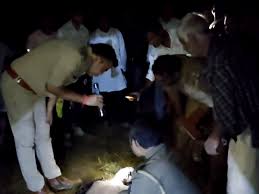
A Dalit youth was murdered in Zaidipur village of Madhoganj police station area of Hardoi. The deceased has been identified as 22-year-old Rohit. He was a Rozgar Sevak and the only brother of four sisters. On Sunday evening, Rohit was irrigating the paddy crop in his field. During this time some people attacked him. The accused beat him with kicks and sticks. Then strangled him to death. According to the villagers, Rohit had a dispute with some people three-four months ago over playing music in the temple. He was attacked even then. He went into coma in this attack. He had to be admitted in Lucknow for 15 days. A case of attempt to murder was registered in this matter. On receiving information about the incident, police station in-charge and CO Bilgram Ravi Prakash reached the spot. The deceased’s father Balakram has accused five youths of the village. The police have detained two suspects and started questioning them. The body has been sent for post-mortem. The villagers allege that the police did not take any action after the last attack. This boosted the morale of the accused and they attacked again. There is an atmosphere of tension in the village. Faizi Khan Courtesy: Hindi News
Case of Dalit students being beaten: 5 students were made to stand like a rooster for chanting Jai Bhim, complaint lodged with SP
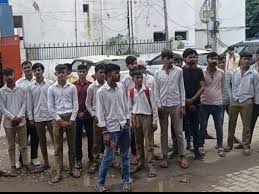
A case of beating of Scheduled Caste students has come to light in the Intermediate College located in Dhanaura Silvernagar of Binauli in Baghpat district. The students have complained to the SP office. The incident is of 26th August. Some students raised slogans of ‘Jai Shri Ram’ in the prayer meeting. During this, the Scheduled Caste students raised the slogan of ‘Jai Bhim’. After this, the PTI and two teachers took five students to a room. Two teachers held the hands of the students. The third teacher beat them with a stick. The students were also made to stand like a rooster. Threatened to be expelled from school The students allege that the principal used casteist words. They were threatened to be expelled from the school. The aggrieved students complained to the Binauli police station. The police did not take any action. After this, the students reached the SP office on Friday. Additional SP Narendra Pratap Singh said that the Binauli police station in-charge has been instructed to investigate. DIOS Raghavendra Singh said that he has not received any complaint yet. On receipt of complaint, a thorough investigation will be conducted and action will be taken as per rules. Ashish Courtesy : Hindi News
Brutality with Dalit child in Alwar, Rajasthan: 11-year-old innocent beaten, made to lick spit and humiliated
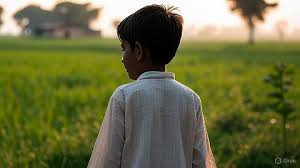
Brutality with 11-year-old Dalit child in Alwar district, accused absconded as soon as villagers reached. A case of beating and humiliation of an 11-year-old Dalit child by village youths has come to light from Khedli police station area of Alwar district of Rajasthan. According to media reports, the incident took place on the evening of 29 August. According to the information, an 11-year-old child from Peepalkheda village had gone to the fields on his bicycle. On the way, two youths came on a bike and stopped him. Both the youths were drunk and started beating the child. Then the youths spit on the ground and forcibly made the child lick it. Not only this, they also abused him and forced him to apologize by falling at their feet. The child’s mother told the police that the accused took her son to a millet field by showing him a knife. There they removed his clothes and tried to do wrong things with him. Meanwhile, some villagers reached the spot. Seeing the villagers, the accused immediately fled from there. The frightened and crying child reached home and told the whole incident to the family. After this, the family lodged a report at Khedli police station. According to police officials, the accused have been identified as Vijendra son of Atar Singh Gurjar and Vikas son of Devi Meena, resident of Pipalkheda. A case has been registered on the complaint of the victim’s family. Now the search for the accused is on and strict action will be taken soon. Rajan Chaudhary Courtesy : Hindi News