
Dalit Student Loses London Job As Pune College Refuses To Issue Reference Letter; “Disciplinary Considerations,” Says Principal
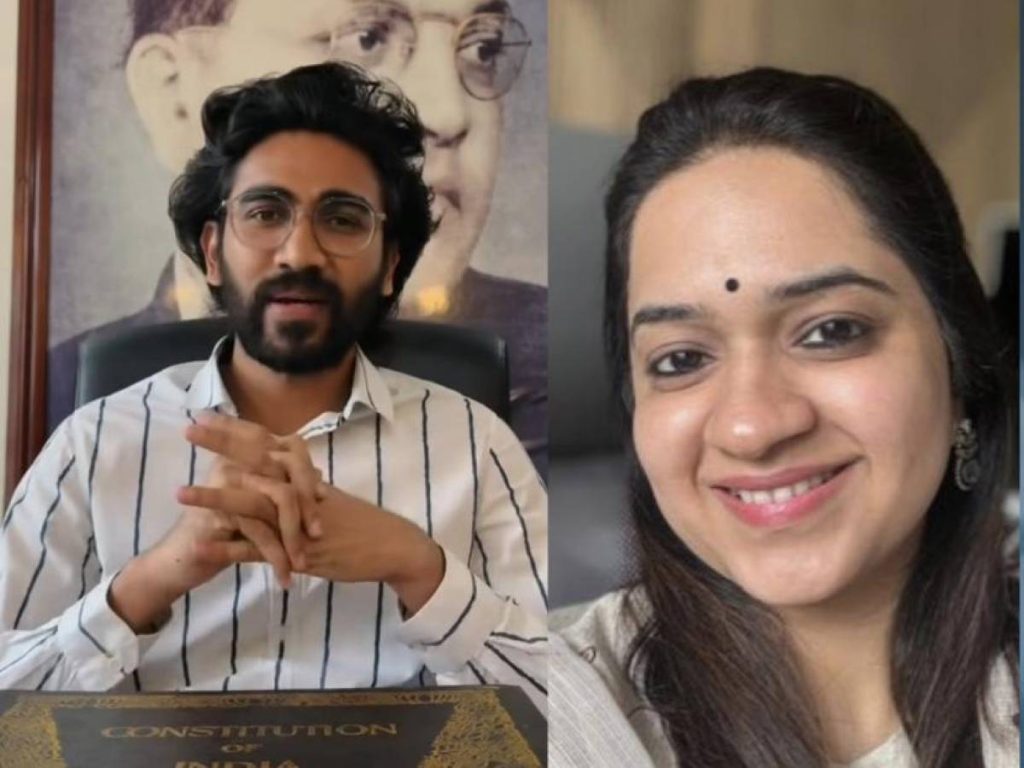
A promising young Dalit scholar from Maharashtra, Premvardhan Narottam Birhade, has reportedly lost a job offer at London’s Heathrow Airport after his former college in Pune allegedly refused to verify his academic credentials. A promising young Dalit scholar from Maharashtra, Premvardhan Narottam Birhade, has reportedly lost a job offer at London’s Heathrow Airport after his former college in Pune allegedly refused to verify his academic credentials. The denial, reportedly made by Modern College of Arts, Science and Commerce, has triggered outrage across social media and drawn allegations of caste discrimination from political leaders and activists. Meanwhile, the principal in question Dr Nivedita Gajanan Ekbote, who also serves as Maharashtra vice-president of the Bharatiya Janata Yuva Morcha, said in a statement that the decision to refuse to issue an Education Reference in this case “is purely based on institutional norms, disciplinary considerations, and professional ethics, and has no connection whatsoever with the student’s social or community background.” Prem, a native of Nandurbar district and a recent graduate of the University of Sussex, had been selected for an employment programme at Heathrow following his postgraduate studies. According to posts shared by Vanchit Bahujan Aaghadi (VBA) president Prakash Ambedkar and also the videos posted by Prem himself, the opportunity fell through after the Pune college declined to confirm his educational background despite all required documents being submitted. In his public statement, Ambedkar accused the college’s administration of caste bias, alleging that the refusal was motivated by discrimination against Scheduled Caste students. “The same college had verified his documents when he went abroad to study,” Ambedkar said, adding that the administration later questioned Birhade about his caste when he sought verification for employment. “Prem’s case symbolises the persistent shadow of caste prejudice that continues to haunt Dalit youth, even after they overcome the hardest social and economic barriers,” he remarked. Ambedkar, also the grandson of Dr BR Ambedkar, also pointed out that Modern College’s principal, Dr Nivedita Gajanan Ekbote, serves as Maharashtra vice-president of the Bharatiya Janata Yuva Morcha, suggesting that her political links might have influenced institutional behaviour. However, Dr Ekbote has firmly denied the allegations. In an official statement, she described the claims as false and defamatory, asserting that the college acted purely in accordance with institutional policy and disciplinary records. “The student completed his education prior to my tenure as principal, and I have never personally known or taught him,” she clarified. According to Ekbote, the college had already provided Birhade with three Letters of Recommendation and a Bonafide Certificate in the past, fulfilling its academic obligations. She said the refusal to issue another letter stemmed from “disciplinary considerations” related to his prior record, not his community background. Ekbote further contended that Birhade’s social media posts had unfairly maligned the college’s reputation and amounted to harassment. “The refusal to issue an Education Reference in this case is purely based on institutional norms, disciplinary considerations, and professional ethics,” her statement read. She requested the authorities legal action against what she termed “false and inflammatory content” circulating online and reaffirmed that the institution “upholds the highest standards of equality, inclusivity, and respect for all communities.” Prakash Ambedkar’s statement: “Prem Birhade, a young Dalit who recently graduated from the prestigious University of Sussex, was forced to forfeit a hard-earned employment opportunity at Heathrow Airport in London. The reason? His former college, Modern College of Arts, Science and Commerce in Pune, refused to verify his academic credentials, despite him submitting all required documentation. Why? Because Prem is a Dalit! The college’s principal, Dr. Nivedita Gajanan Ekbote, also serves as the Maharashtra Vice-President of the Bharatiya Janata Yuva Morcha, the youth wing of the BJP. Given her political and ideological alignment with the Manuwadi BJP, one can only imagine the extent to which caste prejudice must have shaped her actions against SC, ST, OBC students in her academic career. The same verification was provided when Prem had gone to London to study. When Prem requested the same verification again for his job, the college’s administration enquired of his caste! Prem’s journey from Nardubar, a poor Tribal district, to UK was not easy one. Prem’s case is a glaring example of how systemic caste discrimination continues to haunt Dalit youth, even after they break through enormous social and economic barriers. This case demands urgent attention and accountability. Prem’s story is not just his own, it is the story of countless Dalit students whose aspirations are crushed because of caste-discrimination.” Dr Nivedita Gajanan Ekbote’s statement: “Respected Sir/Madam, I, Prof. Dr. Nivedita G. Ekbote, Principal, Modern College of Arts, Science & Commerce (Autonomous), Shivajinagar, Pune – 411005, wish to bring to your kind attention a serious issue of harassment, defamation, and deliberate misuse of social media by a former student of this college, Mr. Premvardhan Narottam Birhade, who was admitted to the BBA program in June 2020 and passed in January 2024. The said individual has been continuously posting false, misleading, and defamatory statements on social media, attempting to malign the image of the college, its staff members, and the Principal. It is important to note that the student completed his education prior to my tenure as Principal, and I have never personally known or taught him. Furthermore, the student has already been issued three Letters of Recommendation (LORs) and one Bonafide Certificate by the college administration in the past, thereby fulfilling all his legitimate academic documentation requirements. Recently, he approached the college once again, demanding that an Education Reference for employment purposes be issued under my signature. Considering his unsatisfactory conduct and disciplinary record during his tenure as a student, and as per institutional policy, the college decided not to issue any further recommendation or reference letter. Following this, he began publishing false, defamatory, and inflammatory videos on various social media platforms, falsely alleging that the college, Dr. Anjali Sardesai (Vice-Principal, Academics), Prof. Lawly Das (Head, BBA Department), and the undersigned are discriminating against him on caste grounds. I wish to categorically state that no such instance
Grand Alliance saved from collapse: Rahul Gandhi, on the initiative of Dipankar Bhattacharya, became the troubleshooter, speaking to Tejashwi and convincing Mukesh Sahni.

Bihar Assembly Election 2025 – Amid the ongoing deadlock over seat sharing in Bihar, the Vikassheel Insaan Party (VIP) led by Mukesh Sahni nearly withdrew from the Grand Alliance, but was prevented by the intervention of top leadership. Patna: After several days of talks regarding seat sharing in Bihar, the Vikassheel Insaan Party (VIP) led by Mukesh Sahni nearly withdrew from the Grand Alliance on Thursday, but was prevented by the intervention of top leaders. Sahani had broken ties with the Grand Alliance. According to media reports, Mukesh Sahni was upset over not being given a fair place in the Grand Alliance and had almost broken ties. He stated that no talks have taken place between the VIP and the Rashtriya Janata Dal (RJD) in the past two days. The source said that Sahni contacted Dipankar Bhattacharya, General Secretary of the Communist Party of India (Marxist-Leninist) Liberation. The matter was resolved after Rahul Gandhi intervened. Dipankar Bhattacharya then approached Rahul Gandhi, Leader of the Opposition in the Lok Sabha, on the issue and insisted that VIP be accommodated. Following this, Rahul Gandhi discussed the matter with the RJD’s top leadership and also spoke with Mukesh Sahni. He said that following this intervention, the VIP chief wrote a letter to Rahul Gandhi, expressing his commitment to remain in the “Grand Alliance.” Nishad community constitutes approximately 2.5 percent of the state’s population. In the letter, the VIP chief stated that they were assured a certain number of seats, which was not fulfilled. He stated that numbers do not matter, as they are part of the alliance because of their ideology and want to fight against communal and divisive forces. Mukesh Sahni is a leader of the Nishad community in Bihar, which constitutes approximately 2.5 percent of the state’s population. Edited by: Ravi Prakash Sinha About the Author Ravi Prakash Sinha is a senior journalist (Principal Digital Content Producer) at Navbharat Times Online. He has 25 years of experience covering current affairs, Jharkhand-Bihar politics, and ground reporting. Ravi Sinha has been with NBT (Digital) for the past three years. Courtesy: Hindi News
VIP gets 15 seats in the Grand Alliance: Rahul Gandhi’s intervention resolves deadlock; Rajya Sabha and MLC seats also offered

The impasse over seat sharing in the Bihar Grand Alliance has finally ended. Mukesh Sahni-led VIP has been awarded 15 assembly seats in the alliance. The Rashtriya Janata Dal (RJD) has subsequently assured VIP of one Rajya Sabha seat and two Legislative Council (MLC) seats. Patna: The seat sharing issue for Mukesh Sahni’s Vikassheel Insaan Party (VIP) in the Bihar Grand Alliance has finally been resolved. VIP has been awarded 15 assembly seats in the alliance. To compensate for the reduced number of seats, the Rashtriya Janata Dal (RJD) has subsequently assured VIP of one Rajya Sabha seat and two Legislative Council (MLC) seats. VIP candidates announced Immediately after the seat sharing agreement was reached, VIP announced its candidates for two seats late last night. Party chief Mukesh Sahni himself will contest from the Gauda Bauram seat in Darbhanga district, while VIP state president Bal Govind Bind will contest from the Bhabua assembly seat. Both candidates will file their nomination papers on Friday. Today is the last day for nominations for the first phase. Deadlock and Reconciliation in Seat-Sharing Mukesh Sahni was adamant on more seats, which prevented the Grand Alliance from finalizing the seat-sharing formula. On Wednesday, Sahni called a press conference, which was later postponed several times. Finally, Congress leader Rahul Gandhi mediated the matter and spoke with Mukesh Sahni over the phone, leading to an agreement. After the seats were finalized, VIP handed over the symbol to its other candidates on Friday morning on behalf of Mukesh Sahni. The Importance of the Gauda Bauram Seat Mukesh Sahni will file his nomination from the Gauda Bauram seat, which will be held in the first phase of voting. In 2020, the VIP won this seat, but its MLA, Swarna Singh, later joined the BJP. This time, the BJP has cut Swarna Singh’s ticket and fielded Sujit Kumar Singh. Curated by: Ravi Sinha About the Author Ravi Prakash Sinha is a senior journalist (Principal Digital Content Producer) at Navbharat Times Online. He has 25 years of experience in current affairs, Jharkhand-Bihar politics, and ground reporting. Ravi Sinha has been working with NBT (Digital) for the last three years. He had the opportunity to work as the Jharkhand representative at Rajasthan Patrika from December 2005 to April 2020. He also spent 17 years as a casual assistant editor at the regional news section of Doordarshan Ranchi and All India Radio. Courtesy: Hindi News
Now Late Dalit IPS Officer’s Wife, Her MLA Brother Booked in ASI Suicide Case
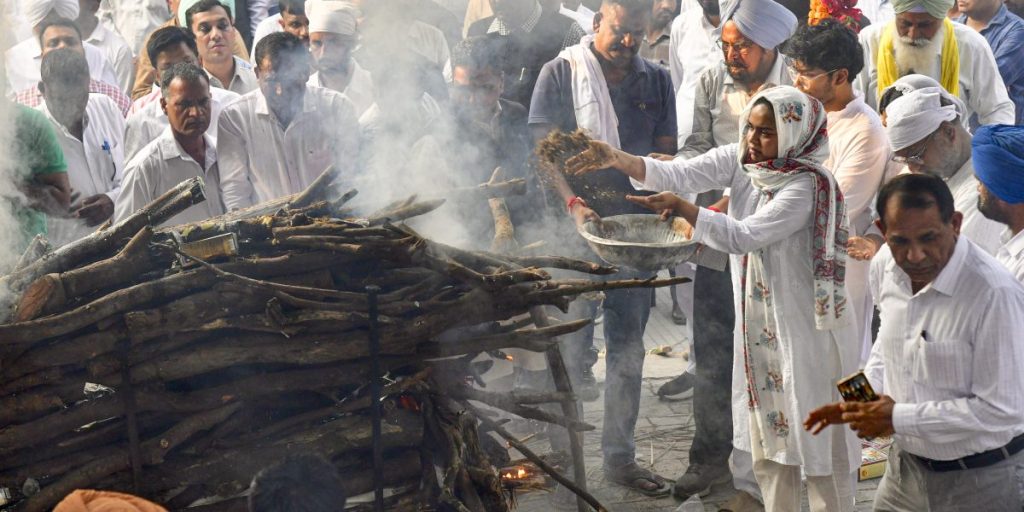
Puran Kumar was cremated on Wednesday after a week-long tug of war between his family and police authorities over denial of Puran Kumar’s post mortem due to their pending demands. Chandigarh: In a fresh twist to the controversy surrounding Dalit IPS officer Y. Puran Kumar’s death, Haryana police have registered a case against the deceased officer’s wife, IAS officer Amneet P. Kumar, her brother and Punjab MLA Amit Rattan and two others on the charges of abetment to suicide and criminal conspiracy in connection with ASI Sandeep Lathar’s suicide case. Lathar, ASI posted in Haryana’s Rohtak, was on Tuesday (October 14) found dead with a gunshot wound along with a purported suicide note that accused the late IPS officer and his family of corruption. Lathar further claimed that the late IPS officer Puran Kumar was facing mounting pressure after his corrupt practices came to light. Lathar was referring to the arrest of Puran Kumar’s gunman Sushil Kumar, who was apprehended for allegedly taking bribe from a Rohtak-based businessman. Sushil Kumar confessed to have taken money on Puran Kumar’s behalf. Further, Lathar narrated in his purported video that Puran Kumar died by suicide due to fear of an impending inquiry, not by any form of social prejudice or caste discrimination as he claimed in his suicide note. In the video, Lathar was also heard saying that “someone has to sacrifice his life to awaken the nation,” while praising state DGP Shatrujeet Singh Kapur and former Rohtak SP Narendra Bijarniya as honest officers. On the contrary, according to late Puran Kumar’s wife, the conspiracy by Kapur and Bijarniya were the trigger point behind her husband’s death by suicide and she continues to demand their arrest. Puran Kumar was cremated on Wednesday (October 15) after a week-long tug of war between his family and police authorities over denial of Puran Kumar’s post mortem due to their pending demands. The family finally relented after Haryana government sent state DGP Kapur on long leave while also transferring Rohtak SP Bijarniya days earlier on October 9. Somewhat similar developments occurred in the ASI suicide case as well. The family of the ASI withheld post mortem permission of the deceased officer unless police registered the case against all those persons named in his suicide note. The family relented and agreed for autopsy after Haryana chief minister Nayab Singh Saini met the family members of 41-year-old Lathar on Wednesday (October 15) afternoon and assured them of “appropriate action”. Leader of opposition Bhupinder Singh Hooda and other Congress leaders also visited Lathar’s house and expressed condolences. Later in the evening, Sanjay Deswal, Lathar’s cousin, told media that the state government has accepted their demands, including registration of an FIR, government job to Lathar’s wife as per her qualification and fair probe in a time-bound manner. After this, Lathar’s body has been sent to Post-Graduate Institute of Medical Sciences (PGIMS), Rohtak, and the post-mortem examination will be conducted on Thursday (October 16) morning followed by cremation. Family silent, AAP minister says conspiracy Meanwhile, there has been no statement from Amneet Kumar or her MLA brother so far. Only thing Amneet Kumar said yesterday was that she had full faith in judicial process and police inquiry and she wants impartial probe. Commenting on the death of ASI Lathar, Punjab finance minister and AAP leader Harpal Cheema said that “when his enemy has died, why did he need to die by suicide?” While addressing media outside governor’s house in Chandigarh, Cheema alleged that he may have been murdered by some agencies or individuals. The police personnel can conspire or commit any treasonous act to save their other officers, to save a DGP, to save an SP, and to save the BJP government, Cheema said. He added that there should be an independent investigation. A high-ranking agency should investigate this, and “I believe that the investigation should be supervised by a judge of the country’s Supreme Court.” If you know someone – a friend or a family member – at risk of suicide, please reach out to them. The Suicide Prevention India Foundation maintains a list of telephone numbers they can call to speak in confidence. Icall, a counselling service run by TISS, has maintained a crowdsourced list of therapists across the country. You could also take them to the nearest hospital. Vivek Gupta Courtesy : The Wire India Note: This news is originally published on https:/thewireindia.com/bha and is used purely for non-profit/non-commercial purposes, especially human rights
Major stir in Maharashtra: Brother Raj Thackeray to enter MVA on Uddhav Thackeray’s recommendation; find out what Congress said.
Raj Thackeray MVA Entry: Following the closeness between the Thackeray brothers in Maharashtra, discussions have begun regarding the MNS’s entry into the MVA. The MVA is a shortened version of the India Alliance. Congress, NCP, Sharad Pawar, and Shiv Sena (UBT) contested the elections under the MVA banner. Congress has given its first response on whether MNS will enter as a fourth partner. Rahul Gandhi on MNS Entry Will Congress welcome Raj Thackeray? Mumbai: The Maha Vikas Aghadi (MVA) in Maharashtra and the Mahagathbandhan (Mahagathbandhan) in Bihar are both part of the India Alliance. With Uddhav Thackeray and Raj Thackeray having come closer ahead of the local body elections in Maharashtra, it is believed that the two brothers will contest the elections together. In such a situation, the question arises: what will happen to the MVA if Uddhav Thackeray and his brother join? Will Raj Thackeray join the MVA? Differences have emerged between the Congress and the Uddhav Thackeray-led Shiv Sena. Now, for the first time, the Congress has clarified its stance on this issue. The Congress party has stated that the decision on MNS’s entry into the MVA will be taken by the leaders of the Bharat Aghadi. The Congress party does not want to send a wrong message by including MNS, which has been known to thrash North Indians, in the midst of the Bihar elections, as the election fever in Bihar is ongoing. Elections are scheduled to be held in two phases. The Bihar results will be announced on November 14th. Meanwhile, the Uddhav Thackeray-led UBS is pushing for Raj’s entry. Maharashtra Congress Chief Clarifies Stand Maharashtra Congress Chief Harsh Vardhan Sapkal has stated that there is no proposal or discussion regarding the inclusion of MNS in the MVA; the decision to include it in the Bharat Aghadi is up to the leaders of the Bharat Aghadi. He stated that the only discussion in the media is that there is resentment or factionalism over the inclusion of the MNS in the Maha Vikas Aghadi. Delhi Congress President Harsh Vardhan Sapkal stated that the Congress is fighting against the BJP’s authoritarian rule and to protect democracy and the Constitution. The Bharat Aghadi has been formed with the participation of several parties from across the country in this fight. If any party wishes to join the Bharat Aghadi, the decision will be taken by the constituent parties of the Bharat Aghadi. Sapkal said that the Maha Vikas Aghadi has also been formed in the state against the BJP. Congress has decided to form an alliance with the Bharat Aghadi constituent parties in the local body elections in Maharashtra, giving them the right to take decisions at the local level. Harsh Vardhan Sapkal also clarified that the decision on alliances will not be taken at the state level. Some political analysts predict that the two brothers’ coming together will benefit Mumbai. Only a united MVA can challenge the Mahayuti, which won a landslide victory in the Assembly elections. In this context, Sanjay Raut, a leader of the Uddhav Thackeray faction, has floated the possibility of Raj joining the MVA. It remains to be seen what happens next. Elections in Maharashtra are expected to be announced in the next few days. Written by: Achlendra Katiyar About the Author Achalendra Kumar Katiyar works for Navbharat Times Online. He began his career with DLA in 2008. During his 17-year career, he has worked for iNext, Aaj Samaj, and Dainik Hindustan. He closely monitors developments in Gujarat, Maharashtra, and western states. He has a keen understanding of politics and closely monitors the developments in the southern and northeastern states. Courtesy : Hindi News
Punjab: Rivals lap up issue of Haryana IGP’s death as BJP’s Dalit outreach takes a hit
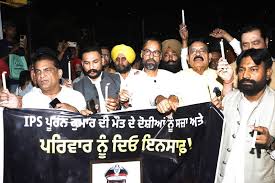
The socio-politico tremors of the death by suicide of Haryana-cadre IPS officer Y Puran Kumar are being felt in Punjab, the state having the largest proportion of Dalit population in the country. The incident is being termed as a case of “institutionalised caste-based discrimination”, which may have political resonance in Punjab that is set to go to the polls in just 15 months. Related news: Suicide by Haryana IPS officer: Punjab Congress to stage candle marches today, BJP says issue politicised Mahapanchayat gives 48-hr ultimatum to arrest Haryana DGP While Punjab’s ruling AAP has quickly lapped up the issue and that of the shoe attack on Chief Justice of India BR Gavai to target the BJP, which rules at the Centre and in Haryana, Congress Dalit leaders led by former CM Charanjit Singh Channi too have put their weight behind the officer’s family. While Punjab’s ruling AAP has quickly grasped the issue and that of the shoe attack on Chief Justice of India BR Gavai to attack the BJP, which rules at the Centre and in Haryana, Congress Dalit leaders led by former CM Charanjit Singh Channi too have put their weight behind the officer’s family. Apart from holding candle marches across the state on Sunday, AAP has got 100 FIRs registered over the shoe attack on the CJI. The party, led by CM Bhagwant Mann and Finance Minister Harpal Cheema, has also claimed of never falling for caste-based politics and blamed the BJP for atrocities against Dalits. On the other hand, political ramifications for the BJP are serious, especially at this time when it is trying to make political inroads into Punjab, mainly by winning over Dalit voters. Party leaders have reportedly not just been in touch with big deras where Dalits pay their reverence but attempts have also been made to woo them through several Centre-sponsored schemes. At this point, the more the issue of the deceased IPS officer lingers, the more it dents the political narrative of the BJP in the state. Realising this, Paramjit Singh Kainth, Punjab state vice-president of the BJP Scheduled Castes Morcha, told The Tribune that whosoever was guilty for atrocities on the late IPS officer should not only be removed from his post but also be booked by the Chandigarh Police under the Scheduled Castes and Scheduled Tribes (Prevention of Atrocities) Act. Eminent sociologist and chairperson of the Institute of Development and Communication, Pramod Kumar, said while the BJP would have to recover from the political setback of this, the Congress was trying to take advantage of resultant “political opportunity”. “While AAP is also trying to project itself as a party that stands by Dalits by registering 100 FIRs, it is also an opportunity for SAD to show its pro-Dalit face. The Dalit voters in Punjab, influenced by both tenets of Sikhism that preaches equality and the Arya Samaj that opposes caste system, have never restricted their political backing for a single party,” Kumar said. “But this incident has highlighted the institutionalised discrimination in the governance system where even the Chief Principal Secretary to the CM could not help the Dalit officer. This has created a narrative of Dalit marginalisation, which could consolidate the Dalit community. The political repercussions for each party, whether good or bad, are there,” he said. Academic Dr Ronki Ram, who has worked on Dalit consciousness and socio-political dynamics in Punjab, however, said on individual level the issue might have found resonance among members of the community, but politics had its own dynamics. “How it pans out will have to be seen, especially as Dalits vote for different political parties and not en masse,” he said. Article_Author Ruchika Khanna Couetesy : The Tribune Note: This news is originally published on https:/thetribune.com/bha and is used purely for non-profit/non-commercial purposes, especially human rights
Reading and writing kept my spirit unbroken: Anand Teltumbde
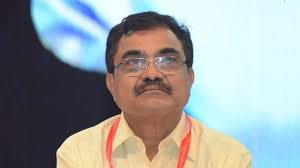
The scholar and activist on the books that shaped his politics, how reading 179 books in jail kept him intellectually alive, and more. Anand Teltumbde is a scholar, writer, and public intellectual whose work spans technology, management, and social justice. He has authored 33 books and contributed extensively to leading journals and periodicals, offering sharp theoretical insights on caste, oppression, and contemporary India. As a committed activist, he has played a significant role in India’s civil rights movement. Born into a poor, landless labourer family, Teltumbde overcame formidable odds to study at Visvesvaraya National Institute of Technology, Nagpur (Bachelor of Engineering), and the Indian Institute of Management Ahmedabad (MBA). He earned a PhD in Management on cybernetic modelling and went on to hold senior corporate positions, including Executive Director at Bharat Petroleum Corporation and Managing Director and Chief Executive Officer at Petronet LNG, before moving to academics. He served as a professor at the Indian Institute of Technology Kharagpur and later as a senior professor at the Goa Institute of Management, where he pioneered India’s first Big Data Analytics centre. In 2018, he was implicated in the Bhima Koregaon case and spent 31 months in prison, an experience that shaped his recently published prison memoir The Cell and the Soul (2025). He has also written a reflective biography of Ambedkar, Iconoclast (2024). Several of his new works are forthcoming. In this interview, Teltumbde reflects on his formative reading in a village school, the influence of Marxist and Dalit thinkers, his lifelong commitment to challenging oppression, and how reading and writing became tools of survival during his incarceration. He also recommends some essential readings for those interested in caste and social justice discourse. Edited excerpts: Tell us about your early relationship with books and reading during your childhood and adulthood? How did these experiences influence your commitment to social justice? I was born in Rajur, a small village in Yavatmal district of Maharashtra, which years later would be branded the farmers’ suicide capital. In those days, our school had only a single classroom but classes up to the fourth standard. When it expanded to the seventh, more cattle sheds were used to house children once the animals were driven out each morning. Books were a luxury; apart from a few stacked in the school office or in the homes of few literate elders, there was almost nothing to read. Yet the school had a tradition: every year, the student who topped the class received a book. That prize was mine for as long as I studied there. In the third standard, illness kept me from the exam, but the teachers awarded me the book anyway. It was a Marathi biography of Joseph Stalin. I could not grasp everything, yet it opened a crack in my world. As a child, I constantly pestered my mother with questions: why didn’t we have land, a cow, goats, or a proper house like others? My parents, landless labourers, bent their backs on others’ fields and at lime factories near the colliery. My mother would brush me off, promising that when I grew up, we would have all these things. Stalin’s story, though half-understood, suggested that inequality was not fate—it could be explained, even fought. That little book became my first key to a locked world. Around the same time, Rajur Colliery—with its large Dalit population—turned into a hub of Ambedkarite activism. We children sat in the front rows as speakers invoked Babasaheb Ambedkar, who had risen to become the most educated man in the world. He became my role model. Still, my earliest lens was not caste but exploitation. I saw it in the lime factories, where my parents laboured for a pittance while owners lived in comfort. Later, even as I came to see the annihilation of caste as the true path to liberation, I resisted the label of “Dalit rights activist”. Rights, to me, were never adjectival—they belonged to all human beings, and to all citizens. Looking back, that little biography of Stalin was more than a prize. It was the seed of my political awakening. Were there any particular books or authors during your formative years who had an impact on your intellectual journey and later writings? I cannot single out one book or author as decisive. I believe every book I read, every person I interacted with, directly or indirectly, shaped how I think and view the world. I was drawn early to revolutionary thought—first to stalwarts like Marx, Engels, Lenin, Trotsky, and Rosa Luxemburg, and later to Marxists from Gramsci and Althusser, Amin down to Žižek, as well as Indian thinkers such as D.D. Kosambi, Debi Prasad Chattopadhyay, and Suniti Kumar Ghosh. I also revered those who laid down their lives for the causes they believed in: Kartar Singh Sarabha, Bhagat Singh, Sukhdev, Rajguru, Chandrasekhar Azad, Ashfaqulla Khan—and the anti-caste crusaders: Ayyankali, Iyothee Thass, Acchutanand, and of course Ambedkar. Ambedkar, however, was my enduring inspiration, internalised through my illiterate parents. Until I moved to Nagpur after the tenth standard, I had not read a page written by or about him, save for a school lesson on his childhood. What we knew came through folklore—songs that celebrated him as a lover of books who built the largest personal library. That image of Ambedkar fostered my own passion for reading and collecting books, a passion that has stayed with me ever since. According to Bloomsbury, “Teltumbde writes of a heartless state that criminalises dissent with political imprisonment, of the relentless grind of injustice, and the profound cost of speaking truth to power.” According to Bloomsbury, “Teltumbde writes of a heartless state that criminalises dissent with political imprisonment, of the relentless grind of injustice, and the profound cost of speaking truth to power.” | Photo Credit: By Special Arrangement Can you share a turning point in your reading or writing life during your younger days? A book, event, or an experience that shaped the writer and thinker you eventually became. As a
Unchahar murder case of Dalit youth: Policeman suspended, but public anger over lack of action against Home Guard
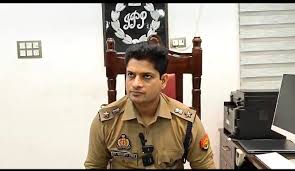
After police negligence was exposed in the case of the murder of a youth in the Unchahar area of Rae Bareli district, Superintendent of Police Dr. Yashveer Singh took action, but it was incomplete. The in-charge of the Dial 112 team, which arrived at the scene and released the accused after questioning, was suspended, but no action was taken against the Home Guard. The incident occurred when the Dial 112 team, number 1770, arrived at a dhaba. Hariom Valmiki, the accused of murder, was present there. Police interrogated him and later released him. Villagers made a video of the incident and made it viral on social media. In-charge suspended, but Home Guard ‘favored’ After the video surfaced, the Superintendent of Police conducted an investigation and suspended the in-charge of Dial 112. However, no action was taken against the Home Guard present on the team. This is what has angered the villagers. He says, “When the in-charge was found guilty, why wasn’t action taken against the Home Guard? Is he being favored by the police?” Action will be taken if the investigation finds him guilty: Commandant When the Home Guard Commandant was contacted regarding this matter, he stated that the case is being investigated. If the investigation finds the Home Guard guilty, strict action will be taken against him. Ashish Kumar Srivastava Courtesy: Hindi News
Dalit IPS officer shoots himself after writing, “There is no option now…”! IAS Sonal Goyal’s emotional post raises serious questions about the system.
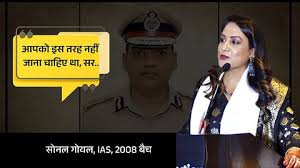
Senior Dalit IPS officer Y. Puran Kumar’s suicide note contains serious allegations of “caste oppression.” Sonal Goyal, a 2008-batch IAS officer, asks, “How many more lives will our system lose?” New Delhi: The suicide of Y. Puran Kumar, a senior Dalit IPS officer of the Haryana cadre, has shocked the administrative and police departments. Four days after the tragic incident, Sonal Goyal, a 2008-batch IAS officer, wrote a poignant and poignant post on the social media platform “X,” highlighting the pain and pressure that often remains buried within the system. Her post has sparked a serious debate on the mental health of officers, institutional work culture, and alleged caste discrimination. What is the whole matter? On October 7, senior IPS officer Y. Puran Kumar took his own life by shooting himself with his service revolver at his official residence in Sector 11, Chandigarh. A suicide note found behind him leveled serious allegations against the entire system. According to a Dainik Jagran report, Kumar wrote in his note, “There is no option now, I have been… for the last five years.” He reportedly mentioned severe caste-based harassment and mental torture by senior officers, which forced him to take this drastic step. IAS Sonal Goyal’s post awakens conscience On Saturday, October 11, 2025, at 5:30 pm, IAS officer Sonal Goyal expressed her pain and outrage over the incident, a post that quickly went viral. She began her statement with a couplet by renowned poet Jaun Elia: “No one comes to this world to stay forever, no one goes the way you went.” Goyal wrote, “You shouldn’t have gone this way, sir. Not only you, but no one should have to go this way.” Describing Kumar as a “capable, talented, and committed senior IPS officer,” she questioned that the passing away of someone who had dedicated the most important years of his life to serving the nation poses a grave question for both our society and the system. She emphasized that this is not a time for mere formal sympathy, but for genuine introspection. A sharp attack on the ‘system’ In her post, Sonal Goyal directly pointed out the flaws in the system. She asked: “What kind of environment have we created within our institutions? What kind of system is this where a crucial part of that system… is so ignored and unheard that it breaks down from within and, in defeat, is forced to take such extreme steps.” She further wrote in English, “Frankly, no one should ever be pushed to that edge—to feel unseen, unheard, or broken inside a system they once believed in.” (Simply put, no one should ever be pushed to the point where they feel ignored, unheard, or broken within the system they once believed in.) Appealing to the Human Side of Officers Goyal reminded that a person serving the country as an officer is, after all, a living human being. He prayed to God for the peace of the departed soul and strength to the family. He also appealed to the officers’ fraternity to collectively show the courage to bring about the desperately needed changes in the system, so that no other colleague has to leave the world in this manner in the future. He concluded his post with a very relevant and cautionary couplet by poet Nawaz Deobandi, which highlights the dangers of silence: “O you who watch the burning house, the thatched roof is yours; there is a strong wind behind you; your destiny is ahead. I was silent on his murder; now my turn has come. You too are silent on my murder; your turn is next.” The tragic death of Puran Kumar and the response of a senior officer like Sonal Goyal has sparked an uncomfortable but necessary dialogue. This incident demands a serious investigation into whether the environment within India’s prestigious civil services has truly become so toxic that an officer is forced to embrace suffocation and ultimately death rather than justice and respect. Rajan Chaudhary Courtesy: Hindi News
Dalit IPS officer’s death: Haryana transfers Rohtak SP, family refuses autopsy
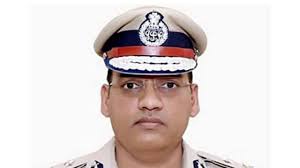
The Punjab State Scheduled Castes Commission has taken suo motu congnisance and sought a report from Chandigarh DGP Sagar Preet Hooda. CHANDIGARH: The family members of Haryana IPS officer Y Puran Kumar has accused the Chandigarh Police of not consulting them before shifting his body to the Post Graduate Institute of Medical Education and Research (PGIMER) for autospy. Amit Rattan, AAP MLA from Bathinda (Rural) and brother-in-law of the deceased officer, said, “The Chandigarh Police have shifted the body without asking us. Injustice is being done with the family.” Four days after Kumar’s death, the Haryana government on Saturday took first action in the case by transferring Rohtak SP Narendra Bijarniya and appointed Surinder Singh Bhoria in his place. Bijarniya, a 2015-batch IPS officer, was among the police officers named in the “final note” recovered from Kumar’s pocket. The Punjab State Scheduled Castes Commission has taken suo motu congnisance and sought a report from Chandigarh DGP Sagar Preet Hooda. Hooda on Saturday visited the residence of Amneet P Kumar, the IAS officer wife of the deseased, and said that the police requested the family to get the post-mortem done as early as possible. “The post-mortem will be conducted only after the family gives its consent,” Hooda said. Asked why the family is yet to give its consent for the autopsy, Hooda said they have some grievances. When questioned why the police have not added the names of the alleged suspects in the FIR, he said, “An SIT headed by an IG-rank officer has been formed. The autopsy will be conducted at the PGIMER, for which a board, comprising a magistrate, forensic experts, and doctors, has been set up.” After the registration of the FIR, Amneet on Friday had sought its amendment to “accurately reflect the names of all the accused.’’ In a letter to Chandigarh SSP Kanwardeep Kaur, Amneet also sought an amendment of the “diluted sections of the SC/ST Act”, which have been added to the FIR. In his eight-page “final note”, Kumar named eight senior IPS officers, including Haryana DGP Shatrujeet Kapur and Bijarniya, for allegedly harassing and maligning him. Harpreet Bajwa Courtesy : TNIE Note: This news is originally published on https:/thenewindianexpress.com/bha and is used purely for non-profit/non-commercial purposes, especially human rights