
Dalit youth injured at a birthday party in Greater Noida dies; justice will be served – CM Yogi assures the victim’s family
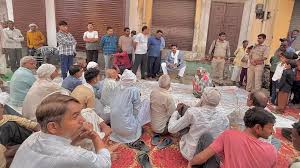
Aniket, a Dalit youth, died in an attack during a birthday celebration in Greater Noida. Police have arrested two of the seven accused, while the rest are absconding. The deceased’s family and villagers are demanding the immediate arrest of the accused. Dalit youth injured at a birthday party in Greater Noida dies Manish Singh, Greater Noida: Aniket, a Dalit youth injured in an attack during a birthday celebration in Greater Noida, died during treatment on Friday morning. The incident occurred eight days ago and occurred in the Rabupura police station area. Aniket and several members of his family were injured in the incident. Approximately 12 people living in his neighborhood attacked Aniket and his family due to an old rivalry. Following the incident, police registered a case against seven people based on the victim’s complaint. Police have arrested two of the accused and sent them to jail, while the remaining accused remain at large. Upon receiving the news of Aniket’s death, the family and villagers became enraged. They blocked a road a short distance from the police station in the town and created a ruckus, demanding the immediate arrest of the accused. Upon receiving the news of the death, police and administrative officials immediately arrived at the scene. They assured them that the accused would be arrested quickly, after which the crowd was calmed. The incident occurred on the night of October 16th, when Aniket had gone to attend his uncle Sumit’s birthday celebration. The family alleges that several people, including Yuvraj, Jeetu, Rachit, Bharat, Ankit, Pawan, and Sunil, attacked them. They also allege that the neighbors are bullying and exerting pressure in a controversial manner. Police station in-charge Sujit Upadhyay said that on Thursday evening, after celebrating a birthday party, some people attacked the Scheduled Caste youths walking on the street with sticks and iron rods. Sumit and Aniket, residents of the Ambedkar Mohalla, were seriously injured in the attack. Based on the family’s complaint, the police registered a case against twelve people, including seven named ones. All the accused were absconding since the incident. On Sunday, the police arrested the named accused, Jitendra alias Jitu, and Yuvraj, residents of Rabupura. Efforts are underway to arrest the remaining accused, and the police claim that all will be arrested soon. Jewar MLA Dhirendra Singh expressed deep sorrow over the Rabupura Aniket murder case and stated that the culprits will not be spared under any circumstances. He stated that the state government is fully sensitive to law and order and will take the strictest possible action against those involved. Early in the morning, Jewar MLA Dhirendra Singh visited the deceased Aniket’s home and consoled the victim’s family. The Jewar MLA visited the victim’s family today and consoled them. During this time, Dhirendra Singh arranged a phone conversation with Chief Minister Yogi Adityanath, during which the Chief Minister assured the family of justice. Jewar MLA Dhirendra Singh further stated that he and the state government stand with the victim’s family. There will be no laxity in pursuing justice, and strict action will be taken against the culprits. Contributed by: Manish Singh • Edited by: Alok Bhadauria About the Author Alok Singh Bhadauria is an Assistant News Editor at Navbharat Times. He has been with the Times of India Group since 2008. After working at Navbharat Times, Delhi (newspaper), he has been working at NBT Online for the past seven years. He has also worked for prestigious organizations such as Doordarshan and Gaon Connection. Courtesy: Hindi News
Dalit fault lines are resurfacing for BJP. Case studies: IPS suicide to shoe thrown at CJI Gavai
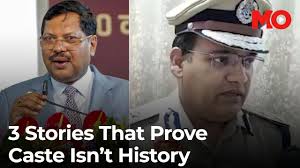
These incidents and the way they were handled have once again put spotlight on what is being seen as BJP’s deficiency in addressing Dalit concerns & integrating them in Hindutva family. New Delhi: Over the past month, instances of alleged atrocities against Dalits—from abuse, to targeting, to discrimination leading to suicide—have been reported in BJP-ruled states including Haryana, Uttar Pradesh and Madhya Pradesh. These incidents, and the way they have been handled, have once again put the spotlight on what is being seen as the ruling party’s deficiency in addressing the concerns of backward communities in India and the challenges of integrating Dalits into the broader Hindutva family, especially at a time when Bihar elections are around the corner. A shoe thrown at Chief Justice of India B.R. Gavai, a Dalit, in the national capital; a Haryana IPS officer’s alleged suicide due to caste discrimination; a Dalit man accused of theft lynched by villagers in UP; a Dalit youth urinated upon in MP. Four incidents in four BJP-ruled regions, where the government’s handling has been perceived as inadequate and lethargic. In the CJI’s case, the shoe-throwing was defended by some Hindutva supporters; in Haryana, the government was criticised for not immediately taking action against the DGP named in the suicide note; in UP, the police allegedly watched as a Dalit ‘thief’ was lynched. In MP, police are yet to make arrests after a Dalit man was urinated upon for opposing illegal mining, and he was allegedly pressured against escalating the matter. Just a few days before the shoe-throwing incident, the RSS—BJP’s ideological fountainhead—had invited CJI Gavai’s mother to their Vijayadashami celebration in Nagpur. While she declined, former President Ram Nath Kovind attended the event to bolster the RSS’s efforts to incorporate Dalits into the larger Hindutva identity. In his annual address, the RSS chief warned against attempts to disrupt the country’s diversity and called for the embracing of societal differences. But within a week of Bhagwat’s speech, the fault line in Hindutva unity with regard to Dalits became evident when advocate Rakesh Kishore openly defended his act of flinging a shoe at the Chief Justice of India, and many who identified as BJP supporters justified his actions on social media, blaming the CJI for allegedly insulting Sanatana Dharma in his remarks on 16 September. This came even as Prime Minister Narendra Modi condemned the incident. Among those who came out in support of Kishore was YouTuber Ajeet Bharti, who was accused by some social media users of inciting people against the CJI. The Noida Police took him in for questioning regarding certain remarks he made about the shoe-throwing incident, and then released him. This was perceived by many as the state government going soft on those openly abusing the chief justice. Contacted by ThePrint for comment, Lucknow University professor Shashikant Pandey said, “The memories of the Hathras incident remain vivid, where a Dalit girl was gang-raped and the authorities cremated her against her family’s wishes. This indicates that despite seven decades of independence and the Constitution established by Ambedkar, societal and authoritative perspectives towards Dalits have not evolved.” Referring to the incident of the Dalit youth lynched in UP, Pandey said: “The Hariom (Balmiki) case reveals new evidence that the RSS’s broader agenda of Hindutva unification is still incomplete, as upper caste groups continue to maintain their dominance in society and compete with Dalits.” According to the latest National Crime Records Bureau (NCRB) data, 57,789 cases of crimes against Scheduled Castes (SCs) were registered in 2023, with Uttar Pradesh accounting for the highest share of cases at 15,130. Rajasthan came next with 8,449 cases, followed by Madhya Pradesh (8,232) and Bihar (7,064). ‘Hum baba ke log hain’ On 7 October, a day after the attack on the CJI, in BJP-ruled Haryana, senior IPS officer Y. Puran Kumar died by apparent suicide, detailing alleged instances of discrimination and humiliation over his caste in an eight-page note. A week after the IPS officer’s death, amid mounting pressure from Dalit organisations and opposition parties, and the officer’s wife’s demands for the arrest of the DGP accused in the suicide note, DGP Shatrujeet Singh Kapur was sent on leave. This was seen as a reaction without real will for justice. A BJP leader from Haryana told ThePrint: “(Haryana Chief Minister Nayab Singh) Saini was awaiting approval from central leaders and did not anticipate larger implications; that is why he was making decisions slowly. However, when the Centre instructed him to act swiftly due to the potential disruption of the Bihar elections, the DGP, who is close to a central minister, was sent on leave.” This leader further said: “The BJP had lost two SC reserved seats, Ambala and Sirsa, in the Lok Sabha, and it was essential (that it) be seen addressing the case of Dalit officers, as we lost the narrative in the first few days.” In Uttar Pradesh, a 38-year-old Dalit man called Hariom Balmiki was allegedly lynched on 2 October by villagers for being a “drone chor”. This, as the police allegedly watched. After meeting the victim’s family, UP Congress chief Ajai Rai said: ‘Hariom Balmiki was on his way to meet his wife when he was beaten in front of the police, who could have intervened. When he mentioned Rahul Gandhi’s name, the attackers responded, ‘hum bhi baba ke log hain’, indicating that such incidents are occurring repeatedly under Baba’s jungle raj.” Subsequently, the UP DGP suspended three police personnel for negligence. Following the incident, Chief Minister Yogi Adityanath sent Rakesh Sachan and Asim Arun, two of his ministers, to meet the bereaved family and assure them of strict action against the perpetrators. Following the alleged suicide of the Dalit IPS officer in Haryana, Congress President Mallikarjun Kharge said: “Between 2013 and 2023, there has been a 46 percent increase in crimes against Dalits, while crimes against Adivasis have surged 91 percent.” “Caste discrimination faced by an IPS officer in Haryana, the harassment of Hariom Valmiki, the assault on
Rahul Gandhi missing from the Grand Alliance’s press conference poster, sparking discussions in political circles about showing Congress its place.

Bihar Elections: Pappu Yadav, speaking to the media, said that Rahul Gandhi’s picture should have been on the Grand Alliance’s poster. Meanwhile, only Tejashwi Yadav’s picture was visible at the Grand Alliance’s press conference. A controversy has erupted within the Grand Alliance over Lalu Prasad Yadav finally showing the Congress its place. Patna: The Bharatiya Janata Party (BJP) took a jab at the Congress in Bihar just hours before the Grand Alliance’s joint press conference in Patna on Thursday. The BJP attacked the Congress citing the absence of Congress leader Rahul Gandhi’s picture from the press conference posters. Sources said the press conference was scheduled to formally announce Rashtriya Janata Dal (RJD) leader Tejashwi Yadav as the Grand Alliance’s chief ministerial candidate for the Bihar elections. However, before this crucial announcement, the BJP highlighted the RJD’s dominance within the Grand Alliance. BJP’s Sarcasm BJP leader Gaurav Bhatia compared Tejashwi Yadav to Mughal emperor Aurangzeb on this issue. Bhatia posted on X, “After Aurangzeb, now Tejaszeb! No other king was so insecure. The pictures of the national president, fodder scamster Lalu Prasad Yadav, and Rahul Gandhi are missing. The legacy of Jungle Raj and the status of the Congress are both missing from the poster.” He tweeted and tagged Tejashwi Yadav and other RJD and Congress leaders. Questions to the Congress Party BJP spokesperson Shahzad Poonawala posted on X, “Joint Press Conference? But only one picture. ‘Stealing the honor’ of Rahul Gandhi and the Congress. Has Congress and Rahul been shown their place?” It should be noted that Rahul Gandhi’s photo is missing from the poster, raising questions about what kind of alliance this is. The BJP has raised questions about the absence of a leader’s photo from the joint press conference. Meanwhile, Pappu Yadav has also taken a dig at the poster. Pappu Yadav’s Statement Independent MP Pappu Yadav’s statement on this issue added fuel to the fire when he said that votes would be cast on Gandhi’s photo. He said that voting would only be done on Rahul Gandhi’s photo, not anyone else’s. There should have been photos of all three alliance leaders. This is not right and will not send the right message. We can win Bihar only on the face of Rahul Gandhi. We have no other way to win here. Edited by: Ashutosh Kumar Pandey About the Author Ashutosh Kumar Pandey works for Navbharat Times Online. He has been active in digital, print, and electronic journalism for over 22 years. He specializes in digging into the past pages of politics and uncovering unheard stories. He presents political anecdotes in a witty manner. Courtesy: Hindi News
Congress has once again surrendered to the RJD. Why does the “Ekla Chalo” movement derail in Bihar? Understand this.

Bihar Election News: Ahead of the 2025 Bihar Assembly elections, the Congress party, which had been adamant about its stand, has now suddenly backtracked. It has accepted Tejashwi Yadav’s leadership in Bihar. The question is, if the Congress is going to surrender, then why is it glaring? Patna: On October 23rd, something happened at Hotel Maurya in Patna that was not expected, at least this time. It was becoming clear that the Congress was ready to throw off the RJD’s crutches in the Bihar Assembly elections. But two days before October 23rd, the sudden entry of former Rajasthan CM Ashok Gehlot changed the entire scenario. The changed scene on October 23rd On this day, the media received an invitation to a press conference. This invitation specifically came from the Rashtriya Janata Dal (RJD) and the Congress. The time was set for 11:30 am. But the posters displayed outside and inside made one thing clear: Congress has once again surrendered to the RJD. We’re not saying this, but it’s being widely discussed in political circles. The buzz is so intense that even the average person in Patna is seen discussing the same thing at a tea stall or a Kachori stall. Congress has done it again. This time, it seemed, it would show its strength and demonstrate its power by separating from the RJD. But in the end, it failed again. Congress’s Surrender to the RJD These posters made one thing clear: Tejashwi Yadav would be the Grand Alliance’s CM candidate in Bihar. The same Tejashwi Yadav whose CM candidacy had been silent on the question of Rahul Gandhi during the Voter Rights Yatra. Following this, Bihar Congress in-charge Krishna Allavaru also demonstrated the backbone of the Bihar Congress and refused to bow down to the RJD. But how did this sudden change of stance occur? Many stories are being fabricated about this. The first story: Lalu’s call! One story is that Congress had tried to woo the Left and VIP to make Tejashwi Yadav, or RJD, the younger brother of the alliance. But the shrewd Lalu Prasad Yadav realized that the less experienced Tejashwi Yadav had fallen into this trap. Therefore, Lalu Prasad Yadav must have spoken directly to Sonia Gandhi in Delhi and told her that if Congress had its way, he would field RJD candidates against all of her party’s candidates. This is why Ashok Gehlot was given the responsibility to resolve the matter. But in Patna, Lalu Yadav must have bluntly told Ashok Gehlot the same thing. Second Story – Congress Got Scared! Another story is that seeing RJD’s stubborn stance, Congress must have feared that if RJD’s votes were not transferred to Congress candidates out of anger, it would be a disaster. Therefore, it was best to handle the situation in a timely manner. That is why Ashok Gehlot himself had to come forward and admit in a press conference to all the parties in the Grand Alliance that the election would be fought on Tejashwi’s face. What Political Experts Say Patna’s renowned political expert and educationist, Dr. Sanjay Kumar, says, “Since 1990, Congress has never been able to muster the courage to strengthen its base. It has always proved itself dwarfed by the RJD. Naturally, its own workers become disillusioned and apathetic, and then they turn to other parties. The RJD understands this weakness of the Congress very well and always exploits it through pressure politics.” The RJD has been exploiting the Congress’s weaknesses from the very beginning. The real question: What is the matter? This was when the late Sitaram Kesri was the national president of the Congress. In the 1990s, Congress supported Lalu Prasad Yadav and helped him remain in power. After this, when Lalu Prasad Yadav split from the Janata Dal and formed the Rashtriya Janata Dal in 1997, Congress remained with him for power. It is said that in this way, Congress gradually alienated its base vote bank, which to this day has remained with it due to Lalu Yadav and has gone to the BJP. Authored by: Rishikesh Narayan Singh About the Author Rishikesh Narayan Singh is in charge of Bihar-Jharkhand for Navbharat Times Digital. His 20-year journey in journalism spanned from Janmat TV, IBN7, ETV Bihar-Jharkhand, News18 Bihar-Jharkhand, to Times Internet. After starting in the national capital, Delhi, he now works in Bihar. Courtesy: Hindi News
Breaking Barriers: Dr. Priya Makes History as Kerala’s First Transgender Doctor, Symbolising Courage and Inclusion
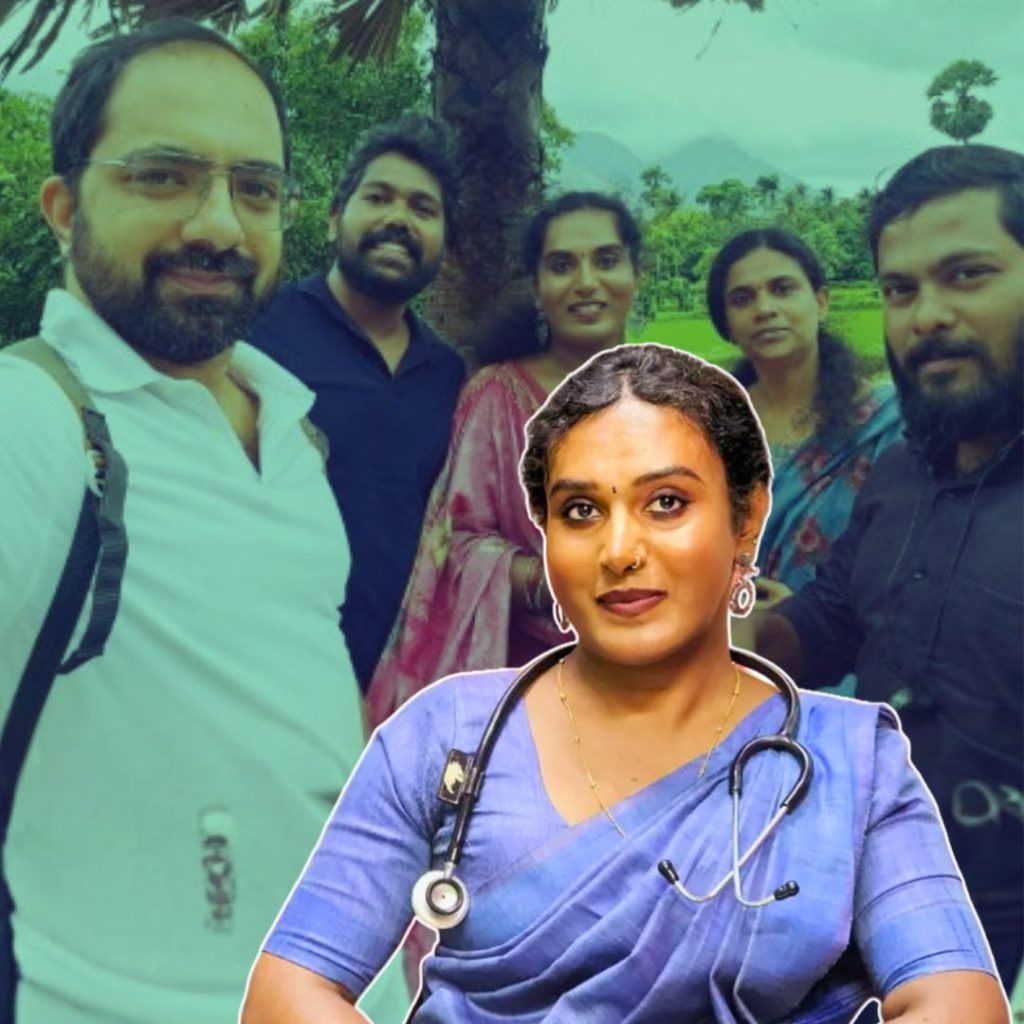
Dr. Priya’s groundbreaking journey from discrimination to becoming Kerala’s first transgender doctor embodies hope, resilience, and social change. Dr. Priya from Kerala has become the state’s first transgender doctor, a groundbreaking achievement that highlights the intersection of medicine, gender identity, and social acceptance. With a medical degree and clinical experience, she has broken barriers despite facing early childhood discrimination and ongoing societal stigma. Kerala’s Health Minister Veena George and various rights activists have welcomed her success, calling it a symbol of hope for marginalized youth seeking dignity and opportunity. Recent updates also mention challenges linked to a brief suspension by the French Medical Council earlier this year, though she continues her medical career in Kerala with community support. Overcoming Personal and Professional Barriers Born as Jinu Sasidharan, Dr. Priya struggled with her gender identity from an early age. As a child, she realised she identified as female but faced fear and embarrassment in revealing her truth. She decided to pursue education as a coping mechanism, completing a BAMS degree and then an MD from Mangaluru. Her medical journey was accompanied by hormone treatment and gender-affirming surgery, which she underwent after joining Sitaram Hospital in Thrissur. In her own words, “Life is precious. I don’t need a mask to hide my identity.” Her transitioning process included not only surgery but ongoing treatments such as voice therapy, exemplifying her commitment to living authentically while upholding her professional role. Colleagues commend her diligence and empathetic approach, depicting her as a compassionate physician dedicated to patient care irrespective of societal labels. “She is a trailblazer who demonstrates how identity and ability coexist harmoniously,” a senior official from the Kerala Medical Council noted. Societal Context and Support Systems Kerala stands out in India for progressive transgender policies. The state offers free gender affirmation surgeries and scholarships for transgender students. Yet, discrimination in education and workplaces remains a pervasive challenge. Dr. Priya’s achievement spotlights how formal policy reforms must be complemented by societal attitude shifts. Community activists argue that despite legislative support, inclusion requires enhanced awareness and anti-discrimination measures in institutional environments. Dr. Priya’s family has been a pillar of strength, providing emotional and financial support through her struggles. Their role underscores the importance of familial acceptance in transgender journeys. Public officials, including Health Minister Veena George, touted her success as a “milestone for Kerala and India,” encouraging young transgender persons to dream beyond historical limitations. However, it is worth noting that earlier in 2025, Dr. Priya faced a one-month suspension by the French Medical Council while working there, following allegations related to her practice. While the details remain confidential, the incident reflects additional layers of challenge transgender professionals may face on international platforms, compounding pressures beyond gender identity alone. The Logical Indian’s Perspective Dr. Priya’s story epitomises resilience and the pursuit of equality through courage and professionalism. At The Logical Indian, we believe that true inclusivity transcends legal rights and requires changing hearts and minds within communities and workplaces alike. Her journey signals how society enriches itself by embracing diversity rather than fearing difference. Her success should inspire not just admiration but concrete action: implementing inclusive policies, fostering safe environments in education and healthcare, and celebrating achievements of marginalized communities without prejudice. The Logical Indian urges readers to reflect on how everyday interactions in schools, workplaces, and social spaces can become platforms for empathy, dialogue, and respect. Syed Muskan Shafiq Courtesy : The Logical Indian Note: This news is originally published on https:/thelogicalindian.com/bha and is used purely for non-profit/non-commercial purposes, especially human rights
Beyond the binary: Supreme Court reclaims the promise of transgender equality

The Supreme Court’s judgement in Jane Kaushik v Union of India, delivered on 17 October 2025, reopens a conversation about what equality truly demands for transgender persons. The judgement, pronounced by a Bench of Justices J.B. Pardiwala and R. Mahadevan, represents both a rebuke of bureaucratic neglect and a reaffirmation of constitutional compassion. From recognition to realisation The Court’s recognition of the right to self-identify one’s gender in NALSA v Union of India (2014), was celebrated as an epochal moment. The subsequent enactment of the Transgender Persons (Protection of Rights) Act, 2019 and the 2020 Rules promised a legal scaffold for this recognition. Yet, as Jane Kaushik demonstrates, the distance between promise and practice remains vast. The Court found that state institutions have displayed a “grossly apathetic attitude” toward implementing the Act and its Rules. The Court attributed this to deep-rooted societal stigma and the lack of bureaucratic will. The petitioner, a transwoman teacher, had been dismissed by private schools in Uttar Pradesh and Gujarat after she revealed her gender identity. The Court refused to treat her experience as an isolated instance. Instead, it placed the case within the broader constitutional arc that connects substantive equality under Article 14 with dignity under Article 21 — insisting that the two are inseparable for transgender citizens. The Court’s mandate The Court set up an eight-member Advisory Committee headed by former Delhi High Court judge Asha Menon. The committee, the Court held, would consult stakeholders and formulate a practical policy draft or report for the Union’s consideration, to give effect to the provisions of the 2019 Act. In particular, the Committee is tasked with formulating a viable and comprehensive equal opportunity policy for the transgender community in the arenas of employment and education. The Committee has been asked to suggest suitable measures to accommodate transgender persons reasonably in public spaces and workplaces, without them being forced to keep their identity a secret or reveal their identity, violating their right to privacy. The Court then directed the Union government to frame its own equal opportunity policy within three months of receiving the report from the Advisory Committee. Critique of the 2019 Act The Court reasoned that reasonable accommodation was implicit in the 2019 Act and was a positive obligation on the state. However, the 2019 Act only spells out rights for transgender persons, and falls short of creating any mechanism for them to realise the benefit of these rights—thereby aggravating their struggle. This is so because the 2019 Act, the Bench observed, does not spell reasonable accommodation the way it is done in the Rights of Persons with Disabilities Act, 2016. However, the decisions of the Supreme Court in NALSA and Shanavi Ponnuswamy v Ministry of Civil Aviation (2022) have employed the concept of reasonable accommodation in the context of discrimination faced by transgender persons in employment. The Bench observed that the 2019 Act represents a significant step towards giving horizontal application to constitutional rights, as it imposes enforceable duties on both the State and private establishments to prevent discrimination against transgender persons. The Court noted with dismay that the Act’s limited enforcement mechanisms weakened its transformative potential. The Court, therefore, reminded non-State actors to guarantee the non-discrimination against transgender persons who continue to be victims of prejudice, stigma and social stratification. The Bench criticised the 2019 Act for diluting the sanctity of the right to self-determination as envisioned in NALSA. No need for permission from employer for SRS Equally significant is the Court’s clarification that no transgender or gender diverse person is bound to take permission from their employer to undergo gender-affirming medical procedures such as Sexual Reassignment Surgery (SRS), unless the nature of their work is such that it is based on one’s gender identity. Employers, it said, may only require a reasonable notice to update records or workplace documentation. Rationale for compensation The Court noted that the petitioner was entitled to be awarded compensation as she had suffered due to the violation of her fundamental rights. Otherwise, it would render the fundamental right a hollow promise, the Bench held. The Bench reasoned that it is not just state action, that is amenable to review, but also omissions, especially those that result in the state failing to fulfil its obligation to protect fundamental rights. “If not for such inaction and apathy, the petitioner would have been in a significantly better position to exercise her rights, especially those related to employment”, the Bench held. The Bench directed the two schools, the Union government and the state of Uttar Pradesh and Gujarat to pay ₹50,000 each as compensation. The Bench reasoned that the Union and the state governments were liable due to their failure to provide relevant mechanisms which prevented her from seeking appropriate redressal. Excoriation of the Union and the States The judgement includes a searing critique of the Union’s inaction. The Bench observed that the Union feigned ignorance and chose not to act, despite clear directions of the Court, in its order dated 8 September 2022, to develop suitable measures and place a policy on record. The judgement cited the answer of Sushree Pratima Bhoumik, the then Union Minister of State, for Social Justice and Empowerment, who in the Rajya Sabha stated that there was no need for any policy as the 2019 Act provided appropriate remedies. The Court described the Union’s intentions as “limpid”, stating : “Such a stance is in blatant disregard to the mandate of Chapter IV of the 2019 Act which obligates the appropriate Government to take steps in order to secure the full and effective participation of transgender persons and their inclusion in society”. The Bench found the persisting inaction as deeply disturbing. The Bench noted with dismay that States other than West Bengal, Tamil Nadu and Delhi, have not brought forth any rules along the lines of the 2020 Rules to implement the 2019 Act. It found that Odisha and Kerala were the only States that undertook comprehensive policy measures. “The other States have situated
Uproar over elder from SC community forced to lick ground as Opposition alleges display of casteism
60-year-old man from the Scheduled Caste community was forced to lick the ground near Sheetla Maataa Mandir in Kakori area on the outskirts of the State capital on Deepavali after accidentally urinating near the temple; Congress and AAP call for justice for victim After uproar over an elderly man from the Scheduled Caste community allegedly forced to lick the ground after accidentally urinating near a temple in Lucknow, Opposition parties on Wednesday (October 22, 2025) described the incident as a “naked display” of the anti-SC mindset of casteism and feudalism. The parties have demanded protection, support, respectable compensation, and medical facilities for the victim. “Forcing a Dalit elder to lick urine is not just a crime, but a naked display of the age-old anti-Dalit mentality of casteism and feudalism. We have come to know, the person accused in the case belongs to the Rashtriya Swayamsevak Sangh (RSS), this is the pattern in Uttar Pradesh, where Other Backward Classes (OBCs) and Dalits are being humiliated in every possible way. In Uttar Pradesh, from vandalised statues of Ambedkar to casteist slurs against OBCs, Dalits, a full display of anti-constitutional Manusmriti-centric mindset is at display. This is not only a disgrace to humanity but also an attack on the very spirit of the Constitution,” said Anil Yadav, a senior Uttar Pradesh Congress leader. Mr. Yadav demanded a judicial enquiry into continuous incidents of atrocities on people and identities belonging to Scheduled Caste communities across U.P. In the Lucknow incident, a 60-year-old man from the Scheduled Caste community was allegedly forced to lick the ground near Sheetla Maataa Mandir in Kakori area on the outskirts of the State capital on Deepavali. While the accused has been arrested, the senior citizen’s grandson claimed his grandfather has breathing difficulties, and he had accidentally urinated while coughing. In the complaint, the victim alleged that the accused started hurling casteist words against the elderly man. Lucknow Police registered a case under Bharatiya Nyaya Sanhita Sections 115(2) (voluntarily causing hurt), 351(3) (criminal intimidation) and 352 (intentional insult with intent to provoke breach of peace) and under provisions of the Scheduled Caste and Scheduled Tribe (Prevention of Atrocities) Act. According to police, the accused has claimed that the man from the Scheduled Caste community was only forced to touch the ground. “My grandfather did not tell anyone about the incident in the night. After he narrated the incident, we lodged a police complaint,” said the grandson of the victim to local reporters. Aam Aadmi Party (AAP) Rajya Sabha member Sanjay Singh termed the incident a blot on our society. “Humanity is above caste and creed. The inhuman treatment meted out to a Dalit elder in Lucknow, the disgusting thought of making him lick urine and asking him to “purify” the temple is a blot on our society. Today, a delegation of Aam Aadmi Party Uttar Pradesh met the victim’s family. I myself spoke to the victim, listened to his pain and assured him of all possible support in his fight for justice,” Mr. Singh posted on X. Mayank Kumar Courtesy : The Hindu Note: This news is originally published on https:/thehindu.com/bha and is used purely for non-profit/non-commercial purposes, especially human rights
In Uttar Pradesh, an entire family was beaten up after they spoke out against the molestation of a Dalit girl: Police said the dispute was over firecrackers, misleading news on social media!
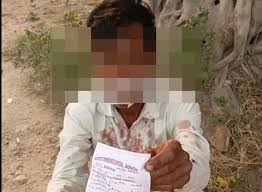
Regarding the dispute in village Bharsen, under the jurisdiction of Kotwali Auraiya police station, the city area officer stated that the matter stemmed from a dispute over children lighting firecrackers. An FIR has been filed against both sides, and two people from each side have been arrested and further action has been taken. Auraiya – A brutal incident involving a Dalit family has unfolded in a village in Auraiya district, Uttar Pradesh, which paints an ugly picture of society. The entire family was “punished” for protesting against the molestation of a young woman. Unruly men entered their home, brutally beat them, and, boasting of their government and caste, threatened to kill them. The victim’s family alleges that the accused openly declared, “This is our government, the Chief Minister is ours.” Following the incident, the police are reluctant to register an FIR, forcing the victim’s family to appeal to higher authorities in hopes of justice. The molestation of a Dalit girl in the district’s village of Bharsen and the subsequent family dispute have escalated. The victim’s family alleges that members of the opposing party not only sexually assaulted the girl but also threatened to kill her family members by beating them with a mob. The most serious allegation is that the accused, claiming power and caste dominance, are openly threatening to shoot them. After a copy of the girl’s written complaint and photos of the victim’s families went viral on social media, the Auraiya police denied the case and attributed the dispute to the firecrackers lit by children on Diwali night, leading to a physical altercation and injuries. According to the victim, her neighbor, Kshitij alias Heeru alias Veeresh, casts lewd glances at her and makes obscene gestures. Out of fear, poverty, and caste pressure, the family did not oppose the attack. On October 20th, at around 7:00 pm, when the victim went to the fields to relieve herself, Kshitij suddenly grabbed her and molested her. She ran home crying and informed her mother of the incident. The victim’s father then complained to the accused’s family. However, the opposing side, in turn, taunted him for being of the “Chamar” caste, accusing him of making false accusations, and said, “It’s our government, the Chief Minister is ours, what is your status?” Then, at around 10:30 pm, a group of nine men arrived at the victim’s home armed with pistols and sticks. The attackers broke down the door and shouted, “Teach these Chamars a lesson today, kill them.” They beat the victim’s brothers, Deepak and Sushil, and another man, creating an atmosphere of terror. In her written complaint, the victim stated that the accused declared that if they wanted to live in the village, they should keep their heads bowed, or they would be shot in public. They threatened, “The Bahujan Samaj Party will no longer rule the state; only our Yogi will rule, and Thakurism will prevail.” Several people in the vicinity witnessed the incident. According to the victim, a complaint was lodged at the police station, but the station in-charge only conducted a medical examination and refused to register an FIR. Allegations are that the police are taking the matter lightly and are bowing to the influence of the accused. The victim has now appealed to higher authorities for justice. Journalist Gaurav Pal shared the victim’s written complaint on x, along with photographs of the injured family members, writing, “Caste and casteism have reached such a level in Uttar Pradesh that when people of the Bharsen Kshatriya caste assault Dalits in Auraiya, no FIR is filed. Why are the police shying away from taking action against people of the Chief Minister’s caste? The family alleges that their case was not registered and they were chased away from the police station.” Police said the news on social media was misleading. Regarding the dispute in the village of Bharsen, under the jurisdiction of the Auraiya police station, the Circle Officer stated that the incident stemmed from a dispute that began on Diwali day over children lighting firecrackers. Both sides exchanged abusive language and pelted stones, resulting in injuries. Medical examinations were conducted and an FIR was filed against both parties. Further action was taken by arresting two people from each side. The Circle Officer denied the news circulating on social media, calling it misleading. Geetha Sunil Pillai Courtesy: Hindi News
Chhatarpur: Dalit woman’s demand for 10,000 rupees back proves costly; Sarpanch representative beats her publicly; video goes viral
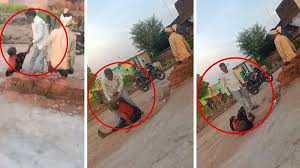
Taken 10,000 rupees in the name of a government housing scheme, brutally assaulted in the middle of the street when she asked for her money back; no action taken against the accused even after the video went viral. Chhatarpur (Madhya Pradesh): An incident that shames humanity has come to light in Chhatarpur, Madhya Pradesh. A Sarpanch representative brutally beat a Dalit woman when she asked for her money back. This incident occurred on Thursday. A video of the entire incident is rapidly going viral on social media, shocking viewers. The viral video clearly shows the woman lying on the ground, with a man (the accused) holding both her arms with one hand and repeatedly slapping her with the other. What is the whole matter? According to reports, this incident occurred in Manetha village, Prithvipur district, Niwari district, Madhya Pradesh. According to reports, the victim, Shanti Ahirwar, had given ₹10,000 to Rajkumar Sahu, the husband and representative of the village sarpanch, in exchange for a house under a government housing scheme. When the woman hadn’t received the benefits of the scheme even after a considerable period of time, she demanded her money back from Rajkumar Sahu. It is alleged that an argument broke out between the two over this issue, and the dispute escalated to the point where Sahu began beating the woman in the middle of the street. No action taken despite complaint According to a report in the Free Press Journal, the victim has filed a formal complaint with local authorities. However, shockingly, despite the complaint, no action has been taken against the accused. This horrific video has caused widespread anger and outrage among the public. People are strongly condemning the sarpanch representative’s violent and abusive behavior and demanding strict legal action against the accused. Rajan Chaudhary Courtesy: Hindi News
Two transgender persons from Bangladesh living illegally in north-west Delhi held
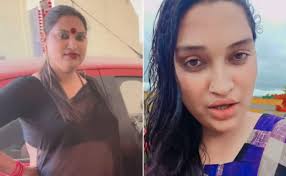
Delhi police on Wednesday apprehended two transgender persons from Bangladesh living illegally in north-west Delhi’s Mahindra Park and were involved in “objectionable” activities. The deportation process has been initiated for the infiltrators, said police on Wednesday. Stating that they have launched an operation to identify illegal immigrants in the locality, Deputy Commissioner of Police (North West) Bhisham Singh said, “On October 15, we received information regarding the movement of suspected Bangladeshi nationals near the New Subzi Mandi area. Acting on actionable intelligence, we conducted raids and found two suspicious persons.” According to the police, the suspects admitted to their Bangladeshi origin during interrogation and presented their Bangladeshi identity cards and birth certificates. “Interrogation revealed that they had homes in the Khulna and Barguna districts of Bangladesh. They had been communicating with their family members via the IMO application, which is banned in India,” the DCP added. Police also seized their smartphones, which contained call logs to Bangladesh and photographs of Bangladeshi documents in their phone galleries. The deportation process has been initiated in coordination with the Foreigners Regional Registration Office, the police said. The Hindu Bureau Courtesy : The Hindu Note: This news is originally published on https:/thehindu.com/bha and is used purely for non-profit/non-commercial purposes, especially human rights