
PAC Chairman seeks report on ‘Great Nicobar project from MHA
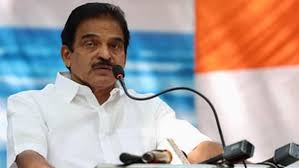
The project has faced criticism from environmental groups and opposition leaders over its potential impact on the island’s ecology. NEW DELHI: At a meeting of the Public Accounts Committee (PAC) on Wednesday, committee chairman and Congress MP KC Venugopal sought a report from Home Secretary Govind Mohan on the controversial Great Nicobar Project, which has been consistently opposed by Leader of the Opposition in the Lok Sabha Rahul Gandhi, sources said. The project has also faced criticism from environmental groups and opposition leaders over its potential impact on the island’s ecology. Although the issue was not listed on the meeting agenda, Venugopal said he raised it suo motu, citing its significance and concerns over the project’s ecological impact. The intervention came during a briefing by officials of the Ministry of Home Affairs (MHA) on observations in the Comptroller and Auditor General (CAG) audit report on the establishment and functioning of the Andaman and Nicobar Islands Institute of Medical Sciences (ANIIMS). According to sources, BJP MP Anurag Thakur objected when the chairman raised the Great Nicobar Project issue, arguing that it was not part of the committee’s agenda and that the proceedings should remain confined to scheduled business. Venugopal, however, said he was not seeking an immediate response from the Home Secretary. “While accepting that he is not prepared for this subject today, it is my duty to make the Home Secretary aware that the committee has taken cognisance of this matter and would like to receive a brief report later on the situation in the Andaman and Nicobar Islands with respect to the Great Nicobar Project,” sources quoted him as saying. Venugopal is learnt to have raised concerns over the felling of an estimated 1.5 crore trees and the displacement of tribal communities because of the project. “All this is being done to create commercial space for a few large private players. On one hand, the long-pending demand for the expansion of the naval base INS Baaz was put on hold. On the other hand, the Central government is hastily moving to commercialise the Andaman and Nicobar Islands,” he is learnt to have told the meeting. The Congress has consistently opposed the Great Nicobar Project, describing it as an ecological disaster. After his recent visit to the islands, Leader of the Opposition Rahul Gandhi challenged the government’s contention that the project is driven by strategic and defence considerations. Gandhi alleged that claims surrounding the proposed transshipment port were misleading and that the project was aimed at benefiting a single businessman through the development of hotels and casinos on ecologically sensitive land. Recently, Congress leader Jairam Ramesh wrote to Union Minister Sarbananda Sonowal raising concerns over the proposed international container transshipment port at Galathea Bay in Great Nicobar Island. He sought clarification on the project’s ownership structure, competition safeguards and government funding support. During the meeting, sources said, Venugopal expressed concern over financial mismanagement and a 12-year delay in the construction of ANIIMS. The PAC chairman also expressed displeasure over the absence of the Chief Secretary of the Andaman and Nicobar Administration from the meeting. Speaking to reporters later, Venugopal said the official had been asked to explain his absence. According to sources, the MHA informed the committee that it serves only as the monitoring agency for the institute, which is administered by the Ministry of Health and Family Welfare. Preetha Nair Courtesy : TNIE Note: This news is originally published on https:/thenewindianexpress.com/bha and is used purely for non-profit/non-commercial purposes, especially human rights
Jairam Ramesh seeks Centre’s clarity on private control, funding of Great Nicobar port
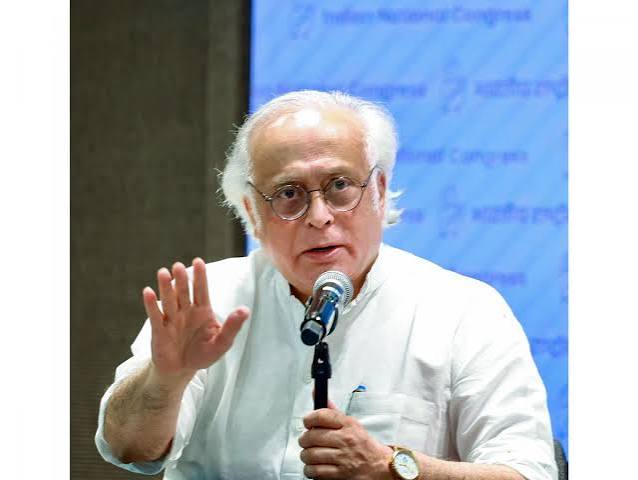
Congress leader questions ownership pattern, VGF support and risks flagged by PPPAC for the Galathea Bay transhipment project. Congress leader Jairam Ramesh has sought clarifications from Union Ports, Shipping and Waterways Minister Sarbananda Sonowal over the proposed International Container Transhipment Port (ICTP) at Galathea Bay in Great Nicobar Island, raising questions over private participation, funding and environmental concerns. In a letter to Sonowal, Ramesh asked the ministry to share the timeline for inviting private participation for the project and the process for selecting the private co-owner and operator of the proposed port. He also sought clarity on the ownership structure of the project’s special purpose vehicle (SPV), pointing out that recommendations of the Public Private Partnership Appraisal Committee (PPPAC) specify that a minimum of 55 per cent shareholding should be held by an Indian-owned and controlled entity. “I seek clarity on three specific points. Since the minimum private shareholding is to be 55%, does it mean that 100% private shareholding will be allowed, or is there a minimum shareholding by public entities as well?” Ramesh said in his letter. The Congress leader also questioned whether private ownership of ports would be diversified or whether a situation similar to the airport sector would be allowed. “Is private ownership of ports to be diversified, or will the airports-like situation be permitted, where only one private company has acquired the six airports sold off so far,” he asked. Ramesh further sought details on funding after the PPPAC rejected the ministry’s request for a Viability Gap Funding (VGF) grant. “Since the PPPAC has turned down the Ministry’s request for a Viability Gap Funding (VGF) grant, will the Ministry provide VGF/capital grant support from its own allocated budget?” he asked. The letter comes amid Ramesh’s repeated objections to the Great Nicobar Island (GNI) project, which includes the transhipment port, a civilian-cum-naval airport, a township and a power plant. Calling himself among those concerned about the project’s ecological impact, Ramesh said the government was pushing ahead with the port despite acknowledging major risks. “You are aware that the PPPAC of the Ministry of Finance had met on March 17, 2026 and March 19, 2026 to consider the proposal of the Ministry of Ports, Shipping and Waterways for the development of an international container transshipment port at Galathea Bay, Great Nicobar Island,” Ramesh said. He cited the PPPAC’s record of discussions issued on April 2, which identified two major risks associated with the project — developing a large-scale greenfield port and attracting transhipment traffic away from established ports. “I take it that these competing well-established ports are Colombo, Singapore and Port Klang — It is extraordinary that even while recognizing these huge risks — quite apart from the certainty of ecological devastation that will be caused by its construction — the transshipment port is being pushed through,” Ramesh said. Ramesh has previously written to Environment Minister Bhupender Yadav, Tribal Affairs Minister Jual Oram and Defence Minister Rajnath Singh, raising concerns over environmental clearances, tribal rights and defence-related aspects of the project. On Friday, he wrote to Yadav alleging that environmental impact assessments for different components of the project were “demonstrably inadequate” and questioned the transparency of the approval process. The Congress has repeatedly criticised the project, claiming the Galathea Bay port would cause large-scale ecological damage, including destruction of coral colonies. Ramesh has also raised concerns over the impact on tribal rights and has urged the government to ensure implementation of the Forest Rights Act, 2006. Congress leader Rahul Gandhi has also attacked the project, alleging that the government’s stated reasons of defence and port development were not the real motivation behind it. Gandhi had earlier claimed the project was aimed at benefiting a private businessman by enabling the development of hotels and casinos on ecologically sensitive land. He also released a video after his visit to the Andaman and Nicobar Islands and urged people to oppose the project through a public campaign. Courtesy : TNIE Note: This news is originally published on https:/thenewindianexpress.com/bha and is used purely for non-profit/non-commercial purposes, especially human rights
Congress raises fresh concerns over Great Nicobar project, seeks public disclosure of studies
Congress leader Jairam Ramesh has shot off a letter to Environment Minister Bhupender Yadav, flagging concerns over the lack of transparency in the Great Nicobar Island project. Congress leader Jairam Ramesh has shot off a letter to Environment Minister Bhupender Yadav, flagging concerns over the lack of transparency in the Great Nicobar Island project. He asserted that the environmental impact assessments of different aspects of the venture are “demonstrably inadequate.” Ramesh’s latest letter comes against the backdrop of a series of exchanges with Yadav over the Great Nicobar Island project in the past few years. “I am sorry to say yet again that the environmental impact assessments of different aspects of the Great Nicobar Island Project are demonstrably inadequate and fall woefully short of guidelines set by the Ministry of Environment, Forests & Climate Change itself,” the former environment minister said in his letter to Yadav. Ramesh pointed out that these had been detailed in his earlier letters to which Yadav had “no worthwhile answer”. “Your position is that conditions made part of the environmental clearance mandate continuous monitoring. In this connection, may I submit the following for your consideration. Six-monthly compliance reports are to be made public. But after March 2024 no such compliance report has been made available. Minutes of the project monitoring committee meetings are being uploaded several months after they have been held,” Ramesh said. Ramesh said the environmental clearance for the project, granted on November 11, 2022, required several conservation and mitigation plans to be submitted within 15 days. However, these plans have not been made public The plans were to be prepared by institutions including the Wildlife Institute of India (WII), the Salim Ali Centre for Ornithology and Natural History (SACON), the Zoological Survey of India (ZSI), the Botanical Survey of India (BSI), the National Institute of Oceanography (NIO), the Indian Institute of Forest Management (IIFM) and the Andaman and Nicobar Forest Department (ANFD), he said. According to Ramesh, some of these institutions were later asked to revise their monitoring and mitigation proposals after incorporating suggestions from the Expert Appraisal Committee. “These plans too are not publicly available,” he said. Ramesh further argued that it was “strange, to say the least” that some of these plans may have been submitted only after being appraised by the committee concerned, raising questions about their adequacy and reliability He also pointed out that the updated Environment Management Plan, which was to be based on existing and additional studies, remains unavailable in the public domain. “There are at least, as far as I have been able to make out, 12 such studies by different institutions. Several studies are still pending, which proves that the environmental clearance was granted prematurely and hastily. Some mitigation measures, such as the large-scale relocation of coral colonies, are clearly unrealistic and almost impossible to implement,” Ramesh said. The Congress leader noted that he had earlier sought the public release of the report of the High-Powered Committee (HPC) constituted by the National Green Tribunal, along with the field survey conducted by the National Centre for Sustainable Coastal Management, on which the committee’s conclusions regarding the Coastal Regulation Zone status of the proposed transshipment port were based. “Everything I am asking to be made public in no way hampers the fulfilment of the so-called strategic objectives that are now being cited as the rationale for the Great Nicobar Island Project. Serious questions over its environmental impact assessment and legitimate concerns about its grave ecological consequences remain unanswered and unaddressed by your sadly evasive replies,” Ramesh said. “I am simply unable to understand the extraordinary level of non-transparency being adopted to conceal reports, studies and plans,” he added. The Congress on Wednesday criticised the project, describing the proposed transshipment port at Galathea Bay as a recipe for ecological disaster that would result in the large-scale destruction of coral colonies. Ramesh has also written to Defence Minister Rajnath Singh, urging him to reconsider the decision to reject the full expansion of the INS Baaz runway. In his correspondence with Yadav, he has repeatedly highlighted what he described as the “demonstrably dubious” nature of the project’s environmental impact assessment. The Centre plans to develop an international container transshipment port, a civilian-cum-naval airport, a township and a power plant under the Great Nicobar Island project. Congress leader Rahul Gandhi has alleged that the government’s claim that the project is primarily about national defence and a transshipment port is a “lie”, arguing instead that it is intended to benefit a single businessman through the development of hotels and casinos on ecologically sensitive land. Earlier this month, Rahul released a video of over 16 minutes based on his visit to the Andaman and Nicobar Islands in late April and urged people to sign a petition calling on the government to “choose green over greed”. Courtesy : TNIE Note: This news is originally published on https:/thenewindianexpress.com/bha and is used purely for non-profit/non-commercial purposes, especially human rights
Reconsider rejection of full expansion of INS Baaz runway: Jairam Ramesh to Rajnath on Great Nicobar project
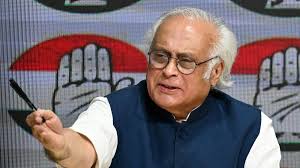
Jairam Ramesh said thar has written over the past two years on at least four different occasions highlighting the demonstrably “dubious nature” of the environmental impact assessment of the Great Nicobar Island Project in its totality. NEW DELHI: Congress leader Jairam Ramesh on Friday wrote to Defence Minister Rajnath Singh over the Great Nicobar Island Project and urged him to reconsider the rejection of the full expansion of the INS Baaz runway. In his latest letter to Singh, the former environment minister said he had written to the Defence Minister on May 16, 2026 on the Great Nicobar Island Project suggesting that in order to minimise its adverse ecological impacts and also meet strategic objectives, the expansion of the existing runway at INS Baaz on Campbell Bay could be considered as an alternative to building a greenfield airport at Gandhi Nagar-Shastri Nagar area of Great Nicobar Island. “Subsequently, on June 8, 2026 there were reports in the media attributed to ‘defence ministry sources’ saying that the runway expansion at INS Baaz would be limited because lengthening to beyond 4500 feet will have adverse ecological impacts,” Ramesh pointed out. “I appreciate the sudden worry for ecological protection but please permit me to submit the following facts for your consideration: The proposed site at Gandhi Nagar-Shastri Nagar needs cutting of two forest-covered hills of 115 metres. The proposed site comprises around 225 acres of protected forest and 130 acres of deemed forest–which are part of the territory of the Shompen tribal community and are currently being used by them,” Ramesh said in his letter. He further pointed out that the proposed site sits directly on about 142 acres of Island Coastal Zone Regulation (ICRZ)-1A which enjoy the highest protection under the Coastal Regulation Zone Notification, 2019 and that include turtle nesting beaches, corals and nesting grounds of the endangered Nicobar Megapode. “The proposed site involves reclamation of a creek and relocation of saltwater crocodiles. The proposed site sits directly on two villages where 234 ex-servicemen settler families reside and they will have to undergo relocation for the third time in recent years,” Ramesh said. He also argued that the proposed site is in a largely undisturbed, pristine forest bordered by a coastline with ecologically sensitive areas “The proposed site has not been subject to any serious and systematic environmental impact assessment especially since Great Nicobar has been designated as an Important Bird Area, an Endemic Bird Area and also holds the significance of being situated on two international bird flyways–the Central Asian and the East Asian- Australasian bird Flyways–that are accessed every year by several migratory species of birds that flock Great Nicobar seasonally,” he pointed out. Noting that the proposed airport site at Galathea Bay was first declared as a dual- purpose airport by the Union Home Ministry on March 30, 2022, Ramesh said it has taken the Defence Ministry over six years to make some statement on it, albeit verbally and anonymously. “It has been compelled to do so because the disastrous ecological impacts of the Great Nicobar Island Project which includes the proposed airport, in addition to the transshipment port, township and other facilities, have become all-too-evident and are inviting wide-spread concern,” the Congress general secretary in-charge communications said. “In sum, I request you to reconsider your rejection of the full expansion of the INS Baaz runway that has been recommended by some distinguished naval personnel themselves,” Ramesh said. The Congress leader copied the letter to the Union Minister of Environment, Forests and Climate Change, Bhupender Yadav, to whom, Ramesh said, he has written over the past two years on at least four different occasions highlighting the demonstrably “dubious nature” of the environmental impact assessment of the Great Nicobar Island Project in its totality. Ramesh’s letter to Singh comes days after Defence Ministry sources said India is undertaking the Great Nicobar Island project to advance its strategic maritime and economic interests. They dismissed its critics as suffering from “geographical illiteracy”. The sources had said the runway at the INS Baaz, the Indian naval air station, in the Andaman and Nicobar Islands, will not be part of the GNI project. The runway of INS Baaz was recently expanded to 4,500 ft and its further expansion requires significant land reclamation and it will impact tribal area, flora and fauna, they had said. The GNI development project is a strategically significant national initiative designed to safeguard India’s maritime interest, the sources had said. The government is planning to build an international container transshipment port (ICTP), a civilian-cum-naval airport, a township and a power plant under the Great Nicobar Island (GNI) project. Congress leader Rahul Gandhi has said the government’s argument that the Great Nicobar Island project is about defence and a transshipment port is a “lie”, and alleged that it is actually about benefiting one businessman so that he can build hotels and casinos on India’s most irreplaceable ecological land. Gandhi had also released an over 16-minute video earlier this month based on his visit to the Andaman and Nicobar Islands in late April and urged people to sign a petition to tell the government – “we choose green over greed”. Courtesy : TNIE Note: This news is originally published on https:/thenewindianexpress.com/bha and is used purely for non-profit/non-commercial purposes, especially human rights
Great Nicobar Project isn’t about defence: Rahul Gandhi

NEW DELHI: Releasing a video of his visit to Nicobar that shows him diving into the sea, travelling through thick forests and talking to tribals and locals, Congress MP Rahul Gandhi on Friday said the Modi govt’s argument that the Great Nicobar Project is about defence and a transshipment port is a “lie” – raising the tempo against the programme that has triggered concerns about environmental destruction and tribal displacement. In a 16-minute video of his April trip, Rahul said the project is about benefiting a big businessman to build hotels and casinos on India’s most irreplaceable ecosystem. He named “Adani” as the beneficiary. Rahul also initiated an online petition against the project, urging Indians to sign “we choose green over greed”. He asked the young Indians to ponder if they wanted to inherit an India where rainforests have been bulldozed for casinos, where coral reefs have been erased from maps, tribal communities pushed off their land, and the air turned into poison, or where India’s natural heritage is protected, tribal communities are safe, and progress works with nature. “More than 1.5 crore trees, ancient coral reefs, irreplaceable rainforests are being destroyed to profit one businessman.” Rahul said if govt is concerned about defence on the island, then it should abandon the project and “expand INS Baaz”, arguing that the Navy has been asking for its expansion for five years. Courtesy : TOI Note: This news is originally published on https:/timesofindia.com/bha and is used purely for non-profit/non-commercial purposes, especially human rights
IMD forecasts on time onset of Southwest monsoon over Andaman Sea
The forecast suggests that monsoon rainfall may reach only 92 per cent of the long-period average. NEW DELHI: The Indian Meteorological Department (IMD) has predicted that the monsoon is likely to begin over parts of the south Bay of Bengal, the Andaman Sea, and the Andaman and Nicobar Islands towards the end of this week (May 16-17). “Conditions are turning favourable for the onset of the southwest monsoon over parts of the south Bay of Bengal, Andaman Sea, and Andaman and Nicobar Islands by the end of this week,” stated the IMD in its daily weather forecast. The traditional schedule for the arrival of the Southwest Monsoon in the Nicobar Islands is May 15, with coverage of the entire Andaman Sea typically by May 20. This year, the expected arrival of the SWM aligns with this timeline. “It appears that the onset of the monsoon over the South Andaman Sea is nearly on schedule,” said Dr Mrutyunjay Mohapatra, Director General of Meteorology at the IMD, in an interview with TNIE. Last year, the SWM reached the South Andaman Sea, parts of the southeast Bay of Bengal, and the Nicobar Islands by May 13, arriving earlier than the normal schedule. Climatologically, the SWM covers the Andaman Sea by May 20 and reaches the coast of Kerala by June 1. Earlier predictions by the IMD indicated a below-normal SWM season for 2026 (June to September), which poses challenges for Indian agriculture amid an energy crisis. The forecast suggests that monsoon rainfall may reach only 92 per cent of the long-period average (LPA), with a model error margin of ±5%, marking one of the lowest predictions in recent years. The LPA for seasonal rainfall across the country is based on data from 1971 to 2020, which amounts to 870 mm. This year, anticipated rainfall is expected to be around 800 mm. The low rainfall forecast is primarily attributed to the emergence of strong El Niño conditions. The El Niño-Southern Oscillation (ENSO) is a natural climate phenomenon characterised by abnormal warming in the Central and Eastern Pacific Ocean. El Niño is often associated with a weaker and more erratic monsoon in India. According to the IMD, since 1951, there have been 16 recorded El Niño years, of which only six contradicted the expectations of a weaker monsoon. Out of the 10 years that recorded deficient or below-normal rainfall, the patterns were consistent with El Niño effects. Additionally, reduced snow cover in the Northern Hemisphere over the last three months has also contributed to expectations of a weaker monsoon. Last year, India experienced above-normal monsoon rainfall, with the season concluding at 108 per cent of expected levels. Furthermore, the private weather agency Skymet has also predicted below-normal rainfall at 94 per cent of the LPA. Jitendra Choubey Courtesy : TNIE Note: This news is originally published on https:/thenewindianexpress.com/bha and is used purely for non-profit/non-commercial purposes, especially human rights
Congress leader Jairam Ramesh questions Centre over environment clearances for Great Nicobar project
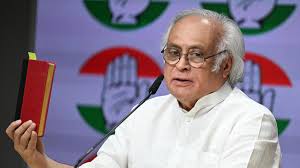
Ramesh alleged that the clearances were based on hurried assessments conducted over a few days and weeks in one of India’s most ecologically sensitive island regions. NEW DELHI: Senior Congress leader Jairam Ramesh on Sunday intensified his attack on the Centre over the Rs 72,000 crore Great Nicobar Island Development Project, alleging that the environmental studies used to grant clearances for the mega infrastructure venture were “grossly inadequate” and reduced the Environmental Impact Assessment (EIA) process to a “mockery”. In a letter to Union Environment Minister Bhupender Yadav, Ramesh questioned the Ministry of Environment, Forest and Climate Change’s claim that the ecological impacts of the project were being “effectively managed”. He alleged that the clearances were based on hurried assessments conducted over a few days and weeks in one of India’s most ecologically sensitive island regions. The Congress MP said the government’s own regulations require detailed and multi-season environmental studies for projects of this scale, particularly in the Andaman and Nicobar Islands. Citing a November 3, 2009 Office Memorandum issued by the Ministry, Ramesh said port projects in the islands must undergo “comprehensive Environmental Impact Assessment including physical and mathematical modelling and ground verification”. He said a proper baseline assessment should cover at least three seasons to capture ecological variations and biodiversity patterns. Ramesh said he could not find the “comprehensive and robust EIA studies” referred to in the ministry’s Frequently Asked Questions issued on May 1, 2026. Instead, he pointed to the Final EIA report submitted in March 2022, which showed that baseline environmental studies were conducted only during the winter season between December 2020 and February 2021. Congress general secretary in-charge communications, Jairam Ramesh. Bulldozer ignores concerns of locals: Congress flays Great Nicobar project Calling the exercise a “Rapid EIA”, the Rajya Sabha MP said a three-month, single-season study was insufficient to assess the environmental consequences of a large-scale port and infrastructure project in a biodiversity-rich island ecosystem. He also alleged that biodiversity assessments linked to the project were conducted over short periods. According to the letter, a “Quick Primary Survey of Ecology and Biodiversity” was carried out between December 14 and 22, 2020, while the survey on leatherback turtles lasted from February 12 to 18, 2021. Ramesh cited passages from the EIA report, claiming the study acknowledged that biodiversity mapping remained incomplete because of the island’s dense forests. Quoting the report, he said: “Based on our site observations, it appears that what is uncovered so far is not complete and what is hidden may be even more valuable.” He also questioned studies conducted by institutions including the Zoological Survey of India and the Wildlife Institute of India. According to Ramesh, the Zoological Survey relied on baseline data collected between February and March 2021, while the Wildlife Institute’s report described itself as a “Rapid Assessment Study” conducted over five days in April 2021. Congress general secretary in-charge communications, Jairam Ramesh. Controversial Rs 80,000 crore Great Nicobar Project gets NGT green light Describing the environmental studies as “an insult to science”, the Congress leader alleged that the clearances were granted on the basis of incomplete ecological data. Ramesh also objected to the Centre’s refusal to publicly release the report of the High-Powered Committee constituted after proceedings before the National Green Tribunal examining clearances linked to the project. Questioning the “logic and legality” behind classifying the report as confidential, he said that when EIA reports, detailed project reports and airport DPRs related to the project were already in the public domain, there was no justification for withholding the committee’s findings. Warning that the island’s “globally unique” ecosystem faced irreversible damage, Ramesh said compensatory afforestation could not offset the environmental destruction likely to be caused by the project. He added that several security experts had argued India’s strategic interests could be safeguarded without causing “such ecological devastation”. Mukesh Ranjan Courtesy : TNIE Note: This news is originally published on https:/thenewindianexpress.com/bha and is used purely for non-profit/non-commercial purposes, especially human rights
Great Nicobar project faces fresh questions on ecology, tribal consent and feasibility: Jairam Ramesh
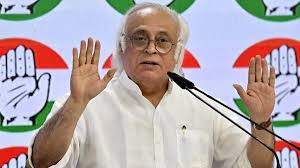
Congress party general secretary (communications) Jairam Ramesh says the press note, issued three days after Rahul Gandhi’s April 28 visit to Great Nicobar, is part of ‘damage control’ The Congress on Sunday questioned the Centre’s response on the Great Nicobar Island Development Project, saying the Government’s clarification, issued after the recent visit of Leader of the Opposition Rahul Gandhi, does not address the serious concerns raised over ecology, tribal rights, environmental clearances and financial viability. Senior Congress leader and party general secretary (communications) Jairam Ramesh said the press note, issued three days after Rahul Gandhi’s April 28 visit to Great Nicobar, was part of “damage control” and ignored detailed objections already submitted to the Environment Ministry in 2024. He said the issues raised related to the ecological sensitivity of the island, legality of approvals and the economic assumptions behind the project. “The Government’s press note does not address any of the serious concerns that have been raised,” Ramesh said. The Great Nicobar Island Development Project includes a transshipment port, airport, township and tourism infrastructure in the Andaman and Nicobar Islands. Ramesh said the claim that only 1.82 per cent of island land is being used was misleading as it ignored the ecological value of Great Nicobar as a distinct and fragile ecosystem. He said nearly 50 new species of birds, reptiles, crabs and other fauna had been recorded from the island in recent years, underlining its biodiversity. On Galathea Bay, the proposed site of the port, Ramesh said it fell under Coastal Regulation Zone-1A where such construction is not permitted. He said the area had over 20,000 coral colonies and was a major nesting site of the endangered Giant Leatherback turtle. He also questioned the environmental clearance process, alleging conflict of interest involving institutions such as the Wildlife Institute of India and the Zoological Survey of India, which were part of the clearance process and later involved in monitoring roles. Ramesh said compensatory afforestation proposed in Haryana could not replace forest loss in Nicobar. “A forest ecosystem cannot be substituted by plantation in a completely different ecological zone,” he said. He pointed to inconsistent official figures on tree felling, saying estimates had ranged from 8.52 lakh to 9.64 lakh and now 7.11 lakh trees. He said this raised questions over the accuracy of baseline assessments, adding that ANIIDCO had also invited tenders for enumeration and felling, indicating the absence of a final verified count. On tribal rights, Ramesh said the Nicobarese community withdrew consent in 2022, alleging they were pressured during the clearance process. He also raised concerns over the Shompen tribe, a Particularly Vulnerable Tribal Group, saying there is no clarity on how informed consent was obtained. He said Forest Rights Act procedures were completed in less than 20 days and without mandatory tribal representation, raising concerns over legality. On financial viability, Ramesh said projections of 10 million passengers annually at the proposed airport appeared unrealistic compared to Port Blair’s current traffic of around 1.8 million. He also referred to internal Government discussions that have flagged concerns over the viability of the transshipment port, which would need to compete with established regional hubs without a strong industrial base. Ramesh said key documents related to the project, including environmental management plans and committee reports, had not been made public. He also cited concerns raised by former Navy Chief Admiral Arun Prakash, who said security requirements should not be linked to the development project. Ramesh said security considerations should not be used to restrict scrutiny of a project with major ecological and social implications in one of India’s most sensitive island regions. Article_Author Shekhar Singh Courtesy : The Tribune Note: This news is originally published on https:/thetribune.com/bha and is used purely for non-profit/non-commercial purposes, especially human rights
Why Rahul Gandhi chose Great Nicobar as his next battlefield
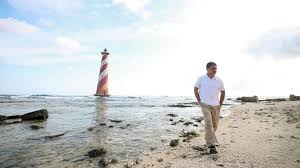
As exit polls bring the Congress grim news except in Kerala, Rahul bets on the Great Nicobar narrative. But sustaining campaigns remains his enduring weakness If exit polls are right, May 4 will hand Rahul Gandhi a rarity: unambiguously good news. The Congress-led United Democratic Front (UDF) seems on course to dislodge Pinarayi Vijayan’s Left Democratic Front (LDF) government in Kerala, with Axis My India giving it 78-90 out of the legislative assembly’s total 140 seats and Manorama News-CVoter pushing the band to 82-94. The headache is what tends to follow a Congress win: a stampede for the chief minister’s chair. There are four men in the frame. K.C. Venugopal, AICC general secretary and Alappuzha MP, is Rahul’s most trusted aide. V.D. Satheesan, leader of the Opposition in the outgoing assembly and a sitting MLA, has the strongest claim from the floor. Ramesh Chennithala, a former home minister of Kerala, has waited two decades for his turn. K. Sudhakaran, the Kannur MP, has not entered his name, but his Facebook endorsement of Venugopal has already lit fires in the rival camps. Rahul has handled this kind of three-way contest before, not without some unwanted consequences though. Madhya Pradesh and Rajasthan in 2018 produced festering wars between Kamal Nath and Jyotiraditya Scindia, and Ashok Gehlot and Sachin Pilot, respectively. In both, it is the party that lost. Karnataka in 2023 ended in an awkward truce between Siddaramaiah and D.K. Shivakumar that already shows signs of fraying. Given all that, the Kerala squabble may be the easiest of Rahul’s problems. Beyond Kerala, the cupboard is bare. Assam looks set to elude the Congress again. In West Bengal, where some exit polls now predict a BJP majority, the party faces what every survey calls extinction. Tamil Nadu accommodates the Congress only at the DMK’s pleasure. With the Kerala victory, the Congress completes its transformation into a southern outfit, with Himachal Pradesh as a high-altitude footnote. This is why the BJP’s parliamentary upset of April 17 matters to Rahul in a way political punditry has under-priced. The defeat of the Constitution (131st Amendment) Bill—the Narendra Modi government’s attempt to bundle women’s reservation with delimitation—was the first time in nearly 12 years that a Modi-sponsored constitutional amendment failed the two-thirds test. Rahul’s circle now believes the Opposition has the floor strength in Parliament to dictate, not just react. The aim, they say, is to set the agenda rather than chase it. Rahul’s aides point to the caste census as proof of concept. From the day in 2023 that he reversed the Congress’s historical squeamishness on the question, Rahul pounded one slogan—“jitni abadi, utna haq” (rights in proportion to population)—until the BJP, which had once dismissed the idea as an “urban Naxal” plot, agreed in April 2025 to fold caste enumeration into the next census. The electoral pay-off in 2024 was modest, but the pressure was real. In Uttar Pradesh, where caste arithmetic decides everything, the BJP fell from 62 Lok Sabha seats to 33. Post-poll data from the Centre for the Study of Developing Societies (CSDS) showed the National Democratic Alliance (NDA) losing 19 percentage points among Koeri-Kurmi OBCs (Other Backward Classes) and 13 percentage points among other OBCs. This was on the back of an Opposition campaign that warned that a “400 paar” majority for the NDA would dismantle reservation. Rahul’s next slogan was “vote chori”—his charge was that the Election Commission (EC) and the BJP had colluded to inflate, prune and redirect electoral rolls. Rahul turned it into a series of high-decibel press conferences, complete with what he called “Hydrogen-bomb” evidence. In Bihar, where he timed his second presentation a day before the November 6 vote last year, the pitch sank: the Congress won only six of the 62 seats it contested, its second-worst showing in the state’s history, and forfeited deposits in most of the rest. The argument resurfaced only in West Bengal, where the EC’s invented category, “logical discrepancy”, was used to red-flag some 2.7 million voters during the Special Intensive Revision of rolls—a disproportionate share of them allegedly Muslim. The EC has dismissed every accusation. The Congress’s own fortunes in Bengal will be unaffected either way. Rahul’s pattern is now clear. He picks issues that may not win the next election but will deny Prime Minister Modi the comfort of an unchallenged narrative. After May 4, and especially if Bengal goes the BJP way, the saffron camp will want a chorus about the Opposition’s decimation. Rahul wants a counter-tune cued up for the rest of 2026, ideally one with a moral charge. Standing with the locally aggrieved is, by now, his most dependable register. The list runs from Yavatmal in 2008, when he sat in Kalawati Bandurkar’s hut in Vidarbha, through Niyamgiri (2008-10), where he marched with the Dongria Kondh against Vedanta’s bauxite plan, to Mirchpur (2010), Bhatta Parsaul (2011), Gopalgarh (2011), Satara (2012), Shakur Basti (2015), Una (2016), Saharanpur (2017), Mandsaur (2017) and Hathras (2020). The template never varies: travel to the wronged, embrace the cause, exit. In the era of the UPA (United Progressive Alliance), the pay-offs could be substantial—Jairam Ramesh’s 2010 rejection of Vedanta’s environmental clearance was a Niyamgiri trophy. In the NDA era, the land acquisition ordinance lapsed on August 31, 2015, with Modi citing farmer “fear” in his Mann Ki Baat radio message as the trigger. Since then, the splash has rarely converted: the Yavatmal-Washim seat in Maharashtra has voted the Shiv Sena (in its various avatars) in every Lok Sabha poll since 2009; in 2022, the Sikandra Rao assembly seat in Uttar Pradesh’s Hathras gave the Congress 1,159 votes against the BJP’s 98,094. Now, in the summer of 2026, Rahul has chosen Great Nicobar. On April 26, he flew to Sri Vijaya Puram (the renamed Port Blair). Two days later, despite a curiously timed suspension of helicopter services to the Nicobars from April 28 to May 1, he reached Campbell Bay. He met Nicobarese elders at Rajiv Nagar, settlers at Gandhi Nagar and
Former Air Chief says Greater Nicobar project important for ‘military footprint’
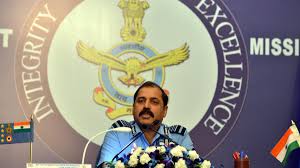
In pushback against Rahul Gandhi’s opposition to the project, retired Air Chief Marshal says ecological concerns will be mitigated; notes that proposed port is 150 km from Malacca Strait, the route for 75% of China’s energy trade The Greater Nicobar project is “important for India’s military footprint” in the area, a former chief of the Indian Air Force said on Thursday (April 30, 2026), as part of the BJP’s pushback against Congress leader Rahul Gandhi’s comments against the project and its harmful ecological footprint. Air Chief Marshal (Retd) R.K.S. Bhadauria, who is now a member of the BJP, pointed to the strategic importance of having a port near the route of China’s energy shipments, with the conflict in West Asia demonstrating the impact of such maritime leverage. Nicobar project largest theft of Indian property to fulfil fantasies of one businessman: Rahul Gandhi He added that environmental concerns are taken on board as a matter of course whenever such projects are mooted. “There are statutory clearances and committees are made. They look at all the factors and all these are mitigated,” he said in a statement. The project, being built at a cost of around ₹81,000 crore, includes a transhipment terminal, a power plant, and a township. The Union government expects it to boost maritime trade, connectivity, and security, and play a key role in promoting India’s geo-strategic and economic interests. The Great Nicobar project | Between the sea and the state Strategic location The retired Air Chief Marshal said that was “surprised” by Mr. Gandhi’s views on the project, noting that it was “important that such a project be understood.” “[The project] is important for India to set a militarily strategic footprint in that region. From a defence and strategic perspective, this development is very crucial. After Strait of Hormuz closure, we have realised the importance of straits and sea route blockades, and such a statement after all this is surprising. If the port is made, it will be only 150 km away from the Malacca Strait, which serves as the route for 75% of China’s energy trade. It will boost India’s maritime and air front dominance to a great extent,” he said. His response on behalf of the BJP came after Mr. Gandhi characterised the project as “one of the biggest scams and gravest crimes against the natural and tribal heritage of the country”. After visiting the area, the Leader of Opposition in the Lok Sabha had said that the project would entail the axing of millions of trees in 160 sq. km of rainforest. Terming it as “destruction dressed in development’s language”, Mr. Gandhi vowed to raise the issue in Parliament. The Hindu Bureau Courtesy : The Hindu Note: This news is originally published on https:/thehindu.com/bha and is used purely for non-profit/non-commercial purposes, especially human rights